Sishi Finance (SISHI) Airdrop: How It Works, Current Status, and Real Risks

Dec, 18 2025
You see the headlines: "Get free SISHI tokens!" It sounds easy. Sign up, follow a few social accounts, maybe complete a simple task, and boom - crypto in your wallet. But here’s the truth most sites won’t tell you: Sishi Finance airdrops might not be worth the time - and could be riskier than you think.
What’s Actually Happening With SISHI?
Sishi Finance (SISHI) is a cryptocurrency token that peaked at over $7 in early 2021. Today, it trades around $0.0005. That’s a drop of more than 99.99%. If you got 10,000 SISHI tokens in an airdrop last year, they were worth about $73. Now? They’re worth 5 cents. That’s not a windfall - it’s a ghost of what it once was. The token still shows up on exchanges like Binance, Coinbase, and Bitget. But here’s the red flag: CoinMarketCap reports zero 24-hour trading volume. Zero. That means nobody’s buying or selling. If you get tokens in an airdrop, you can’t sell them. You can’t cash out. You can’t even trade them for another coin. They’re just digital placeholders with no real market.How the Sishi Finance Airdrop Actually Works
Unlike traditional airdrops that use blockchain snapshots to reward early holders, Sishi Finance runs what’s called an "ongoing challenge and promotion" model. That means there’s no fixed date. No guaranteed payout. No public schedule. You’re expected to keep checking their social channels - Telegram, Twitter, Discord - for new tasks. From what’s been reported, here’s what you might be asked to do:- Follow their official Twitter account
- Join their Telegram group
- Share a post or tag friends
- Complete a quiz about the project
- Hold a specific amount of another crypto (like BNB or USDT)
Why This Model Is a Red Flag
Most legitimate crypto projects use airdrops to bootstrap a real user base. They target people who will actually use the platform - not just collect free tokens to dump them later. Sishi Finance doesn’t have a working product. No DeFi protocol. No lending, no staking, no yield farming. No clear utility for SISHI beyond speculation. The "ongoing challenges" model is a classic tactic used by projects that don’t want to commit to anything. It keeps people engaged with low-effort tasks while avoiding accountability. There’s no end date. No final distribution. No roadmap. Just endless tasks with diminishing returns. And here’s the scariest part: this exact pattern - low price, zero volume, vague airdrops, no product - shows up in dozens of crypto scams. CryptoLegal’s fraud database lists over 300 similar projects that vanished after their airdrop campaigns ended. They called them "rug pulls." They promised free tokens. They delivered nothing.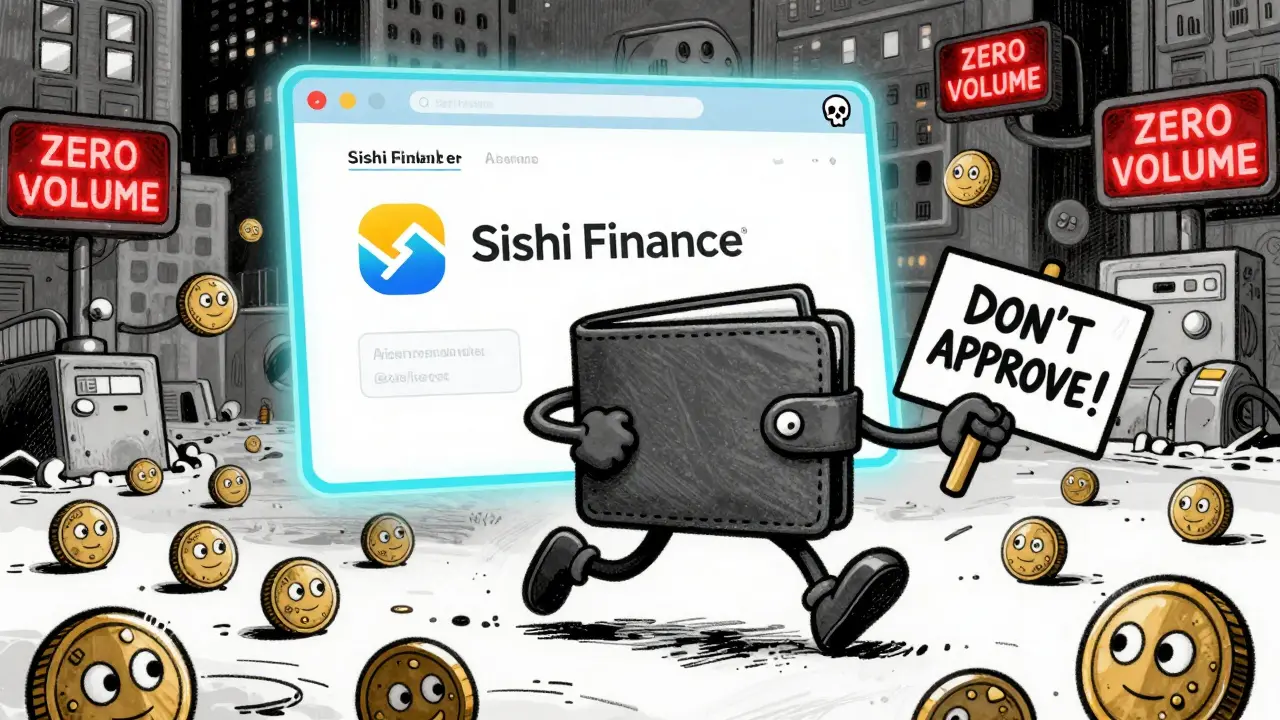
Is It Safe to Participate?
Technically, you won’t lose money if you just follow social accounts and complete tasks. But you’re risking something more valuable: your time and your attention. If you connect your wallet to a phishing site disguised as a Sishi Finance portal - which has happened before - you could lose all your crypto. Many fake airdrop sites look identical to the real ones. They use the same logo, same colors, same wording. The only difference? They ask you to sign a transaction that gives them access to your wallet. You don’t need to deposit money. You don’t need to send crypto. But if you click "Approve" on a smart contract you don’t understand, you’re giving away control of everything in your wallet. That’s how people lose thousands in minutes.What You Should Do Instead
If you’re looking for real crypto opportunities, skip the SISHI airdrop. Here’s what works:- Look for projects with live products - not just whitepapers
- Check if the token has real trading volume (over $1 million daily)
- See if the team is doxxed (public names, LinkedIn profiles, past work)
- Read the contract on Etherscan or BscScan - is it renounced? Is there a liquidity lock?
- Use trusted platforms like Coinbase or Binance for airdrops - they vet projects before listing
Bottom Line: The SISHI Airdrop Is a Ghost
Sishi Finance isn’t dead. It’s still running promotions. But it’s not growing. It’s not innovating. It’s just spinning its wheels, hoping someone will still believe in it. The airdrop isn’t a gift. It’s a distraction. A way to keep the community talking while the value keeps sinking. If you want to earn crypto, find projects that are building something real. Not ones that are just handing out digital confetti.FAQ
Is the Sishi Finance airdrop still active in December 2025?
Yes, promotions are still running as of December 2025, based on updates from Bitget and community reports. But there’s no official end date, no fixed schedule, and no public information on how many tokens are being distributed. Participation requires constant monitoring of their social channels for new tasks.
How much are SISHI tokens worth right now?
As of mid-December 2025, SISHI trades between $0.00051 and $0.00059, depending on the exchange. That’s down over 99.99% from its all-time high of $7.29 in 2021. Even if you get 1 million tokens, they’re worth less than $600 - and you likely won’t be able to sell them due to zero trading volume on major platforms.
Can I cash out SISHI tokens from an airdrop?
Technically, yes - if you can find a buyer. But CoinMarketCap reports zero 24-hour trading volume, meaning no one is actively buying or selling. You might be able to trade on smaller, less secure exchanges, but the price will be even lower due to lack of liquidity. Selling SISHI for real money is extremely difficult and risky.
Are Sishi Finance airdrops a scam?
There’s no confirmed evidence Sishi Finance is a scam, but it matches the profile of many that turned out to be. Zero trading volume, extreme price collapse, no product, and vague, ongoing airdrop tasks are classic warning signs. Many similar projects vanished after their airdrops - known as "rug pulls." Always assume any free token offer carries risk.
What’s the safest way to participate in crypto airdrops?
Stick to airdrops from well-known, established projects like Uniswap, Polygon, or Coinbase. Avoid anything that asks you to connect your wallet to an unknown site. Never sign transactions unless you fully understand what you’re approving. Use a separate wallet for airdrops - never your main one. And always research the project’s team, code, and trading activity before participating.
Why does Sishi Finance have zero trading volume?
Zero trading volume means no one is buying or selling the token. That usually happens when the community loses confidence, the token has no real use case, or the market thinks it’s worthless. With SISHI, the price collapsed after its peak, and there’s been no product development to rebuild trust. Without buyers, the token becomes a ghost - visible on charts but not traded in reality.