Bitcoin halving: What It Is, Why It Matters, and How It Changes Crypto Markets
When you hear Bitcoin halving, a scheduled event that cuts the reward for mining new Bitcoin blocks in half. Also known as Bitcoin reward reduction, it’s built into Bitcoin’s code to control supply and create scarcity. Every 210,000 blocks—roughly every four years—miners get 50% less Bitcoin for verifying transactions. That’s not a glitch. It’s the whole point. Bitcoin was designed to mimic gold: limited, predictable, and harder to produce over time.
This isn’t just a technical detail. It’s a financial event that ripples through the entire crypto ecosystem. Miners, who run powerful machines to secure the network, see their income drop overnight. That forces them to cut costs, upgrade hardware, or shut down. When miners leave, network security weakens—until price rises to make mining profitable again. That’s why Bitcoin halving often comes before major price moves. It’s not magic. It’s economics. And it’s happened three times already: in 2012, 2016, and 2020. Each time, Bitcoin’s price surged over the next 12 to 18 months, even though the halving itself was widely known ahead of time.
It’s not just about Bitcoin. The halving influences how people think about cryptocurrency mining, the process of validating blockchain transactions and earning new coins as a reward. Also known as block mining, it’s the engine behind Bitcoin’s security. When rewards shrink, miners look for cheaper electricity—like in Iran, where cheap power turned mining into a sanctions-busting tool. It pushes innovation too. Projects like blockchain reward reduction, the intentional decrease in block rewards over time to control inflation. Also known as token emission schedule, it’s used by other blockchains to mimic Bitcoin’s scarcity model show up in newer coins, trying to copy Bitcoin’s success. But none have the same track record. Bitcoin’s halving is the only one that’s been tested across multiple bull and bear cycles.
What does this mean for you? If you’re holding Bitcoin, the halving is a reminder that supply is fixed. No central bank can print more. If you’re trading, it’s a signal to watch for historical patterns—not to predict the future, but to understand how markets react to scarcity. And if you’re curious about how Bitcoin stays secure, the halving shows you the real cost of running a decentralized network. It’s not free. It’s paid for by miners, and when their pay drops, the whole system feels it.
Below, you’ll find real stories from the crypto world that connect to this event: how Iran uses mining to bypass sanctions, how exchanges like Bitaroo cater to Bitcoin-focused traders, and why scams pop up right after halving when people get excited. These aren’t random posts. They’re pieces of the same puzzle. The halving doesn’t just change Bitcoin. It changes how people use it, who profits from it, and what gets built around it. Let’s see what’s really happening.
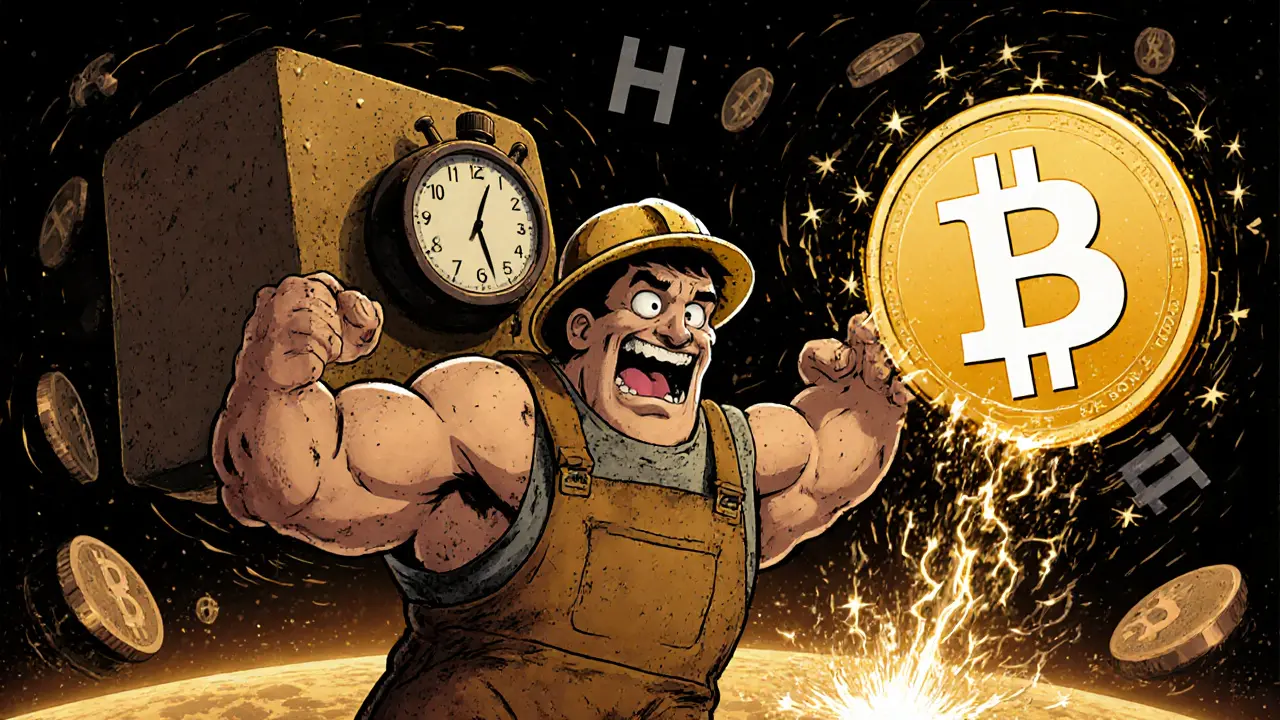
How Block Reward Distribution to Miners Keeps Bitcoin Secure and Growing
Caius Merrow Nov, 19 2025 0Block reward distribution pays miners to secure Bitcoin's network with newly minted coins and transaction fees. As the subsidy halves every four years, fees are becoming critical to long-term security.
More Detail