Crypto Compliance in New York: What You Need to Know About Regulations and Real-World Impact
When it comes to crypto compliance New York, the strict regulatory framework enforced by the New York State Department of Financial Services (NYDFS) that governs how crypto businesses operate in the state. Also known as BitLicense, it's not just a rulebook—it's a barrier, a benchmark, and sometimes a dealbreaker for crypto companies trying to reach U.S. customers. If you're trading, investing, or building in crypto, you can't ignore what happens in New York. It’s one of the few places in the U.S. that demands a specific license just to offer crypto services, and getting one is harder than getting a visa to some countries.
That’s why so many exchanges either refuse to serve New York residents or shut down operations there entirely. Platforms like Bitaroo, a crypto exchange focused on Australian users with simple Bitcoin buying or COREDAX, a South Korean exchange built for local compliance don’t even try to enter New York—they know the cost and complexity aren’t worth it. Meanwhile, the ones that do, like Coinbase or Gemini, spend millions on legal teams just to stay licensed. The result? Fewer choices for New Yorkers, higher fees, and slower innovation.
And it’s not just about exchanges. If you’re running a DeFi project, launching a token, or even running a crypto ATM in New York, you’re under the same microscope. The NYDFS doesn’t care if your code is open-source or your team is anonymous. If you touch crypto in New York, you need to prove you’re secure, transparent, and compliant—or you’re breaking the law. That’s why scams like Bitsoda, a fake crypto platform pretending to be a real exchange or Coinrate, a ghost platform with no regulation or security never make it past the first checkpoint in New York. They don’t have licenses because they can’t get them—and that’s the point.
But here’s the real question: Is this regulation protecting users—or just locking them out? New York’s rules have stopped scams, sure. But they’ve also stopped legitimate projects, blocked access to new tools, and pushed users toward riskier, unregulated platforms overseas. The state claims it’s keeping crypto safe. But for many, it feels more like keeping crypto out.
Below, you’ll find real reviews, deep dives, and hard truths about what happens when crypto meets New York’s rules. From exchanges that made it through the gauntlet to tokens that got crushed by compliance, this collection shows you exactly how regulation shapes what you can—and can’t—do with your crypto today.
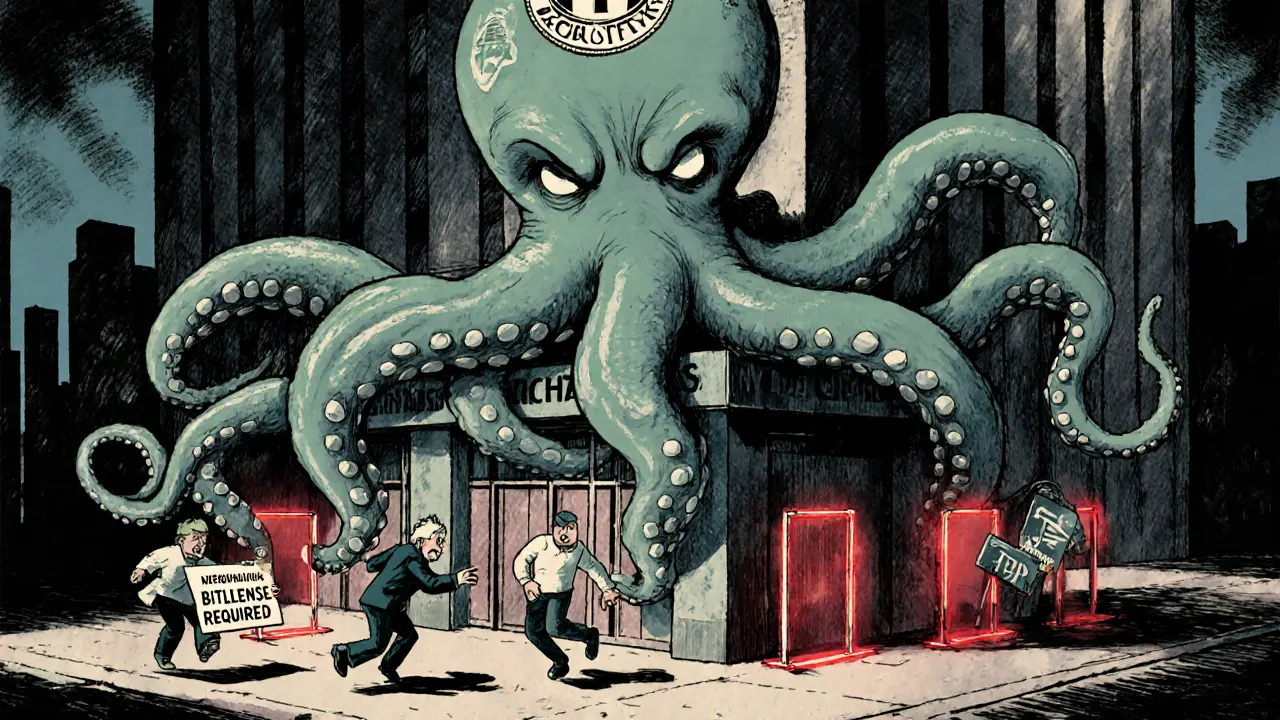
BitLicense Requirements for Crypto Businesses in New York: What You Need to Know in 2025
Caius Merrow Nov, 22 2025 0The BitLicense is New York’s strict crypto business license requiring capital reserves, cybersecurity, and compliance with AML/KYC rules. Only seven major exchanges are licensed as of 2025. Learn the costs, requirements, and alternatives.
More Detail