Cryptocurrency License NY: What You Need to Know About Crypto Regulation in New York
When it comes to cryptocurrency license NY, the official requirement for crypto businesses to operate legally in New York State. Also known as BitLicense, it's one of the toughest regulatory frameworks in the U.S. If you're running a crypto exchange, wallet service, or even a payment processor that touches Bitcoin or Ethereum in New York, you can't skip this. The New York State Department of Financial Services (NYDFS) doesn't just ask for paperwork—they dig into your security, compliance team, AML systems, and even your corporate structure. And if you're a user? You're feeling the ripple effects every time you try to deposit or trade on a platform that won't serve NY residents.
The BitLicense, a regulatory permit issued by NYDFS for virtual currency businesses was introduced in 2015, long before most states had any crypto rules. It forced companies like Coinbase and Gemini to either comply or leave the state. Some did. Others never tried. Today, only a handful of exchanges hold the license, and most smaller platforms still avoid New York entirely. That’s why you won’t find many DeFi apps or niche altcoin exchanges available to NY residents. The crypto exchange compliance, the process of meeting state and federal rules to legally operate a digital asset platform isn’t just about paperwork—it’s about hiring lawyers, auditors, and compliance officers full-time. For a startup? It can cost over $100,000 just to apply.
It’s not just about exchanges, either. If you’re building a crypto-based app, running a mining operation, or even offering staking services to NY users, you might need a license. The NYDFS doesn’t care if you’re based in Texas—if your service reaches New York, you’re in their scope. That’s why some platforms block NY IP addresses entirely. It’s easier than fighting bureaucracy. Meanwhile, traders in New York are stuck with fewer choices, higher fees, and slower withdrawals. The New York crypto laws, the set of state regulations governing virtual currency activities are designed to protect consumers, but they’ve also created a two-tier system: those who can afford compliance, and everyone else.
Below, you’ll find real reviews and breakdowns of crypto platforms that either got the license, got rejected, or just disappeared. You’ll see why some exchanges like Bitstamp made it through while others like Bitsoda and Coinrate were exposed as scams. You’ll learn how regulation shapes what tools are available to you—and why some "zero fee" platforms are too risky to touch. This isn’t theory. These are the platforms real people tried, lost money on, or walked away from because they couldn’t get past New York’s rules. What you’re about to read isn’t about hype—it’s about what actually works, what doesn’t, and who’s still playing by the rules in 2025.
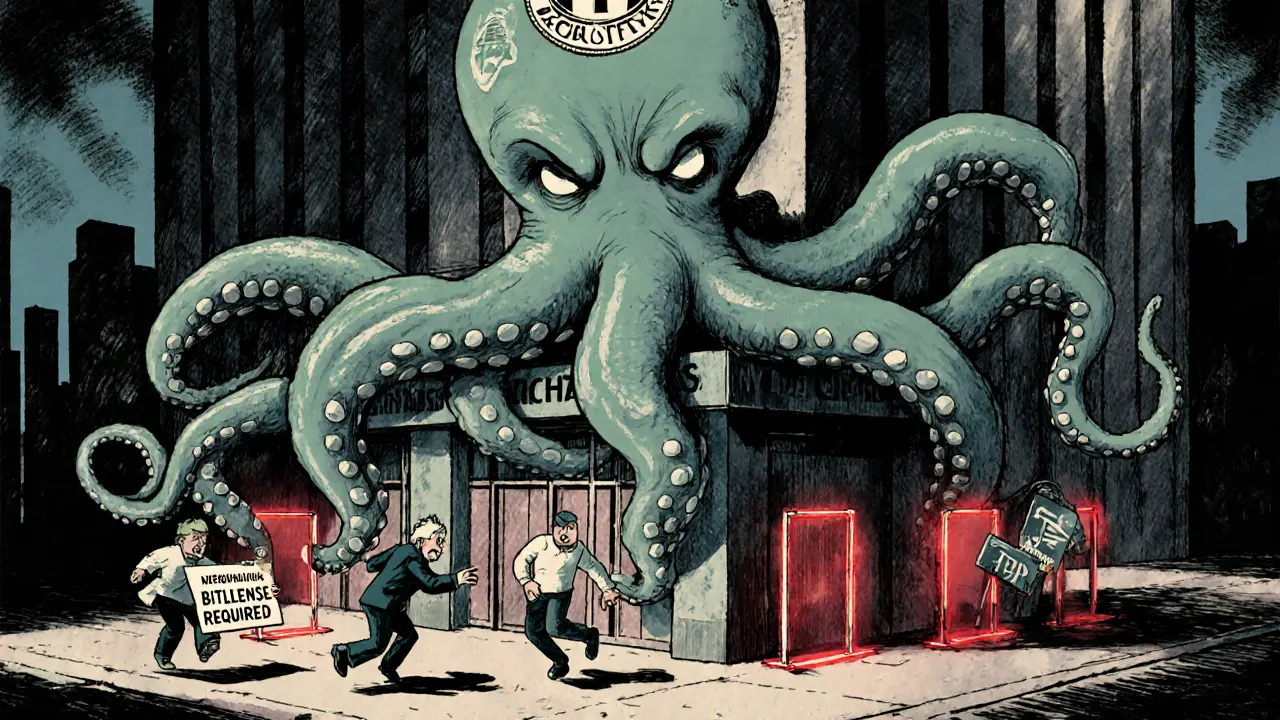
BitLicense Requirements for Crypto Businesses in New York: What You Need to Know in 2025
Caius Merrow Nov, 22 2025 0The BitLicense is New York’s strict crypto business license requiring capital reserves, cybersecurity, and compliance with AML/KYC rules. Only seven major exchanges are licensed as of 2025. Learn the costs, requirements, and alternatives.
More Detail