NFT JSON Data: What It Is, How It Works, and Why It Matters
When you buy an NFT, you’re not just getting a picture or a clip—you’re getting a digital certificate backed by NFT JSON data, the structured file that defines what the NFT actually represents on the blockchain. Also known as NFT metadata, this small JSON file holds everything from the image URL and name to traits, attributes, and even royalty rules. Without it, your NFT is just a token with no meaning.
This data isn’t stored directly on the blockchain—it’s too big and too expensive. Instead, the NFT token points to this JSON file, usually hosted on decentralized storage like IPFS or centralized servers. If the link breaks or the file gets deleted, your NFT becomes a blank placeholder. That’s why smart NFT projects use permanent storage and verify their JSON files. Some NFTs even embed critical data directly in the smart contract, but most rely on this external JSON structure to carry their identity.
The structure of NFT JSON data follows standards like ERC-721 and ERC-1155 on Ethereum, but each project designs its own fields. A CryptoPunk might list pixel art details and rarity traits; a Bored Ape might include background color, hat type, and fur texture. Some NFTs even link to dynamic data—like a music NFT that updates with streaming stats or a game item that changes based on in-world actions. But if the JSON is poorly written, hosted on a shaky server, or missing key fields, the NFT loses its value and usability. That’s why many buyers check the JSON before purchasing—looking for missing attributes, broken links, or hidden royalties.
Behind every NFT you see is a quiet, technical backbone: the NFT token standards, the rules that define how NFTs are created and interact with wallets and marketplaces. Also known as token standards, these protocols ensure your NFT can be displayed, traded, and verified across platforms. And then there’s blockchain NFT, the actual record on the ledger that proves ownership and links to the JSON metadata. Also known as on-chain NFT, this is what your wallet shows when you open it. The JSON data gives the NFT its soul; the blockchain gives it its proof. One without the other doesn’t work.
And don’t forget NFT storage, where the JSON file lives—on decentralized networks like IPFS, Arweave, or centralized services like AWS. Also known as metadata hosting, this is the weakest link in most NFT projects. If a project shuts down and the server goes offline, your NFT turns into a ghost. That’s why the best NFTs use permanent, decentralized storage. You can’t trust a company’s server to last forever, but you can trust a distributed network.
What you’ll find in the posts below are real-world examples of how NFT JSON data works—or fails. From projects that nailed their metadata structure to scams that hid broken links, you’ll see what separates a valuable NFT from a digital paperweight. You’ll also learn how to check your own NFTs, spot risky metadata, and avoid losing your assets to poor storage choices. This isn’t theory—it’s the practical stuff that keeps your NFTs alive.
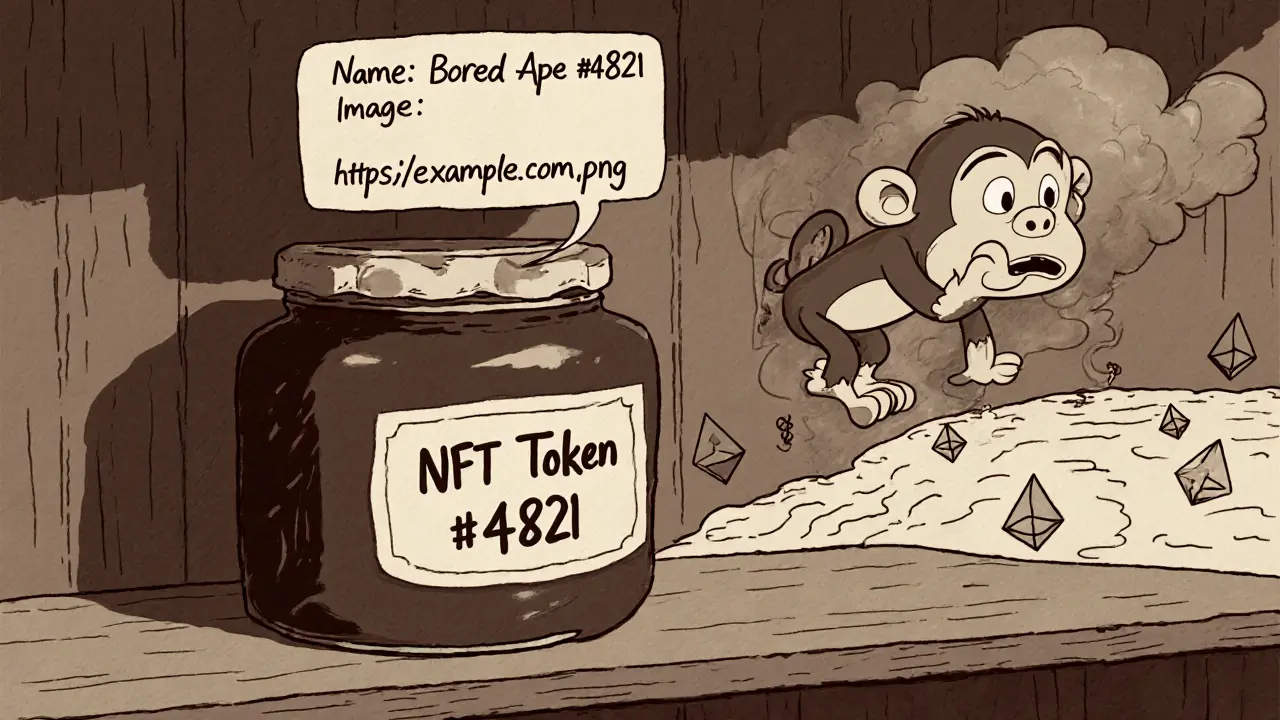
What Is NFT Metadata? A Clear Guide to How It Works and Why It Matters
Caius Merrow Nov, 27 2025 0NFT metadata is the JSON data that defines what your NFT looks like and how it works. Learn how it's stored, why centralized hosting puts your NFT at risk, and how to check if your NFT is truly permanent.
More Detail