NFT Metadata: What It Is, Why It Matters, and What You Need to Know
When you buy an NFT, you’re not just buying an image—you’re buying a set of instructions called NFT metadata, the structured data that defines the appearance, traits, and behavior of a digital asset on the blockchain. Also known as token metadata, it’s what tells your wallet, marketplace, or browser that this NFT is a punk with laser eyes, a cartoon ape in a suit, or a pixelated cat with a hat. Without metadata, your NFT is just a string of numbers on a ledger—useless and unrecognizable.
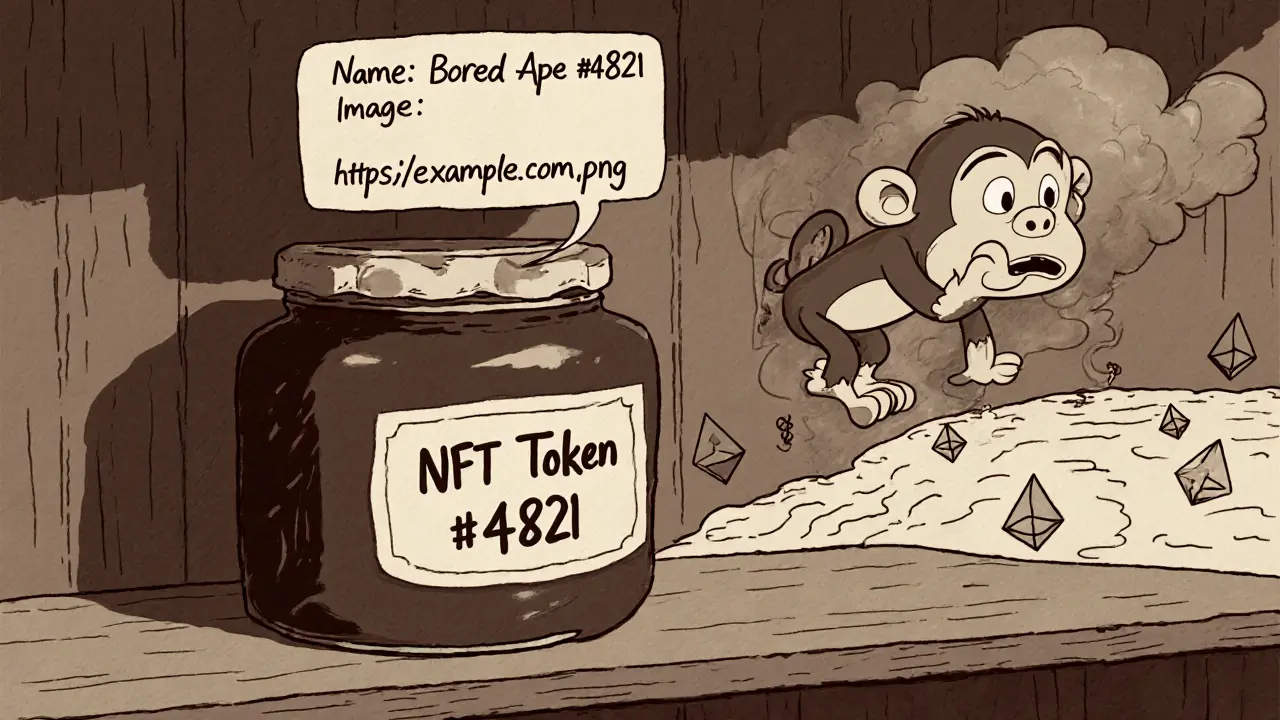
NFT metadata includes things like the name, description, image URL, animation file, and custom traits—like rarity, color, or accessories. These are usually stored as JSON files. But here’s the catch: if that JSON file lives on a regular server and the site goes down, your NFT turns into a broken link. That’s why smart creators store metadata on decentralized networks like IPFS or Arweave. If the file isn’t permanently stored, your NFT could vanish overnight, even if the blockchain still says you own it.
Some NFTs use standards like ERC-721 or ERC-1155 on Ethereum, which include a field called token URI, the pointer that directs your wallet to the metadata file. Also known as metadata location, this URI is the bridge between your NFT’s on-chain ID and its off-chain content. If the URI is wrong, or if the hosting service shuts down, your NFT becomes a ghost. That’s why projects like Bored Ape Yacht Club and CryptoPunks use IPFS—they know their value depends on permanence.
Metadata isn’t just about looks. It can control access, unlock features, or even change over time. Some NFTs update their traits based on real-world events or user actions. Others hide secret attributes only visible after certain conditions are met. Bad metadata? It’s why you see so many NFTs labeled as "unavailable" or "image not found." It’s not the blockchain failing—it’s the metadata.
That’s why the posts here don’t just talk about NFTs as art or investments. They dig into what’s behind them: how metadata is built, where it breaks, and how scams exploit weak storage. You’ll find guides on spotting fake NFTs with missing or copied metadata, reviews of platforms that handle metadata right, and breakdowns of why some NFT projects fail while others last. This isn’t about hype. It’s about understanding the real foundation of what you own.
What Is NFT Metadata? A Clear Guide to How It Works and Why It Matters
Caius Merrow Nov, 27 2025 0NFT metadata is the JSON data that defines what your NFT looks like and how it works. Learn how it's stored, why centralized hosting puts your NFT at risk, and how to check if your NFT is truly permanent.
More Detail