ACMD X CMC Airdrop by Archimedes: How It Worked and What Happened After
Feb, 21 2026
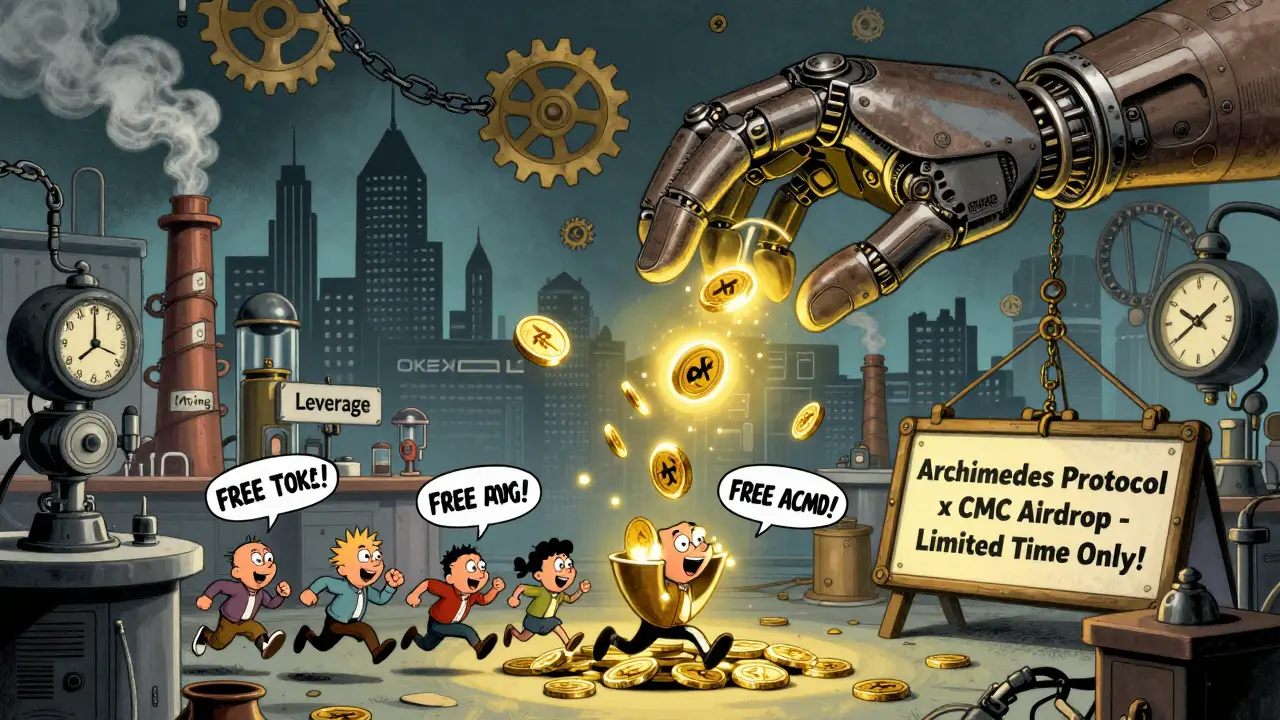
The ACMD X CMC airdrop wasn’t just another free token giveaway. It was a carefully timed move by Archimedes Protocol to break into the crowded DeFi space - and it had real stakes. Back in 2024, when most DeFi projects were struggling to get traction, Archimedes teamed up with CoinMarketCap (CMC) to give away $20,000 worth of ACMD tokens. But this wasn’t about handing out freebies to random Twitter followers. It was about building a real community. And here’s what actually happened.
What Was the ACMD X CMC Airdrop?
Archimedes Protocol launched as a cross-chain leverage aggregator - a fancy way of saying it let users borrow, lend, and amplify returns across multiple blockchains. Its native token, ACMD, was meant to power everything: voting, fee discounts, and mining rewards. But to make it work, they needed users. And that’s where the airdrop came in.
The collaboration with CoinMarketCap gave the campaign instant credibility. CMC isn’t just a price tracker - it’s one of the most trusted names in crypto. When they partnered with Archimedes, it sent a signal: this isn’t another rug pull. The airdrop was live for a limited window, tied directly to the launch of mining on OKExchain. Participants had to complete three steps to enter:
- Follow @ArchiProtocol on Twitter, retweet the airdrop post, and tag three friends.
- Join the official Archimedes Global Telegram channel: t.me/ArchimedesGlobal.
- Submit your wallet address via Google Form: forms.gle/EcLjf3qjicvqPtZC8.
That’s it. No KYC. No fees. No hidden traps. But the system wasn’t random in the way most airdrops are. It was a lottery - every valid entry had an equal shot. The total pool was $20,000 in ACMD tokens, split among winners chosen after the deadline.
How the ACMD Token Was Structured
Understanding the airdrop means understanding the tokenomics. Archimedes didn’t just dump 1 billion tokens into the market. They planned for long-term sustainability.
- 65% went to mining rewards - released gradually over three years and one month. The mining output halved every year after the first month, encouraging early participation.
- 15% was reserved for the team, locked and released alongside mining schedules.
- 10% went to early investors who funded development.
- 5% was allocated for market making - to keep liquidity stable.
- 5% was for marketing, including this very airdrop.
This structure wasn’t designed to pump and dump. It was built to last. But here’s the catch: no one knew if people would stick around after the free tokens arrived.
The Price Confusion: The Price Confusion: $0 or $309.60?
or 9.60?
Here’s where things got messy. After the airdrop, the market couldn’t agree on ACMD’s value.
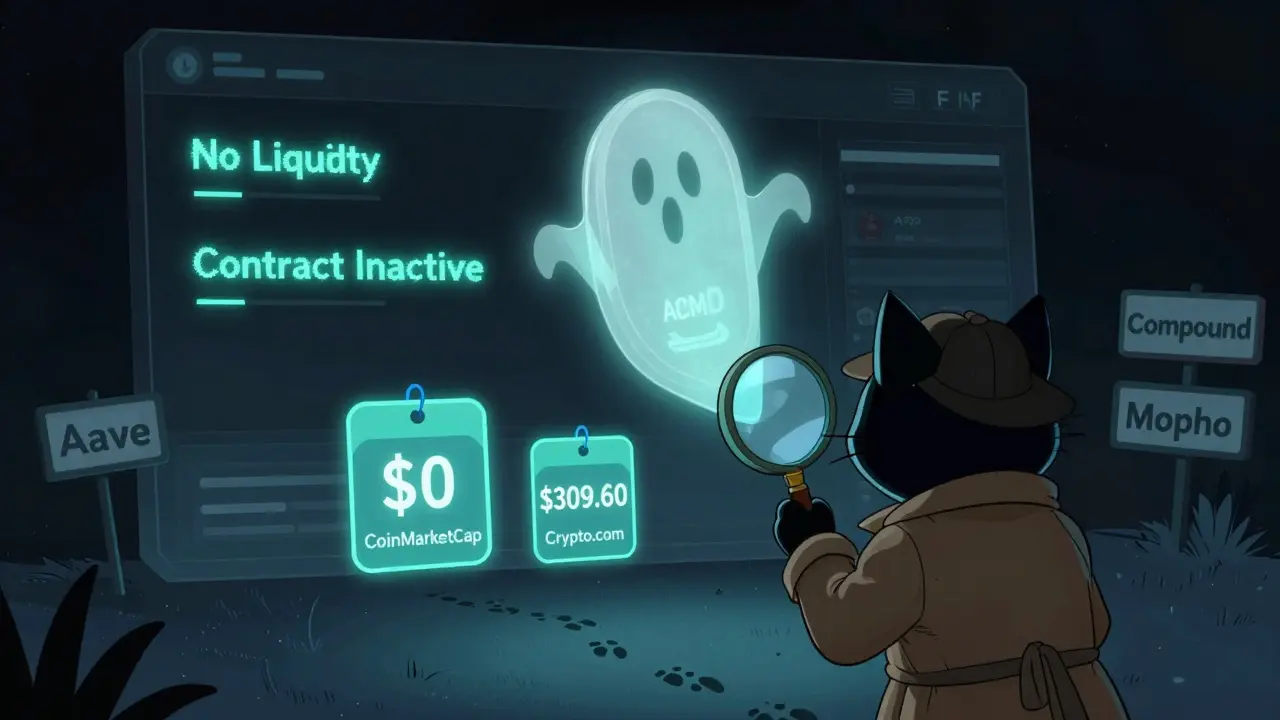
CoinMarketCap listed the price at $0 with zero trading volume. That’s not a glitch - it’s a red flag. It means either no one was trading, or the token wasn’t listed on any real exchange. Meanwhile, Crypto.com showed ACMD at $309.60. That’s not just a discrepancy - it’s a red flag.
Why the gap? Two likely reasons:
- There’s more than one ACMD token contract floating around. Scammers often create fake tokens with similar names.
- Some platforms pull price data from illiquid or fake pools, creating false signals.
The official contract address on CoinMarketCap is 0x2f8e...1b2a57. If you’re holding ACMD, check that. Anything else could be a scam.
Did the Airdrop Work?
Let’s cut through the noise. Did Archimedes achieve what it set out to do?
Yes - and no.
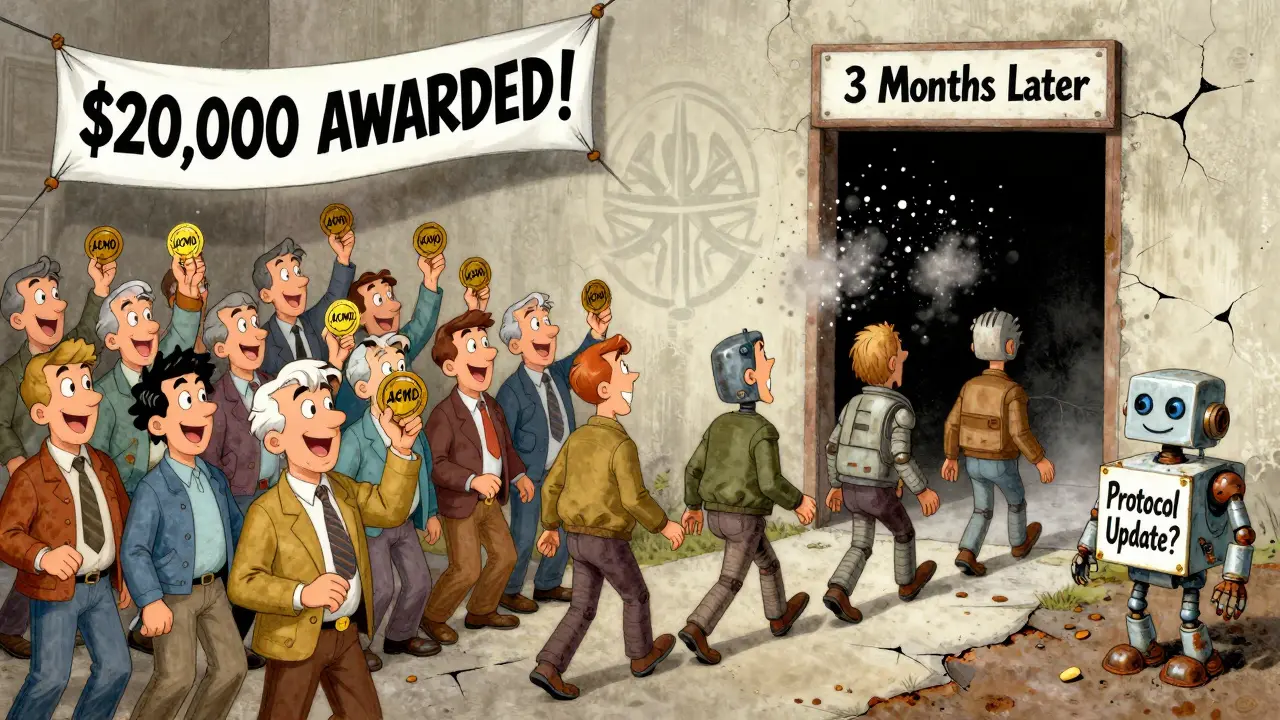
They got attention. The Twitter campaign alone likely reached tens of thousands. The Telegram group grew. The airdrop filled the initial wallet addresses with tokens. But adoption? That’s another story.
Three months after the airdrop, there was no noticeable spike in active users on Archimedes’ platform. No major partnerships. No new chain integrations. The protocol’s website, acmd.finance, still listed the same features - loan mining, leveraged lending, liquidity vaults - but no one was using them.
The real test of an airdrop isn’t how many people sign up. It’s how many stick around after the free tokens are gone. In this case, most participants moved on. The token never made it to major exchanges like Binance or KuCoin. Without liquidity, trading is impossible. Without trading, value disappears.
What You Should Know Now
It’s 2026. The ACMD X CMC airdrop is long over. But if you’re still wondering whether to engage with ACMD - here’s the truth:
- If you got tokens in the airdrop, check your wallet. If they’re still there, they’re likely worthless. No exchange lists them.
- If you’re thinking of buying ACMD now - don’t. The $309.60 price you see on Crypto.com isn’t real. It’s based on zero volume and likely a fake pool.
- The official contract is
0x2f8e...1b2a57. If you’re sent a different one - it’s a scam. - Archimedes Protocol hasn’t released a major update since 2024. Their Medium and Twitter accounts are silent.
This airdrop wasn’t a failure because of poor planning. It failed because the project didn’t follow through. Airdrops can spark interest, but they can’t build a product. And Archimedes never built one.
Lessons from the ACMD X CMC Airdrop
There’s a pattern here. Many DeFi projects use airdrops as a shortcut to growth. They think: “If we give away tokens, people will come.” But users don’t stay for free tokens. They stay for utility.
Archimedes had a solid idea: cross-chain leverage. But they didn’t make it easy to use. They didn’t fix bugs. They didn’t add integrations. They didn’t even update their docs.
The lesson? Don’t trust a project just because it gave away free tokens. Look at the code. Look at the team. Look at the activity. If the website looks like it hasn’t been touched in a year - walk away.
There are better DeFi platforms out there. Aave, Compound, Morpho - they don’t need airdrops to prove they work. They’re live. They’re used. They’re growing.
ACMD? It’s a ghost.
Was the ACMD X CMC airdrop legitimate?
Yes, the airdrop itself was legitimate. It was run by Archimedes Protocol in partnership with CoinMarketCap, with clear rules and a public Google Form. Wallet addresses were collected, and tokens were distributed to winners. But legitimacy doesn’t mean long-term value. The project behind the airdrop has since gone quiet, with no updates, no trading volume, and no active development.
How many people won the ACMD airdrop?
The exact number of winners was never disclosed. Archimedes Protocol only confirmed the total value of the airdrop ($20,000 in ACMD) and that winners were selected via a random lottery from valid entries. There’s no public record of how many participants entered or how many tokens each winner received.
Can I still claim ACMD tokens from the airdrop?
No. The airdrop window closed in August 2024. The Google Form is no longer active, and no new claims are being accepted. If someone is offering to help you claim ACMD now, it’s a scam. The only way to get ACMD is if you already received it during the original distribution.
Why is ACMD listed at $0 on CoinMarketCap but $309 on Crypto.com?
The $0 price on CoinMarketCap means there’s no active trading - no buyers or sellers. The $309.60 price on Crypto.com is likely from a fake or illiquid trading pair. There’s no verified exchange listing ACMD with real volume. This discrepancy suggests either data errors or deliberate manipulation. Never trust a price without verified trading activity on a major exchange.
Is the ACMD token contract safe to use?
Only the contract address 0x2f8e...1b2a57 listed on CoinMarketCap is officially tied to Archimedes Protocol. Any other contract claiming to be ACMD is likely a scam. Never interact with unknown contracts, even if they promise high returns. Always verify addresses on official channels like the Archimedes website or their verified Telegram.
What happened to Archimedes Protocol after the airdrop?
After the airdrop, Archimedes Protocol went silent. No new features were launched. No team updates were posted. Their Medium and Twitter accounts stopped updating in late 2024. The platform’s website remains live but unchanged. There’s no evidence of active development or community growth. The project appears abandoned.