What Is Account Abstraction in Blockchain? A Simple Guide to Smarter Crypto Wallets
Dec, 27 2025
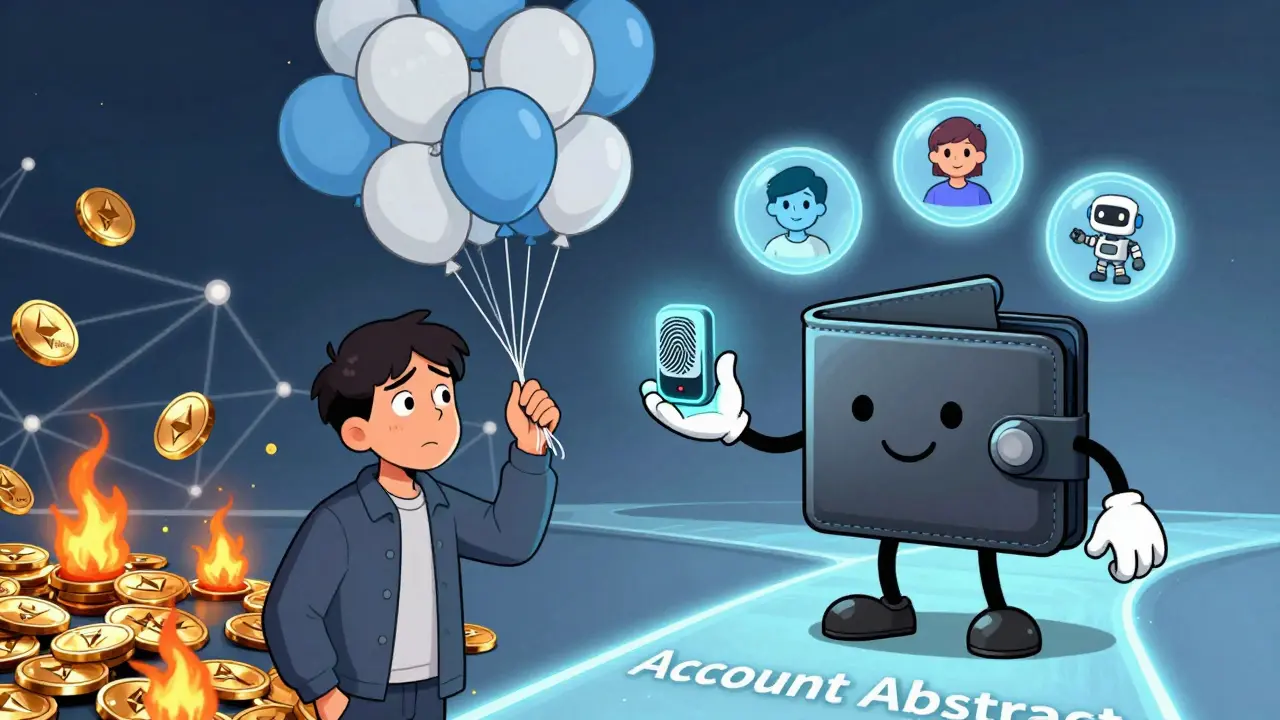
Imagine being able to recover your crypto wallet without a 12-word seed phrase. What if you could let a friend help you unlock your funds if you lose your phone? Or pay for a transaction without even holding any ETH? This isn’t science fiction - it’s account abstraction, and it’s changing how people use blockchain wallets right now.
Why Traditional Wallets Are a Pain
Right now, most crypto wallets - like MetaMask or Trust Wallet - rely on something called an externally owned account (EOA). These wallets are controlled by a single private key. If you lose that key, your money is gone forever. No recovery. No second chance. No way to undo a mistake.And it gets worse. Every time you send crypto, you need to sign it with that key. That means you need to be online, have gas (ETH) in your wallet, and understand how to approve transactions. If you’re new to crypto, this feels like trying to drive a race car without a license. That’s why most people still use centralized exchanges - not because they trust them more, but because they’re easier.
What Is Account Abstraction?
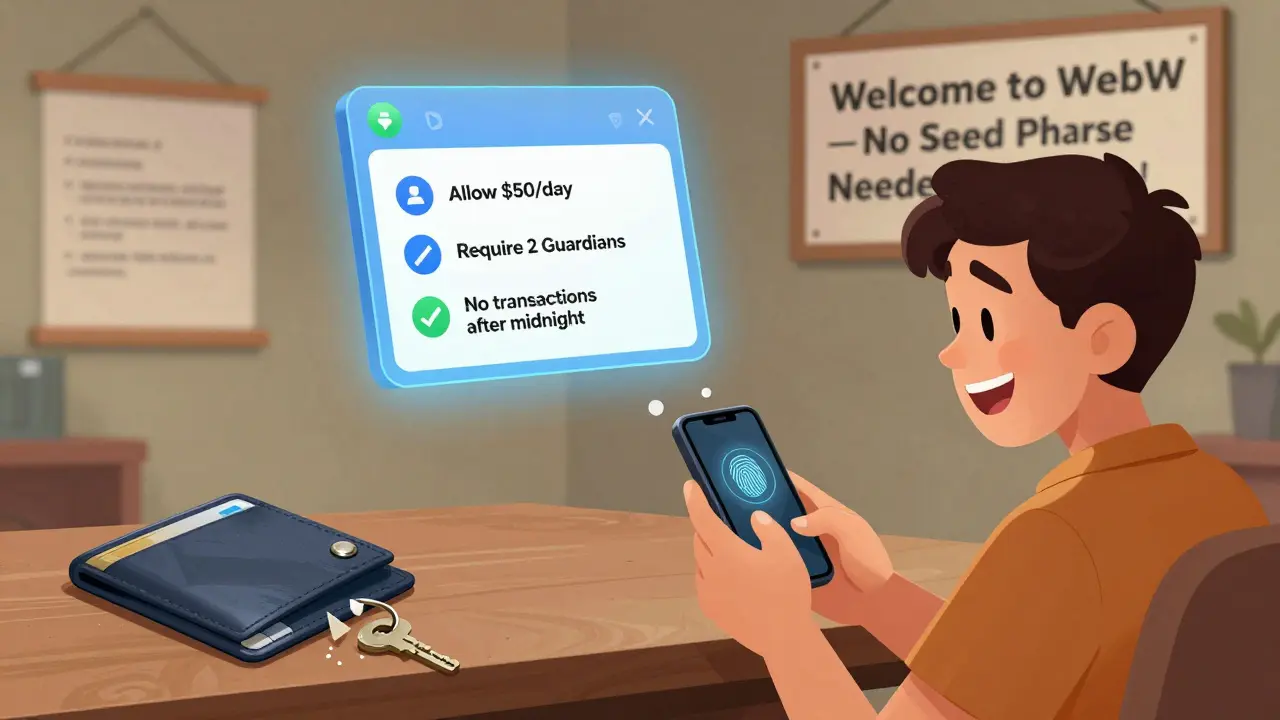
Account abstraction flips the script. Instead of your wallet being a simple key holder, it becomes a programmable smart contract. Think of it like upgrading from a basic lock on your front door to a smart lock that lets you set rules: "Only open after 8 AM," "Require two people to approve," or "Let my kid spend up to $50 a day."This isn’t a theoretical idea. It’s built into Ethereum through ERC-4337, a standard that launched in 2023 and is now live on mainnet. The goal? Keep full self-custody - you still own your funds - but make the experience feel like using a bank app.
How It Works: The Five Key Pieces
Account abstraction doesn’t change the blockchain itself. It adds a smarter layer on top. Here’s how it works:- UserOperation - This is a special message you create instead of a regular transaction. It includes what you want to do (like sending ETH), who signed it, and any special rules.
- Bundler - Think of this as a taxi service for your UserOperations. It collects dozens of these messages from users and packs them into one big transaction to send to the blockchain. This cuts down on network clutter.
- Entry Point Contract - A single, trusted smart contract on Ethereum that checks if each UserOperation is valid. It makes sure the signature matches, the account exists, and the gas fees are covered.
- Paymaster - This is the magic behind gasless transactions. A third party (like a dApp or a sponsor) can pay your gas fees for you. So you can interact with a wallet app without owning any ETH.
- Smart Contract Wallet - This is your actual wallet. It’s not a key. It’s code. And that code can do things like require two signatures, block transactions after midnight, or auto-pay your subscription to a dApp every month.
None of this requires changing Ethereum’s core. That’s why it’s so powerful. It works on top of what’s already there.

Real Benefits You Can Use Today
Account abstraction isn’t just tech jargon. It solves real problems people face every day.
- Social recovery - Lost your phone? No problem. You can set up 3 trusted friends as "guardians." If you need to recover your wallet, 2 out of those 3 can approve it. No seed phrase needed.
- Gasless transactions - A game dApp can pay your gas fees so you can start playing without buying ETH first. That’s huge for onboarding new users.
- Multisig without the headache - Need two people to approve a $10,000 transfer? Set that rule in your wallet’s code. No more emailing spreadsheets or using clunky tools like Gnosis Safe.
- Biometric login - Your wallet can unlock with your fingerprint or face ID. No more typing in long private keys on a mobile screen.
- Session keys - Give a dApp permission to spend up to 1 ETH for 24 hours. After that, it’s locked again. No need to sign every single tiny transaction.
Companies like Argent and Safe already use these features. And they’re not just for crypto natives. Parents are using social recovery to give teens controlled access to crypto savings. Developers are building apps that pay users’ gas fees to get them to try out Web3.
How Solana Does It Differently
While Ethereum added account abstraction as a new layer, Solana built it in from day one. On Solana, every account - whether it holds tokens or runs code - is flexible. There’s no hard line between "wallet" and "smart contract."
This means Solana accounts can naturally handle complex logic without extra standards. But Ethereum’s approach has an advantage: it works with all existing wallets and dApps. You don’t have to choose one chain. You can use account abstraction on Ethereum while still holding assets on Solana.
What This Means for You
If you’re a regular user: your next crypto wallet might not ask for a seed phrase at all. It might ask for your email, your phone number, or your fingerprint. You’ll be able to send crypto like you send a text message - simple, safe, and free of gas fees.
If you’re a developer: you can now build apps that pay for users’ transactions. You can create enterprise wallets with approval workflows for teams. You can let users recover accounts without relying on centralized help desks.
If you’re an investor: account abstraction lowers the barrier to mass adoption. It removes the biggest reason people avoid self-custody: fear of losing access. That means more people will hold their own crypto - which strengthens the whole ecosystem.
What’s Still Hard?
It’s not all smooth sailing. Wallets like MetaMask still don’t support account abstraction natively. You need new wallets like Argent, Safe, or Rabby to use it. And setting up your own bundler or paymaster? That’s still complex. But tools from Thirdweb, Cyfrin, and Biconomy are making it easier - like giving developers a plug-and-play kit.
Also, paymasters aren’t free. Someone has to cover the gas. Right now, it’s mostly dApps or sponsors. In the future, we might see subscription models or token rewards for users who help fund others’ transactions.
What’s Next?
By 2026, most new crypto wallets will likely support account abstraction. The big exchanges might even start offering it as a feature. Imagine logging into Coinbase Wallet and choosing between "basic" and "smart" wallet options.
The end goal? A world where you don’t need to be a blockchain expert to use crypto. Where losing your phone doesn’t mean losing your life savings. Where your wallet works the way you want it to - not the other way around.
Account abstraction isn’t just an upgrade. It’s the first real step toward making blockchain wallets feel like the apps we already use every day.