Crypto Custody Regulations in Germany: A Guide to MiCAR, BaFin Licensing, and Compliance
May, 4 2026
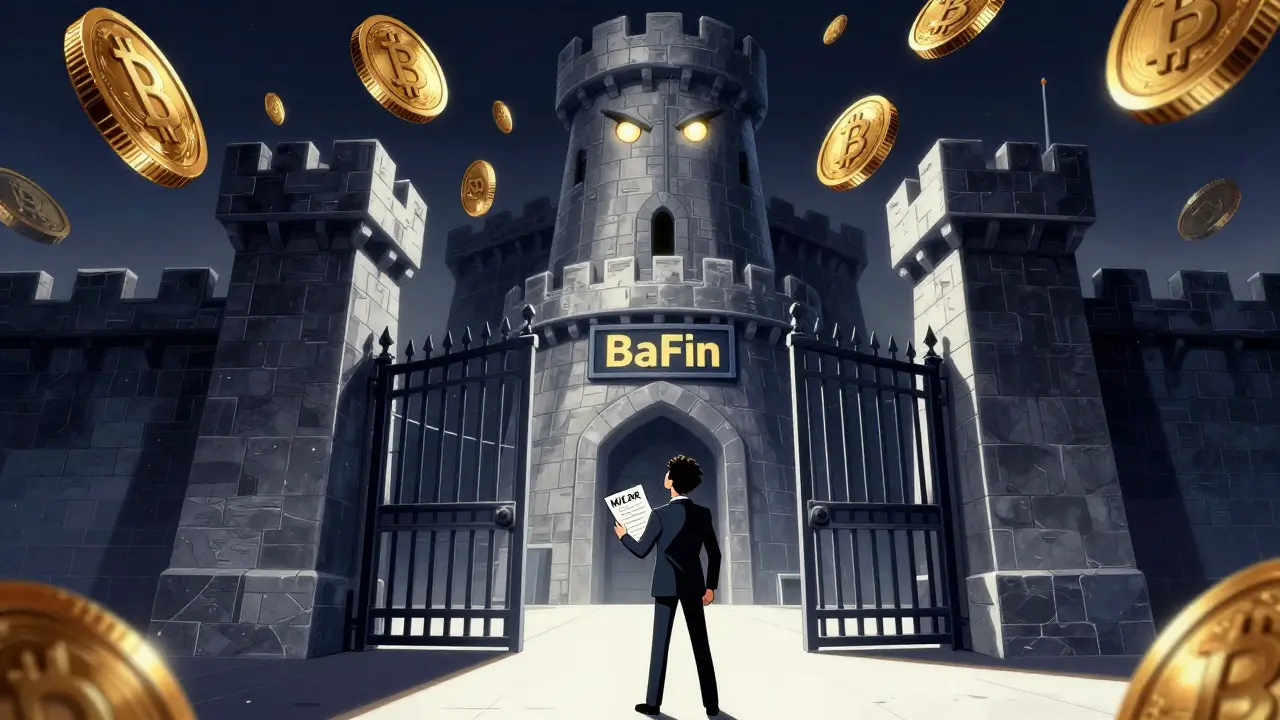
Keeping your digital assets safe in Germany isn't just about buying a hardware wallet. It is about navigating one of the strictest regulatory environments in Europe. If you are looking to offer custody services or simply want to understand how your funds are protected, you need to know who is watching the door. In Germany, that door is guarded by BaFin, the Federal Financial Supervisory Authority.
The rules changed significantly when the European Union's Markets in Crypto-Assets Regulation (MiCAR) took full effect. For anyone operating in this space, the old ways of doing things are gone. You now face a dual framework that combines EU-wide standards with specific German banking laws. This creates high barriers to entry but offers strong protection for investors. Let’s break down what this means for providers, institutions, and users alike.
The Regulatory Landscape: MiCAR Meets German Law
To understand crypto custody in Germany, you first have to look at the two main rulebooks on the table. The first is MiCAR (Regulation (EU) 2023/1114). This is the big EU law that sets the baseline for all crypto-asset service providers (CASPs). The second is the German Banking Act (Kreditwesengesetz or KWG), which has been updated to align with MiCAR through new acts like the FinmadiG and KMAG.
Here is where it gets tricky for operators. Not all crypto assets are treated equally under German law. Assets like Bitcoin and Ether fall squarely under MiCAR’s scope. However, if you are dealing with security tokens-tokens that qualify as securities under civil law-they remain regulated under MiFID II and overseen by BaFin via the Banking Act. This distinction matters because it determines which license you need and how much capital you must hold.
| Asset Type | Governing Regulation | Primary Regulator | Licensing Path |
|---|---|---|---|
| Cryptocurrencies (e.g., BTC, ETH) | MiCAR | BaFin | CASP License |
| Security Tokens | MiFID II / KWG | BaFin | Banking License |
| Stablecoins | MiCAR | BaFin / ECB | CASP + Issuer License |
This dual-track system means that traditional banks have an advantage. Institutions already licensed under MiFID II can use an accelerated notification procedure under MiCAR Article 91(2). This cuts their licensing time from six to nine months down to about three months. Pure-play crypto startups do not get this shortcut. They have to build everything from scratch, meeting every technical and organizational requirement without any prior banking history.
Licensing Requirements and Capital Thresholds
You cannot just start a custody business in Germany today. You need explicit permission from BaFin. The process is rigorous and expensive. For pure crypto custody providers, the minimum operational capital requirement is €125,000. If you plan to offer multiple services-like trading, exchange, and custody-the capital requirement jumps to up to €730,000 under MiCAR Article 6.
Beyond money, you need people. BaFin requires at least two senior managers with 'fitness and propriety' certification. There is currently a shortage of these certified professionals in Germany. According to reports from mid-2025, there were only around 312 certified crypto custody compliance officers serving over 80 licensed entities. This bottleneck slows down many applications.
The application itself is massive. BaFin expects 47 distinct documentation components. These include detailed business plans, organizational charts showing three lines of defense, IT security architecture diagrams, and proof of capital. One common pitfall is Anti-Money Laundering (AML) procedures. In early 2025, 22% of initial license applications were rejected solely because their AML frameworks were deemed insufficient. You need robust transaction monitoring systems that integrate seamlessly with Germany’s existing AML infrastructure.

Technical and Operational Security Standards
If you get the license, you still have to prove you can keep the keys safe. The technical requirements are exceptionally detailed. BaFin mandates strict segregation between client assets and the custodian’s own holdings. This isn't just a policy statement; it requires physical or logical separation documented in detail.
For the technology stack, here are the non-negotiables:
- Multi-signature Wallets: You must use schemes like 3-of-5 signatures. Single-key control is prohibited for institutional custody.
- Cold Storage: At least 95% of assets must be stored in cold storage (offline).
- Hardware Certification: Hardware wallets must meet Common Criteria EAL 4+ security standards.
- Penetration Testing: Software solutions require regular penetration testing by independent third parties. Results must be submitted to BaFin quarterly.
- Business Continuity: Your systems must withstand disruptions for at least 72 hours. This includes power outages, cyberattacks, and natural disasters.
These standards align with the Digital Operational Resilience Act (DORA), which applies to financial entities across the EU. The goal is clear: even if your company goes bankrupt, the clients' assets must remain untouched and accessible. BaFin President Claudia Olafsson emphasized this point in March 2025, stating that protecting client assets in insolvency scenarios is the primary objective of the framework.

Market Impact and Institutional Adoption
Strict rules often scare away small players, but they attract big money. Germany’s crypto custody market is growing fast. By June 2025, total assets under custody reached €48.7 billion, a 28.3% increase year-over-year. Who holds these assets? Mostly traditional banks.
Deutsche Bank, Commerzbank, and DZ Bank collectively hold 58% of the market share. Their ability to leverage existing banking licenses gave them a head start. Specialized crypto-native providers like Coinbase Custody and Finoa hold about 27% combined. The rest is split among smaller licensed firms.
Institutional adoption is accelerating. As of mid-2025, 63% of DAX 30 companies were using licensed German custody providers. Why? Because the regulatory clarity reduces legal risk. When a major corporation wants to hold Bitcoin on its balance sheet, it needs a custodian that won’t disappear overnight. Germany’s framework provides that certainty.
However, the cost of compliance is high. A survey by Blockchain Bundesverband showed that 54% of German crypto firms spent over €250,000 on regulatory compliance in 2025. This is significantly higher than the EU average of €175,000. Smaller startups struggle with these costs. Some, like Ethena GmbH, have had operations wound down by BaFin due to regulatory breaches, highlighting the zero-tolerance approach to non-compliance.
Future Outlook: Taxation and Civil Law Changes
The landscape is not static. Two major changes loom on the horizon that will reshape custody operations.
First, the DAC 8 Implementation Act will take effect on January 1, 2026. This introduces mandatory reporting of crypto transactions to tax authorities, aligned with the OECD’s Crypto-Asset Reporting Framework. Custody providers will need to implement new technical interfaces by Q4 2025 to handle this data flow. Expect compliance costs to rise by another 15-20%.
Second, Germany is revising its civil securities law as part of its blockchain strategy. By Q2 2026, we expect a clearer definition of which crypto assets qualify as securities under civil law. Analysts predict that 70-80% of security tokens will fall into this category. If this happens, custody for these tokens will trigger stricter banking licenses rather than the lighter CASP licenses under MiCAR. This could further consolidate the market in favor of large banks.
Despite the complexity, the direction is clear. Germany is building a fortress for digital assets. It is expensive to enter, but once inside, you are protected by some of the strongest investor safeguards in the world. For users, this means peace of mind. For providers, it means a long, costly road to approval.
What is the minimum capital required to start a crypto custody business in Germany?
For pure crypto custody providers, the minimum operational capital is €125,000. If you offer multiple services such as trading and custody, the requirement increases to up to €730,000 under MiCAR Article 6.
How does BaFin distinguish between different types of crypto assets?
BaFin distinguishes between cryptocurrencies like Bitcoin and Ether, which fall under MiCAR, and security tokens, which are regulated under MiFID II and the German Banking Act (KWG). This distinction determines the licensing path and regulatory oversight.
What are the technical security requirements for crypto custodians in Germany?
Custodians must use multi-signature wallets (e.g., 3-of-5), store at least 95% of assets in cold storage, use hardware wallets certified to Common Criteria EAL 4+, and undergo regular third-party penetration testing. Business continuity plans must cover at least 72 hours of disruption.
Is it easier for traditional banks to get a crypto custody license in Germany?
Yes. Traditional banks already licensed under MiFID II can use an accelerated notification procedure under MiCAR Article 91(2), reducing the licensing timeline from 6-9 months to approximately 3 months. New entrants must go through the full application process.
When will DAC 8 reporting requirements take effect in Germany?
DAC 8 reporting requirements will take effect on January 1, 2026. Custody providers must implement new technical interfaces by Q4 2025 to comply with the OECD’s Crypto-Asset Reporting Framework and report transactions to tax authorities.