How El Salvador Uses Bitcoin for National Economy
Feb, 14 2026
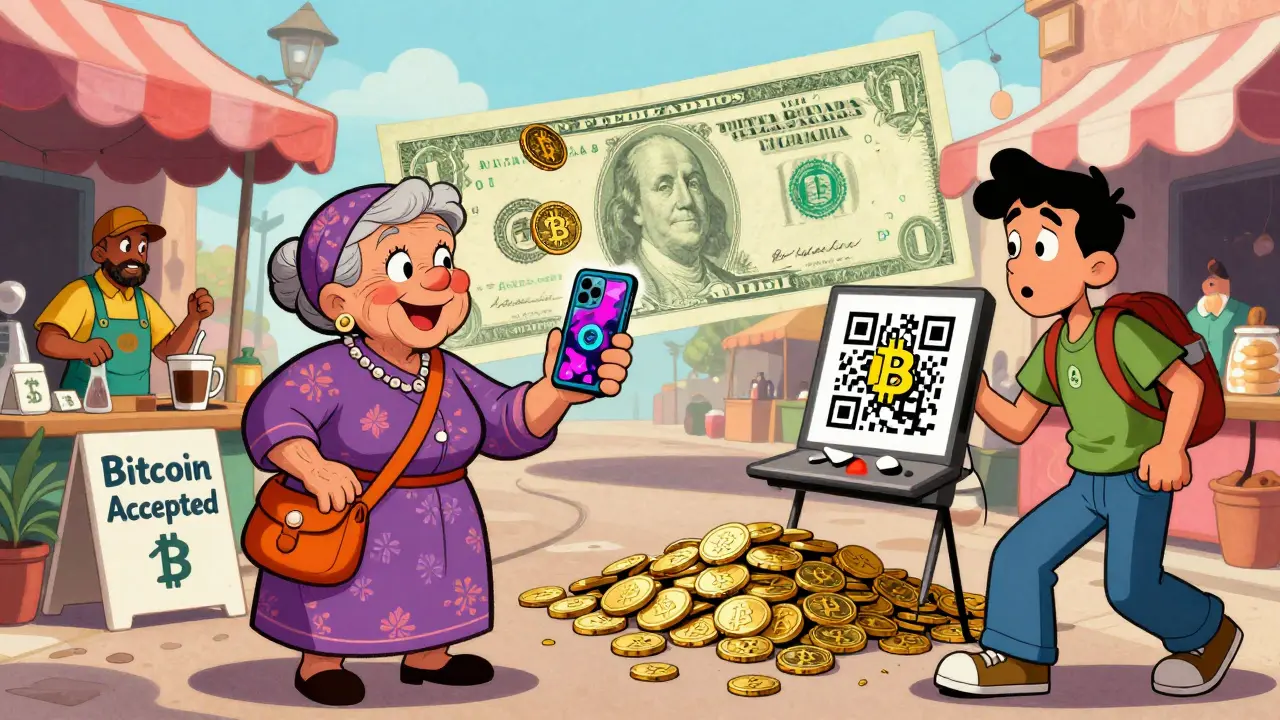
On September 7, 2021, El Salvador became the first country in the world to make Bitcoin legal tender. Not as an investment, not as a side project - but as real money you could use to buy coffee, pay taxes, or send money home to your family. The move was bold, dramatic, and meant to fix deep problems: a broken financial system, high remittance fees, and millions of people locked out of banks. But three years later, the story isn’t what anyone expected.
Why Bitcoin? The Problems El Salvador Was Trying to Solve
El Salvador’s economy has always been tied to money sent home from abroad. More than 20% of its GDP comes from remittances - cash sent by Salvadorans working in the U.S. Every year, families rely on these payments to pay rent, buy food, and keep businesses running. But sending that money used to cost up to 20% in fees. A $500 transfer might leave only $400 in the hands of the recipient. Traditional services like Western Union and MoneyGram ate into those lifelines. At the same time, nearly 70% of Salvadorans didn’t have a bank account. They couldn’t get loans, build credit, or even save money safely. The banking system was expensive, slow, and mostly centered in cities. Rural communities, women, and older people were left out. President Nayib Bukele promised Bitcoin would fix both problems at once: cut remittance costs to near zero and bring banking to the unbanked. The government didn’t just announce it - they built a system. They created the Chivo Wallet is a government-backed Bitcoin app that gives users $30 in free Bitcoin just for signing up. They added discounts on gasoline, phone bills, and even public transit for people who used it. The goal was simple: make Bitcoin easier than cash.The Reality: Adoption Stalled Fast
At first, people downloaded the app. Over half of households installed Chivo Wallet in the first few months. But then, the momentum stopped. By early 2022, downloads flatlined. A study of 1,800 Salvadoran households found that more than 60% of early users never made a single transaction after their free Bitcoin ran out. One in five still hadn’t spent their bonus - even after two years. Why? Because Bitcoin didn’t solve the real problems. Most people didn’t use it to pay for groceries. They didn’t use it to send money to relatives. They used it to cash out the free Bitcoin and then stopped. The app was glitchy. Many users couldn’t set up their wallets. Transactions failed. The interface was confusing. For people who had never used a smartphone before, the idea of a digital wallet with private keys and QR codes was overwhelming. Rural areas had spotty internet. Older adults didn’t trust it. Women, who often manage household finances, were rarely targeted in the marketing. And here’s the kicker: the people who actually used Bitcoin regularly weren’t the ones the program was meant to help. They were young, urban, educated men who already had bank accounts. The unbanked? Still unbanked.The Volatility Problem: When Your Money Disappears Overnight
Bitcoin’s price swung wildly during this time. In 2021, it hit $68,000. By 2022, it dropped below $20,000. The government bought Bitcoin at high prices - spending $150 million to build reserves. When the price crashed, those holdings lost value. That’s not just a loss on paper - it’s real money the country can’t spend. Imagine a family receiving $100 in Bitcoin to pay their electricity bill. If the price drops 30% before they spend it, they’re effectively getting $70 worth of power. The government didn’t warn people about this. No one explained that Bitcoin isn’t stable like the U.S. dollar - which is still the backbone of El Salvador’s economy. Businesses didn’t want to accept Bitcoin because they couldn’t predict their costs. A restaurant might price a meal at 0.002 BTC. If Bitcoin drops, they lose money. If it spikes, customers won’t pay. So most just stuck with dollars - even if they had to convert Bitcoin back to dollars after every sale.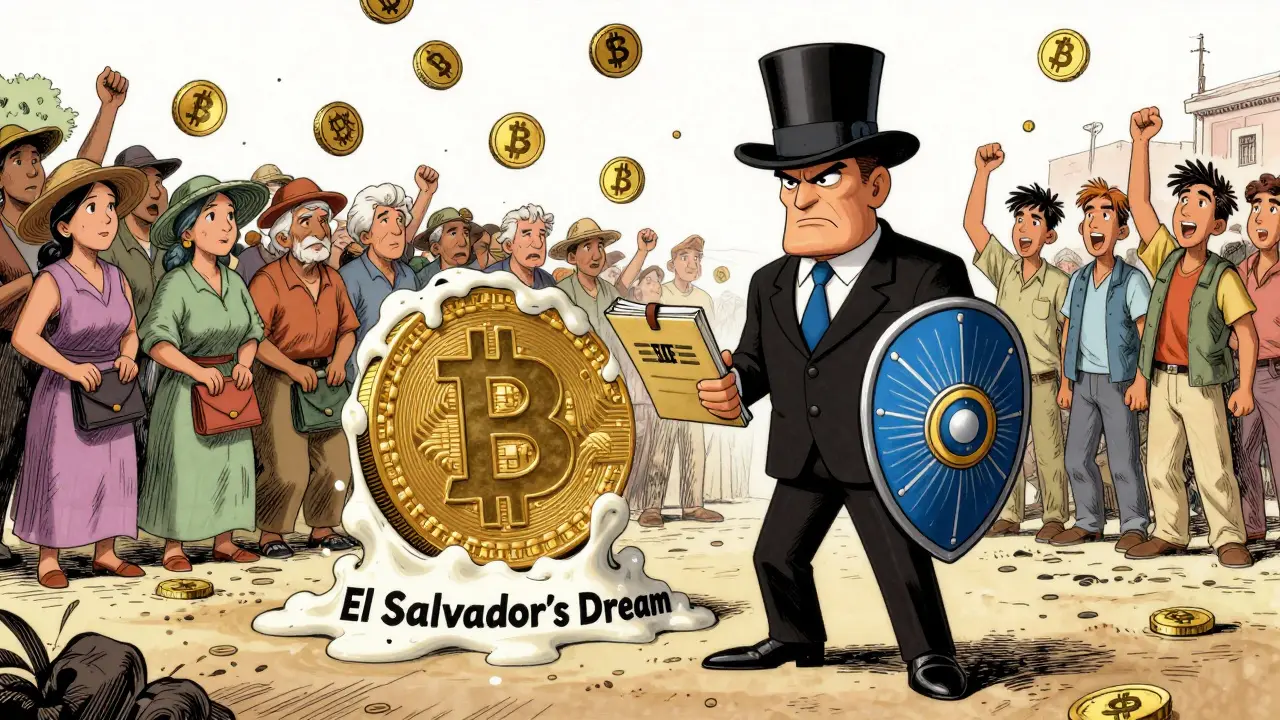
The IMF Backs Out
By 2024, international pressure mounted. The International Monetary Fund (IMF) had been warning El Salvador since day one. They called Bitcoin adoption risky, unstable, and potentially dangerous for the country’s finances. In March 2024, El Salvador agreed to a $1.4 billion loan - but only if they scaled back their Bitcoin plans. The deal didn’t ban Bitcoin. But it forced the government to stop using it for tax payments, stop buying more Bitcoin, and stop using public funds to support the Chivo Wallet. The IMF’s message was clear: you can’t run a national economy on a currency that moves 10% in a single day. This wasn’t a policy change. It was a retreat. The world’s first crypto nation had to ask for help from the very institutions it tried to defy.What Actually Changed?
Did Bitcoin help remittances? A little - but not because of Bitcoin. The real drop in fees came from private companies like PayPal and Wise, which started offering low-cost transfers to El Salvador after the government pushed for digital innovation. Bitcoin didn’t win that race - traditional fintech did. Did it bring financial inclusion? No. The number of people with bank accounts didn’t rise. The number of people with mobile wallets? Maybe. But most of those wallets are empty. The government claimed success by counting downloads - not usage. Did it attract foreign investment? Not really. Investors stayed away. Why? Because no one trusts a country that ties its fiscal policy to a volatile digital asset. Credit rating agencies downgraded El Salvador’s debt. Foreign companies didn’t see innovation - they saw risk.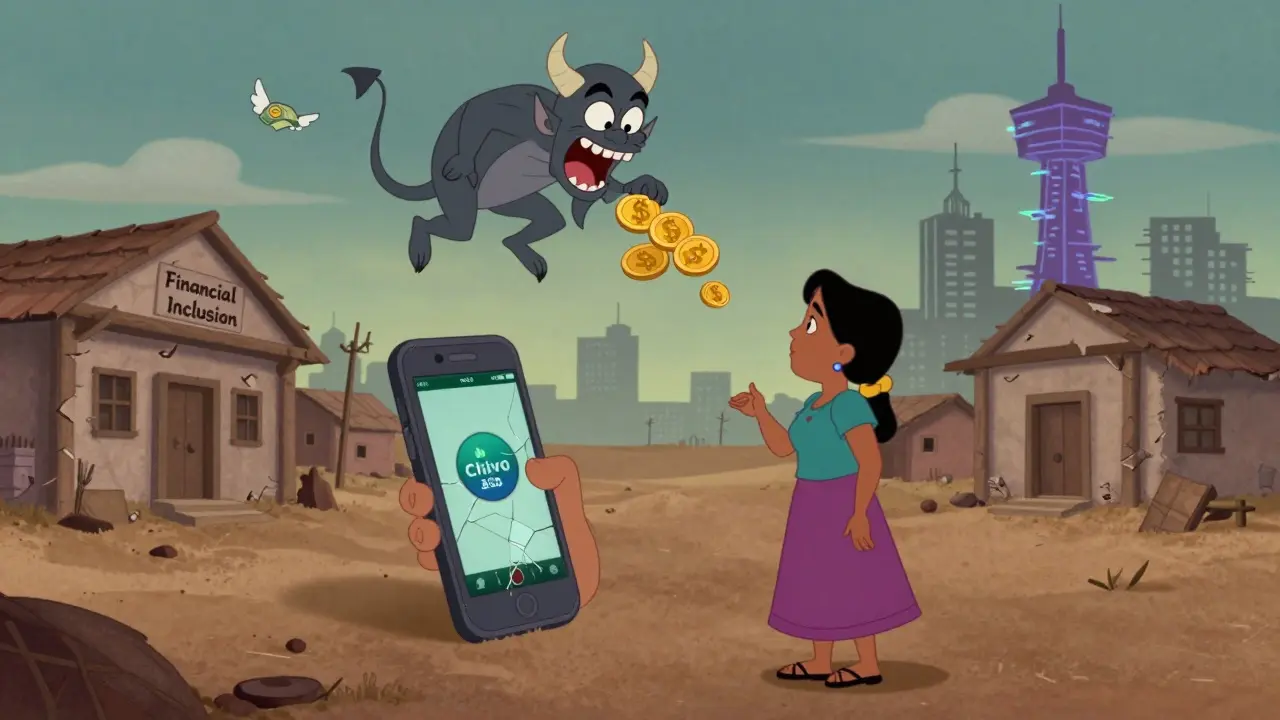
The Bigger Lesson
El Salvador didn’t fail because Bitcoin is bad. It failed because they treated it like a magic solution - not a tool. You can’t fix poverty, exclusion, and weak infrastructure by forcing people to use a cryptocurrency. You need banks, education, internet access, and trust. Bitcoin didn’t provide those. It just added complexity. The real winners? Tech-savvy youth in San Salvador. The losers? Rural women, elderly farmers, and small business owners who were never consulted. The experiment showed something important: technology alone doesn’t fix economics. People need to understand it, trust it, and find it useful in daily life. El Salvador tried to leapfrog the system. Instead, it exposed how fragile that system really is.What’s Next?
El Salvador still recognizes Bitcoin as legal tender. The Chivo Wallet is still there. But the government no longer pushes it. The focus has shifted back to stability - dollar-based budgets, IMF oversight, and rebuilding trust. Bitcoin is no longer the centerpiece. It’s a footnote. Other countries watched. Some, like Paraguay and Ukraine, are exploring crypto for specific uses - like cross-border aid or energy payments. But no one is copying El Salvador’s full Bitcoin-as-currency model. The lesson isn’t that Bitcoin can’t be used. It’s that you can’t force it into a national economy without fixing the foundation first.Is Bitcoin still legal tender in El Salvador?
Yes. Bitcoin remains legal tender in El Salvador as of 2026. However, the government no longer promotes its use for tax payments or public spending. The Chivo Wallet still exists, but most transactions are still done in U.S. dollars.
Did Bitcoin reduce remittance fees in El Salvador?
Not significantly. While Bitcoin theoretically lowers fees, most remittances still flow through traditional services like PayPal, Wise, and Western Union. These companies lowered their fees independently - not because of Bitcoin. The Chivo Wallet’s usage for remittances remains very low.
Why did the IMF intervene in El Salvador’s Bitcoin policy?
The IMF stepped in because El Salvador’s Bitcoin holdings lost value during price crashes, risking the country’s fiscal stability. The government’s spending on Bitcoin reserves and subsidies created unpredictable budget gaps. The IMF required policy changes as a condition for a $1.4 billion loan to prevent economic collapse.
Are Salvadorans still using the Chivo Wallet?
A small number still use it - mostly for cashing out Bitcoin bonuses or getting discounts. But daily active users are under 5% of the population. Most people opened the app once, claimed their free Bitcoin, and never used it again.
What happened to the $150 million the government spent on Bitcoin?
The government bought Bitcoin at prices ranging from $30,000 to $68,000. When the price dropped below $25,000, those holdings lost over 40% of their value. The exact amount of remaining reserves is not public, but analysts estimate the loss exceeds $60 million. The government now avoids buying more.