Liquidity Lock and Rug Pull Prevention: A Complete Guide for 2026
May, 1 2026
You’ve found a new token that looks promising. The chart is green, the community is buzzing, and the developers promise moonshots. But before you connect your wallet, have you checked if the liquidity is actually locked? In the world of decentralized finance (DeFi), this single check can be the difference between building wealth and losing everything in seconds.
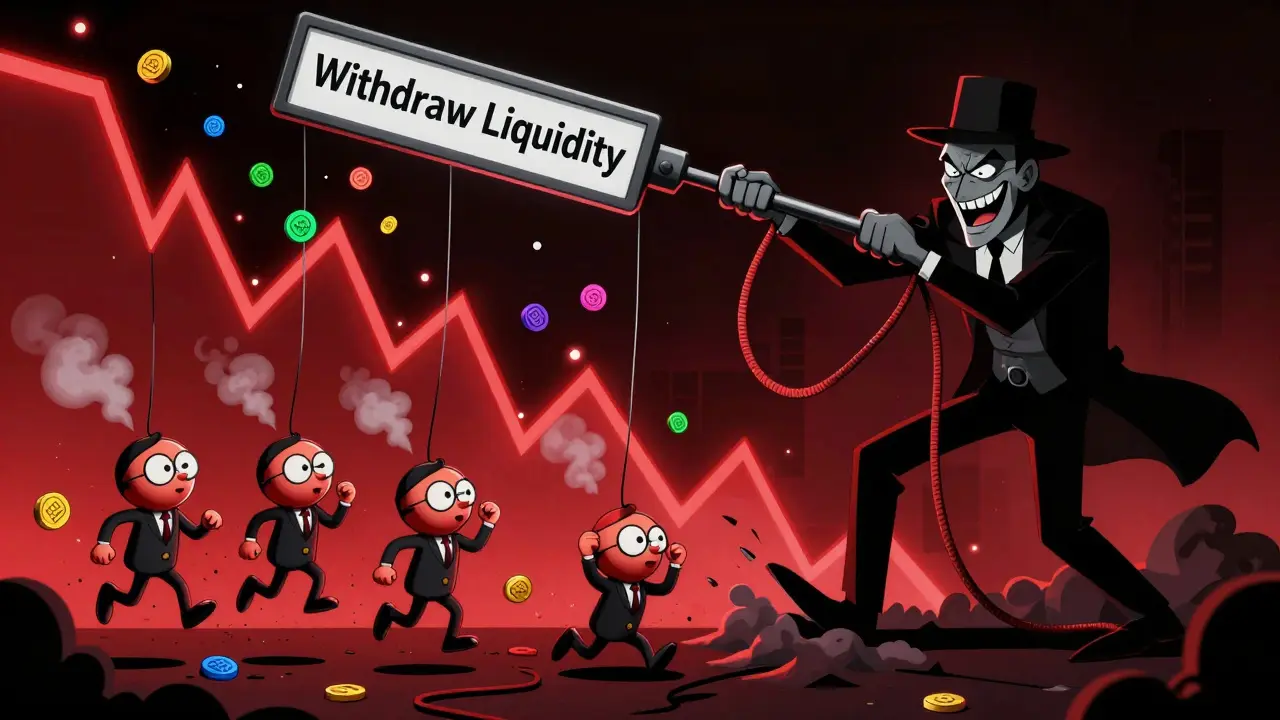
A rug pull is a malicious attack where developers abandon a project and withdraw all liquidity from the trading pool, causing the token price to crash to zero. It’s not just theory; it’s a recurring nightmare for investors. Back in 2021, Chainalysis reported over 1,300 documented rug pulls that stole roughly $2.8 billion from unsuspecting users. Even today, despite better tools, scams evolve. They use fake screenshots, complex contracts, or 'soft' rugs that drain funds slowly rather than all at once.
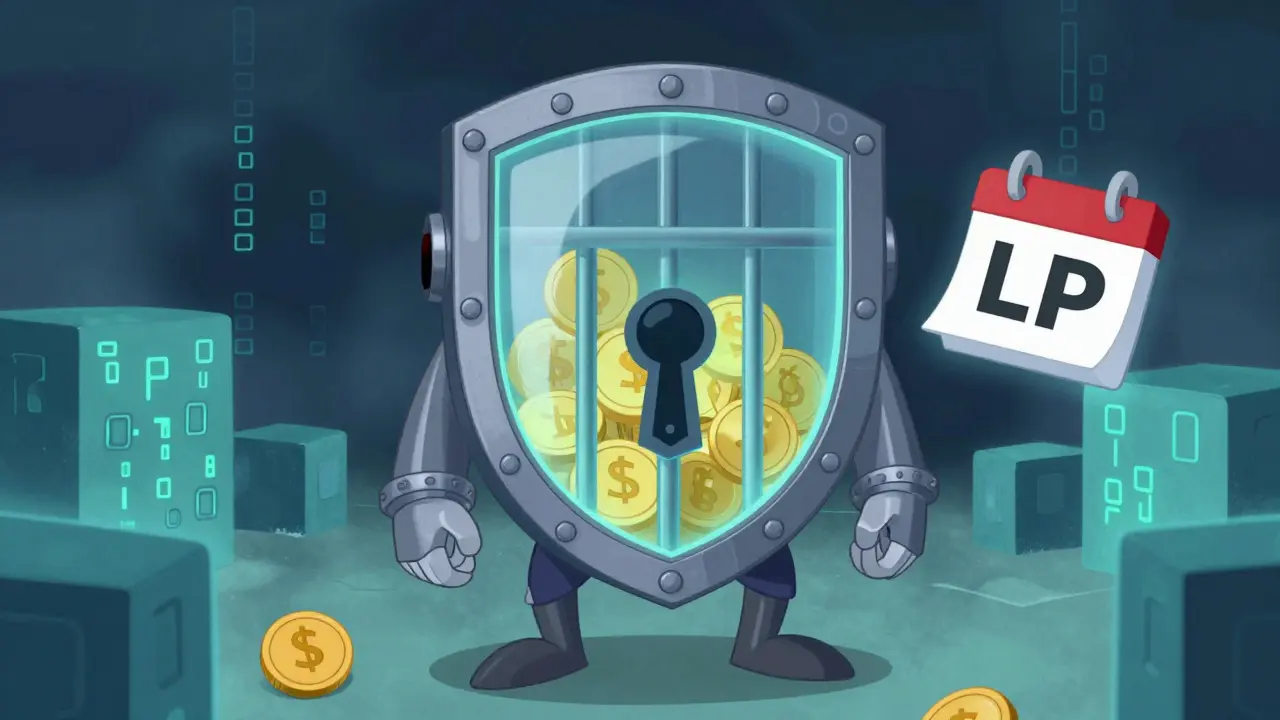
This is where liquidity locking comes in. It’s the primary shield against these attacks. By locking Liquidity Provider (LP) tokens in a tamper-proof smart contract, developers prove they cannot suddenly vanish with the money. This guide breaks down exactly how liquidity locks work, how to verify them yourself, and what other red flags you need to watch for in 2026.
How Liquidity Locking Actually Works
To understand liquidity locking, you first need to understand how decentralized exchanges (DEXs) like Uniswap or PancakeSwap function. Unlike centralized exchanges like Binance, DEXs don’t hold your funds. Instead, they use automated market makers (AMMs). When a developer launches a token, they pair it with a stablecoin or another major asset (like ETH or BNB) in a liquidity pool. This allows traders to swap tokens instantly.
In return for providing this liquidity, the developer receives LP tokens. These LP tokens represent ownership of the entire pool. If the developer holds these LP tokens, they can go back to the exchange, burn the LP tokens, and withdraw all the underlying assets-both their original investment and the value provided by other traders. That’s the rug pull mechanism.
Liquidity locking prevents this by sending those LP tokens to a separate, immutable smart contract. Once inside, the tokens are stuck until a predetermined date or condition is met. Think of it like putting your car keys in a time capsule. You physically can’t drive away because you don’t have access to the keys yet.
- Time-Based Locks: The most common method (used in about 85% of cases). The liquidity is locked for a fixed period, such as 6 months, 1 year, or even 5 years.
- Milestone-Based Locks: Liquidity unlocks only when specific goals are met, like reaching a certain market cap or user count.
- Community-Governed Locks: Rare but emerging, where holders vote on whether to release liquidity early.
As of late 2023 and into 2024, platforms like Team Finance, UNCX Network, and SolidProof became the industry standards for providing these services. Team Finance alone supported over 15,000 projects across 15 blockchains, including Ethereum, BSC, Polygon, and newer chains like Kaia.
Why Locked Liquidity Matters for Your Investment
If you’re investing in meme coins or early-stage DeFi protocols, liquidity lock status is non-negotiable. Data from Gate.com analyzing 350 token launches showed that projects with locked liquidity experienced 42% lower volatility in their first 30 days compared to unlocked ones. More importantly, Chainalysis noted that tokens with more than 51% of their liquidity locked for at least 12 months had a 92% lower incidence of rug pulls.
But here’s the catch: a lock isn’t a guarantee of quality. It only guarantees that the *liquidity* won’t be pulled out abruptly. It doesn’t mean the team won’t dump their personal token holdings, manipulate the contract code, or mint infinite new tokens. Dr. Garrick Hileman from Blockchain.com stated clearly that projects without locked liquidity should be considered high-risk investments until proven otherwise. However, he also warned that locks are necessary but insufficient on their own.
Step-by-Step: How to Verify a Liquidity Lock
Don’t trust screenshots posted in Telegram groups. Scammers easily forge images of Team Finance dashboards showing 'locked' status. You must verify the lock directly on the blockchain. Here is the exact process:
- Find the Token Contract Address: Go to CoinMarketCap, CoinGecko, or the official website of the token. Copy the verified contract address. Never use addresses from random comments.
- Check the Blockchain Explorer: Paste the address into Etherscan (for Ethereum), BscScan (for Binance Smart Chain), or Polygonscan. Look for the 'Holders' tab. You will see several wallets holding large amounts of LP tokens.
- Identify the Locker Contract: One of the top holders will likely be a known locker service. For example, look for addresses associated with Team Finance or UNCX. Click on that holder’s address.
- Verify the Transaction History: On the locker’s page, look for a transaction labeled 'Lock' or similar. Click through to the transaction details. You should see the LP tokens being sent to a smart contract with a specified unlock date.
- Use Dedicated Verification Tools: Services like RugDoc.io or built-in features on PancakeSwap can help. PancakeSwap, for instance, now mandates that new listings have at least 51% of liquidity locked for 12 months. If a token is listed there, it likely meets this baseline.
In August 2023, Etherscan added native liquidity lock verification, covering 92% of Ethereum-based locks. This makes checking much easier. If you don’t see a clear link to a reputable locker service in the holder list, assume the liquidity is unlocked and proceed with extreme caution.
Beyond Liquidity: Other Critical Security Checks
Liquidity locks are just one piece of the puzzle. Sophisticated scammers know this. They might lock the liquidity but still execute a 'soft rug pull' by minting billions of new tokens and dumping them, crashing the price without touching the pool. To protect yourself, you must perform three additional checks.
1. Contract Ownership Renouncement
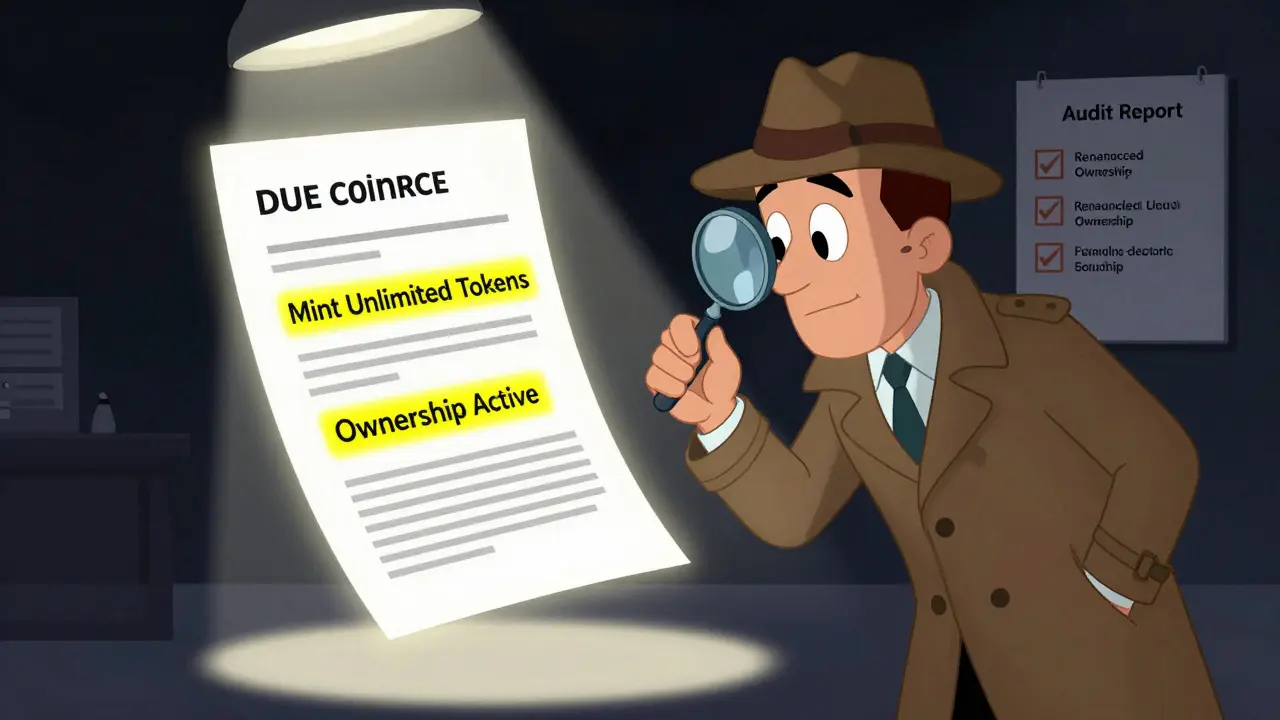
When a smart contract is created, the creator has 'ownership' privileges. This allows them to pause trading, blacklist addresses, or modify fees. A secure project should renounce this ownership. Once renounced, no one-not even the developers-can change the contract code. SolidProof’s audit data shows that only 37% of projects properly renounce ownership. If the owner is still active, you are at risk.
2. Audit Reports
An audit means a third-party security firm has reviewed the code for vulnerabilities. Not all audits are equal. Look for reports from reputable firms like CertiK, Hacken, or PeckShield. Be wary of cheap, automated audits that offer little real protection. Mikhail Kalinin, a security researcher at Consensys, emphasized that investors must verify both contract ownership renouncement and audit reports together.
3. Token Distribution
Check the holder distribution on the blockchain explorer. If the top 10 wallets hold more than 20-30% of the total supply (excluding burn addresses and exchanges), the team or insiders could manipulate the price. Healthy projects have a wide distribution among many small holders.
| Provider | Supported Chains | Service Fee | Key Feature |
|---|---|---|---|
| Team Finance | 15+ (ETH, BSC, Polygon, etc.) | 1-2% | Widest multi-chain support |
| UNCX Network | 9+ | 0.5% | Lower fees, strong governance focus |
| SolidProof | Multi-chain | Varies | Combined audit and locking services |
The Risks of Fake Locks and Soft Rugs
Even with all these checks, risks remain. In mid-2023, RugDoc.io identified over 2,100 instances of 'fake locks,' where projects displayed forged verification badges. This accounted for nearly 18% of new token launches in that quarter. Always verify on-chain, never via social media posts.
Another threat is the 'soft rug.' In the DegenSpartan protocol incident in July 2023, developers kept their liquidity locked but exploited a vulnerability in the contract to mint unlimited tokens. They sold these tokens gradually, draining the pool’s value without triggering the lock withdrawal. This highlights why auditing is critical-a locked pool doesn’t stop bad code.
Regulatory scrutiny is also increasing. SEC Commissioner Hester Peirce warned in 2023 that unaudited liquidity locks marketed as investment guarantees could violate securities laws. As we move into 2026, expect stricter compliance requirements for DeFi projects, especially those seeking listings on major exchanges.
Best Practices for Safe DeFi Investing
Protecting your capital requires a disciplined approach. Here are actionable steps to minimize your exposure to rug pulls:
- Never invest more than you can afford to lose. Early-stage tokens are inherently volatile and risky.
- Always verify liquidity locks on-chain. Use Etherscan, BscScan, or dedicated tools like RugDoc.io. Ignore screenshots.
- Look for long-term locks. A 1-month lock offers minimal protection. Aim for projects with 12+ months of locked liquidity.
- Check for ownership renouncement. If the contract owner hasn’t renounced control, consider it a major red flag.
- Diversify your portfolio. Don’t put all your funds into a single unverified token.
- Stay updated on regulatory changes. Laws around DeFi are evolving rapidly, especially regarding investor protections.
The landscape of DeFi security continues to improve. By 2025, analysts projected that 95% of legitimate token launches would implement verifiable liquidity locks for at least 12 months. The market for lock verification services grew from $47 million in 2022 to an estimated $310 million by 2026, according to Messari’s DeFi Infrastructure Report. This growth reflects a maturing ecosystem where transparency is becoming the standard, not the exception.
However, vigilance remains essential. Technology can prevent simple rug pulls, but it can’t stop sophisticated exploits or human error. By understanding how liquidity locks work and combining them with thorough due diligence, you can navigate the DeFi space with greater confidence and safety.
What is a liquidity lock in cryptocurrency?
A liquidity lock is a security mechanism where Liquidity Provider (LP) tokens are secured in a tamper-proof smart contract for a set period. This prevents developers from withdrawing the liquidity from a trading pool, thereby protecting investors from sudden rug pulls and price crashes.
How do I check if a token's liquidity is locked?
You should verify this directly on the blockchain explorer (like Etherscan or BscScan). Find the token’s contract address, look at the 'Holders' tab, and identify if a known locker service (such as Team Finance or UNCX) holds the LP tokens. Click through to the transaction details to confirm the lock duration and amount. Do not rely on screenshots from social media.
Can a project still rug pull if liquidity is locked?
Yes. While liquidity locks prevent the withdrawal of pool funds, they do not stop other malicious actions. Developers can still execute a 'soft rug pull' by minting excessive tokens, manipulating contract fees, or exploiting code vulnerabilities. Therefore, liquidity locking should be combined with contract audits and ownership renouncement checks.
What is the best duration for a liquidity lock?
Industry experts recommend a minimum lock period of 6 to 12 months. Longer locks, such as 2 to 5 years, provide greater confidence to investors and signal the team’s long-term commitment. Short locks (under 3 months) offer minimal protection against quick scam exits.
Who are the top providers of liquidity locking services?
The leading providers include Team Finance, which supports over 15 blockchains; UNCX Network, known for lower fees and governance features; and SolidProof, which combines locking with security audits. These platforms provide the infrastructure for developers to securely lock LP tokens and for investors to verify the status.
What does it mean for a contract to be renounced?
Contract renouncement means the developer has permanently given up ownership privileges of the smart contract. Once renounced, no one can alter the code, pause trading, or blacklist addresses. This is a critical security step alongside liquidity locking to ensure the project operates fairly and transparently.