Mining Crypto in China: Law and Restrictions in 2026
Feb, 12 2026
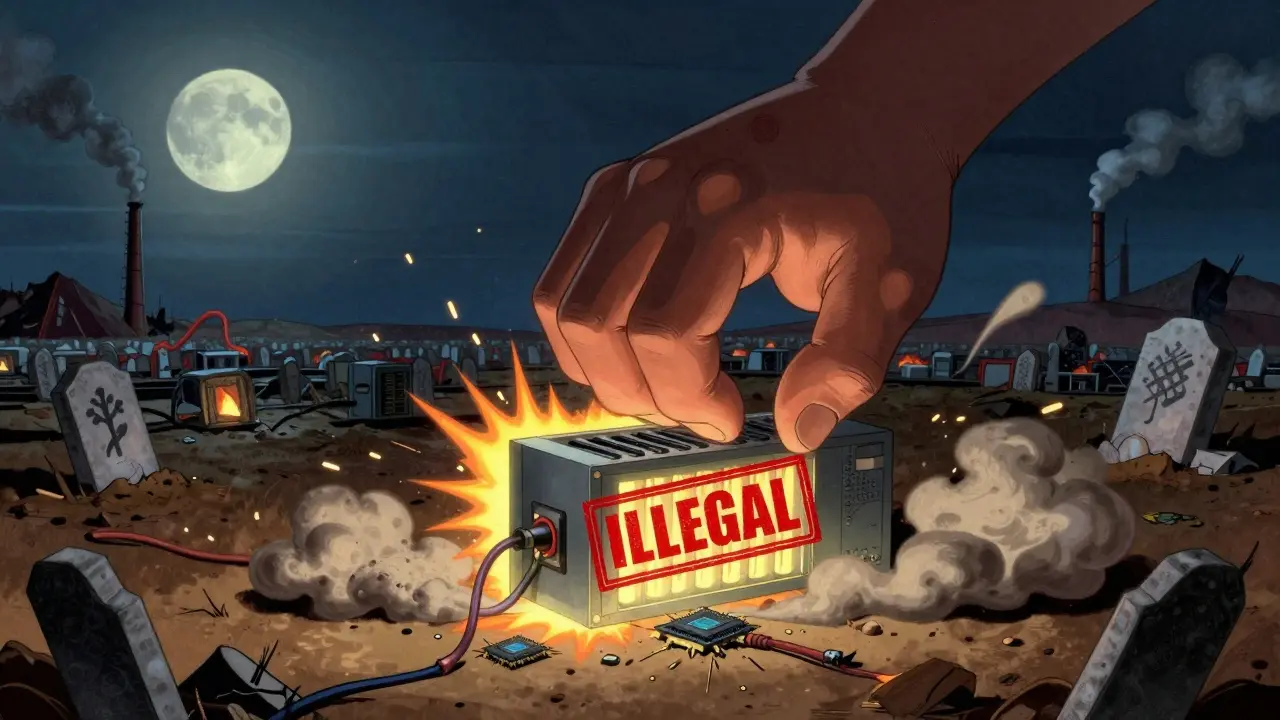
China doesn’t just restrict crypto mining - it criminalizes it. As of May 31, 2025, any form of cryptocurrency mining, trading, or even holding digital assets is illegal under Chinese law. This isn’t a gray area. It’s not a warning. It’s a full criminal ban, backed by police raids, asset seizures, and nationwide monitoring systems. If you’re thinking about mining Bitcoin or Ethereum in China, stop. You’re not just breaking rules - you’re risking jail time.
How China Went from Top Miner to Total Ban
Just a decade ago, China was the heart of the global crypto mining industry. More than 70% of Bitcoin’s computing power came from Chinese farms. Why? Cheap electricity, especially in provinces like Xinjiang and Inner Mongolia, and easy access to mining hardware from manufacturers like Bitmain. But that era ended abruptly. In 2021, China banned cryptocurrency mining nationwide. The government shut down large mining farms, cut power to data centers, and forced operators to shut down. By 2022, courts refused to protect crypto investors in civil lawsuits. In 2023, blockchain tech was allowed - but only if controlled by state-approved entities. And then, on May 31, 2025, everything changed. The People’s Bank of China, alongside the Cyberspace Administration and Ministry of Industry, declared a comprehensive ban on all cryptocurrency activities. Now, even owning Bitcoin is a criminal act.Why Did China Crack Down So Hard?
China didn’t act on impulse. The ban was built on four clear goals. First: Energy use. Bitcoin mining is power-hungry. One Bitcoin transaction uses as much electricity as an average U.S. household in two weeks. China’s push for carbon neutrality by 2060 meant mining farms were a direct threat. In 2024, authorities tracked electricity spikes in rural areas and shut down over 300 underground mining sites just in Sichuan province alone. Second: Financial control. The Chinese government doesn’t want money flowing outside its system. Cryptocurrencies bypass banks, avoid capital controls, and let people move wealth out of the country without oversight. That’s unacceptable to a state that tightly manages how money moves. Third: Illicit activity. Crypto has been used for money laundering, ransomware payments, and smuggling. In 2023, Chinese police linked over $2 billion in criminal transactions to unregulated crypto exchanges operating through shell companies. Fourth: The digital yuan. China’s central bank digital currency, the e-CNY, is being rolled out to every city. It’s not just a digital version of cash - it’s a tool for total financial surveillance. Every transaction is tracked. Every user is verified. There’s no room for Bitcoin, Ethereum, or any decentralized alternative. The government wants its own digital money - not yours.How Enforcement Works Today
You can’t hide crypto mining in China anymore. Authorities have built a system designed to catch you.- Electricity monitoring: Power companies now use AI to detect abnormal usage patterns. A home with three industrial-grade ASIC miners running 24/7 draws 15-20 kW - far beyond normal residential use. That triggers an alert.
- Banking checks: Banks are required to flag any transactions linked to crypto exchanges or mining hardware suppliers. If you buy a mining rig with your bank account, the transaction gets flagged.
- Digital tracking: The Cyberspace Administration scans internet traffic for connections to mining pools and wallet services. Even using a VPN won’t help - your ISP is required to log your activity.
- Police raids: In 2024, over 800 people were arrested for crypto mining. Many faced prison sentences of 2-5 years. Assets - including mining rigs, bank accounts, and even homes - were seized.

Is Mining Still Happening in China?
Yes - but not like before. Underground operations still exist, but they’re smaller, riskier, and harder to sustain. Some miners operate out of abandoned factories, rural barns, or even basements. Others use fake business licenses to justify high power usage. But the risks are huge. One miner in Guangdong was caught after his electricity bill jumped 400% in three months. Police showed up with a warrant, seized his 120 ASIC rigs, and charged him with “illegal financial activity.” Studies from 2025 estimate that underground mining still accounts for 5-7% of global Bitcoin hash rate - down from over 70% in 2020. That’s not because it’s thriving. It’s because it’s barely surviving.What Happened to the Miners Who Left?
When China shut down mining in 2021, over 70% of global hash power disappeared overnight. Miners didn’t vanish - they moved. The U.S. became the new leader, especially in Texas and Georgia, where cheap power and friendly regulations attracted billions in mining investment. Kazakhstan, Canada, and even parts of Eastern Europe saw mining booms. By 2024, the U.S. alone accounted for 38% of Bitcoin’s global hash rate. The shift changed the whole industry. Mining became more decentralized. Hardware manufacturers like MicroBT and Bitmain shifted production to the U.S. and Europe. Energy efficiency improved as new ASIC chips were designed for lower power use. And miners now operate in places where they won’t be raided.Market Impact: When China Announced the Ban
The May 31, 2025 ban didn’t just affect miners - it shook the entire crypto market. Bitcoin dropped from $111,000 to $104,500 in less than 24 hours. Ethereum fell 12%. Altcoins like Solana and Cardano lost over 20% of their value. Over $750 million in leveraged long positions were liquidated. Traders worldwide scrambled as exchanges like Binance and Kraken temporarily halted withdrawals from Chinese IP addresses. The crash wasn’t just panic. It was a signal: China’s ban meant the end of any hope for crypto acceptance in the world’s second-largest economy. Investors saw it as a permanent shift - not a temporary setback.
What’s Next for Crypto in China?
There’s no coming back. The Chinese government has made its stance crystal clear. The digital yuan (e-CNY) is now used in over 1,000 cities. Over 700 million people have active e-CNY wallets. The government is testing it for tax payments, utility bills, and even social welfare. It’s not a side project - it’s the future of money in China. Meanwhile, penalties for crypto violations are getting harsher. In late 2025, a new law raised the maximum prison sentence for illegal mining to 10 years. Authorities are testing AI-powered surveillance tools that can detect mining activity from satellite heat signatures and network traffic patterns. The message is simple: if you mine crypto in China, you’re not just breaking a rule - you’re challenging the state’s control over money, energy, and technology. And China doesn’t tolerate that.What This Means for the Rest of the World
China’s ban didn’t just change one country - it changed the global crypto landscape. Mining is now concentrated in places with stable laws: the U.S., Canada, Germany, and parts of Latin America. Hardware manufacturers are redesigning equipment for energy efficiency, not just raw power. Investors are avoiding jurisdictions with high regulatory risk. It also showed how quickly one country can reshape an entire industry. What happened in China could happen elsewhere - if governments decide crypto is a threat to their power. The lesson? Crypto mining isn’t just about technology. It’s about politics, control, and who gets to decide how money moves.Is it still possible to mine crypto in China legally?
No. As of May 31, 2025, all forms of cryptocurrency mining, trading, and ownership are illegal in China. The ban is total and criminal. There are no exceptions for individuals, businesses, or government-approved projects. Any mining activity, no matter how small, is subject to arrest, asset seizure, and prosecution.
What happens if you get caught mining crypto in China?
If caught, you face criminal charges under China’s financial crime laws. Penalties include prison sentences of 2 to 10 years, depending on the scale of the operation. Mining equipment, bank accounts, and even property used to support mining can be seized. In 2024, over 800 people were arrested. Many had their homes and vehicles confiscated. There is no leniency.
Can you still buy Bitcoin in China?
No. Buying, selling, or holding any cryptocurrency is illegal. Chinese banks are required to block transactions linked to crypto exchanges. Even using peer-to-peer platforms or foreign apps can trigger investigations. Authorities have cracked down on individuals using QR codes or offshore wallets to acquire crypto. Possession alone can lead to legal consequences.
Why did China ban crypto mining but allow blockchain?
China allows blockchain technology - but only under strict state control. Blockchain as a database system is useful for supply chains, land records, and government services. But decentralized blockchain - like Bitcoin’s public ledger - threatens state authority. The government wants to own the ledger, not share it. That’s why they support their own digital currency, the e-CNY, which runs on a centralized blockchain they fully control.
How did China’s ban affect global crypto prices?
The May 2025 ban triggered a global market crash. Bitcoin fell from $111,000 to $104,500 in 24 hours. Ethereum dropped 12%, and altcoins like Solana and Cardano lost over 20%. Over $750 million in leveraged positions were liquidated. The ban confirmed to investors that China would never accept crypto, removing any hope of regulatory normalization in one of the world’s largest economies.
Is underground mining still active in China?
Yes, but it’s shrinking and extremely risky. Underground operations exist in small, hidden setups - like rural homes or abandoned warehouses. They use fake business licenses or connect to industrial power lines. But electricity monitoring and AI surveillance have made detection easier. Authorities shut down over 300 underground sites in 2024 alone. The risk of arrest now far outweighs any potential profit.
Could China reverse its crypto ban in the future?
Almost certainly not. The ban is tied to China’s long-term strategy: complete control over its financial system and the success of the digital yuan. The government has invested billions into e-CNY infrastructure and is expanding its use daily. Introducing decentralized crypto would undermine that system. Experts agree: the ban is permanent, not temporary.