Pearl v1.5 Crypto Exchange Review: Is Zero Fees Worth the Risk?

Oct, 28 2026
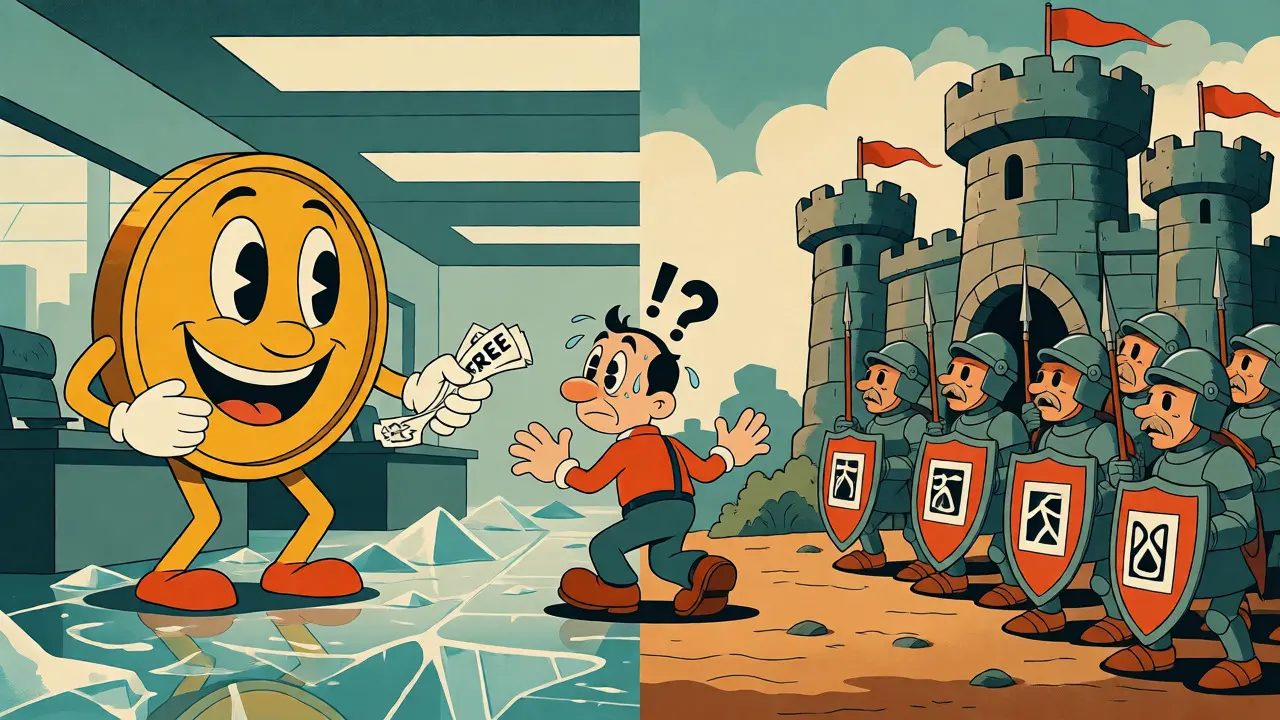
You see the headline: Pearl v1.5 is a cryptocurrency exchange platform founded in 2023 that offers zero-fee trading for both makers and takers. It sounds too good to be true, doesn't it? In a market where Binance or Coinbase might charge you 0.1% to 0.4% per trade, saving every cent feels like smart money management. But before you connect your wallet and start swapping Bitcoin, you need to look past the fee schedule. The real question isn't whether Pearl v1.5 saves you money on trades; it's whether the platform is safe enough to hold your capital in the first place.
This review breaks down what we know about Pearl v1.5 as of late October 2026. We're looking at its operational metrics, regulatory status, and how it stacks up against industry giants. If you are considering this platform, understanding the gap between "free" and "secure" is critical.
The Allure of Zero-Fee Trading
Let's address the main selling point immediately. Pearl v1.5 operates with a fee structure set at 0.00% for both maker and taker orders, distinguishing it from competitors who typically charge between 0.25% and 0.40%. For high-frequency traders or those moving large volumes, this difference compounds quickly. If you trade $10,000 worth of Ethereum ten times a month, a standard 0.2% fee costs you $200. With Pearl, that cost is theoretically zero.
However, free often comes with hidden costs. In the crypto world, liquidity is the currency that matters most. If an exchange has low volume, you might get zero fees but suffer from high slippage-the difference between the expected price of a trade and the price at which the trade is actually executed. On thin order books, buying $1,000 of a mid-cap altcoin could move the market price against you by 1% or more, effectively negating any fee savings. Pearl v1.5's current user base suggests its liquidity pools are shallow compared to established players.
Regulatory Red Flags and Safety Concerns
Here is the part that should make you pause. As of our latest analysis, Pearl v1.5 does not appear to be regulated by any major government financial authority. Compare this to Kraken, which holds licenses in multiple jurisdictions and implements top-tier security measures including cold storage and two-factor authentication, or Coinbase, a publicly traded company subject to rigorous US securities oversight.
Why does regulation matter if you trust the tech? Because regulation forces transparency. It requires exchanges to prove they hold user funds in reserve (Proof of Reserves), maintain anti-money laundering (AML) protocols, and have insurance or compensation schemes if things go wrong. Without a regulator watching, you are relying entirely on the integrity of a private company that has very little public track record. If Pearl v1.5 faces a solvency crisis, there is no FDIC equivalent or regulatory body stepping in to help you recover your assets.

Traffic and User Adoption Metrics
Data tells a stark story about Pearl v1.5's market presence. The platform generates only about 60 organic monthly visits. To put that in perspective, Binance serves hundreds of millions of users globally and dominates global daily trading volume. Even smaller, niche exchanges usually attract thousands of visitors monthly. Ranking 509th out of 612 in its category for organic traffic indicates extremely poor market penetration.
User engagement metrics raise further questions. The average visit duration is reported as nearly zero, and the bounce rate sits at 36%. This suggests that when people do land on the site, they either leave immediately because the interface is confusing, or they don't find the features they expect. A healthy exchange thrives on community interaction-users asking questions on Reddit, sharing strategies on Twitter, and leaving reviews on Trustpilot. Pearl v1.5 lacks this social proof. There is virtually no chatter in major cryptocurrency communities about this platform, which means you won't find many peer reviews to validate your experience.
Feature Comparison: Pearl vs. The Industry Leaders
To understand where Pearl v1.5 fits, let's compare it directly with established alternatives. While Pearl wins on fees, it loses significantly on depth, security, and usability.
| Feature | Pearl v1.5 | Kraken | Coinbase | Uphold |
|---|---|---|---|---|
| Maker/Taker Fees | 0.00% | ~0.16% - 0.26% | ~0.60% (varies) | 0.2% - 2.95% |
| Regulatory Status | Unregulated | Licensed in multiple jurisdictions | Publicly Traded / Regulated | Regulated in key markets |
| Cryptocurrencies Supported | Limited (Data unclear) | 450+ | 200+ | Thousands of pairs |
| Advanced Tools | Basic | Margin, Futures, OTC | Staking, Learning Rewards | Staking, Multi-asset |
| Monthly Traffic Est. | ~60 | Millions | Millions | Hundreds of thousands |
The table highlights a clear trade-off. You save money on fees with Pearl, but you sacrifice access to deep liquidity, advanced trading instruments like margin or futures, and the peace of mind that comes with regulatory compliance. Kraken, for instance, offers up to 5X leverage and supports over 450 cryptocurrencies. Pearl’s feature set appears basic, likely focused solely on spot trading without complex derivatives.
Who Should Actually Use Pearl v1.5?
Given these factors, Pearl v1.5 isn't for everyone. In fact, for most retail investors, it might be better to avoid it entirely. However, specific scenarios might justify its use:
- The Micro-Trader Testing Waters: If you are trading tiny amounts (e.g., under $50) and want to experiment with a new platform without risking significant capital, the zero-fee model removes the barrier of entry costs eating into small profits.
- The Privacy Advocate: Some users prefer unregulated platforms for perceived anonymity, though this often comes with higher risks during withdrawals or KYC checks later on.
- The Fee-Sensitive Arbitrageur: If you are doing quick arbitrage between Pearl and another exchange where the spread covers any potential slippage, the zero fees can boost margins. But beware: low liquidity makes this strategy difficult to execute reliably.
Conversely, if you are holding long-term investments, trading large volumes, or require customer support, stick with regulated exchanges. The risk of losing access to your funds due to technical issues or lack of oversight outweighs the savings on trading fees for most people.
The Verdict: Proceed with Extreme Caution
Pearl v1.5 presents a classic case of "too cheap to ignore, too risky to trust." Its zero-fee structure is attractive on paper, but the lack of regulatory oversight, minimal user base, and absence of expert reviews create a precarious foundation. In the volatile world of crypto, security and liquidity are paramount. An exchange with 60 monthly visitors cannot guarantee the same level of service, uptime, or fund protection as one with millions of users.
If you decide to try Pearl v1.5, treat it as a speculative venture. Deposit only what you can afford to lose, keep your holdings minimal, and withdraw profits frequently. Do not store your life savings on an unregulated platform with such low visibility. Until Pearl gains significant traction, regulatory clarity, and community validation, it remains a niche tool rather than a primary exchange for serious crypto investors.
Is Pearl v1.5 a scam?
There is no direct evidence labeling Pearl v1.5 as a scam, but it carries high risk due to being unregulated and having very low traffic. Lack of regulation means no legal recourse if funds are mishandled, so caution is advised.
Does Pearl v1.5 really have zero fees?
Yes, the advertised maker and taker fees are 0.00%. However, users should monitor for hidden costs like withdrawal fees or wide bid-ask spreads caused by low liquidity.
Is Pearl v1.5 regulated?
As of October 2026, Pearl v1.5 does not appear to hold licenses from major financial regulators like the SEC, FCA, or ASIC, unlike competitors such as Coinbase or Kraken.
How many cryptocurrencies does Pearl v1.5 support?
Specific data is limited, but the platform generally supports fewer assets than major exchanges like Kraken (450+) or Coinbase (200+). Check their live listing for the most current count.
Can I trust Pearl v1.5 with large amounts of money?
Generally, no. Due to its small user base (approx. 60 monthly visits) and lack of regulatory backing, it is safer to use for small experimental trades rather than storing significant capital.