The Future of NFT Data Storage: Beyond Simple JPEGs
Apr, 8 2026
The Core Problem: On-Chain vs. Off-Chain
To understand where we're going, we have to look at why things are broken. Blockchains are great for security, but they are terrible for storing large files. Trying to put a high-resolution 4K video directly onto a blockchain would cost a fortune in gas fees and slow the entire network to a crawl. This is why the ERC-721 is the foundational smart contract standard for non-fungible tokens on Ethereum usually just stores a 'tokenURI'-essentially a digital pointer-that tells your browser where the actual image or video is hosted.
If that pointer leads to a private server (centralized storage) and the company goes bust, your NFT becomes a dead link. That's not true ownership; it's just a digital receipt for a missing item. To fix this, the industry is pivoting toward decentralized storage, where data is spread across a global network of nodes, making it nearly impossible to delete or censor.
The Big Three of Decentralized Storage
Not all decentralized storage is the same. Depending on whether you're building a game or a digital museum, you'll choose different tech. Currently, three heavy hitters dominate the space:
| Technology | Primary Goal | Best For | Persistence |
|---|---|---|---|
| IPFS | Content Addressing | General Media/Art | Depends on 'Pinning' |
| Arweave | Permanence | Archives/Records | Permanent (One-time fee) |
| Filecoin | Marketplace Storage | Enterprise Data | Contract-based |
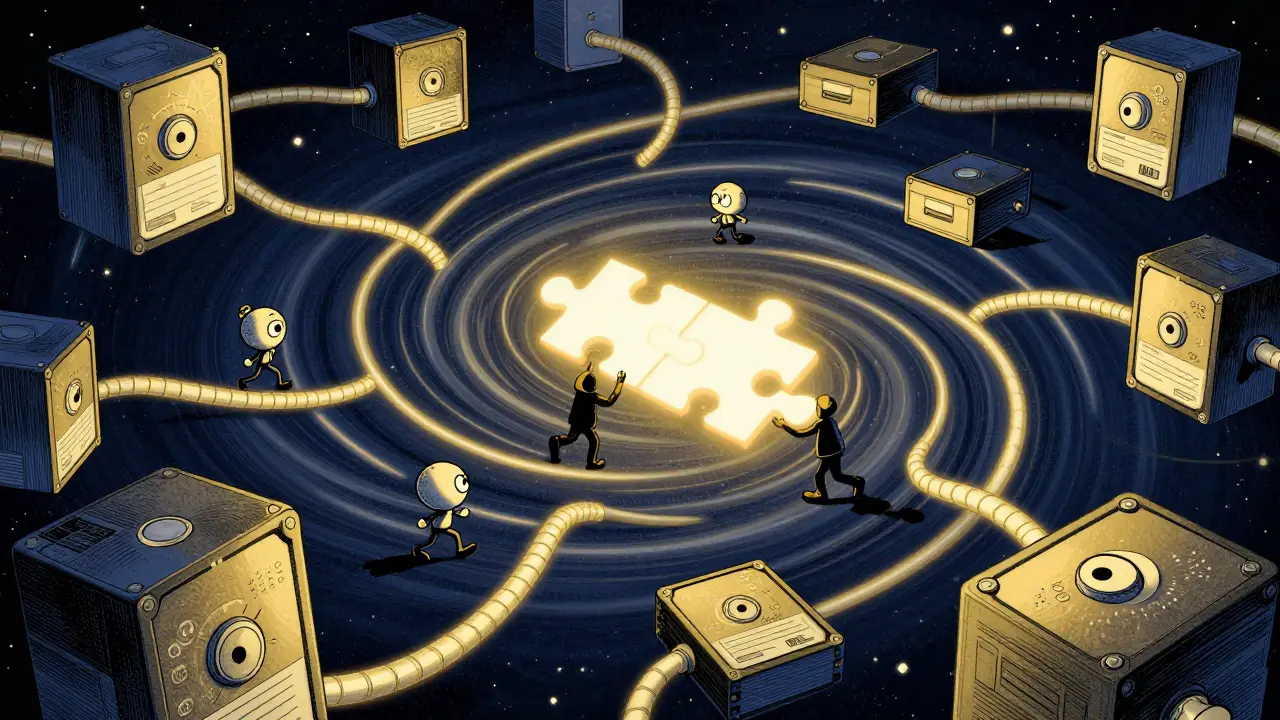
IPFS (InterPlanetary File System) uses a peer-to-peer method. Instead of asking 'where' a file is (URL), it asks 'what' the file is (Hash). If multiple people host the same file, it stays alive. Arweave takes a different approach by creating a 'permaweb,' charging a one-time fee to ensure data lasts for hundreds of years. Then there's Filecoin, which essentially turns spare hard drive space into a rentable commodity for businesses.
The Rise of Intelligent NFTs (iNFTs)
The most exciting shift is the arrival of NFT data storage that can actually change. For years, NFTs were static-once the art was minted, it stayed that way. But we're entering the era of 'programmable digital life.'
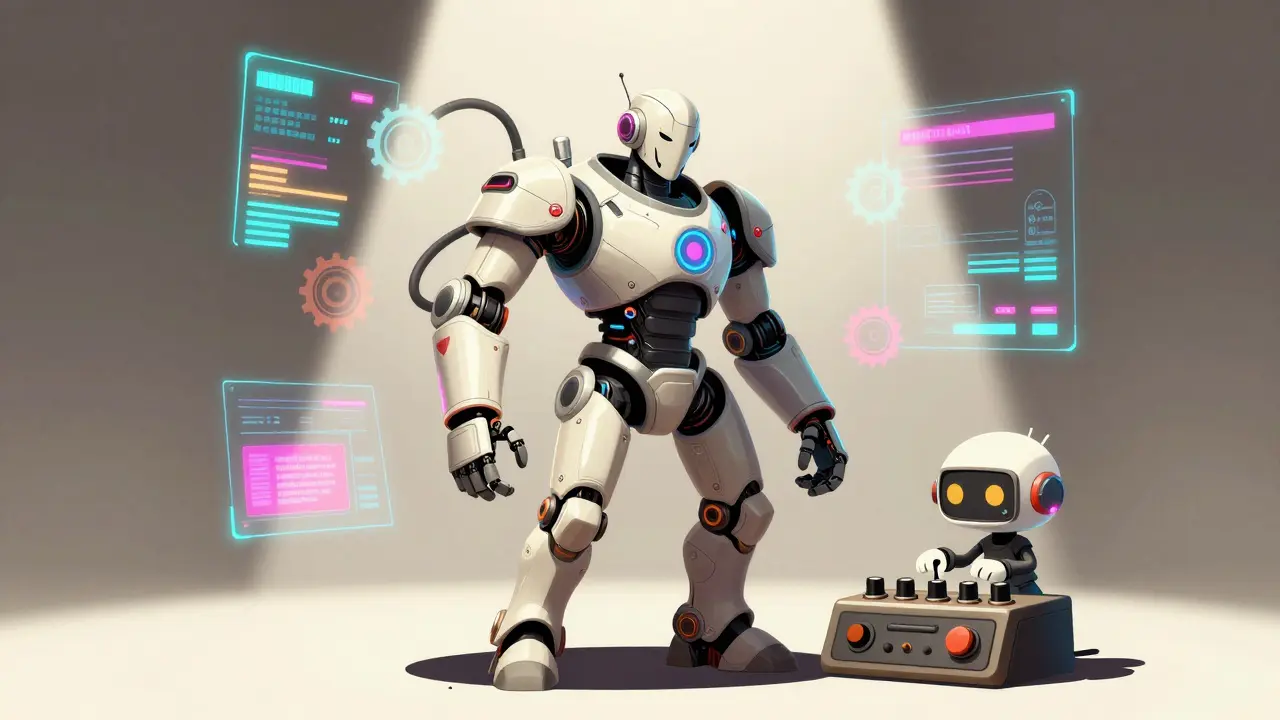
Enter the ERC-7857 is a new standard for intelligent NFTs (iNFTs) that allows AI agents to be securely transferred and managed . Launched by 0G Labs in early 2025, this changes the game. An iNFT isn't just a picture; it's a container for an AI model. Imagine a gaming character that learns your playstyle, remembers your conversations, and evolves its personality over time. You can't store a living, breathing AI in a static JPEG.
These iNFTs require 'mutable' storage. This means the metadata needs to be updated frequently without breaking the blockchain's proof of authenticity. This is where high-performance decentralized layers come in, allowing AI agents to process data in real-time and update their state on-chain while keeping the bulk of their 'memory' in secure, off-chain vaults.
Gaming: The Ultimate Stress Test
Gaming is where these storage theories meet reality. The NFT gaming market is projected to hit nearly $943 billion by 2029. Think about a massive open-world game where every sword, plot of land, and piece of armor is an NFT. If every single item requires a blockchain call for every single movement, the game would be unplayable.
The solution is a hybrid architecture. The 'ownership' remains on the blockchain, but the 'state' (how much durability the sword has, what enchantments are active) lives in a high-speed storage layer. The goal here is interoperability. About 70% of gamers want their assets to work across different games. This means storage standards must be universal. If you earn a legendary cape in Game A, the data storage for that cape must be readable by Game B's engine.

Privacy and the AI Collision
As NFTs move into enterprise use-like digital IDs, medical records, or luxury certificates-privacy becomes the top priority. Putting sensitive data on a public ledger is a nightmare for GDPR compliance. The future of storage is 'Zero-Knowledge' integration.
By storing sensitive data off-chain in encrypted vaults and only putting a cryptographic hash (a digital fingerprint) on the blockchain, users can prove they own a document without actually revealing the contents of that document to the world. When combined with AI, this allows for personalized experiences. An AI-curated collection can analyze your preferences and suggest new assets without the AI ever actually 'seeing' your private identity data.
What Happens Next?
By 2026, the line between an AI and an NFT will almost entirely disappear. We are moving toward a world of 'living assets.' Your digital avatar won't just be a costume; it will be a personalized brand agent that grows in value as it gains experience and data.
For the average collector, this means the 'where is it stored?' question finally gets answered. The shift from speculative bubbles to utility-driven adoption means the 'junk' projects are fading, and the ones that survive will be those using enterprise-grade, permanent storage. If a project can't explain its storage strategy, it's probably not an investment; it's a gamble on a dead link.
What happens if the website hosting my NFT disappears?
If your NFT uses centralized storage (a standard URL), the image will disappear. However, if it uses IPFS or Arweave, the data is distributed across many computers, meaning as long as one person 'pins' the data or the Arweave fee was paid, the asset remains accessible regardless of the original website's status.
Can AI NFTs actually change their appearance?
Yes. Through standards like ERC-7857 and dynamic metadata, iNFTs can link to AI models that update the asset's visual properties or behaviors based on real-world data, user interaction, or internal AI logic, creating a 'living' digital asset.
Is storing data on the blockchain always a bad idea?
Not necessarily, but it is incredibly expensive. 'On-chain' storage is perfect for small amounts of critical data (like a few pixels or a text string) because it is the most secure. For anything larger, like an image or a 3D model, off-chain decentralized storage is the only practical choice.
What is the difference between IPFS and Arweave?
IPFS is more like a decentralized version of the web where files stay as long as someone wants to host them (pinning). Arweave is designed for permanence, where you pay a one-time endowment to ensure the data is stored forever on a blockchain-like ledger.
How does gaming affect NFT storage?
Gaming requires massive amounts of data and real-time updates. This drives the need for 'hybrid' storage where ownership is on-chain but game state is stored in high-speed, decentralized layers to avoid lag and high transaction costs.