Which Countries Prosecute Crypto Users Most? Global Enforcement Breakdown
Dec, 21 2025
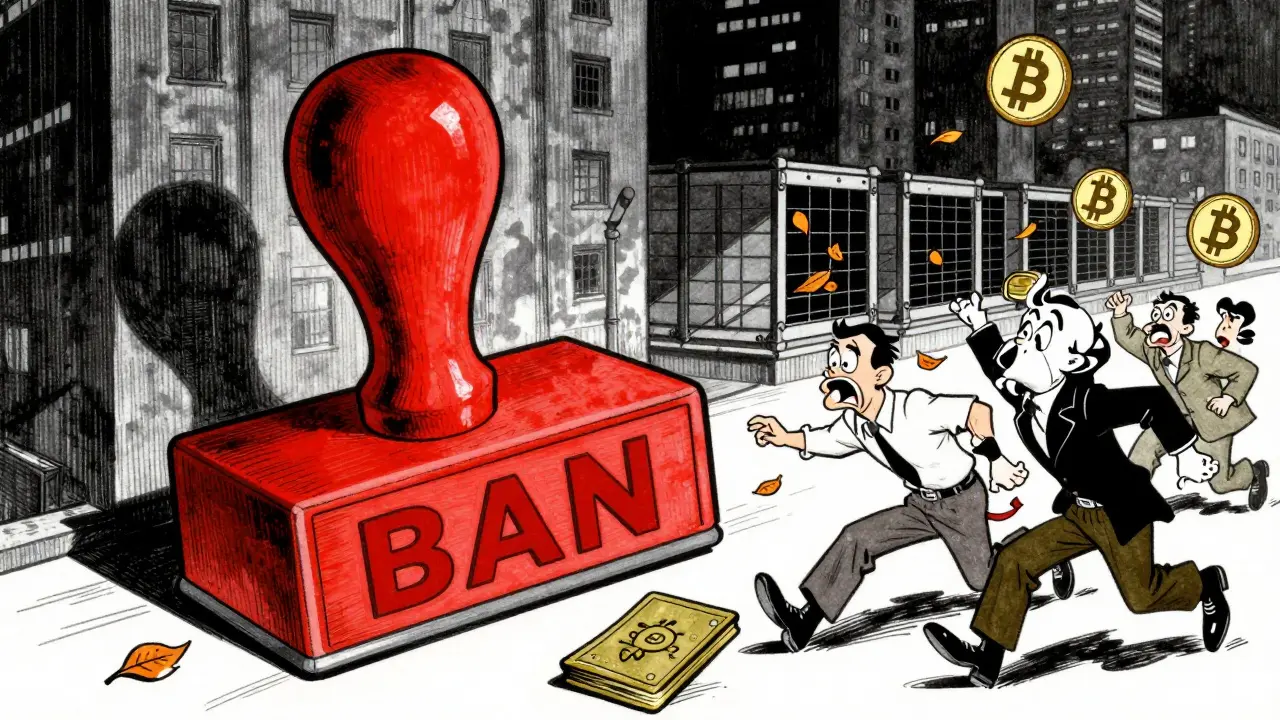
If you hold Bitcoin, Ethereum, or any other cryptocurrency, your risk of being prosecuted isn't the same everywhere. In some countries, simply owning crypto could land you in jail. In others, it’s as legal as owning stocks. The difference isn’t about technology-it’s about government policy, and it’s changing fast.
China: The Harsh Reality of a Complete Ban
China doesn’t just discourage crypto-it erases it. Since 2017, the government has banned all crypto exchanges, ICOs, and mining operations. By 2021, even peer-to-peer trading was targeted. Authorities don’t just shut down platforms; they track down individuals. Mining rigs are seized. Wallets are frozen. People have been fined, jailed, or forced to sign confessions just for running a home mining setup or trading on decentralized platforms. The crackdown isn’t random. It’s systematic. Chinese regulators use surveillance tools to trace crypto flows through blockchain analysis. They partner with domestic banks to flag suspicious transfers. In 2023, over 1,200 individuals were prosecuted under charges of illegal business operations or financial fraud tied to crypto. China doesn’t need new laws-it uses existing financial crime statutes to punish crypto activity. For users, the message is clear: no crypto, no exceptions.Algeria and Bolivia: Total Prohibition, Zero Tolerance
Outside Asia, two countries stand out for their zero-tolerance approach: Algeria and Bolivia. Both have outright bans on owning, trading, or even holding cryptocurrency. Algeria’s 2018 decree labeled crypto as “illegal and forbidden,” with violations punishable by fines and imprisonment. Authorities have raided homes and businesses suspected of crypto activity, seizing devices and freezing bank accounts. Bolivia’s Central Bank declared cryptocurrencies “not legal tender” in 2014 and later expanded the ban to include all transactions. In 2023, a Bolivian man was sentenced to 18 months in prison for using Bitcoin to pay for imported goods. His case was rare but symbolic-proof that even small-scale use carries real legal consequences. Unlike China, these countries lack the tech infrastructure to track blockchain transactions at scale. But they don’t need to. Their laws are broad enough to criminalize any crypto interaction, and enforcement is unpredictable but severe.Bangladesh: Criminalizing Transactions, Not Ownership
Bangladesh doesn’t ban holding crypto-it bans using it. The country’s Anti-Money Laundering Act treats any crypto transaction as a potential crime. In 2024, the central bank issued a circular warning that anyone involved in crypto trading could face up to 10 years in prison. Banks are required to report any customer activity linked to crypto wallets. Several cases have gone to court, with defendants charged under terrorism financing laws because crypto was used to send money abroad. The enforcement is uneven. Most prosecutions target those moving large sums or working with offshore exchanges. But even small transfers-like paying a freelancer in Bitcoin-can trigger an investigation. The lack of clear guidelines means users live under constant uncertainty. One wrong transaction, one flagged wallet, and you could be facing criminal charges.India: Taxation as Enforcement
India doesn’t jail crypto users. Instead, it taxes them into submission. Since 2022, all crypto gains are taxed at a flat 30%, with no deductions allowed. Every single transaction-buying, selling, swapping-is subject to a 1% tax deducted at source (TDS). That means if you buy $1,000 worth of Ethereum, $10 is automatically withheld by the exchange and sent to the government. The goal isn’t to stop crypto-it’s to control it. The government tracks every exchange transaction through mandatory reporting. If you don’t report your gains, you face penalties up to 200% of the tax owed. In 2024, over 1.2 million Indian taxpayers were flagged for unreported crypto income. While no one has been jailed for owning crypto, the tax system acts as a silent enforcer. Many users have simply stopped trading. Others hide their activity, increasing their legal risk.
United States: Targeting Criminals, Not Casual Users
The U.S. prosecutes crypto users-but only if they’re involved in serious crime. In September 2024, the Treasury Department sanctioned Cryptex, a Russia-linked exchange that processed over $5.8 billion in illicit funds. Its operator, Sergey Sergeevich Ivanov, is now on the FBI’s most wanted list with a $10 million reward for his capture. The U.S. didn’t go after random traders. It went after the infrastructure enabling ransomware, darknet markets, and fraud. Regular users face almost no risk. There’s no ban. No mandatory reporting for small holdings. The IRS wants you to report gains, but it doesn’t arrest you for forgetting. The Trump administration’s 2025 crypto-friendly policies further reduced regulatory pressure. Enforcement is focused on money laundering, fraud, and sanctions evasion. If you’re not laundering drug money or funding terrorists, you’re not a target.Europe: Regulation Over Prosecution
Europe is building walls, not prisons. The new Anti-Money Laundering Authority (AMLA), launched in July 2025, is now the central watchdog for all crypto activity in the EU. It doesn’t arrest users-it fines exchanges. AMLA requires every exchange to know who their customers are, track every transaction, and report anything suspicious. If an exchange fails, it loses its license. In 2024, Dutch authorities seized €7 million in crypto tied to a cybercrime payment processor called UAPS. That money was recovered and returned to victims. The operation didn’t target users-it targeted the middlemen. The EU’s AMLD5 rules mean you can’t buy crypto anonymously anymore. But you won’t be jailed for owning it. The system is designed to make crime harder, not to punish ordinary people.Singapore and South Korea: Compliance as the Norm
Singapore and South Korea take a business-first approach. Singapore’s Monetary Authority (MAS) requires stablecoin issuers to hold 100% reserves in regulated banks. Exchanges must be licensed, audited, and monitored. No one is jailed for trading. But if you run an unlicensed platform, you go to prison. South Korea’s 2024 Virtual Asset User Protection Act forced exchanges to segregate client funds, carry insurance, and report suspicious activity. If an exchange gets hacked, users get compensated. The government isn’t chasing traders-it’s forcing platforms to protect them. Prosecution is rare and reserved for fraudsters, not investors.
Portugal: The Crypto Safe Haven
In 2025, Portugal remains one of the few places where crypto users face almost no legal risk. There’s no capital gains tax on crypto profits. No reporting requirements. No restrictions on trading or holding. The government doesn’t encourage crypto-it just ignores it. As long as you’re not laundering money or running an unlicensed exchange, you’re free to trade, hold, or mine without fear. It’s not perfect. Some banks still refuse to serve crypto users. But the state doesn’t interfere. That makes Portugal a rare haven for individuals who want to use crypto without paperwork, penalties, or paranoia.What This Means for You
If you’re a casual crypto user, your biggest risk isn’t hacking or volatility-it’s location. If you live in China, Algeria, Bolivia, or Bangladesh, you’re playing with fire. Even small transactions could trigger legal action. In India, the tax system is your enemy. In the U.S., Europe, Singapore, and Portugal, you’re mostly safe-as long as you’re not breaking laws. The trend is clear: authoritarian states ban and prosecute. Democratic states regulate and monitor. The future belongs to countries that build clear rules-not fear-based crackdowns. If you’re considering moving, investing, or just holding crypto long-term, where you live matters more than which coin you own.What’s Next?
More countries will follow India’s path-using taxes as a control tool. Others, like Brazil and Ecuador, are testing state-backed digital currencies to replace private crypto. But the core truth won’t change: if your government sees crypto as a threat to control, you’re at risk. If it sees it as a tool, you’re free. Know your country’s rules. Don’t assume crypto is legal just because you can buy it. Check official government statements. Talk to local lawyers. Your freedom to hold crypto isn’t guaranteed-it’s granted by law, and laws change.Can you go to jail for owning Bitcoin?
Yes, in countries with outright bans like China, Algeria, Bolivia, and Bangladesh, owning or trading Bitcoin can lead to criminal charges and jail time. In most other countries, ownership is legal-but you may still face taxes or reporting requirements.
Is crypto legal in the United States?
Yes, owning and trading crypto is legal in the U.S. The government doesn’t prosecute individual users unless they’re involved in money laundering, fraud, or sanctions violations. The IRS requires you to report gains, but jail time is extremely rare for ordinary investors.
Why does India tax crypto so heavily?
India uses a 30% tax and 1% TDS on every transaction to discourage speculative trading and bring crypto activity into the formal economy. The goal isn’t to ban crypto-it’s to track it, control it, and collect revenue. It’s enforcement through taxation, not criminalization.
Which country is safest for crypto users?
Portugal is currently the safest for individual users-no capital gains tax, no reporting requirements, and no criminal penalties. Singapore and South Korea are also safe if you use licensed exchanges. The U.S. and EU are safe too, as long as you’re not breaking laws.
Do crypto exchanges report to the government?
In most developed countries, yes. In the EU, Singapore, South Korea, and the U.S., licensed exchanges must collect KYC data and report suspicious activity. In China and India, exchanges are forced to block transactions or shut down. In unregulated jurisdictions, reporting is rare or nonexistent.