Almeedex Crypto Exchange Review: Is It Legit or a Red Flag?

Oct, 23 2026
You’re scrolling through your social feed, and an ad pops up for Almeedex. It promises low fees, high yields, and a sleek interface. You click the link, create an account, and maybe even deposit some money. But then you pause. Have you heard of this place? Do your friends use it? Does it show up on the major data trackers?
Here is the hard truth about Almeedex right now: it’s a ghost. As of late 2026, if you search for Almeedex on the major cryptocurrency aggregators like CoinMarketCap or CoinGecko, you won’t find it. There are no verified regulatory filings in the US SEC database, no active presence in the UK’s FCA register, and barely a whisper on Reddit’s massive r/CryptoCurrency community. This isn’t just "new"; this is a significant red flag that demands serious caution before you send a single cent.
| Verification Criteria | Almeedex Status (Oct 2026) | Binance / Coinbase Standard |
|---|---|---|
| CoinMarketCap Listing | Not Listed | Listed with volume data |
| Regulatory License | Unknown/None Found | FCA, MAS, or SEC registered |
| User Reviews (Trustpilot) | Minimal/Non-existent | Thousands of verified reviews |
| Social Media Presence | Limited/Organic Growth Unclear | Verified accounts, millions of followers |
| Trading Volume Data | Opaque | Publicly auditable on-chain/off-chain |
The Problem with Invisible Exchanges
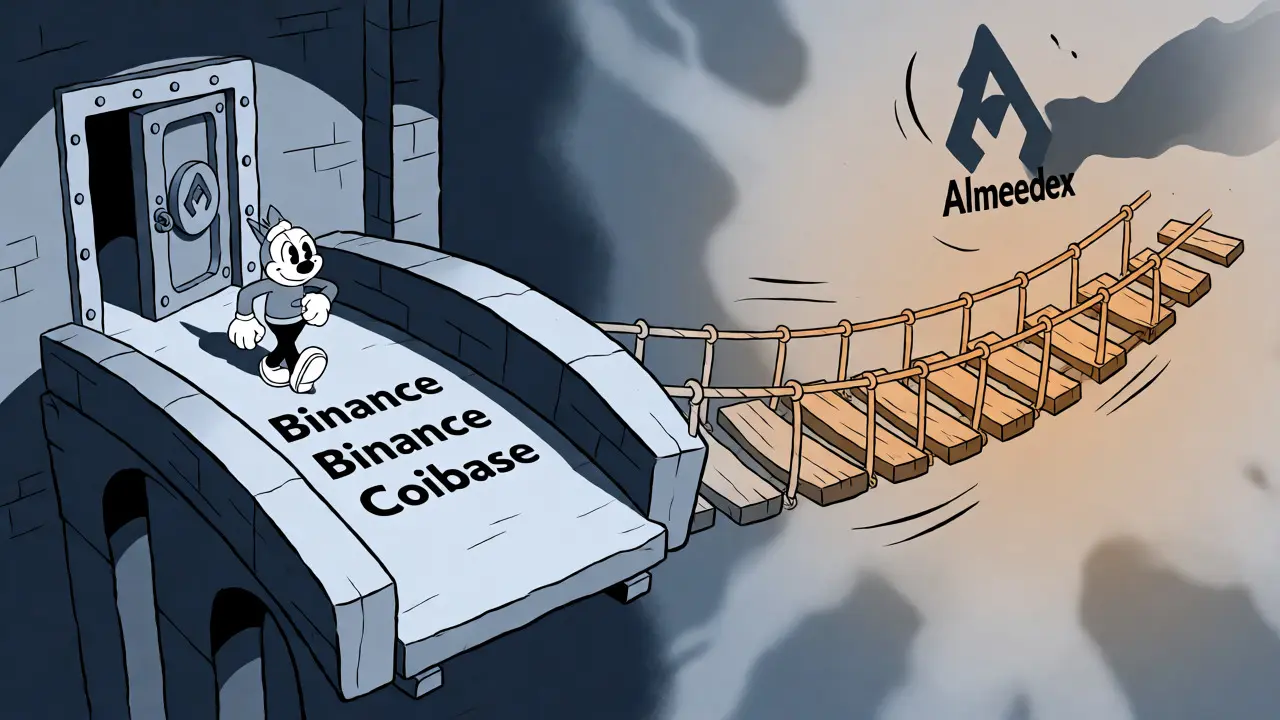
In the crypto world, visibility equals trust. When you look at platforms like Binance, which handles billions in daily volume, or Coinbase, which is publicly traded on NASDAQ, you can see exactly what they do. They publish proof-of-reserves. They undergo audits. They have customer support lines that actually answer.
Almeedex lacks this transparency. Why does this matter? Because without public trading volume data, you don’t know if anyone else is actually trading there. A common tactic for questionable exchanges is to show inflated volume numbers on their own website while having zero activity on external trackers. If you try to sell your Bitcoin on Almeedex, who is buying it? If the market depth is thin, you might face massive slippage-meaning you sell your asset for much less than the current market price because there aren’t enough buyers.
Furthermore, the absence from CoinGecko is telling. CoinGecko tracks over 700 exchanges globally. To be excluded usually means one of two things: either the exchange is too new to have been indexed yet (which happens, but rarely stays hidden for long), or it fails basic liquidity and legitimacy checks required for inclusion. Given that we are in October 2026, a platform launching today should have some initial chatter in niche Telegram groups or Discord servers by now. The silence suggests Almeedex might not have a genuine user base.
Red Flags to Watch For
If you are currently using Almeedex or considering it, look out for these specific behaviors. Scam exchanges often share a playbook.
- Unrealistic Promises: Does Almeedex offer guaranteed returns or interest rates significantly higher than industry standards (e.g., 15-20% APY on stablecoins)? High yield without clear risk disclosure is a classic Ponzi signal.
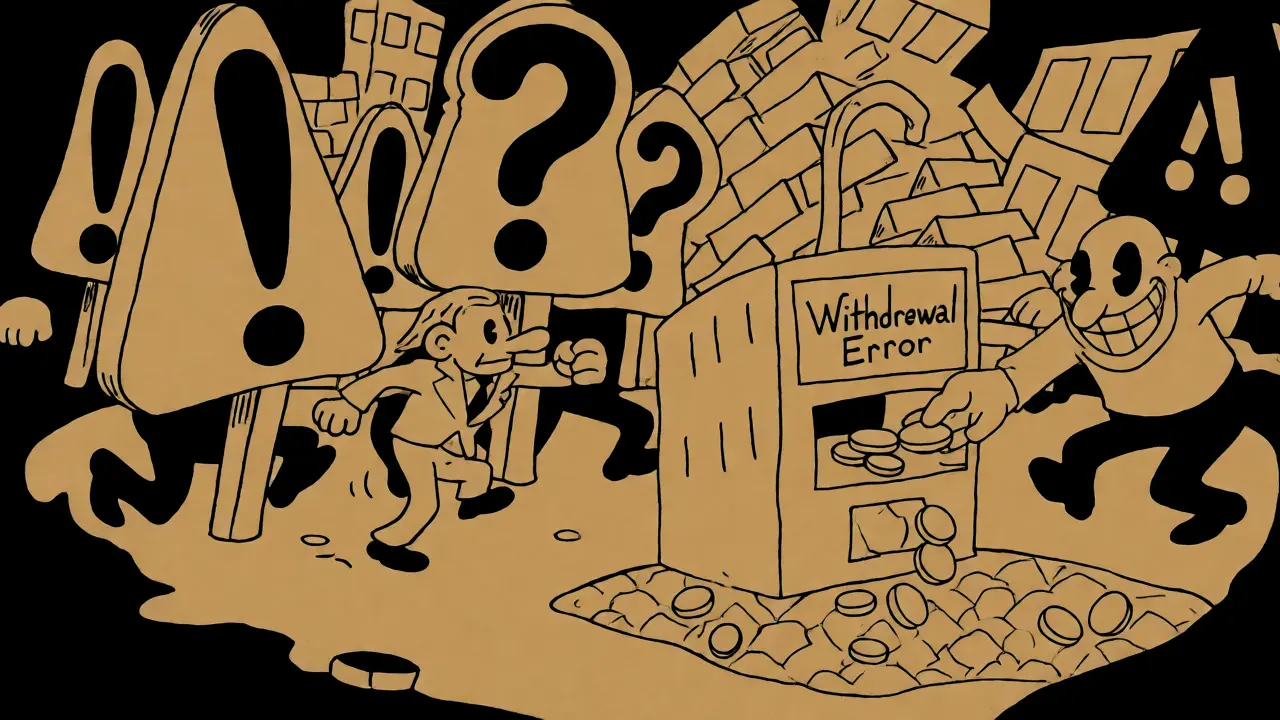
- Withdrawal Issues: The biggest complaint against unverified exchanges is that deposits work instantly, but withdrawals trigger endless "verification errors," "maintenance windows," or require you to pay a "tax" upfront to release funds.
- Aggressive Referral Schemes: If your friend pushes Almeedex hard because they get a percentage of your trades, check if the platform pays out those commissions. Often, the only people making money are the referrers, while the underlying asset value stagnates.
- Lack of KYC Transparency: While some users hate Know Your Customer (KYC) checks, legitimate regulated exchanges must perform them to comply with Anti-Money Laundering (AML) laws. If Almeedex lets you trade thousands of dollars with zero ID verification, ask yourself: where is the regulatory oversight?
How to Verify an Exchange Before Depositing
Don’t rely on the exchange’s own website design. Professional-looking websites cost $500 to build. Here is how you actually vet a platform like Almeedex.
- Check the Domain Age: Use a WHOIS lookup tool. If Almeedex’s domain was registered only three months ago, but they claim to be a "leading global exchange," that’s a lie. Established players have domains dating back years.
- Search Regulatory Databases: Go to the official government financial regulator site in your country (e.g., ASIC in Australia, FCA in the UK, SEC in the US). Search for "Almeedex." If it’s not there, you have no legal protection if the company disappears.
- Analyze Social Sentiment: Search Twitter/X and Reddit specifically for "Almeedex withdrawal problem" or "Almeedex scam." Ignore generic promotional posts. Look for real users complaining about stuck funds.
- Test with Small Amounts: If you absolutely must try it, deposit a tiny amount (like $50). Try to withdraw it immediately. If the withdrawal takes more than 24 hours or requires contacting support multiple times, pull your money out.
Why Established Alternatives Are Safer
Let’s compare Almeedex to a known entity like Kraken. Kraken has operated since 2011. They survived the Mt. Gox collapse, multiple bear markets, and regulatory shifts. Their security track record includes cold storage for 95% of assets and regular third-party audits.
When you use a proven exchange, you benefit from network effects. More users mean better liquidity, tighter spreads, and more robust customer support teams. With an obscure platform like Almeedex, you are essentially beta-testing a financial product with your life savings. If their server goes down during a market crash, do they have the infrastructure to handle the load? Or will you be locked out while prices drop 20%?
Consider the opportunity cost. The time spent worrying about whether Almeedex will let you withdraw your funds could be spent learning actual trading strategies on a reliable platform. Peace of mind has value. In crypto, losing access to your keys or your funds is a permanent loss. Don’t gamble with unknown entities when reputable options exist.
What to Do If You Already Have Funds on Almeedex
If you’ve already deposited money, don’t panic, but act quickly. First, attempt a small withdrawal to test the waters. If it works, great. But consider moving the rest of your capital to a self-custody wallet like MetaMask or a hardware wallet like Ledger. Remember the golden rule: "Not your keys, not your coins."
If the withdrawal fails, document everything. Take screenshots of your balance, the transaction history, and any support chat logs. Contact your bank or credit card provider to see if a chargeback is possible for recent deposits. However, note that crypto transfers are often irreversible, so prevention is far better than cure.
Finally, keep an eye on news outlets like CoinDesk or Cointelegraph. If Almeedex is a legitimate emerging player, they will eventually appear in these reports. If they remain invisible while others grow, assume the worst-case scenario: it’s a vanity project or a scam waiting to exit.
Is Almeedex a scam?
It is difficult to definitively label Almeedex as a scam without concrete evidence of fraud, but it exhibits many characteristics of a high-risk or potentially fraudulent platform. Its absence from major tracking sites like CoinMarketCap and lack of verifiable regulatory licenses are significant warning signs. Until it proves its legitimacy through transparent operations and user reviews, treat it with extreme caution.
Why isn't Almeedex on CoinMarketCap?
CoinMarketCap lists exchanges based on criteria including trading volume, liquidity, and reliability. Almeedex's absence likely indicates that it does not meet the minimum threshold for reported trading volume, has insufficient liquidity, or has failed to submit the necessary API data for verification. It may also suggest the exchange is too new or has not yet established a credible market presence.
Can I trust Almeedex with my money?
For most investors, especially beginners, trusting an unverified exchange with significant capital is risky. Without regulatory oversight or insurance policies like SIPC (for US stocks) or equivalent crypto protections, you bear 100% of the risk. If the exchange suffers a hack or an exit scam, you may lose all your funds with little recourse.
What are good alternatives to Almeedex?
Look for exchanges with proven track records such as Binance, Coinbase, Kraken, KuCoin, or Bybit. These platforms are widely tracked, have substantial daily trading volumes, maintain active communities, and generally adhere to stricter compliance standards depending on your jurisdiction.
How do I verify if a crypto exchange is legit?
Verify an exchange by checking its registration with local financial regulators, confirming its listing on trusted data aggregators like CoinGecko, reviewing independent user feedback on Trustpilot or Reddit, and ensuring it offers standard security features like Two-Factor Authentication (2FA) and cold storage options.