Best Depth Crypto Exchange in 2026: Fees, Security, and Trading Experience Compared
Jan, 13 2026
When you’re trading crypto, the difference between a good exchange and a great one isn’t just about which coins are listed. It’s about how fast your order fills, how much you pay in fees, and whether your money stays safe when the market crashes. In 2026, the crypto exchange landscape has changed dramatically. What worked in 2022 won’t cut it today. If you’re looking for a depth crypto exchange-one that handles large trades without slippage, offers real-time data, and doesn’t vanish when volatility hits-you need more than a flashy app. You need substance.
What Depth Really Means in a Crypto Exchange
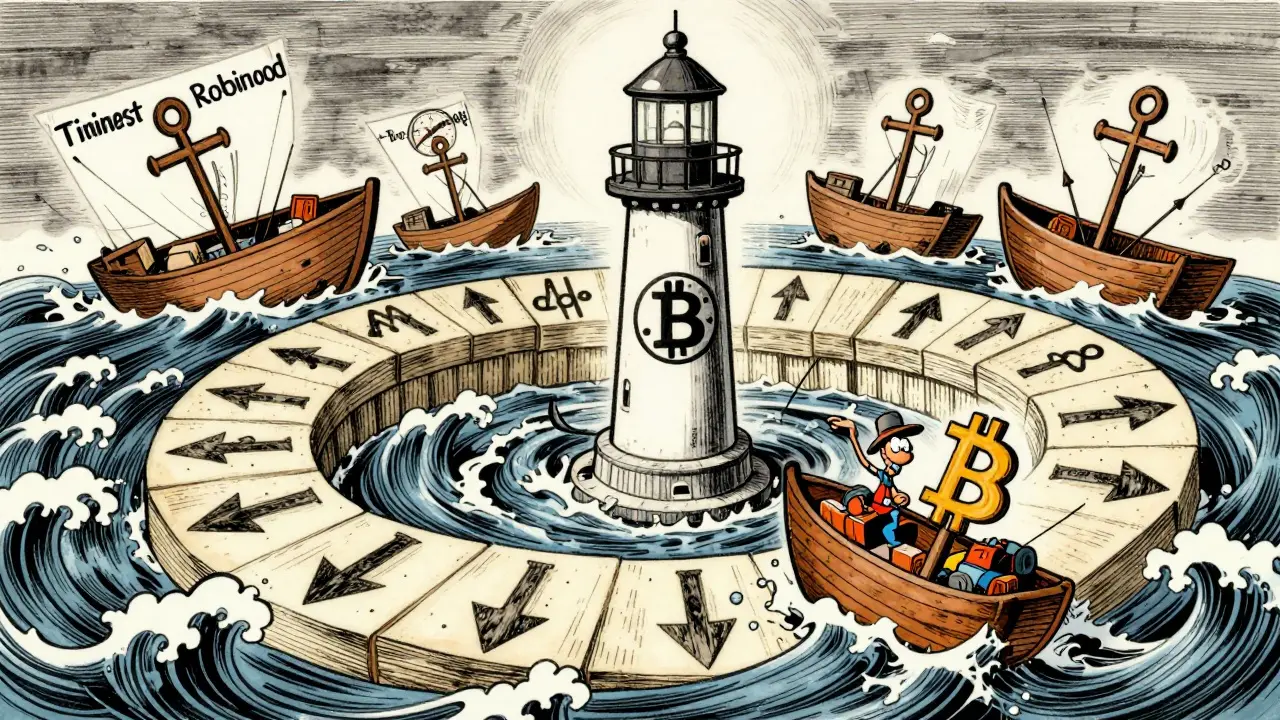
Depth isn’t just a buzzword. It’s the total volume of buy and sell orders stacked at different price levels across the order book. High depth means you can trade $100,000 in Bitcoin without moving the price. Low depth? You buy $5,000 and the price jumps 3%. That’s slippage-and it eats into your profits.
Exchanges with real depth have thousands of active orders on both sides of the book. Kraken leads here. As of November 2025, Kraken’s order book for BTC/USD had over 12,000 active buy orders and 9,800 sell orders at varying price points. Coinbase? Around 4,200 buys and 3,900 sells. That’s not even close. If you’re trading more than $10,000 at a time, depth matters more than anything else.
Who Has the Lowest Fees-and Why It Matters
Fees can kill your returns faster than bad timing. Most exchanges advertise low fees, but they hide the real cost in maker-taker spreads, withdrawal charges, and hidden slippage.
Kraken’s fee structure is the most transparent. For users trading over 50 BTC equivalent per month, maker fees drop to 0.00%. Even for casual traders, maker fees start at 0.16%. Taker fees are 0.26%. Compare that to Coinbase, where the base maker fee is 0.40% and taker fees are 0.60%. That’s nearly 2.5x more for the same trade.
And don’t forget withdrawal fees. Kraken offers free ACH withdrawals in the U.S. Coinbase charges $25 for wire transfers. If you’re moving $10,000 out monthly, that’s $300 a year in fees you’re paying just to access your own money.
Security: Not All Exchanges Are Created Equal
After Mt. Gox collapsed in 2014, exchanges had to step up. Today, the top players use multi-signature cold storage, proof-of-reserves audits, and mandatory 2FA. But only a few go further.
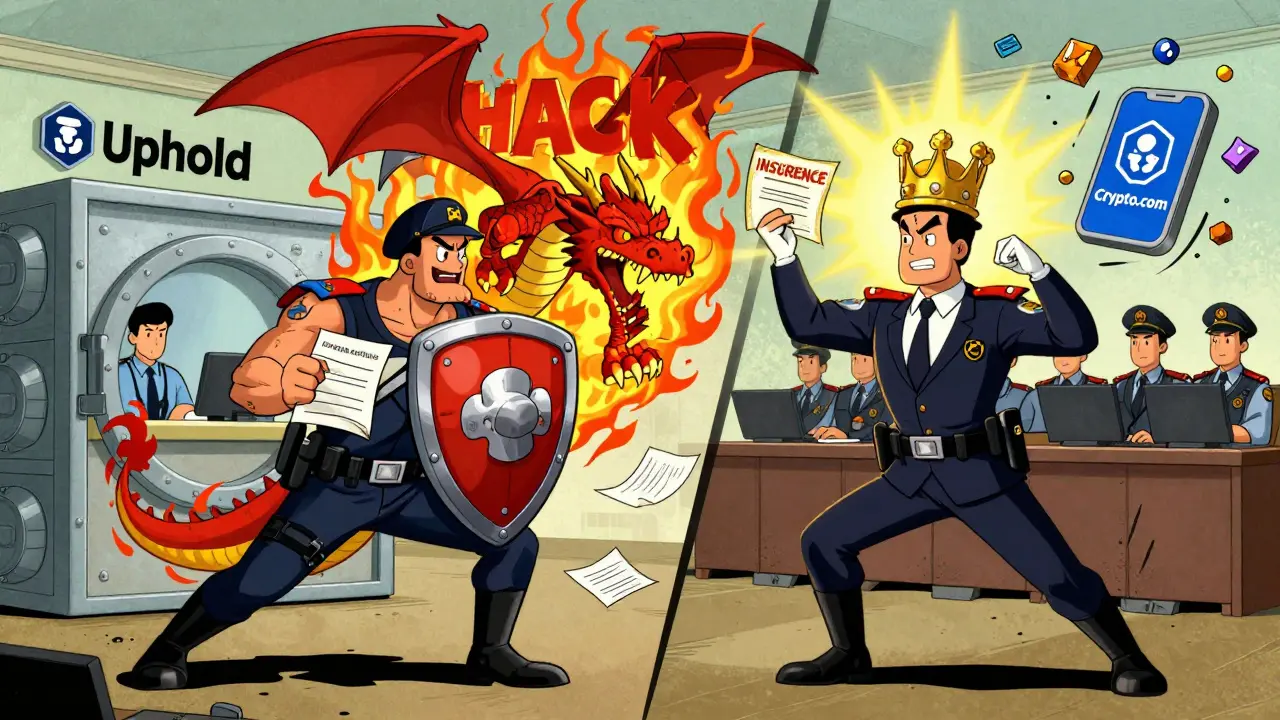
Gemini stands out with $321 million in insurance coverage backed by Lloyd’s of London. They’re also one of the few exchanges with a New York State BitLicense-meaning they meet some of the strictest regulatory standards in the world. But they support only 73 coins. If you trade altcoins, that’s a dealbreaker.
Kraken has never been hacked since 2011. They store 98% of assets offline. Their proof-of-reserves reports are published monthly and verified by third-party auditors. That’s not marketing-it’s operational discipline.
On the flip side, exchanges like Uphold and Robinhood cut corners. Uphold’s Trustpilot rating is 2.1/5, mostly because of 72-hour customer response times. Robinhood doesn’t even let you withdraw crypto-you can only trade it. That’s not a wallet. It’s a trading terminal with locked-in assets.

Mobile Experience: Is the App Actually Usable?
Most people trade on their phones. But not all apps are built for real trading.
Crypto.com’s app scores 4.8/5 on the App Store with over 127,000 reviews. Why? Seamless Visa card integration. You can spend crypto at any store that takes Visa, and it converts in real time. That’s powerful for everyday use.
But here’s the catch: during the October 2025 Bitcoin dip, 67% of 1-star reviews cited app crashes. When prices move fast, your app shouldn’t freeze. Kraken Pro’s mobile app doesn’t crash. It’s lean, fast, and mirrors the desktop platform exactly. No fluff. Just charts, orders, and execution.
Coinbase’s app is beginner-friendly-clean, simple, easy to navigate. But it’s built for people who buy $100 of Bitcoin once a month. If you’re watching the order book, setting limit orders, or using trailing stops, it feels sluggish. The charts lag. The order entry is slow. It’s not built for active traders.
Regulation and Trust: The Hidden Layer
In 2026, regulation isn’t a buzzword-it’s a survival requirement. The EU’s MiCA regulations went live in December 2024. The U.S. passed the Digital Commodities Consumer Protection Act in October 2025. Exchanges that didn’t adapt are gone.
Kraken, Coinbase, and Gemini are all fully licensed across major markets. Binance US operates in only 43 U.S. states. Crypto.com is licensed in 30+ jurisdictions but has faced scrutiny from the SEC over its staking rewards program. Robinhood is under investigation for payment-for-order-flow practices. SEC Chair Gary Gensler called it a conflict of interest: traders get zero fees, but their orders are routed to market makers who pay Robinhood for the data.
If you’re serious about trading, you don’t want to be on an exchange that could be shut down tomorrow. Stick with platforms that have clear regulatory footprints and publish compliance reports.
Who Should Use What?
Not everyone needs the same exchange. Here’s who wins in each category:
- Active traders with large positions: Kraken. Best depth, lowest fees, fastest execution, institutional-grade tools.
- Beginners and casual buyers: Coinbase. Simple interface, educational content, reliable app. Just pay the higher fees.
- Security-first users: Gemini. Highest insurance coverage, strict compliance, but limited coins.
- Everyday spenders: Crypto.com. Best mobile experience, Visa card, rewards program.
- Zero-fee seekers: Robinhood. But you can’t withdraw crypto. Avoid if you’re serious.
The Hidden Problems No One Talks About
Even the best exchanges have flaws.
Kraken’s verification process takes 3-5 days. It’s slow. But it’s thorough. If you’re in a hurry, you’ll hate it. Coinbase’s support takes 24-48 hours for basic issues. Crypto.com’s app crashes during volatility. Uphold’s customer service is a black hole.
API rate limits are another silent killer. If you’re using bots, Kraken allows 100 requests per second. Coinbase caps at 30. That’s not enough for serious algo traders.
And don’t forget: withdrawal delays. During the November 2025 market panic, 62% of users reported delays of 24-72 hours on all major platforms. It’s not just one exchange. It’s the entire system. Liquidity dries up. Banks freeze. Exchanges slow withdrawals to avoid runs. That’s normal. But if you’re planning to move funds during volatility, assume it’ll take 3 days.
The Future: What’s Coming in 2026
Exchanges are becoming hybrid platforms. Kraken announced in November 2025 they’ll support over 11,000 U.S. stocks and ETFs alongside crypto. Coinbase is rolling out tokenized real-world assets in Q1 2026-think property, bonds, and commodities on-chain.
That’s the direction: one platform for all your assets. But it’s also a risk. The more you bundle, the more you rely on one company. If Kraken goes down, you lose access to crypto, stocks, and ETFs all at once.
For now, the best strategy is to keep your long-term holdings in cold storage and use a depth-focused exchange like Kraken for active trading. Use Coinbase for simple buys. Use Crypto.com to spend. Don’t put everything in one basket-even if the basket looks shiny.
Final Verdict
If you’re looking for a true depth crypto exchange in 2026, Kraken is the only one that delivers on all fronts: deep order books, low fees, strong security, and institutional tools. It’s not the easiest to use. It’s not the prettiest. But it’s the most reliable for anyone trading more than $1,000 at a time.
For everyone else-casual buyers, beginners, or people who just want to spend crypto-Coinbase and Crypto.com still have their place. But if you’re serious about trading, don’t settle for convenience. Trade where the liquidity is. Trade where the depth is. Trade where the pros do.
What does depth mean in a crypto exchange?
Depth refers to the total volume of buy and sell orders at different price levels in an exchange’s order book. High depth means you can trade large amounts without significantly changing the market price. Low depth causes slippage-where your trade moves the price against you. Kraken has the highest depth among major exchanges, with over 12,000 active buy orders for BTC/USD as of late 2025.
Which crypto exchange has the lowest fees in 2026?
Kraken has the lowest fees for active traders. Maker fees start at 0.16% and drop to 0.00% for users trading over 50 BTC equivalent per month. Taker fees are 0.26%. Coinbase charges 0.40% for makers and 0.60% for takers. Kraken also offers free ACH withdrawals, while Coinbase charges $25 for wire transfers.
Is Kraken safer than Coinbase?
Yes, Kraken has a stronger security track record. It has never been hacked since 2011, stores 98% of assets in cold storage, and publishes monthly proof-of-reserves audits. Coinbase is also secure and insured, but Kraken’s operational discipline and transparency give it an edge for serious traders. Both use two-factor authentication and multi-signature wallets, but Kraken’s compliance and audit history are more consistent.
Why does my crypto exchange app crash during volatility?
High volatility causes massive spikes in traffic. Exchanges like Crypto.com and Coinbase have mobile apps that weren’t built for high-frequency trading. During sharp price movements, the servers get overwhelmed, and apps freeze or crash. Kraken Pro’s mobile app is optimized for real-time trading and handles volatility better. For active traders, desktop platforms or API-based tools are more reliable.
Should I use Robinhood for crypto trading?
Only if you’re a beginner buying small amounts and never plan to withdraw your crypto. Robinhood offers zero fees but doesn’t let you move crypto off the platform. You can’t send Bitcoin to a wallet or use it for DeFi. The SEC has criticized Robinhood’s payment-for-order-flow model, which means your trades are routed to market makers who profit from your activity. It’s convenient-but not ownership.
How long does crypto withdrawal take?
Crypto withdrawals usually take 5-30 minutes, depending on network congestion. Fiat withdrawals (bank transfers) vary: ACH takes 1-3 business days, wire transfers take 2-5. During market crashes, exchanges may delay withdrawals to prevent bank runs. In November 2025, 62% of users reported delays of 24-72 hours across major platforms during high volatility.
What’s the best crypto exchange for beginners?
Coinbase is the best for beginners. It has a simple interface, clear educational content (Coinbase Learn), and a reliable mobile app. You can buy crypto with a credit card, and it’s easy to understand. But it’s expensive for active trading. Once you’re comfortable, move your holdings to a lower-fee exchange like Kraken for better prices and more control.
Can I trust exchanges with low coin selection?
Yes-if security and compliance matter more than variety. Gemini supports only 73 coins, but it’s one of the most regulated and insured exchanges in the world. If you only trade Bitcoin, Ethereum, and a few top coins, Gemini is safer than an exchange with 500 coins but weak audits. More coins don’t mean better security. Focus on audits, insurance, and regulatory status instead.
Next steps: If you’re new to trading, start with Coinbase to learn the basics. Once you’re ready to scale, move your funds to Kraken. Keep your long-term holdings in a hardware wallet like Ledger or Trezor. Never leave large amounts on any exchange. And always check the order book depth before placing a large trade-don’t assume the price you see is the price you’ll get.