Crypto Exchange Licensing in Brazil by Central Bank: What You Need to Know in 2026

Feb, 22 2026
When you think of crypto trading in Brazil, you might picture a free-market playground where anyone can buy Bitcoin or trade altcoins without limits. But that’s not the reality anymore. Since 2023, Brazil has been enforcing strict rules on cryptocurrency exchanges - not through a separate crypto law, but by folding them into its existing financial oversight system. The Central Bank of Brazil (BCB) now controls who can operate, how they must report transactions, and even how much money users can move in a single transfer. This isn’t just another regulation. It’s a full-scale overhaul of how digital assets move through the country’s financial system.
How Brazil Regulates Crypto Exchanges
Brazil doesn’t have a license called "crypto exchange permit." Instead, any company offering cryptocurrency services - buying, selling, storing, or swapping - must register as a Virtual Asset Service Provider (VASP) with the Central Bank. This requirement comes from Law No. 14.478/2022, which took effect in June 2023. The law didn’t invent new rules from scratch. It adapted international standards, especially those from the Financial Action Task Force (FATF), to fit Brazil’s financial landscape.
What does this mean in practice? If you run a crypto exchange in Brazil, you’re no longer just a tech startup. You’re now treated like a bank. You need to verify every customer’s identity, monitor every transaction for suspicious activity, and report everything to the Central Bank. There’s no gray area. Operating without registration is illegal, and the penalties are serious.
But here’s the twist: the Securities and Exchange Commission of Brazil (CVM) also has a say. If a crypto asset is classified as a security - like a token that promises profit based on a company’s performance - then the CVM steps in. That means some tokens fall under two regulators at once. One handles the financial plumbing, the other handles the investment side. It’s messy, but it’s intentional.
The $10,000 Rule That’s Changing Everything
In September 2024, the Central Bank dropped a bombshell. It proposed new rules for electronic foreign exchange platforms - companies that let people convert reais to dollars or euros online. At first glance, it seemed unrelated to crypto. But experts quickly realized: this was aimed squarely at crypto exchanges.
The rules require:
- Every eFX platform to get an official permit from the Central Bank
- All customer transactions to be reported in real time
- Deposits and withdrawals to go only through approved banking channels
- A hard cap of $10,000 per transaction for individuals
- Full transparency: every fee, tax, and exchange rate must be shown upfront
Even though the proposal was written for forex platforms, it’s being applied to crypto exchanges that handle cross-border transfers. If you’re a Brazilian user trying to send $15,000 worth of Ethereum to a U.S. wallet, you’ll be blocked. You can’t split it into two $7,500 transfers either - the system tracks individual transactions, not total volume over time.
For retail traders, this might not matter much. But for businesses, investors, or anyone doing serious crypto work, it’s a major bottleneck. Institutional buyers, DeFi liquidity providers, and crypto startups funding operations overseas now face real obstacles. Some are already moving operations to other countries where limits don’t exist.
Who Gets Hit the Hardest?
Not all crypto businesses are affected the same way. Small, local exchanges that only handle Brazilian reais and don’t do international transfers might survive with minimal changes. But platforms that allow users to swap crypto for USD, EUR, or other foreign currencies? They’re in the crosshairs.
Global exchanges like Binance, Coinbase, or Kraken - even if they’re based outside Brazil - now have to comply with these rules if they serve Brazilian customers. That means they either adapt their systems to block transfers over $10,000, or they risk being cut off from the Brazilian market entirely. Some have already started restricting Brazilian users from certain services.
Local exchanges face their own challenges. The cost of building compliant reporting systems, hiring AML officers, and integrating with approved banking channels is high. Many small operators can’t afford it. Some have shut down. Others are merging to pool resources. The market is consolidating fast.
What Happens If You Don’t Comply?
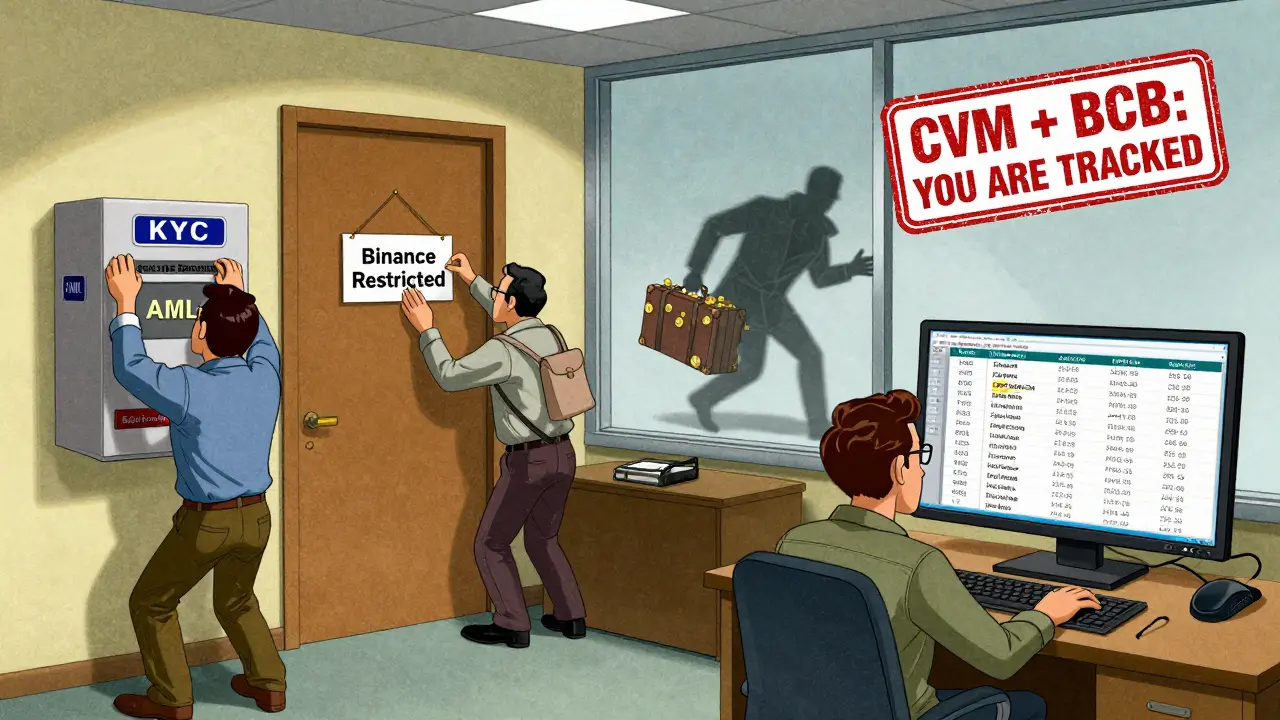
Non-compliance isn’t just a fine. It’s a shutdown. The Central Bank can freeze accounts, block payment processors, and even pursue criminal charges against company executives. In late 2024, two local exchanges were forced to close after failing to submit required transaction logs. Their users lost access to funds for weeks. The Central Bank doesn’t negotiate.
Even worse, if your exchange gets flagged for money laundering or suspicious activity, you could be added to a blacklist. That means banks across Brazil will refuse to work with you - even if you try to rebrand or restart under a new name. The system is designed to be irreversible.
The Bigger Picture: Why Brazil Is Doing This
Brazil isn’t trying to ban crypto. In fact, it’s one of the few countries in Latin America that fully recognizes crypto as a legal financial instrument. The goal isn’t to stop innovation - it’s to control the flow of money.
For years, Brazil’s foreign exchange market was a wild west. People used crypto to move money out of the country, bypassing capital controls. The Central Bank estimates that over $12 billion in crypto-related cross-border transfers happened in 2023 alone - most of it unreported. That’s money that doesn’t show up in GDP, tax records, or economic forecasts.
By forcing exchanges to use approved banking channels and report every transaction, the Central Bank now has visibility. It can track where money goes, who’s sending it, and whether it’s tied to crime or tax evasion. It’s surveillance by regulation.
And it’s working. In the first six months after Law No. 14.478 took effect, reported crypto transactions jumped 400% - not because more people were trading, but because more transactions were being recorded.
What’s Next? The Road to 2026
The consultation period for the new forex rules ended in November 2024. The Central Bank has not yet announced final rules, but insiders say they’re finalizing them in early 2026. Expect implementation to begin in mid-2026.
One thing is clear: Brazil won’t back down. The government has invested heavily in building a digital financial infrastructure. The Central Bank is rolling out its own digital currency (the digital real) and wants crypto exchanges to plug into it - not bypass it.
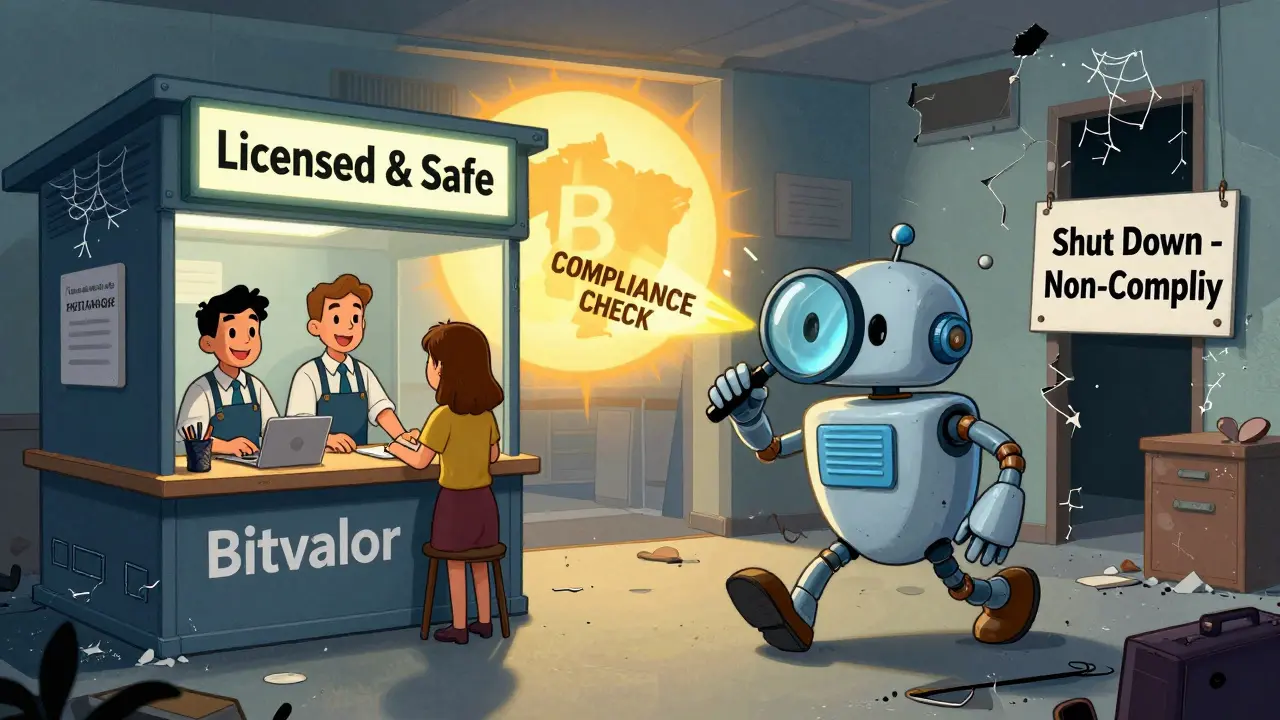
For users, this means fewer platforms to choose from, more paperwork, and slower transfers. But it also means more protection. If your exchange is licensed and regulated, your funds are more likely to be safe if something goes wrong.
For businesses, the message is simple: register, report, and comply - or get out. There’s no middle ground anymore.
Key Takeaways
- All crypto exchanges operating in Brazil must register with the Central Bank as VASPs under Law No. 14.478/2022.
- The $10,000 per-transaction cap applies to any cross-border crypto transfer involving foreign currency.
- Exchanges must use approved banking channels for deposits and withdrawals - no direct crypto-to-bank transfers allowed.
- Global exchanges serving Brazilian users must comply or risk losing access to the market.
- Non-compliant platforms face account freezes, blacklisting, and criminal liability.
Do I need a license to buy crypto in Brazil as an individual?
No, individuals don’t need a license to buy or hold cryptocurrency in Brazil. The rules only apply to businesses that operate as exchanges, custodians, or brokers. As a user, you just need to use a licensed platform. But if you’re doing large or frequent international transfers, you’ll hit the $10,000 cap - and you’ll need to document where the money came from and where it’s going.
Can I still use Binance or Coinbase in Brazil?
Yes - but with restrictions. Both platforms still operate in Brazil, but they’ve limited services for Brazilian users. Withdrawals to foreign bank accounts are capped at $10,000 per transaction. Some trading pairs have been removed. If you try to send more than the limit, the transaction will be blocked. You’ll also see more verification steps and longer processing times.
What if I use a peer-to-peer (P2P) exchange like LocalBitcoins?
P2P platforms aren’t regulated the same way. But if you’re trading large amounts, the Central Bank can still track you. If you deposit crypto proceeds into a Brazilian bank account over $10,000, the bank will ask for proof of source. If you can’t provide it, the funds may be frozen. The system doesn’t care how you got the money - it cares about the amount and whether it’s reported.
Are there any crypto exchanges in Brazil that are fully compliant?
Yes. Local platforms like Bitvalor, Foxbit, and Uniswap Brasil (a Brazil-based entity) have registered with the Central Bank and built systems to meet all reporting and transaction limits. They’re slower and more expensive than global platforms, but they’re legal and offer more protection for users. If you want to avoid future problems, use one of these.
Will these rules change in 2026?
Not likely. The Central Bank has signaled it’s not planning to loosen restrictions. Instead, it’s preparing to integrate crypto reporting with its new digital real system. Expect tighter controls, not fewer. The goal is to make crypto transactions as traceable as bank transfers - and that’s not going to change.
What This Means for You
If you’re a Brazilian crypto user, your options are narrowing. The days of sending $50,000 in Bitcoin to a U.S. exchange in one click are over. You’ll need to plan ahead, break up large transfers, and use only licensed platforms. But there’s a silver lining: regulated exchanges are safer. Your funds are more likely to be insured, and your identity is protected.
If you run a crypto business, the path is clear: register now, build compliance into your system, and stop treating Brazil as a loophole. The Central Bank isn’t waiting. It’s watching. And it’s already won.