EU Stablecoin Restrictions: What MiCA Means for USDT and Investors
Apr, 15 2026
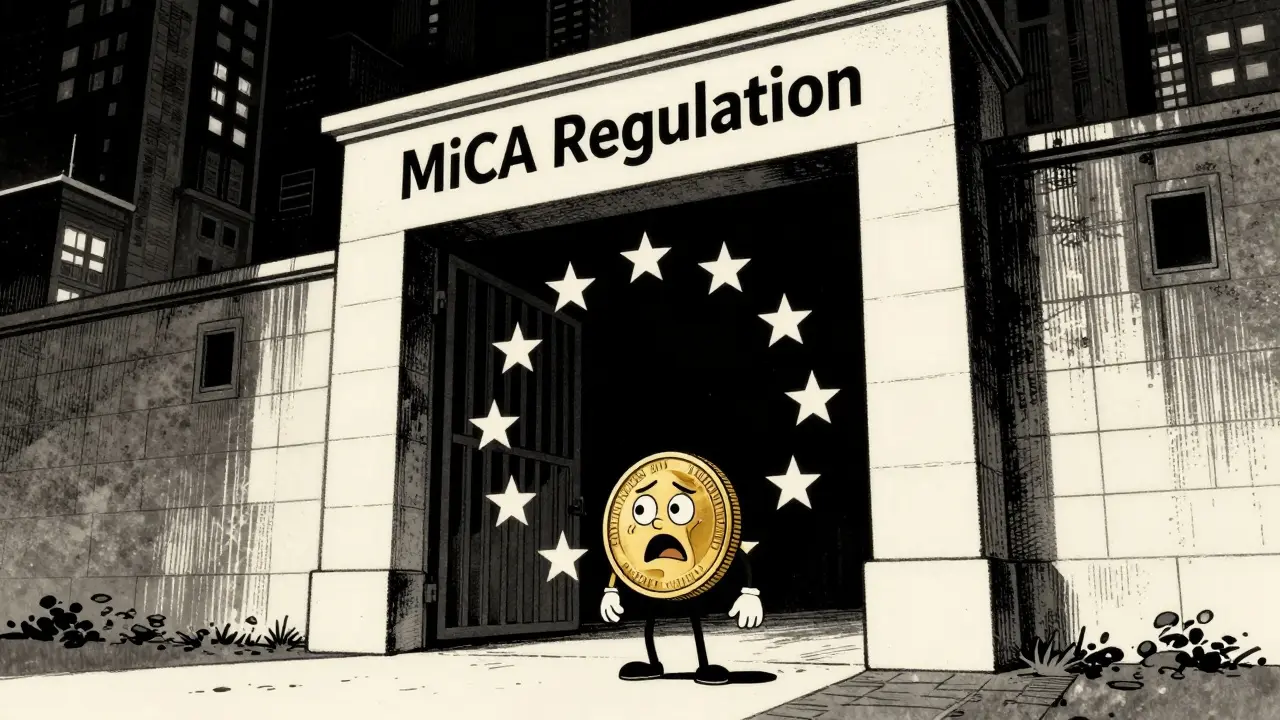
If you hold USDT is a stablecoin issued by Tether that pegs its value to the US Dollar or other popular stablecoins in Europe, the rules of the game have changed. The European Union didn't just tweak the rules; they rebuilt them from the ground up. The goal is to stop the kind of volatility and collapse that can happen when a "stable" coin isn't actually backed by anything real. But for the average user, this translates to a few scary words: delisting and restrictions.
| Feature | Compliant Stablecoins | Non-Compliant (e.g., USDT) |
|---|---|---|
| Trading Status | Allowed on EU exchanges | Delisted from trading by Q1 2025 |
| Reserve Requirements | Strict 1:1 protected reserves | Variable/Non-transparent |
| Redemption Rights | Guaranteed par value redemption | Dependent on issuer policy |
The MiCA Shakeup: What is Actually Happening?
The core of these changes is the Markets in Crypto-Assets Regulation is a comprehensive EU framework designed to regulate crypto-assets, focusing on consumer protection and financial stability, better known as MiCA. This isn't just a set of guidelines; it's a law that applies to all 27 EU member states. If you've noticed your favorite exchange suddenly limiting how you trade certain coins, this is why.
Under MiCA, the EU has split stablecoins into two buckets. First, there are E-Money Tokens is stablecoins that reference a single official currency to function as a medium of exchange (EMTs). These are basically digital versions of cash. Then there are Asset-Referenced Tokens is tokens that maintain value by referencing several currencies, commodities, or other crypto-assets (ARTs). If a coin doesn't fit these definitions or meet the strict reserve rules, it's essentially banned from being traded on regulated platforms in Europe.
Why USDT is in the Crosshairs
You might be wondering why a giant like Tether is struggling. The EU is obsessed with "bankruptcy-protected structures." They want to know that if a stablecoin issuer goes bust, the money is sitting in a safe vault, separate from the company's operational cash. USDT has historically been criticized for its lack of transparency regarding its reserves. The EU stablecoin restrictions are designed to force these issuers to prove their 1:1 reserve ratio or get out of the market.
The European Securities and Markets Authority is the EU's financial regulatory agency that oversees securities and markets to ensure investor protection (ESMA) set a hard deadline. By the end of January 2025, Crypto-Asset Service Providers is entities that provide services like trading, custody, or exchange of crypto-assets on behalf of users (CASPs)-which is just a fancy word for your exchanges-were told to stop offering trading for non-compliant coins. You can still hold them in a wallet, but you can't easily swap them for Bitcoin or Euros on a regulated EU platform.

Comparing the EU Approach to the US GENIUS Act
Europe isn't the only one playing catch-up. In July 2025, the US signed the GENIUS Act is the Guiding and Establishing National Innovation for U.S. Stablecoins Act, creating a federal framework for payment stablecoins. While both the EU and US now demand 1:1 reserves and bankruptcy protection, the US is being significantly more lenient. They've created a category called "payment stablecoins," which gives issuers a smoother path to legality.
This creates a weird gap. While the EU is building a "walled garden" of highly regulated, safe tokens, the US is trying to attract the industry with faster approvals. This is what experts call regulatory arbitrage. If it's too hard to launch a coin in Paris, a company will just launch it in New York and hope the liquidity carries over. We're already seeing this with payment giants like Visa and Mastercard, who are leaning into the more flexible US framework to integrate stablecoins into global retail.
How This Affects Your Portfolio
If you're a regular trader, the most immediate impact is the loss of liquidity. Arbitrage-the act of buying a coin low on one exchange and selling it high on another-has become much harder in Europe because the available pairs have shrunk. If you hold non-compliant tokens, your exchange should have provided options to convert them into compliant ones or liquidate them. If you didn't do this by early 2025, you might find your funds are "custody-only," meaning you can move them out of the exchange, but you can't trade them there.
For those into DeFi, the situation is murkier. MiCA primarily targets the "on-ramps" and "off-ramps" (the exchanges). Decentralized protocols that don't have a central company managing them are harder to regulate, but the EU is watching. The real risk is that the liquidity providing the "fuel" for these DeFi apps-often USDT-is becoming harder to move into and out of the EU ecosystem.

The Rise of the "European Stablecoin"
Since the EU doesn't want to rely on US-based coins, they are building their own. A massive consortium of nine European banks-including names like ING, UniCredit, and CaixaBank-is working on a MiCA-compliant, euro-denominated stablecoin. They've even set up a dedicated company in the Netherlands to handle this.
Expect this to hit the market in the second half of 2026. This isn't just about convenience; it's about "strategic autonomy." The EU wants a digital payment system that doesn't depend on a company in the British Virgin Islands or a law passed in Washington D.C. For the user, this means you'll likely see a new, bank-backed Euro coin that is boringly safe, fully regulated, and accepted everywhere in the bloc.
Practical Tips for Staying Compliant
If you are managing assets in the EU, don't wait for your exchange to send you a warning email. Here is a simple rule of thumb for managing your holdings:
- Audit your holdings: List every stablecoin you own. Check if the issuer has a MiCA license or is applying for one.
- Diversify away from non-compliant tokens: If you're using a stablecoin for long-term savings, move it into a regulated E-Money Token (EMT).
- Use hardware wallets: If you insist on holding non-compliant tokens, keep them in a self-custody wallet. Exchanges are the first to freeze or restrict assets under MiCA.
- Monitor the 2026 Bank Coin: Keep an eye on the European bank consortium's release. It will likely be the gold standard for Euro-based stability.
Can I still hold USDT in Europe?
Yes, you can still hold USDT in a private wallet. However, regulated exchanges (CASPs) in the EU are required to stop offering it for trading. This means you can't easily buy or sell it on a legal EU platform; you'd have to use a decentralized exchange or a non-EU service.
What is the difference between an EMT and an ART?
An E-Money Token (EMT) is pegged to a single official currency (like the Euro) and is meant to be a digital substitute for cash. An Asset-Referenced Token (ART) can be pegged to several currencies, a basket of commodities (like gold), or other crypto-assets to maintain its value.
Is my money safe in a MiCA-compliant stablecoin?
It is significantly safer than in non-regulated coins. MiCA requires a 1:1 reserve ratio held in bankruptcy-protected accounts and gives you a legal right to redeem your tokens for the actual currency at par value.
When did these restrictions start?
MiCA became enforceable in 2025. The most aggressive phase, where exchanges had to delist non-compliant stablecoins, happened by the end of January 2025, with full enforcement by national authorities wrapping up in Q1 2025.
Will the US follow the EU's strict rules?
Not exactly. While the US GENIUS Act shares some goals-like reserves and protection-it is generally more flexible. The US is positioning itself to be a more attractive hub for crypto companies, whereas the EU is focusing on creating a strict, safe standard for consumers.