FT Exchange Crypto Exchange Review: Features, Fees & Safety
Aug, 17 2026
When you search for FT Exchange, you are likely looking at the legacy of FTX, the platform that shook the entire crypto world in November 2022. If you are holding a wallet address from that era or wondering if it is safe to trade on similar platforms today, this review breaks down what happened, what remains, and what it means for your funds. We will look past the headlines to examine the technical specs, fee structures, and the critical safety lessons left behind by one of the largest collapses in financial history.
What Is FT Exchange (FTX)?
FTX was a centralized cryptocurrency derivatives exchange founded in 2019 by Sam Bankman-Fried. At its peak, it operated as the third-largest crypto exchange globally, specializing heavily in futures contracts and leveraged tokens rather than just spot trading. Unlike generalist exchanges like Coinbase or Kraken, which offer a wide mix of assets including stocks and NFTs, FTX positioned itself as a hub for intermediate and advanced traders seeking high-leverage instruments.
The platform’s core value proposition was its innovative product suite. It offered 15 perpetual swap contracts and 45 leveraged tokens, allowing users to amplify their positions without constantly managing margin calls in the traditional sense. A standout feature was the 'Quant Zone,' a tool that allowed experienced traders to build custom automated strategies using personal indicators. These traders could then monetize their work by charging fees when other users adopted their strategies. While this created a unique ecosystem for algorithmic trading, it also added complexity to a platform that was already operating with thin regulatory guardrails.
Fee Structure and Trading Costs
During its operational years, FTX attracted volume with some of the most competitive rates in the industry. The standard fee schedule was straightforward:
- Maker Fee: 0.02%
- Taker Fee: 0.07%
For high-frequency traders or those using limit orders frequently, the 0.02% maker fee was significantly lower than many competitors, who often charged between 0.1% and 0.2%. This low-cost structure helped drive substantial trading volume, particularly in the derivatives market. However, low fees do not always equate to good value if the underlying asset custody is risky. In FTX's case, the attractive pricing masked significant internal liquidity issues that only became apparent during the 2022 bank run.
Safety, Security, and The 2022 Collapse
This is the most critical section for any potential user. FTX did not fail because of a hack; it failed due to corporate mismanagement and lack of transparency. Before the collapse, the platform required KYC/AML verification only for withdrawals exceeding $1,000. This threshold seemed reasonable but proved insufficient to prevent massive outflows once trust eroded.
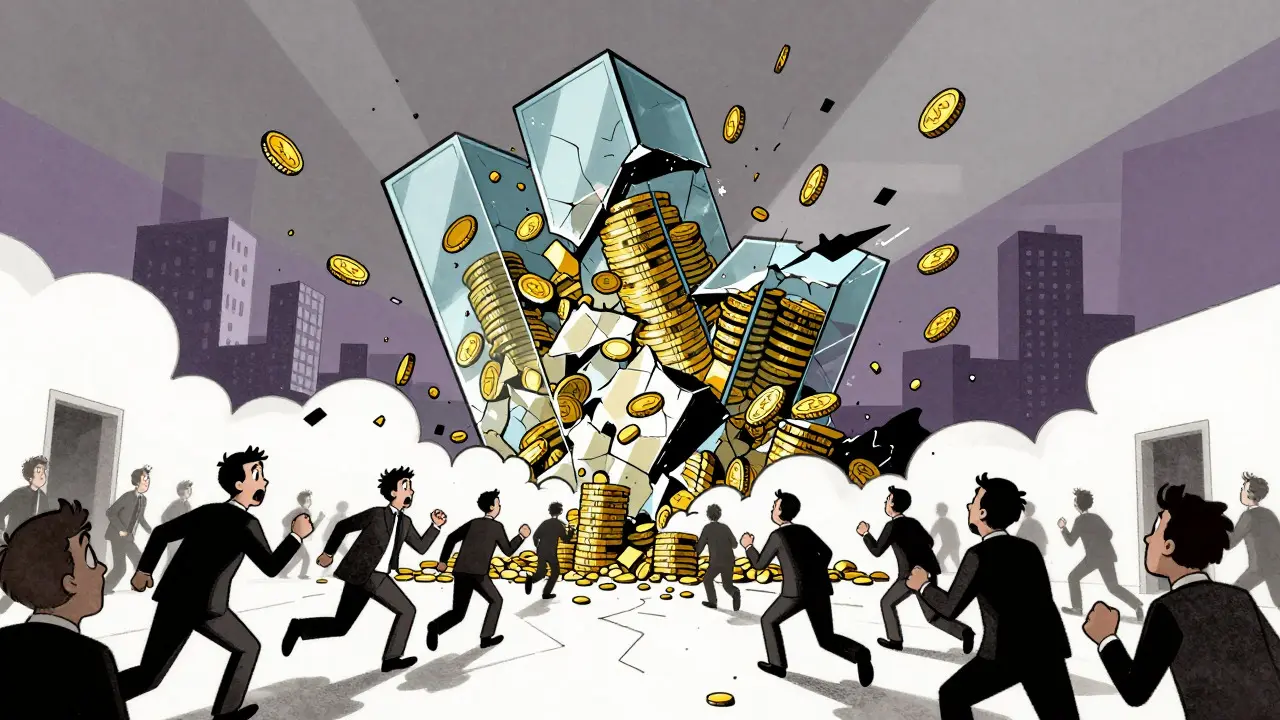
In November 2022, after reports surfaced that FTX had lent billions in customer funds to its sister company, Alameda Research, a panic ensued. The result was a rapid insolvency event. By April 2023, the bankruptcy estate had recovered over $7.3 billion in assets, yet this represented only about 40% of the estimated $18 billion in customer liabilities. Approximately one million customers filed claims, with average claim amounts exceeding $1,500 per user.
The lesson here is clear: "Not your keys, not your coins" applies doubly to unregulated exchanges. While FTX had a "good Help Center" and responsive support via Telegram during its stable period, no amount of customer service can save you if the exchange itself goes bankrupt without proper segregation of assets.
FTX vs. Modern Alternatives
Since FTX's shutdown, the void in the derivatives market has been filled by competitors like OKX and Bybit. These platforms have stepped up to capture the volume FTX once held, but they operate under different risk profiles. To understand where FTX stood relative to current leaders, consider the following comparison:
| Feature | FTX (Pre-Collapse) | Kraken (Current) | OKX (Current) |
|---|---|---|---|
| Primary Focus | Derivatives & Leveraged Tokens | Spot & Institutional Custody | Derivatives & DeFi Integration |
| Maker/Taker Fees | 0.02% / 0.07% | 0.16% / 0.26% (Standard) | 0.08% / 0.10% (Basic) |
| Regulatory Status | Unregulated (Bermuda/US excluded) | SEC Settled (March 2024) | Global Compliance Push |
| Asset Custody Model | Custodial (Failed Segregation) | Cold Storage (SOC 2 Type 2) | MPC Wallets & Insurance Fund |
Notice the difference in regulatory posture. Kraken, for instance, settled its SEC case in March 2024, providing a level of legal clarity that FTX never achieved. OKX has focused on robust insurance funds and multi-party computation (MPC) wallets to reduce custodial risk. When choosing an exchange today, prioritize these safeguards over slightly lower fees.
Who Should Use Derivatives Exchanges Like FTX Was?
FTX was never designed for beginners. Its interface and product lineup catered to traders comfortable with leverage, liquidation risks, and complex order types. If you are new to crypto, jumping into a derivatives-heavy platform is akin to learning to swim in the ocean without a pool. The high volatility of perpetual swaps can wipe out capital quickly, especially without deep understanding of funding rates and open interest.
However, for experienced traders, the innovation in products like leveraged tokens (e.g., BTC3L, ETH3S) offered convenience. Instead of managing margin balances manually, these tokens automatically adjusted exposure based on price movements. This feature, combined with the Quant Zone, made FTX a favorite among quantitative traders. Today, similar tools exist on Binance and Bybit, but the integration and community size vary.
Key Takeaways for Traders in 2026
- Check Regulatory Compliance: Avoid exchanges that exclude major jurisdictions without clear reasons. Look for SOC 2 Type 2 and ISO 27001 certifications.
- Understand Custody Risks: Prefer exchanges that publish proof-of-reserves and use cold storage for the majority of assets.
- Fees Are Not Everything: A 0.02% maker fee is attractive, but only if the exchange doesn't go bankrupt. Factor in total cost of ownership, including withdrawal fees and spread costs.
- Diversify Platforms: Do not keep all your assets on one exchange. Split holdings across two or three reputable platforms and keep a portion in self-custody.
Frequently Asked Questions
Is FTX still operating in 2026?
No, FTX ceased operations in November 2022 and entered bankruptcy proceedings. As of 2026, it remains in the process of distributing recovered assets to creditors. Any website claiming to be the original FTX is likely a scam. Always verify domain names carefully.
How much money did FTX recover for customers?
By April 2023, approximately $7.3 billion in assets had been recovered. This amount represents roughly 40% of the estimated $18 billion in customer liabilities. Distribution timelines depend on the finalization of the bankruptcy restructuring plan.
What were the main features of the FTX platform?
FTX specialized in derivatives, offering 15 perpetual swaps and 45 leveraged tokens. It also featured the 'Quant Zone' for automated strategy creation and monetization. The platform used a low-fee model with 0.02% maker and 0.07% taker fees.
Why did FTX fail?
FTX collapsed due to poor corporate governance, commingling of customer funds with its affiliate Alameda Research, and a lack of transparent reserves. The initial trigger was a short-seller report questioning the health of Alameda's balance sheet, leading to a mass withdrawal run.
Are there safer alternatives to FTX for derivatives trading?
Yes. Platforms like OKX, Bybit, and Binance offer similar derivatives products with stronger regulatory oversight, published proof-of-reserves, and larger insurance funds. Kraken is also expanding its derivatives offerings with a focus on institutional-grade security.