KuMEX Crypto Exchange Review: Fees, Features & Verdict
Nov, 8 2026
If you've been eyeing KuMEX but hesitating because of the name or its connection to KuCoin, you're not alone. It’s a common confusion: Is it a separate entity? Is it safe? And with the recent regulatory shakeups in early 2025, is it even accessible for you?
Here’s the quick truth before we get into the weeds. KuMEX isn't some obscure new player; it is the dedicated futures trading arm of KuCoin, one of the top-tier global crypto exchanges. It specializes in leveraged Bitcoin futures. If you are a U.S. resident, stop reading now-your access is restricted due to legal settlements. For everyone else, this platform offers some of the lowest taker fees in the industry (0.06%) and institutional-grade speed. But does it have enough assets to keep you interested long-term? Let's break down what actually happens when you trade here.
What Exactly Is KuMEX?
Think of KuMEX as the high-performance sports car garage attached to the main KuCoin dealership. While the main KuCoin exchange handles spot trading (buying actual coins), KuMEX focuses entirely on derivatives. Specifically, it launched as a venue for perpetual swaps and futures contracts, primarily centered around Bitcoin.
The technology behind it is serious. The engine claims to handle up to 1 million transactions per minute with latency under 1 millisecond. In plain English? When the market moves fast, your orders don't freeze. This is critical for day traders who lose money just because their interface lagged during a volatility spike. Because it operates under the KuCoin ecosystem, it inherits the security infrastructure of the parent company, including majority cold storage and multisignature hot wallets. You aren't trusting a brand-new startup with your leverage; you're using an established giant's specialized tool.
Fees and Cost Structure: Where You Save Money
This is usually the deciding factor for active traders. If you are flipping positions daily, fees eat your profits alive. KuMEX attacks this pain point directly. Their standard taker fee sits at 0.06%. Compare that to competitors like Binance Futures or Bybit, where standard rates often hover around 0.04% to 0.05% but can climb higher depending on volume tiers, or older platforms charging significantly more. Actually, let's be precise: while some competitors offer lower maker rebates, KuMEX's flat low-cost structure is attractive if you don't want to calculate complex VIP tier discounts every month.
For makers (those who place limit orders that sit on the book), the fees are competitive, often involving rebates depending on your volume. But the real win here is simplicity. You know exactly what you're paying. There are no hidden network surcharges for executing trades within the platform itself, though withdrawal fees to external wallets follow standard blockchain costs.
| Feature | KuMEX | Binance Futures | Bybit |
|---|---|---|---|
| Standard Taker Fee | 0.06% | ~0.04% - 0.05% | ~0.055% |
| Primary Asset Focus | Bitcoin Futures | Multi-asset (BTC, ETH, Altcoins) | Multi-asset (BTC, ETH, Altcoins) |
| US Access | No (Withdrawal only) | No (Binance.US is separate) | No |
| Liquidation Engine Speed | <1ms Latency | High Frequency | High Frequency |
User Experience: Lite Mode vs. Advanced Trading
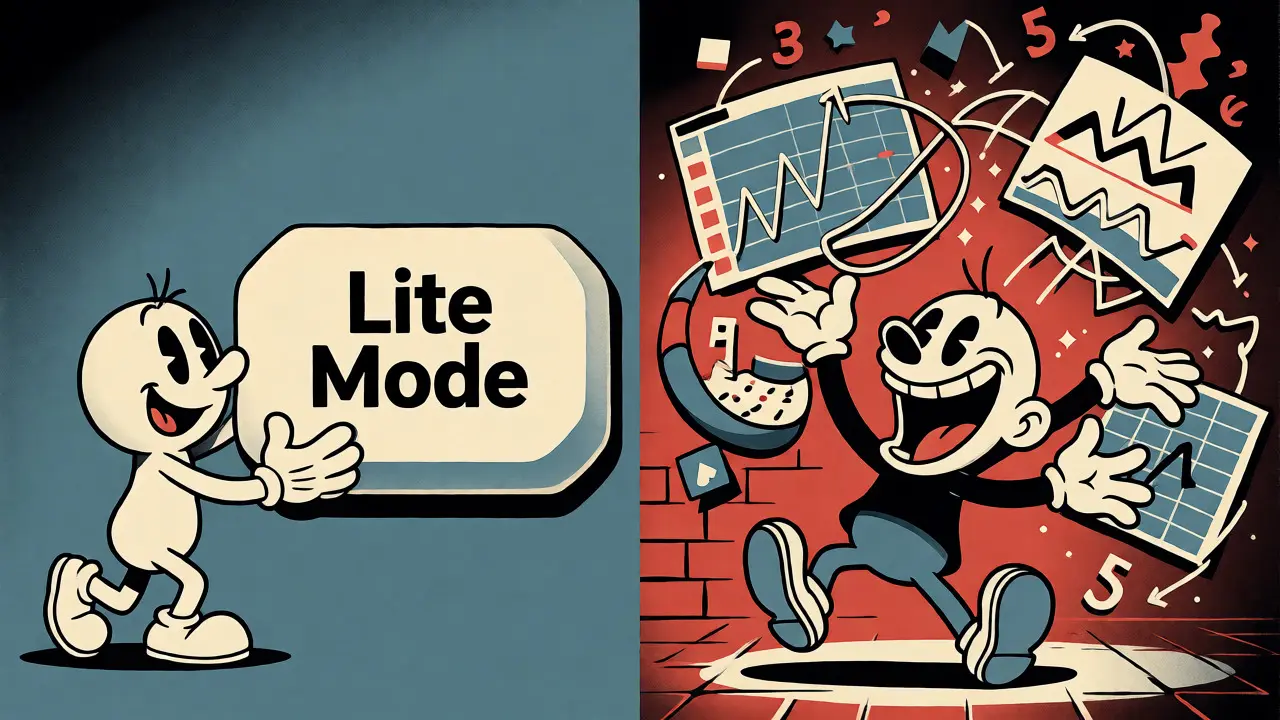
One of the smartest moves KuMEX made was splitting the interface. Newcomers to leverage often panic when they see a screen full of candlesticks, order books, and funding rate indicators. So, they created "Lite" mode. It looks like a simple buy/sell button app. You pick a direction (Long or Short), set your leverage slider, and hit go. No charts, no jargon.
Once you graduate from Lite, the Advanced view opens up. This is where the pro tools live. You get deep API support, which means if you run automated trading bots, KuMEX integrates smoothly. The charting tools are robust, supporting multiple timeframes and technical indicators without cluttering the screen. User feedback on platforms like Revain highlights this transition path as a major positive. People appreciate that they didn't feel overwhelmed on day one but had room to grow as they learned risk management.
Risk Management and Safety: The Insurance Fund
Leverage is a double-edged sword. It amplifies gains, but it also amplifies losses. If the price moves against you by just 1% on 100x leverage, you are wiped out. To prevent this from cascading into bad debt for the exchange, KuMEX uses an insurance fund mechanism.
How does it work? When a trader gets liquidated (their position is forcibly closed because they ran out of margin), the remaining collateral doesn't just vanish. It goes into a communal insurance pool. This pool protects other traders from negative balance events during extreme market crashes. Coin Bureau, a reputable crypto analysis outlet, specifically praised this feature in their assessment of KuMEX. They noted that the fund is replenished consistently, creating a buffer that keeps the platform stable even during volatile weeks. Plus, since it's backed by KuCoin, you benefit from their broader security track record, which includes handling billions in volume without catastrophic hacks recently.
The Big Elephant in the Room: Regulatory Status
You cannot talk about KuMEX in late 2026 without addressing the January 2025 regulatory settlement. KuCoin pleaded guilty to charges related to operating an unlicensed money transmitting business in the United States. As part of the deal, they agreed to exit US operations for at least two years.
What does this mean for you? If you live in the US, you currently have withdrawal-only access. You can take your funds out, but you cannot open new positions or deposit new capital into KuMEX. This effectively shuts out the largest retail trading market in the world. For non-US users (Europe, Asia, Australia, etc.), the platform remains fully operational. However, this restriction has slowed KuMEX's growth compared to rivals who aggressively expanded their user bases in North America. If you are outside the US, this might actually be a benefit-less congestion, potentially better liquidity depth relative to order flow-but it limits the overall community size.

Asset Selection: The Limitation
Here is the biggest drawback. KuMEX is heavily focused on Bitcoin futures. While they have expanded slightly, they do not offer the massive menu of altcoin perpetuals found on Binance or Bybit. If you want to short Ethereum, Solana, or a random meme coin with 20x leverage, you might find the selection lacking.
This specialization is a double-edged sword. On one hand, it means the liquidity for Bitcoin pairs is very deep. Spreads are tight, meaning you enter and exit trades closer to the fair price. On the other hand, if your strategy involves rotating through different altcoins based on market cycles, KuMEX will frustrate you. You'll end up keeping funds on another exchange for altcoin plays and only moving BTC back to KuMEX for specific Bitcoin setups. For most generalist traders, this extra step is annoying.
Who Should Use KuMEX?
Let's cut through the noise. Who actually benefits from this platform?
- Bitcoin Maximalists and Specialists: If you only trade BTC and care about execution speed and low fees, this is a strong contender.
- Cost-Conscious Active Traders: The 0.06% taker fee is hard to beat when you are making hundreds of trades a month.
- Bot Developers: The API stability and low latency make it a great backend for algorithmic strategies.
- KuCoin Users: If you already hold funds on KuCoin, moving them to KuMEX for hedging or speculation is seamless.
Conversely, avoid KuMEX if you are a beginner wanting to learn spot trading first, if you need extensive altcoin exposure, or if you reside in the United States.
Final Verdict: Solid Tech, Limited Scope
KuMEX is a technically proficient platform wrapped in a somewhat limited product offering. It delivers on its promise of fast, cheap Bitcoin futures trading. The integration with KuCoin provides peace of mind regarding security and fund custody. However, the lack of diverse assets and the regulatory ban on US users cap its potential as a primary destination for everyone.
It’s not the best exchange for beginners looking for a one-stop-shop. But for experienced traders who know exactly what they want-low fees, high-speed execution, and Bitcoin-centric derivatives-it punches above its weight. Just remember to check your local regulations before signing up, especially if you’ve moved countries recently.
Is KuMEX safe to use?
Yes, KuMEX is generally considered safe because it is operated by KuCoin, a major global exchange. It utilizes institutional-grade security measures, including cold storage for most assets and multisignature wallets. Additionally, an insurance fund protects traders from negative balances during extreme market movements.
Can US residents use KuMEX?
No, not for trading. Due to a regulatory settlement in January 2025, KuCoin exited US operations. US residents currently have withdrawal-only access, meaning they can retrieve funds but cannot open new accounts or place new trades.
What are the trading fees on KuMEX?
The standard taker fee is 0.06%, which is competitive among major futures exchanges. Maker fees are typically lower or involve rebates depending on your trading volume tier. These fees apply to executed trades and are deducted from your account balance.
Does KuMEX require KYC verification?
Yes, full Know Your Customer (KYC) verification is required. Since KuMEX is linked to the KuCoin ecosystem, you must submit identification documents through the main KuCoin registration process to unlock trading features and higher withdrawal limits.
What assets can I trade on KuMEX?
KuMEX primarily focuses on Bitcoin futures and perpetual swaps. While there may be limited offerings for other major cryptocurrencies, it lacks the extensive altcoin derivative selection found on competitors like Binance Futures or Bybit.