How Nigerian Banks React to Crypto-to-Fiat Withdrawals in 2026

Jul, 3 2026
It used to be simple. You sold your Bitcoin, the money hit your bank account, and you spent it. Then came the ban. For nearly three years, starting in February 2021, the Central Bank of Nigeria (CBN) told commercial banks to stay away from cryptocurrency transactions entirely. If a bank saw crypto-related activity, they froze accounts or closed them. It was a dark time for traders who relied on peer-to-peer (P2P) markets just to cash out.
But the landscape has shifted dramatically. By late 2023, the CBN lifted the ban, and by March 2025, President Bola Ahmed Tinubu signed the Investments and Securities Act 2025 (ISA 2025) into law. This legislation officially recognized digital assets as securities, placing oversight under the Securities and Exchange Commission (SEC). So, if you are wondering how banks react when you withdraw crypto to fiat today, the answer is not a simple yes or no. It depends entirely on whether you are playing by the new rules.
The Two-Tier System: Licensed vs. Unlicensed Platforms
The most important thing to understand about the current banking environment in Nigeria is that it operates on a two-tier system. Your experience withdrawing crypto to naira depends heavily on which platform you use.
On one side, you have SEC-licensed exchanges like Luno. These platforms have undergone rigorous compliance checks. When you withdraw funds from a licensed exchange to your Nigerian bank account, banks generally process these transactions smoothly. They view these transfers as legitimate electronic payments from registered financial service providers. The money arrives in your account within a few hours, subject to standard processing fees.
On the other side, you have unlicensed international platforms and informal P2P networks. Even though crypto itself is legal, using platforms that do not hold an SEC license is a major red flag for banks. The SEC has explicitly warned against operating without a license, and banks are required to cooperate with regulatory directives. If you withdraw from an unverified source, your bank may block the transaction, reverse it, or worse freeze your entire account pending investigation.
Why Banks Are Still Cautious: AML and KYC Measures
You might think that because the ban is lifted, banks should treat crypto withdrawals like any other transfer. But banks are risk-averse institutions. Under the new CBN guidelines issued in December 2023, banks must implement enhanced Anti-Money Laundering (AML) and Know Your Customer (KYC) measures for any account linked to virtual asset activities.
This means that even if you are using a licensed exchange, your bank is watching. They monitor transaction patterns, volumes, and frequencies. If you suddenly start moving large amounts of money from crypto sales, it triggers automated compliance reviews. Banks categorize crypto transactions as high-risk activities requiring enhanced due diligence. They are not trying to be difficult; they are trying to avoid penalties from regulators.
To keep your account safe, ensure your KYC details are fully verified on both your crypto platform and your bank account. Consistency is key. If the name on your Binance account doesn't match the name on your GTBank account, expect friction.
The Real Danger: Account Freezes by the EFCC
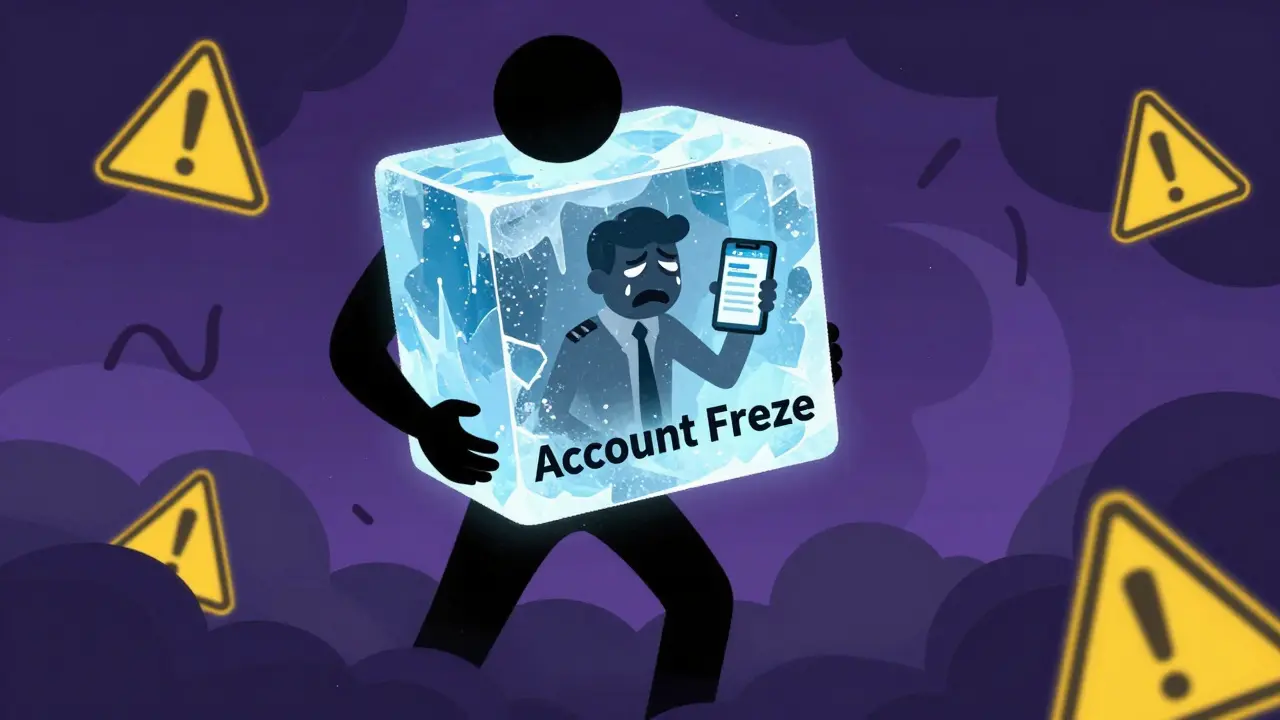
The biggest fear for any Nigerian crypto trader is not a slow withdrawal it is an account freeze. The Economic and Financial Crimes Commission (EFCC) has shown it will aggressively target accounts connected to suspicious crypto activity, even if the user believes they are innocent.
In September 2024, the EFCC secured court orders to freeze 22 bank accounts belonging to sellers of USDT on exchanges like Bybit and KuCoin. The frozen amount totaled approximately ₦548.6 million. The allegation? Market manipulation of the naira exchange rate. This case sent shockwaves through the community. It proved that authorities are monitoring crypto-linked bank accounts closely.
| Risk Factor | Description | Likelihood |
|---|---|---|
| Account Freeze | Banks or EFCC freezing accounts due to suspected money laundering or market manipulation. | High for unlicensed platforms; Low for licensed ones. |
| Transaction Reversal | Banks reversing incoming transfers if they detect non-compliant sources. | Moderate |
| Enhanced Scrutiny | Requests for proof of funds and trading history after large withdrawals. | High for frequent/large traders |
| Tax Investigation | Future reporting of gains to the Federal Inland Revenue Service (FIRS). | Increasing |
If you are involved in P2P trading, especially outside of approved channels, you are walking a tightrope. The EFCC views rapid movement of funds between multiple accounts as a sign of layering a technique used in money laundering. Even if you are just a regular trader, appearing in these patterns can lead to your account being locked.
Practical Limits and Cash Restrictions
Even when everything goes right, you will face practical limitations. The CBN guidelines require banks to impose prudent transaction limits on crypto-related accounts. These limits are not always publicly disclosed and vary by bank and account type.
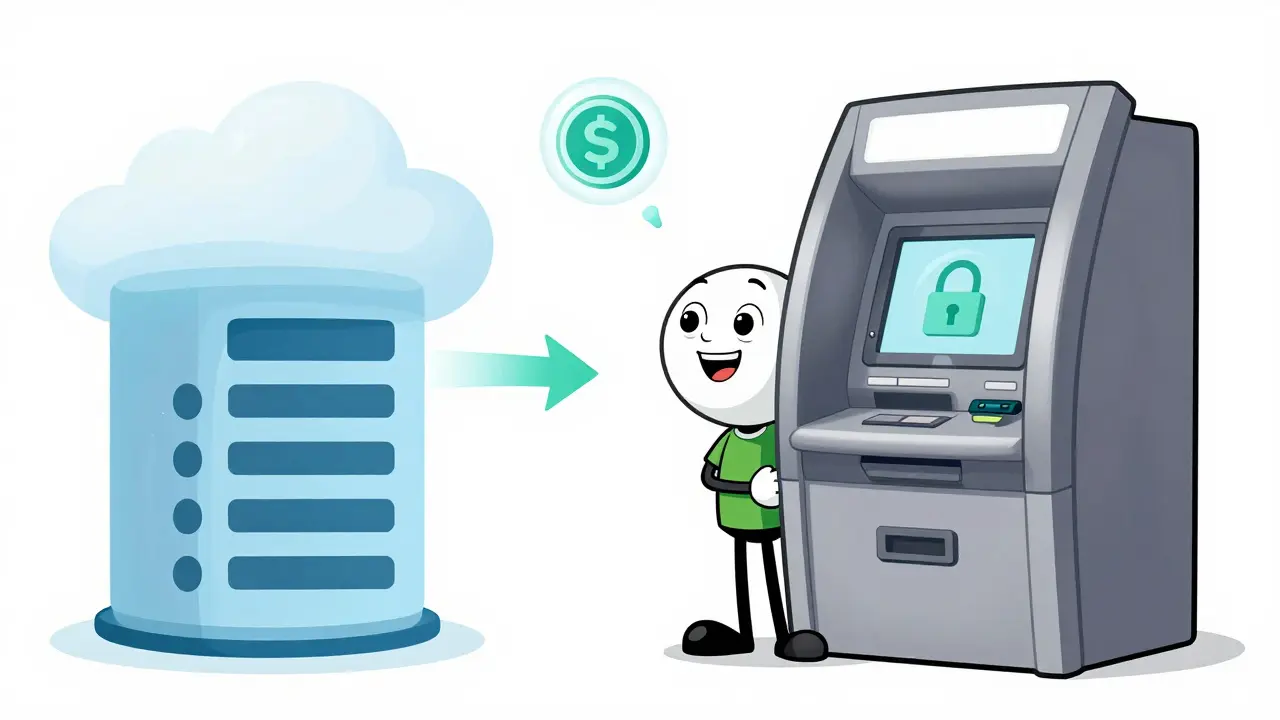
Furthermore, there is a strict rule regarding cash. Banks are prohibited from allowing cash withdrawals from accounts identified as holding crypto proceeds. All transactions must go through electronic banking channels. This means you cannot walk into a branch and withdraw physical naira from a crypto sale. You must use POS terminals, ATMs, or online transfers to move the money further. This restriction is designed to create a digital trail for auditors.
Different banks handle this differently. Fintech-oriented banks and digital-only platforms often have smoother processes for crypto withdrawals compared to traditional commercial banks like UBA or Zenith, which tend to be more conservative. Some users diversify their banking relationships, keeping one account for salary and another for crypto activities, to mitigate the risk of having all their eggs in one basket.
The Taxation Question: What Comes Next?
As we move through 2026, the conversation is shifting from legality to taxation. The Federal Inland Revenue Service (FIRS) has stated that cryptocurrency transactions are taxable as capital gains. While specific tax laws for crypto were still evolving in late 2025, the proposed Finance Bill aims to align Nigeria's framework with international norms.
This matters for your bank reactions. As tax frameworks solidify, banks may be required to report significant crypto-to-fiat withdrawals to tax authorities. If you are making large or frequent withdrawals, be prepared for documentation requests. Your bank may ask for proof of your crypto holdings, trading history, and tax filings to verify the source of funds. Ignoring these requests can lead to account restrictions.
Best Practices for Smooth Withdrawals
So, how do you navigate this complex environment? Here is what works in practice:
- Stick to Licensed Exchanges: Use platforms like Luno that are approved by the SEC. Avoid unlicensed international apps for direct bank withdrawals.
- Keep Records: Maintain comprehensive records of your trades. Screenshots, export files, and transaction IDs are your best defense if your bank asks questions.
- Avoid Suspicious Patterns: Do not move money rapidly between multiple accounts. Keep your withdrawal amounts consistent with your historical banking behavior.
- Verify Your Identity: Ensure full KYC verification on both your crypto platform and your bank. Mismatches trigger alerts.
- Diversify Banking Relationships: Do not rely on a single bank for all your crypto activities. If one bank decides to exit crypto services, you still have access to your funds elsewhere.
The Nigerian crypto banking environment is a work in progress. Regulations are tightening to boost global confidence and help Nigeria get off the Financial Action Task Force's Gray List. This means banks will act as enforcers of compliance rather than facilitators of free trading. Understand this role, play within the lines, and your withdrawals will likely proceed without drama.
Can I withdraw crypto directly to my bank account in Nigeria?
Yes, but only if you use an SEC-licensed exchange like Luno. Banks will process these transfers as legitimate electronic payments. However, withdrawals from unlicensed platforms or informal P2P deals may be blocked or frozen.
Why did my bank freeze my account after a crypto withdrawal?
Banks freeze accounts due to Enhanced Due Diligence requirements. If the transaction comes from an unlicensed source, looks like money laundering, or violates AML/KYC protocols, the bank or EFCC may freeze the account pending investigation. This is common with P2P trades involving suspicious actors.
Is it legal to trade crypto in Nigeria in 2026?
Yes. The Investments and Securities Act 2025 (ISA 2025) legalized digital assets as securities. However, you must operate through licensed entities regulated by the SEC. Trading on unlicensed platforms carries significant legal and banking risks.
Can I withdraw cash from my ATM after selling crypto?
No. Current CBN guidelines prohibit cash withdrawals from accounts receiving crypto proceeds. All transactions must remain within electronic banking channels to maintain a clear audit trail for regulatory purposes.
Which banks are most crypto-friendly in Nigeria?
Fintech-oriented banks and digital-only platforms generally offer smoother processing for crypto withdrawals. Traditional commercial banks tend to be more cautious and may impose stricter limits or slower processing times for crypto-related transactions.