Nigeria Crypto Banking Ban Reversal: 2021-2025 Timeline

Nov, 10 2026
Imagine trying to buy a coffee with Bitcoin in Lagos, only to find your bank account frozen because the transaction touched a crypto exchange. For four years, that was reality for millions of Nigerians. The Central Bank of Nigeria (CBN) is the apex monetary authority responsible for regulating the country's financial system, and in February 2021, it slammed the door shut on institutional crypto support. Fast forward to late 2025, and the landscape has flipped entirely. Banks are now permitted to serve licensed crypto firms, and a new legal framework recognizes digital assets as securities. This isn't just a minor policy tweak; it's one of the most dramatic regulatory reversals in African financial history. If you're wondering how we got from a total ban to structured acceptance, or what this means for your wallet, this timeline breaks down exactly what happened, why it changed, and where things stand today.
The Hard Stop: Why the Ban Happened in 2021
To understand the reversal, you have to look at the fear driving the original prohibition. In early 2021, Governor Godwin Emefiele didn't just dislike crypto; he viewed it as a direct threat to the Naira. He told the Senate that "opaque activities" threatened the safety of the financial system. On February 5, 2021, the CBN issued a circular that didn't just discourage crypto-it banned commercial banks and other financial institutions from processing transactions for virtual asset service providers. If your bank saw money moving to Binance or Luno, they could freeze your account. Period.
This wasn't out of nowhere. It built on a January 2017 directive that had already flagged Bitcoin risks. But the 2021 move was aggressive. The government worried about capital flight, money laundering, and the destabilizing effect of unregulated digital currencies on foreign exchange reserves. They wanted control. What they got, however, was chaos in the informal sector. Instead of dying, the market went underground. Peer-to-peer (P2P) trading exploded because users couldn't rely on traditional banking rails. By 2022, Nigeria ranked second globally in P2P volume. The ban hadn't stopped adoption; it had just made it harder and riskier for regular people.
The Silent Shift: Cracks in the Policy (2022-2023)
Policies rarely change overnight. They erode under pressure. By late 2022, the strict enforcement began to soften. You might not have seen headlines screaming about it, but banks quietly started allowing some crypto firms to operate under undisclosed conditions. Why? Because the economic reality became undeniable. Nigeria was grappling with severe foreign exchange shortages, and the CBN realized that fighting a technology used by over 40% of the adult population was a losing battle.
There was also a leadership transition. When Emefiele’s tenure ended, the tone at the central bank shifted. The new administration looked at global trends-countries like Singapore and Dubai were embracing regulated crypto-and decided isolation wasn't working. The first major sign of change came in December 2023. The CBN officially lifted the ban, citing "current global trends." This wasn't a free-for-all, though. It was a calculated reopening. Banks were allowed to resume relationships with crypto platforms, but only those holding valid licenses from the Securities and Exchange Commission (SEC).

The New Rules: How Regulation Works Now
If you think the door is wide open, think again. It’s more like a turnstile with a security guard. The December 2023 reversal introduced the Virtual Asset Service Provider (VASP) Guidelines. These rules created a pathway for crypto businesses to enter the formal financial system, but with strings attached. Banks can now process payments for licensed entities, but they must set "prudent" transaction limits. Crucially, cash withdrawals from crypto-linked accounts are prohibited. This aims to prevent money laundering while keeping digital assets within the traceable banking ecosystem.
The real game-changer arrived with the Investments and Securities Act (ISA) 2025. This legislation definitively categorizes digital assets as securities under SEC authority. Before this, owning crypto wasn't illegal, but the legal status was murky. Now, it's clear: if you run an exchange, you need an SEC license. The SEC manages the licensing and compliance, while the CBN oversees the banking side. This dual-regulatory structure is designed to balance innovation with stability. It’s a lesson learned from the 2021 failure: you can't ban what people want to use, but you can regulate how they access it.
| Feature | 2021 Ban Era | 2025 Regulated Era |
|---|---|---|
| Banking Access | Prohibited for all crypto transactions | Allowed for SEC-licensed VASPs only |
| Legal Status | Gray area; ownership legal but unsupported | Digital assets recognized as securities |
| Primary Trading Method | Peer-to-Peer (P2P) informal markets | Licensed exchanges with KYC compliance |
| Regulatory Body | CBN (Enforcement focused) | Joint SEC and CBN oversight |
| Cash Withdrawals | N/A (No bank integration) | Prohibited from crypto accounts |
Industry Reaction and Market Impact
The response from the industry has been swift, albeit cautious. Major players see opportunity. Yellow Card, a prominent Africa-focused exchange, announced plans to apply for licensing immediately. Even Coinbase, the U.S. giant, entered agreements to expand its presence across African nations, leveraging local partners who understand the regulatory nuance. However, insiders warn against expecting a gold rush. One anonymous CEO noted that regulators likely won't issue many licenses quickly. The goal isn't to flood the market with startups; it's to ensure only robust, compliant firms survive.
For everyday users, the impact is mixed. On one hand, you get the convenience of linking your bank account directly to a trusted exchange. No more awkward P2P chats with strangers on WhatsApp. On the other hand, privacy takes a hit. Enhanced Know Your Customer (KYC) requirements mean every trade is tracked. This transparency helps Nigeria fight its bid to leave the Financial Action Task Force (FATF) Gray List, which currently hampers foreign investment. But it also means the era of anonymous crypto trading in Nigeria is effectively over.
Ongoing Tensions and Future Risks
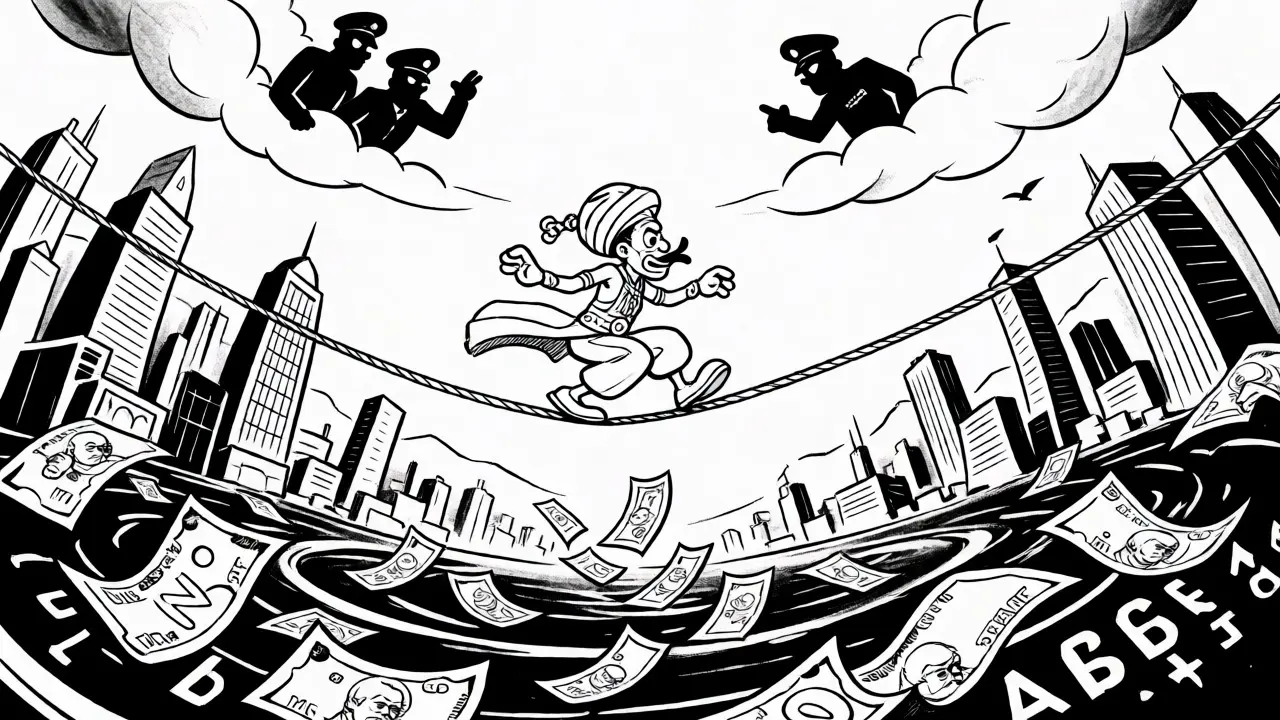
Don't mistake regulation for full embrace. Tensions remain high. Throughout 2024, authorities still blamed crypto traders for foreign exchange volatility. The detention of two Binance executives in March 2024 served as a stark reminder that enforcement risks haven't vanished. There are still whispers among national security advisors about whether crypto trading poses a broader threat. The government wants the tax revenue and financial inclusion benefits, but they remain wary of losing control over the Naira.
Implementation challenges persist, too. Specific transaction limits under the new AML rules aren't fully public yet. Users don't know exactly how much they can move before triggering a review. Furthermore, the distinction between using crypto for investment versus daily payments remains blurry. While South Africa and Kenya have moved toward clearer frameworks, Nigeria is still fine-tuning the details. The success of this model will likely influence the rest of Sub-Saharan Africa. If it works, expect neighbors to follow suit. If it creates bottlenecks, the informal P2P market may resurge despite the regulations.
Frequently Asked Questions
Is cryptocurrency legal in Nigeria right now?
Yes, owning and trading cryptocurrency is legal. The 2021 ban restricted banking support, not ownership itself. As of 2025, the legal framework explicitly recognizes digital assets as securities under the Investments and Securities Act, providing clear legitimacy for users and businesses.
Can I link my Nigerian bank account to any crypto exchange?
Not just any exchange. Banks are only permitted to process transactions for Virtual Asset Service Providers (VASPs) that hold a valid license from the Securities and Exchange Commission (SEC). Using unlicensed platforms may still result in account freezes or restrictions.
Why did the CBN lift the ban after banning it so strictly?
The ban failed to stop adoption; instead, it pushed trading into informal peer-to-peer channels. With Nigeria facing foreign exchange pressures and seeing global trends toward regulated crypto, the CBN realized that bringing the market into the formal banking sector offered better oversight and potential economic benefits than outright prohibition.
What are the main restrictions under the new 2025 rules?
Key restrictions include mandatory SEC licensing for exchanges, strict anti-money laundering (AML) and KYC compliance, and prohibitions on cash withdrawals from crypto-linked bank accounts. Banks must also impose prudent transaction limits on these accounts.
How does this affect the FATF Gray List status?
Nigeria is on the Financial Action Task Force (FATF) Gray List due to concerns about inadequate anti-money laundering controls. The new crypto regulations aim to strengthen these controls through transparent, regulated transactions, helping Nigeria meet FATF standards and potentially remove the list status to improve foreign investment inflows.