Bird Finance Airdrop: Complete Guide, Tokenomics & Safety Check
May, 24 2026
It is easy to get excited when you see the word "airdrop" attached to a new cryptocurrency project. You imagine free tokens landing in your wallet, boosting your portfolio without any upfront cost. But with the name Bird Finance, the reality is much more complicated than a simple click-and-collect reward. In fact, right now, you need to be extremely careful. There is no active, verified Bird Finance airdrop happening today. Instead, there is a minefield of confusion caused by multiple projects using similar names, past timelines that have already passed, and aggressive marketing tactics that can lead you into scams.
If you are looking for the BIRD token distribution from the original lending protocol, you likely missed the window or are looking at outdated information. If you are seeing ads for a "Bird" game on Telegram or a messaging app called Birdchain, those are completely different entities. This guide cuts through the noise. We will explain what Bird Finance actually is, why their airdrop news is confusing, how their tokenomics work, and most importantly, how to protect yourself from fake airdrops pretending to be this project.
What Is Bird Finance?
To understand the airdrop situation, you first need to know what the project itself does. Bird Finance Protocol is not just a meme coin or a gaming token. It is a decentralized finance (DeFi) platform built primarily on the Solana blockchain, though it has explored cross-chain integrations with Ethereum and HECO (Huobi Eco Chain). The core promise of the platform is "smart pool" functionality. Instead of manually hunting for the best yield farming opportunities across different exchanges, Bird Finance uses algorithms to automatically move your assets into the most profitable liquidity pools.
Think of it as an automated investment manager for DeFi. You stake your assets, and the system compounds your returns by reinvesting profits into high-yield pools. The native governance token for this ecosystem is $BIRD. Holders of this token were supposed to benefit from the platform's growth and participate in governance decisions. However, the complexity of the technology means that the user base is generally more sophisticated than the typical casual airdrop hunter. This creates a gap between who the project serves and who is chasing the free tokens.
The Confusion: Why Are There So Many "Bird" Projects?
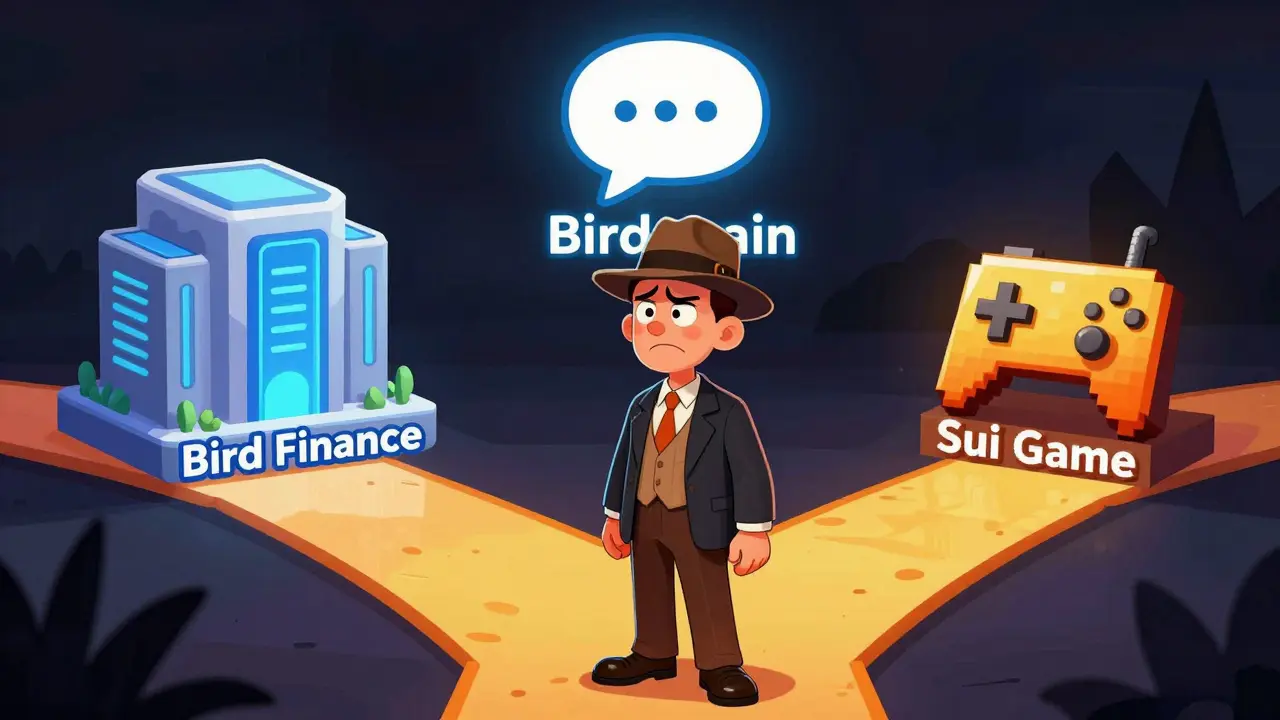
This is the most critical part of this article. If you search for "Bird Airdrop" today, you will find three distinct things. Mixing them up could cost you money or result in wasted time.
- Bird Finance (The DeFi Protocol): This is the lending and yield aggregation platform discussed above. Their initial listings and distributions happened in late 2024 and early 2025. Any talk of a massive new airdrop for this specific entity in mid-2026 is likely misinformation or a scam.
- Birdchain: A separate project focused on decentralized instant messaging. They conducted their own distribution of 1,000,000 BIRD tokens to community members. This requires joining Telegram groups and following social accounts. It has nothing to do with DeFi lending.
- "Birds" Mini App (Sui Blockchain): A Telegram-based game on the Sui network. This project announced token distributions tied to gameplay levels (like reaching level 10) and on-chain activity. This is a gamified airdrop, entirely unrelated to the financial services of Bird Finance.
Scammers exploit this naming overlap. They create fake websites that look like Bird Finance but ask you to connect your wallet to claim "free BIRD tokens." Once connected, they may drain your existing assets. Always verify the official contract address and domain before interacting with any site claiming to represent Bird Finance.
Bird Finance Tokenomics: How $BIRD Works
Understanding the economics of the $BIRD token helps explain why a traditional "free money" airdrop model doesn't fit neatly here. Bird Finance operates on a hyper-deflationary model designed to reduce supply over time, theoretically increasing value for holders. Here is how the mechanics break down:
| Fee Component | Percentage | Purpose |
|---|---|---|
| Liquidity Pool | 2% | Added to DEX liquidity to stabilize trading pairs |
| DAO Governance | 2% | Funds community decision-making and development |
| Holder Rewards | 2% | Distributed proportionally to existing BIRD holders |
| Total Transaction Tax | 6% | Applied to every buy/sell transaction |
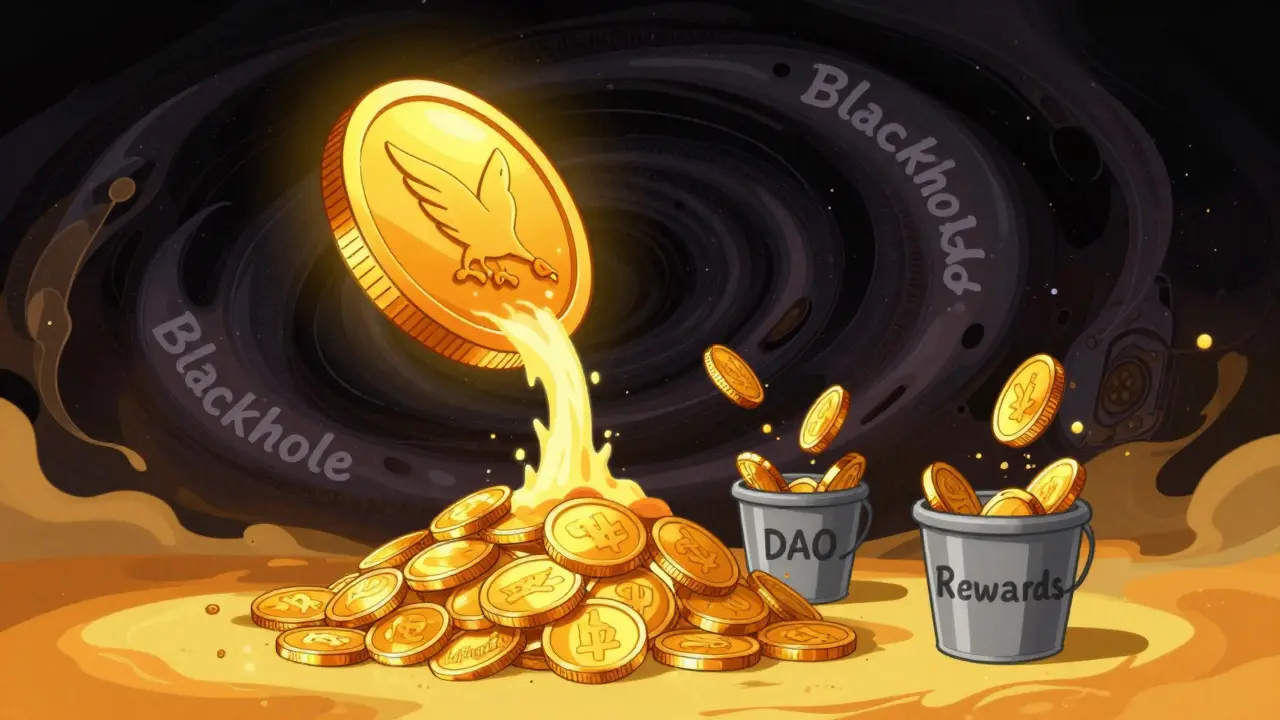
A key feature of this model is the "blackhole" mechanism. At launch, 50% of the total BIRD supply was sent to a blackhole address-a wallet with no private key, meaning those tokens are permanently removed from circulation. Because the blackhole holds the largest portion of the supply, the 2% holder rewards mostly go to this dead address, effectively burning tokens with every transaction. This deflationary pressure is intended to support the price, but it also means that new participants cannot simply "farm" large amounts of tokens easily; the supply is shrinking, not expanding freely.
Airdrop Timeline: What Happened and What’s Next?
Let’s clear up the timeline confusion. Early reports suggested an official listing and distribution event for November 30, 2024. Later announcements pushed this to the first quarter of 2025. As we stand in May 2026, these dates are long past. If you did not participate during those windows, the primary distribution phase is over.
Why the delays? Common reasons in DeFi include regulatory compliance checks, technical audits of smart contracts, and market timing. Bird Finance needed to ensure its cross-chain bridges (connecting Solana, Ethereum, etc.) were secure before allowing mass token movement. While some smaller community incentives may still exist, the major "launchpad" style airdrop is a historical event for this project.
If you see a website claiming a "New Bird Finance Airdrop Starts Today," it is almost certainly a phishing attempt. Legitimate projects do not announce major retroactive drops out of nowhere after two years of silence. They build anticipation months in advance through official channels like Twitter (X), Discord, and Medium blogs.
How to Stay Safe: Avoiding Scams
The desire for free tokens makes users vulnerable. Here is a checklist to keep your crypto safe while researching Bird Finance or similar projects:
- Never Share Your Seed Phrase: No legitimate airdrop will ever ask for your 12 or 24-word recovery phrase. If a site asks for this, close it immediately.
- Verify Contract Addresses: Use trusted aggregators like CoinMarketCap or CoinGecko to find the official $BIRD contract address. Compare it with the address shown on any airdrop site. Even one character difference means it is a fake.
- Check Official Socials: Look for the verified blue checkmark on Twitter/X. Read the pinned posts. If the official account says "No airdrop currently running," believe them.
- Beware of "Gasless" Claims: Real transactions on blockchains require gas fees. If a site promises free tokens with zero interaction cost, it is likely trying to trick you into signing a malicious contract approval.
- Use a Burner Wallet: If you must interact with a new or unverified dApp, use a secondary wallet with minimal funds. Never connect your main holding wallet to unknown sites.

Alternatives to Bird Finance in DeFi
If you are interested in the type of yield aggregation Bird Finance offers, but want to avoid the confusion of their airdrop history, consider looking at established competitors. These platforms have transparent histories and active communities:
- Aave: A leading lending protocol with robust security and widespread adoption across multiple chains.
- Compound: One of the oldest DeFi protocols, offering stable yields and strong governance.
- Uniswap: For liquidity providers, Uniswap remains the standard for decentralized exchange liquidity.
These projects rarely offer "free" tokens anymore because they are mature. However, they often have referral programs or loyalty rewards that are safer and more predictable than speculative airdrops.
Conclusion: Proceed with Caution
The Bird Finance airdrop narrative is a classic example of how quickly information degrades in the crypto space. What started as a promising DeFi tool with a deflationary token model became tangled with similarly named games and messaging apps. For anyone reading this in 2026, the takeaway is clear: the main event has passed. Do not fall for fake urgency. Focus on understanding the underlying technology, verify all sources through official channels, and prioritize security over the hope of free gains. In DeFi, patience and verification are your best tools for long-term success.
Is there an active Bird Finance airdrop in 2026?
No. The primary distribution events for Bird Finance occurred in late 2024 and early 2025. Any claims of a new major airdrop in 2026 are likely scams or refer to unrelated projects with similar names.
What is the difference between Bird Finance and Birdchain?
Bird Finance is a DeFi lending and yield aggregation protocol. Birdchain is a decentralized messaging application. They are completely separate projects with different goals, teams, and token utilities.
How does the BIRD token deflation work?
50% of the total supply was sent to a blackhole address. Additionally, 6% of every transaction fee is distributed, with 2% going to holders. Since the blackhole is the largest holder, most of this tax is burned, reducing the circulating supply over time.
Is Bird Finance available on Ethereum?
Bird Finance primarily operates on Solana but has integrated cross-chain capabilities to access pools on Ethereum and HECO. Users should check the official website for current supported networks.
Can I earn BIRD tokens by playing the "Birds" game on Sui?
Yes, but this is a separate project. The "Birds" mini-app on the Sui blockchain had its own token distribution tied to gameplay levels. It is not affiliated with the Bird Finance DeFi protocol.