Privacy in Decentralized Identity: How SSI Protects Your Data
Sep, 4 2026
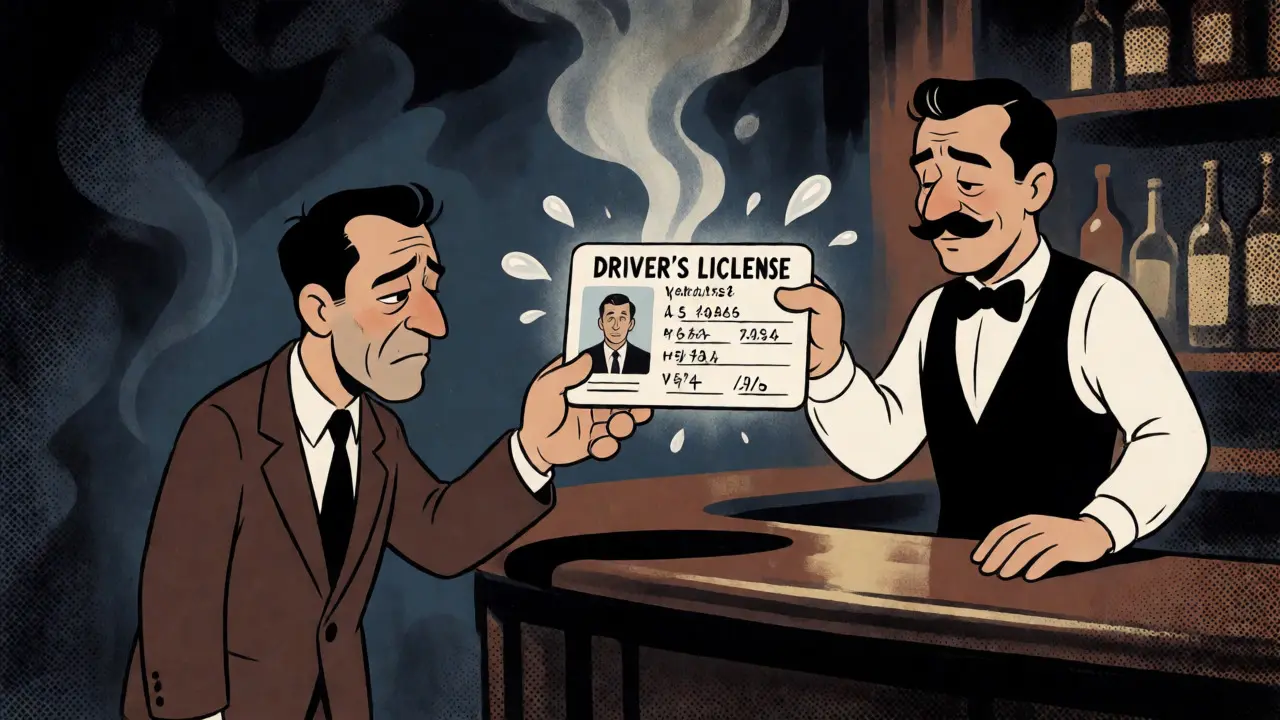
You hand over your driver’s license to a bartender. You give your passport to an airline agent. In both cases, you reveal far more than necessary. The bartender sees your address and eye color just to verify you’re over 21. This is the flaw of traditional digital identity: we share too much, too often, with too many people who don’t need it.
Decentralized Identity is a system where individuals control their own digital credentials using cryptographic keys, rather than relying on central authorities like banks or governments to store and manage personal data. It flips the script. Instead of trusting a third party with your life story, you hold the keys. But does this actually protect your privacy, or is it just another tech buzzword? Let’s break down how it works, why it matters, and where it still falls short.
The Problem with Centralized Trust
Think about every app that asks for "Sign in with Facebook" or "Log in with Google." You are handing over your email, friend list, and browsing habits to a corporation. If that company gets hacked-and they do-your data is exposed. Centralized systems create honeypots. One breach at Equifax exposed 147 million Americans. One leak at a hotel chain exposes thousands of passports.
In these models, you don’t own your identity; the platform does. They decide what data to collect, how long to keep it, and who else can see it. You have little say. Decentralized identity removes the middleman. It shifts power from the verifier (the bank, the school, the government) to the holder (you).
How Self-Sovereign Identity Works
Self-Sovereign Identity (SSI) is a specific implementation of decentralized identity where users maintain full control over their digital identity and data, determining what information can be accessed at any point in time. It relies on three main players:
- Issuers: Trusted entities like universities or governments that sign credentials. For example, Harvard issues a degree certificate.
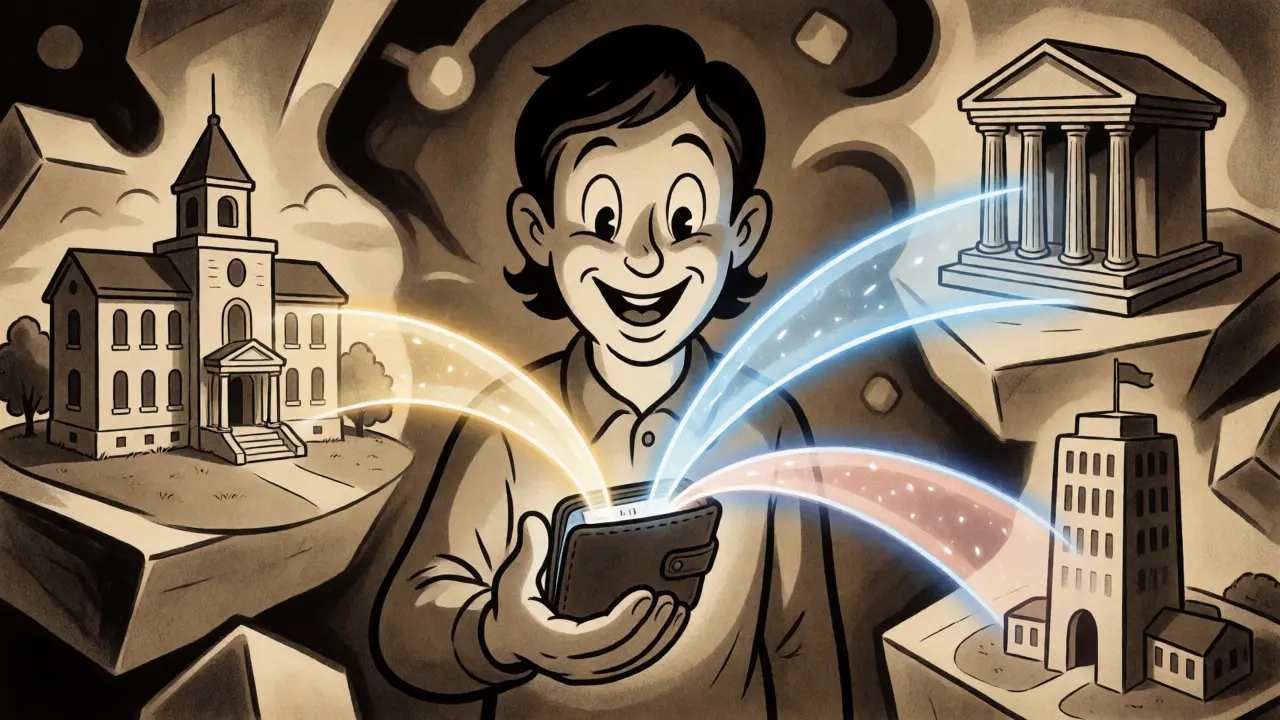
- Holders: You. You store these signed credentials in a digital wallet on your phone.
- Verifiers: Employers or banks that check if your credential is valid without needing to call Harvard directly.
The magic happens in the verification step. When an employer wants to know if you graduated, they don’t ask for your transcript. They ask for a Verifiable Credential a cryptographically secure digital certificate that allows users to prove specific attributes without revealing additional personal details. Your wallet presents proof that you have a valid degree. The employer checks the digital signature against a public ledger. They know it’s real. They don’t see your GPA, your major, or your student ID number unless you choose to share them.
DIDs and Digital Wallets: The Privacy Tools
At the core of this system are Decentralized Identifiers (DIDs) unique alphanumeric strings that deliberately exclude personal data such as phone numbers, email addresses, or names. A DID looks like a random string of characters. It contains no name, no photo, no birthdate. It’s just a pointer to a public key.
Why does this matter for privacy? Because you can generate new DIDs for different interactions. Use one DID for your bank, another for social media, and a third for online shopping. No single entity can link your banking history to your shopping habits because they see different identifiers. This prevents profiling.
Your Digital Wallet a secure software repository where users store and manage their credentials and identifiers locally on their device. holds these credentials. Unlike cloud storage, your data stays on your device. If you lose your phone, you lose access, but no server has a copy of your private keys. This local-first approach reduces the attack surface significantly.
Cryptographic Proofs: Showing Without Telling
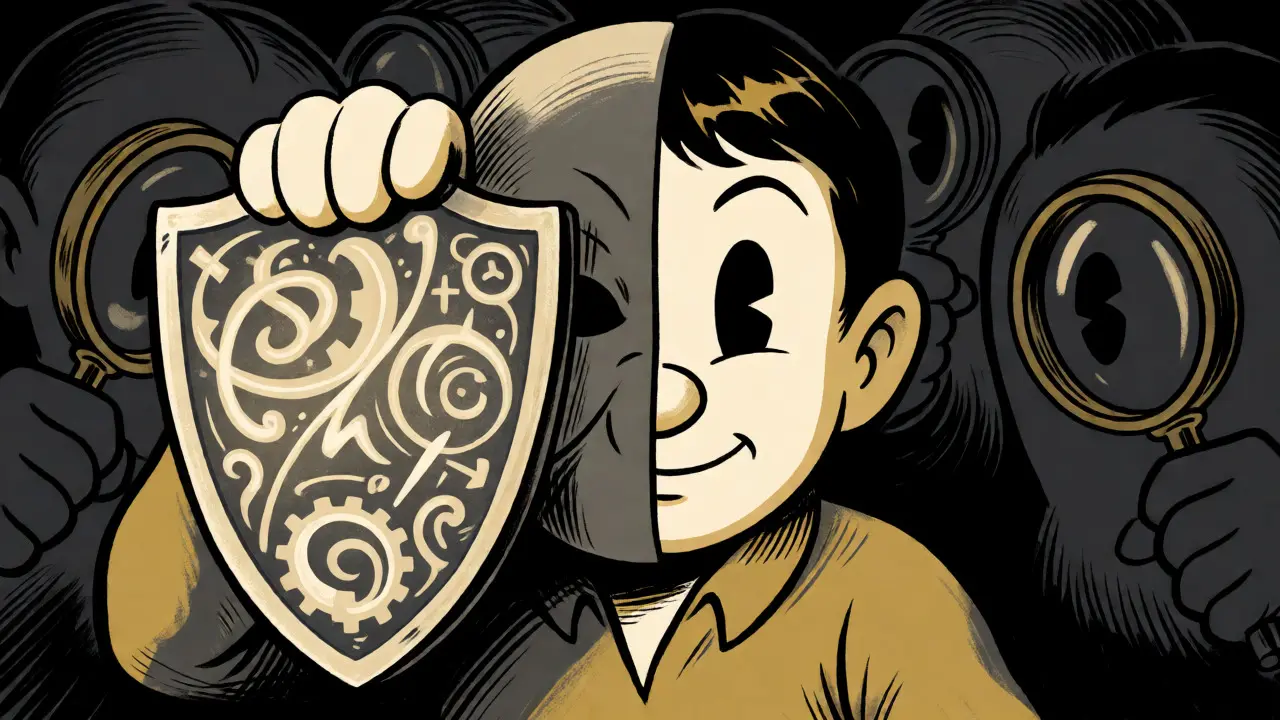
The most powerful privacy feature here is Zero-Knowledge Proof (ZKP) a cryptographic method that allows one party to prove to another that a statement is true without revealing any information beyond the validity of the statement itself. Imagine proving you are over 18 without showing your date of birth. With ZKPs, your wallet generates a mathematical proof that says, "Yes, age > 18," without sending the actual number "25" or "30" to the verifier.
This selective disclosure is huge. Currently, when you buy alcohol online, you might send a scan of your ID. That image contains your home address, height, and weight. The retailer stores that image. Years later, a breach leaks it. With decentralized identity, the retailer only receives a boolean "True" for age verification. They never see your address. They never store your personal data. The risk of exposure drops to near zero.
Blockchain’s Role: Verification, Not Storage
A common misconception is that all your personal data lives on the blockchain. It doesn’t. Storing sensitive data on-chain is expensive and problematic for privacy laws like GDPR, which grants the right to be forgotten. Blockchains are immutable-you can’t delete data once written.
Instead, blockchains store the public keys and hashes of credentials. Think of the blockchain as a notary office. It doesn’t hold your will; it just records the fingerprint of the document so anyone can check if it’s been tampered with. Your actual credential (the will) stays in your pocket (wallet). This separation ensures that even if the blockchain is transparent, your personal details remain private.
| Feature | Centralized Identity | Decentralized Identity |
|---|---|---|
| Data Storage | Servers owned by companies/governments | User's local device (Digital Wallet) |
| Data Sharing | All-or-nothing (share full profile) | Selective Disclosure (share specific claims) |
| Breach Impact | High (millions of records exposed) | Low (no central database to hack) |
| Control | Third-party controls access | User controls access via keys |
| Verification Method | Querying central databases | Cryptographic signature validation |
Real-World Privacy Wins
Consider the healthcare sector. Today, sharing medical records between hospitals involves fax machines or proprietary portals that track who viewed your file. Often, insurance companies get more data than needed. With decentralized identity, you could grant a doctor temporary access to only your vaccination record for a flu shot appointment. Once the visit ends, the access revokes. The hospital doesn’t keep a copy of your entire medical history. You retain ownership.
Another example is cross-border travel. Airlines currently require passport scans stored in their databases. These databases are targets. If airlines adopted verifiable credentials, they would verify the authenticity of your passport digitally without storing the biometric data. This reduces liability for the airline and enhances privacy for the traveler.
The Challenges Remaining
It’s not all smooth sailing. Interoperability is a hurdle. If Bank A uses one standard for DIDs and Bank B uses another, your wallet might not work everywhere. Standards bodies like W3C are working on this, but adoption is fragmented.
Then there’s user error. In centralized systems, if you forget your password, you reset it via email. In decentralized systems, if you lose your private key recovery phrase, you lose your identity forever. There is no "forgot password" button. This requires better UX design and perhaps social recovery mechanisms, where trusted friends can help restore access.
Regulation also lags. Laws like GDPR assume a data controller exists. In a fully decentralized network, who is the controller? Is it the issuer? The verifier? The network nodes? Legal frameworks need to catch up to clarify accountability.
Why This Matters Now
We are moving away from the era of free data collection. Users are tired of being products. Regulations like the EU’s eIDAS 2.0 framework mandate that member states issue digital wallets to citizens by 2026. This isn’t optional anymore; it’s policy. Companies that ignore decentralized identity risk non-compliance and losing customer trust.
For developers and businesses, the shift means building apps that request less data. Less data means lower storage costs and fewer compliance headaches. For users, it means peace of mind. You stop worrying about whether some obscure website sold your email address to spammers.
Decentralized identity isn’t just about technology; it’s about restoring agency. It gives you the ability to walk into a digital space and present exactly what is needed, nothing more. As cyber threats evolve, this minimal-disclosure model becomes our best defense.
Is decentralized identity completely anonymous?
Not necessarily. While it offers pseudonymity through DIDs, you can choose to link your identity to real-world attributes. The key difference is that you control the linkage. You can use one DID for anonymous browsing and another for verified banking, keeping the two separate.
What happens if I lose my digital wallet?
If you lose your device and haven't backed up your recovery seed, you may lose access to your credentials. Most modern wallets offer backup options or social recovery features where designated contacts can help restore access without holding your private keys.
Does blockchain store my personal data?
No. Typically, only the Decentralized Identifier (DID) and public keys are stored on the blockchain. Your actual personal data remains off-chain, encrypted in your local digital wallet. This ensures that the public ledger does not contain sensitive information.
Can companies still track me with decentralized identity?
Tracking is harder because you can use unique DIDs for each service. However, if you reuse the same DID across multiple platforms, those platforms can potentially correlate your activity. Best practices involve generating new DIDs for distinct contexts to prevent cross-site tracking.
Is decentralized identity compatible with GDPR?
Generally, yes, because data is not stored centrally. Since the user holds the data, they can easily revoke access or delete their local copy. However, legal interpretations vary regarding who acts as the 'data controller' in a decentralized network, which remains an area of active regulatory development.