Slashing Insurance and Protection for Proof-of-Stake Staking
Feb, 2 2026
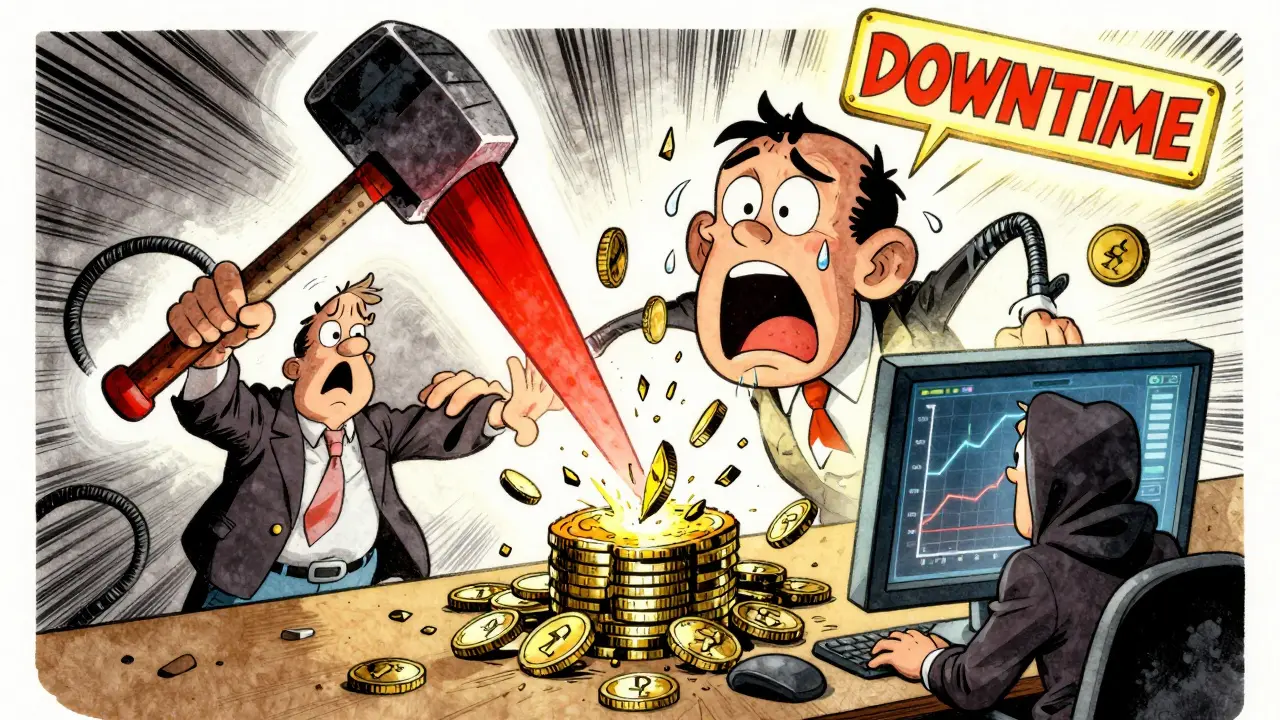
When you stake your cryptocurrency on a Proof-of-Stake (PoS) network like Ethereum, Solana, or Polygon, you’re not just earning rewards-you’re also taking on risk. One of the biggest risks? Slashing. It’s not a bug. It’s a feature. And it can wipe out a chunk, or even all, of your staked assets in seconds.
Slashing happens when a validator-a node that helps secure the blockchain-makes a mistake. Maybe their server went down. Maybe they accidentally signed two conflicting blocks. Maybe they tried to cheat the system. Whatever the reason, the network automatically punishes them by burning part of their stake. And if you delegated your coins to that validator? You lose too.
For retail stakers, this feels like a lottery ticket that can suddenly turn worthless. For institutions-banks, hedge funds, custodians-it’s a dealbreaker. How can you trust a system that can erase your capital without warning? That’s where slashing insurance comes in.
What Exactly Is Slashing?
Slashing isn’t about punishing bad actors. It’s about keeping the network honest. PoS blockchains rely on validators who lock up (or "stake") their own coins as collateral. If they act honestly, they get rewarded. If they act dishonestly-or even just carelessly-they get slashed.
There are three main reasons slashing kicks in:
- Downtime slashing: Your validator goes offline for too long. Maybe the server crashed. Maybe the internet went out. Maybe someone forgot to pay the bill. The network doesn’t care why-it just knows the validator didn’t do their job.
- Double signing: A validator signs two different blocks at the same height. This is a serious violation. It’s like voting twice in an election. The network sees it as an attempt to manipulate consensus.
- Malicious behavior: Intentional attacks, like trying to create a fork or collude with other validators to cheat. This is rare, but the penalties are the harshest.
The amount lost depends on the blockchain. Ethereum slashes up to 100% of a validator’s stake for double signing. Other chains like Cosmos or Avalanche have lower penalties, but they still hurt. And because slashing is automated, there’s no appeal. No human review. No mercy.
Why Slashing Insurance Exists
Before slashing insurance, staking was a gamble. You could earn 5%, 8%, even 12% annual returns-but you had no protection if your validator messed up. Retail users often shrugged it off: "I’ll just pick a reliable one." But reliability isn’t enough. Even the best validators get slashed by accident.
Take Figment, one of the biggest staking providers. They run validators for Ethereum, Polkadot, and others. They have SOC 2 and ISO 27001 certifications-top-tier security standards. Yet in 2024, one of their nodes suffered a power outage during a regional blackout. The validator went offline for 12 hours. Ethereum’s slashing mechanism triggered. Their clients lost 0.5% of their staked ETH.
That’s not a failure of Figment. It’s how PoS works. The network doesn’t distinguish between "good" and "bad" outages. It just enforces the rule.
Enter slashing insurance. Companies realized: if institutions want to stake, they need a safety net. Not just for fraud or hacks-those are covered by traditional crypto insurance. But for the silent, automatic, and unavoidable penalties built into the protocol itself.
How Slashing Insurance Works
Slashing insurance isn’t like car insurance. You don’t pay a monthly premium and file a claim after an accident. It’s built into the service. There are three main models:
- Self-funded reserves: Providers like DAIC Capital set aside a pool of money specifically to cover slashing losses. If your validator gets slashed for downtime, DAIC refunds you based on the blockchain’s slashing rate-say, 0.3% of your stake. But there’s a catch: the fund has limits. If 10 validators get slashed at once, payouts might be reduced.
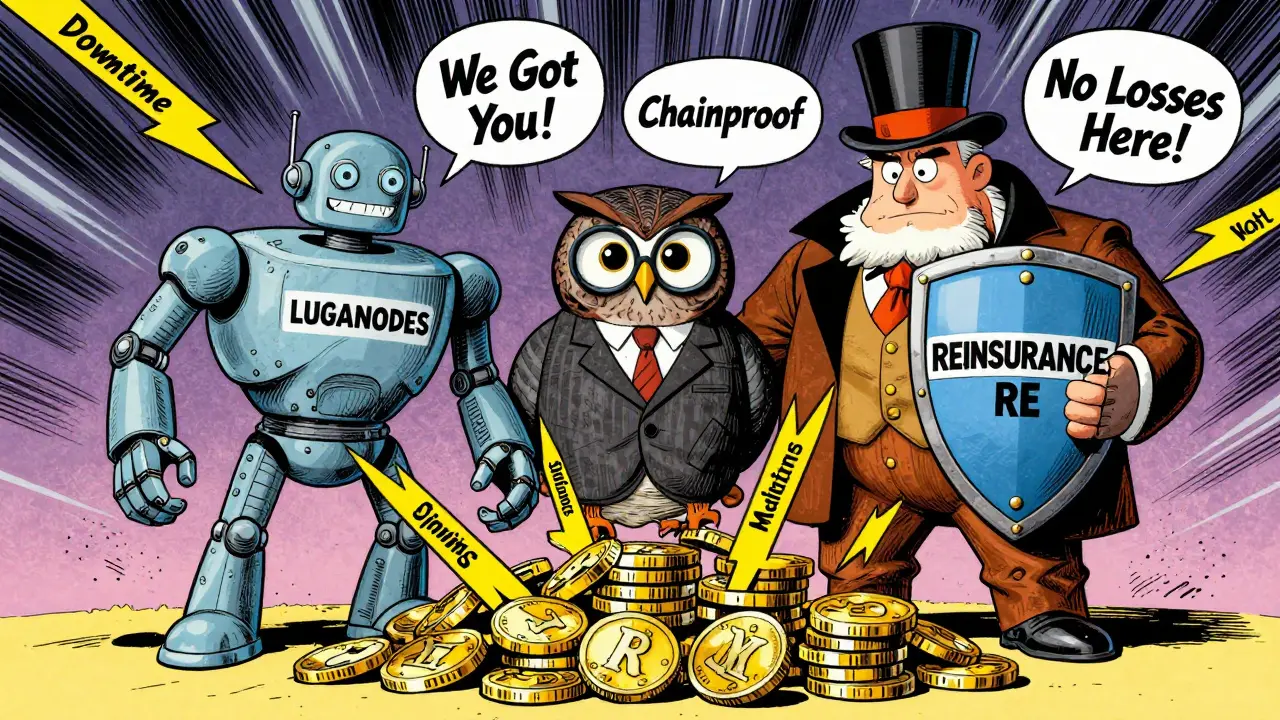
- Third-party coverage: Luganodes partners with Chainproof, a blockchain-specific insurer, which is then backed by Munich Re-one of the world’s largest reinsurance firms. This creates a three-layer safety net: Luganodes handles the validator, Chainproof covers the loss, Munich Re backs Chainproof. It’s like having an insurance policy insured by an insurance company.
- Hybrid models: Figment offers built-in monitoring and alerts for double signing. Then, for Ethereum stakers, they partner with Nexus Mutual, a decentralized insurance protocol. You pay a small fee (usually 0.1-0.5% of your stake per year) to buy additional coverage that kicks in if double signing occurs. It’s optional, transparent, and on-chain.
Blockdaemon, another major player, offers coverage across 29 PoS networks. They target banks and institutional clients, but they don’t publish exact coverage percentages or pricing. That’s common. Most providers treat these numbers as proprietary.
Who Needs It-and Who Doesn’t
Slashing insurance isn’t for everyone. But it’s essential for certain users:
- Institutional investors: Hedge funds, family offices, and custodians are required by compliance teams to mitigate all material risks. Slashing is a material risk. Without insurance, they can’t legally stake.
- Large stakers: If you’re staking $100,000 or more, losing 1% ($1,000) in a single slashing event hurts. Insurance turns a big loss into a small deductible.
- Businesses offering staking services: If you’re a crypto exchange or wallet provider letting users stake, you’re liable for losses. Insurance protects your balance sheet.
For small retail stakers-someone staking $500 in ETH on Coinbase or Kraken-insurance usually isn’t worth it. Most platforms already cover slashing internally, and the cost of buying separate insurance would eat into your returns.
Still, even retail users should understand the risk. If you’re staking on a self-hosted validator, you’re on your own. No insurance. No refunds. Just a blockchain rule that doesn’t care how much you lost.
What’s Not Covered
Slashing insurance only covers losses from protocol-level penalties. It won’t protect you from:
- Hacks of your wallet or exchange account
- Smart contract exploits
- Exchange insolvency
- Price drops in your staked asset
It also won’t cover you if you misconfigure your validator. If you set the wrong parameters, run outdated software, or forget to update your keys, that’s your fault. Insurance only covers unavoidable failures.
Some providers exclude malicious slashing entirely. If a validator is caught intentionally cheating, they get slashed-and you don’t get paid. That’s intentional. The goal isn’t to reward bad behavior. It’s to protect against honest mistakes.
The Big Players and Their Approaches
Here’s how the top providers stack up:
| Provider | Coverage Type | Key Partners | Best For | Auto-Included? |
|---|---|---|---|---|
| Luganodes | Downtime & Double Signing | Chainproof, Munich Re | Institutional clients | Yes |
| Figment | Double Signing (Ethereum only) | Nexus Mutual | Advanced users, enterprises | No (add-on) |
| DAIC Capital | Downtime only | Self-funded fund | Stakers prioritizing uptime | Yes |
| Blockdaemon | 29 PoS networks | Proprietary | Large institutions, custodians | Yes |
Luganodes stands out because they include insurance automatically for institutional clients. No opt-in. No extra fee. Just peace of mind. That’s a strong signal: the market believes this protection is non-negotiable.
Figment’s partnership with Nexus Mutual is unique because it’s decentralized. You’re buying coverage from a community-run pool, not a traditional insurer. It’s transparent, on-chain, and auditable-but it requires you to understand how to use it.
DAIC Capital’s model is the simplest: they focus only on downtime, which is the most common cause of slashing. They don’t try to cover everything. They just make sure your validator stays online.
Is Slashing Insurance Worth It?
Let’s say you stake $10,000 in ETH. The average annual slashing rate for downtime is 0.2%. That means, on average, you might lose $20 a year.
Now, if you buy insurance that costs 0.3% of your stake ($30/year), you’re paying more than the expected loss. Sounds like a bad deal, right?
But insurance isn’t about average losses. It’s about worst-case scenarios.
What if your validator gets slashed 2%? That’s $200. What if it happens twice? $400. What if you’re managing multiple validators and three of them go down at once? $600. That’s a real hit.
Insurance turns unpredictable, high-impact losses into a predictable, low-cost expense. For institutions, that’s the difference between compliance and chaos.
For retail users, it’s optional. But if you’re serious about staking-especially with self-hosted nodes-it’s worth considering. Even a small coverage plan can save you from a surprise that wipes out months of rewards.
The Future of Slashing Insurance
The market is still young. Only a handful of providers offer it. But adoption is growing fast. Aon, one of the world’s largest insurance brokers, is now developing blockchain-specific risk products. Munich Re’s involvement isn’t a fluke-it’s validation.
Expect three big trends in the next two years:
- Standardized coverage terms: Right now, every provider defines "downtime" differently. In the future, we’ll see industry-wide definitions.
- Retail access: Right now, retail users can’t buy slashing insurance easily. That will change as platforms integrate it directly into wallets and exchanges.
- AI-driven monitoring: Providers will use machine learning to predict outages before they happen-reducing slashing events before insurance even needs to pay out.
Slashing isn’t going away. It’s a core part of PoS security. But insurance is making staking safer, more predictable, and more accessible to the institutions that will drive the next wave of blockchain adoption.
Know the risk. Understand your provider’s coverage. And don’t assume you’re protected unless you’ve confirmed it.
What triggers a slashing penalty in Proof-of-Stake?
Slashing penalties are triggered automatically by the blockchain protocol when a validator commits one of three violations: downtime (failing to produce blocks for a set period), double signing (signing two conflicting blocks at the same height), or malicious behavior (intentional attacks on consensus). The network enforces these penalties without human intervention, regardless of intent.
Does slashing insurance cover all types of losses?
No. Slashing insurance only covers losses from protocol-level penalties like downtime or double signing. It does not cover losses from exchange hacks, wallet breaches, smart contract failures, price declines, or intentional misconduct by the validator. Always check the fine print of your coverage terms.
Can retail users buy slashing insurance?
Currently, most slashing insurance products are designed for institutional clients. However, some platforms like Coinbase and Kraken offer built-in protection for retail stakers. Direct access to third-party slashing insurance is still limited for individuals, but this is expected to change as the market matures and more exchanges integrate coverage into their staking services.
Is slashing insurance expensive?
Costs vary. Some providers include it at no extra charge for institutional clients. Others charge 0.1% to 0.5% of your staked amount annually. For example, on $100,000 in ETH, you might pay $100-$500 per year. Compare this to potential losses: a 1% slashing event on that amount would cost $1,000. Insurance often pays for itself after one incident.
How do I know if my staking provider offers slashing insurance?
Check their website’s security or risk management page. Look for mentions of "slashing protection," "insurance coverage," or partnerships with firms like Nexus Mutual, Chainproof, or Munich Re. If you’re unsure, contact their support team directly and ask: "Do you provide insurance for slashing penalties, and what exactly does it cover?" Don’t assume it’s included.