NFT Storage: Where Your Digital Assets Really Live
When you buy an NFT, you’re not buying the image—you’re buying a digital certificate that points to it. That pointer is stored on the blockchain, but the actual file? It’s often stored somewhere else entirely. This is NFT storage, the system that holds the digital files linked to NFTs, like art, music, or virtual land. Also known as off-chain storage, it’s the hidden layer that determines if your NFT will last or vanish tomorrow. Most people think their NFT is safe because it’s on Ethereum or Solana. But if the file is hosted on a company’s server that shuts down, your NFT becomes a link to nothing. That’s not ownership—it’s a digital ghost.
Real NFT storage needs to be decentralized. That’s where IPFS, a peer-to-peer network for storing and sharing files without relying on central servers. Also known as InterPlanetary File System, it’s the backbone of most serious NFT projects comes in. Instead of storing your NFT art on Amazon or Google, IPFS spreads it across thousands of computers worldwide. If one goes down, others still have it. That’s how projects like CryptoPunks and Bored Apes keep their art alive for decades. But even IPFS isn’t perfect. If no one pins (keeps a copy of) your file, it can disappear. That’s why some NFTs use Arweave, a blockchain designed to store data permanently for a one-time fee. Also known as permanent web, it’s built for long-term NFT survival. Arweave charges you once—maybe $5—to store your file forever. No subscriptions. No servers to shut down.
Why does this matter? Because 90% of NFTs today use weak storage. If you bought an NFT last year and now the image is broken, it’s not your wallet’s fault—it’s the storage. Real NFTs need to link to files that are both decentralized and actively maintained. Look for projects that use Arweave or pin their IPFS hashes on multiple nodes. Avoid NFTs that point to centralized URLs like https://example.com/art.jpg. Those are ticking time bombs.
And don’t forget metadata. That’s the JSON file that holds your NFT’s name, description, and attributes. If that’s stored poorly, your NFT loses its identity—even if the image stays up. The best NFTs store metadata on IPFS or Arweave too. This isn’t just tech talk—it’s your ownership. If you care about your NFTs lasting, you need to care about where they live.
Below, you’ll find real breakdowns of NFT projects, storage failures, and how to spot the ones that actually stick around. No fluff. Just what works—and what doesn’t.
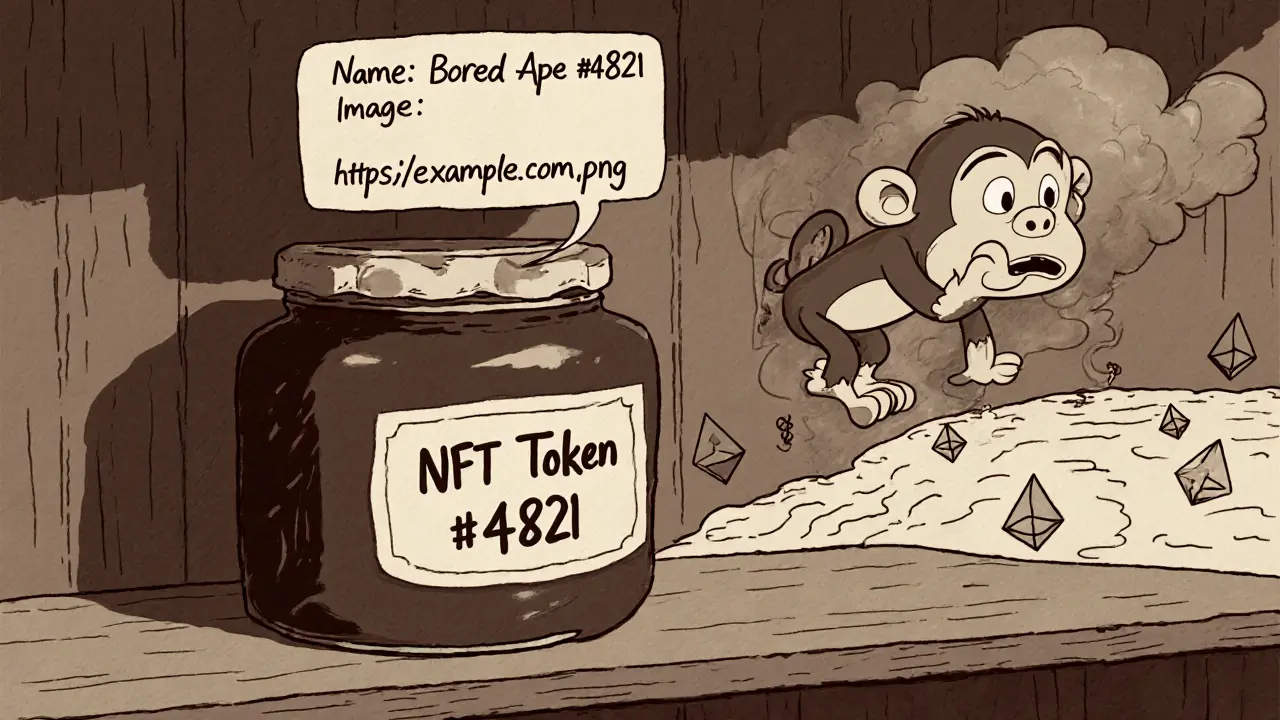
What Is NFT Metadata? A Clear Guide to How It Works and Why It Matters
Caius Merrow Nov, 27 2025 0NFT metadata is the JSON data that defines what your NFT looks like and how it works. Learn how it's stored, why centralized hosting puts your NFT at risk, and how to check if your NFT is truly permanent.
More Detail