BaFin Cryptocurrency Oversight and Compliance: What Businesses Must Know in 2026

Jan, 19 2026
Germany doesn’t ban cryptocurrency. It regulates it. And no one enforces that regulation like BaFin - the Federal Financial Supervisory Authority. If you’re running a crypto business in Germany, or even just accepting crypto payments, you need to understand what BaFin expects. This isn’t about guesswork. It’s about legal boundaries, mandatory licenses, and real consequences.
What BaFin Actually Controls
BaFin doesn’t just watch crypto exchanges. It controls every part of the crypto ecosystem that touches financial services. Under the German Banking Act (KWG), crypto assets - including Bitcoin, Ethereum, stablecoins, and security tokens - are classified as financial instruments. That means any service tied to them falls under BaFin’s supervision.If your business does any of these, you need a license:
- Custody of crypto assets (holding keys for clients)
- Trading crypto on behalf of others
- Operating a crypto exchange platform
- Issuing or offering new crypto-assets to the public
- Running a mining pool that actively markets services
Even if you’re based outside Germany, BaFin still cares. If you target German customers - through German-language websites, accepting euros, or advertising on local forums - you’re subject to German law. Passive services, like someone from Germany coming to you on their own, don’t trigger licensing. But if you reach out to them? That’s a license requirement.
The Licensing Process Is Faster Now - But Still Strict
After the Wirecard scandal, BaFin became infamous for taking over a year to approve crypto applications. That’s changed. Since MiCAR took effect in 2024, BaFin has streamlined its process. Some crypto custody licenses are now granted in under four months.But speed doesn’t mean slack. You still need:
- A detailed business plan showing how you’ll comply with AML rules
- Proof of sufficient capital (minimum €125,000 for custody services)
- Qualified management with clean backgrounds
- Secure IT infrastructure certified for cybersecurity
- A white paper for any new token offering
One company applied in November 2024 and got approval by March 2025. They didn’t cut corners. They submitted a clean, compact application with all documents in order. BaFin responded quickly because they didn’t have to ask for anything extra.
Compliance Isn’t Optional - It’s Built In
Getting licensed is just the start. Once approved, you’re under constant scrutiny. BaFin requires ongoing compliance with two major rules:1. The Crypto Asset Transfer Regulation (KryptoWTransferV)
This is Germany’s version of the FATF "travel rule." Every crypto transfer over €1,000 must carry sender and receiver details. That means your platform must collect and store:
- Name and address of the originator
- Name and address of the beneficiary
- Account or wallet numbers
- Transaction purpose
Even if you’re sending crypto to another licensed provider, you still need to pass this data. If you’re a wallet provider, you must be able to receive and verify this info from others. No exceptions.
2. Know Your Customer (KYC)
You must verify every client’s identity before they can trade, hold, or transfer crypto. BaFin doesn’t accept screenshots of IDs. You need:
- Government-issued photo ID (passport or national ID card)
- Proof of address (utility bill or bank statement under 3 months old)
- Biometric verification (facial recognition or live video check)
And you must keep those records for at least five years. BaFin can audit you anytime. If you can’t produce them, your license is at risk.
What Happens If You Don’t Comply?
BaFin doesn’t warn twice. It shuts you down.In June 2025, BaFin ordered Ethena GmbH to stop all operations in Germany related to its USDe stablecoin. The company had launched the token without a license and failed to meet MiCAR’s white paper requirements. BaFin didn’t fine them - it appointed a special representative to manage the orderly redemption of tokens. Users had until August 6, 2025, to swap their USDe for other assets. After that, the service vanished.
Another case: a Berlin-based crypto trading platform was shut down in January 2025 because its CEO had a prior conviction for fraud. BaFin revoked the license within 48 hours of discovering the truth.
Even small businesses aren’t safe. A freelance web designer in Hamburg accepted Bitcoin for services. He used a third-party payment processor to convert crypto to euros. The processor wasn’t licensed. BaFin fined the designer €15,000 for facilitating unlicensed financial activity. The designer didn’t know the processor was illegal. That didn’t matter.
When You Don’t Need a License
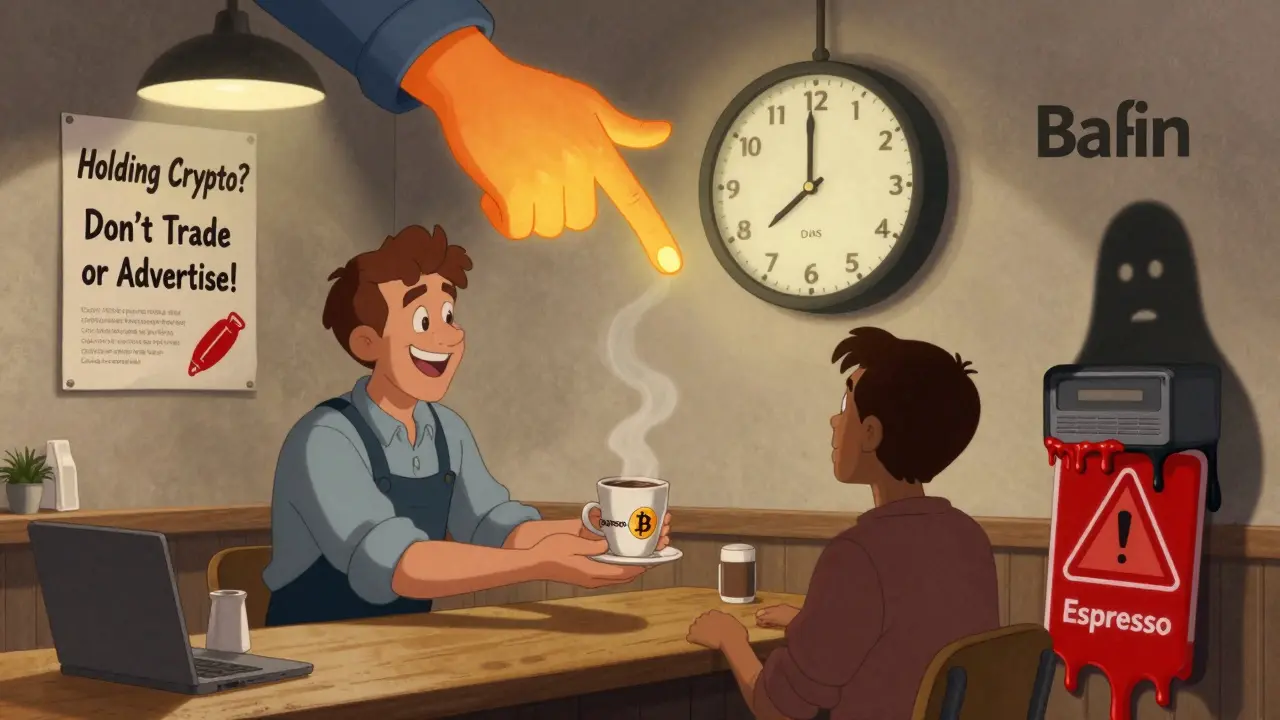
Not every crypto activity needs BaFin approval. Here’s where you’re safe:- Accepting crypto as payment for goods or services (like a coffee shop taking Bitcoin)
- Buying crypto for personal use
- Mining crypto for your own wallet
- Using a licensed payment provider to convert crypto to euros
But here’s the trap: if you start doing anything beyond simple acceptance - like holding crypto for more than 30 days, offering to buy from others, or advertising your crypto trading services - you cross into regulated territory.
One online retailer accepted crypto payments for months without a license. Then they started running Facebook ads saying "Buy Bitcoin with us - we guarantee the best rate." BaFin saw that. They classified it as proprietary trading under Section 1(1a) no. 4 of the KWG. The business had to shut down and apply for a license retroactively - a costly and time-consuming process.
Tax Rules Are Changing Too
BaFin doesn’t handle taxes, but the Federal Ministry of Finance does - and their rules now directly affect how you report crypto activity.In March 2025, the ministry updated its guidelines:
- "Virtual currencies" is no longer a legal term - it’s now "crypto assets"
- Active staking (running a validator node) is treated as income
- Passive staking (using a platform like Coinbase) is treated as capital gains
- DeFi transactions must be tracked and reported - including swaps, liquidity provision, and yield farming
- You must keep daily market values for every transaction and retain records for 10 years
If you’re a business, you need accounting software that can auto-track these. Manual spreadsheets won’t cut it anymore. BaFin and tax authorities share data. If your crypto income doesn’t match your bank statements, you’ll get flagged.
What’s Next for 2026?
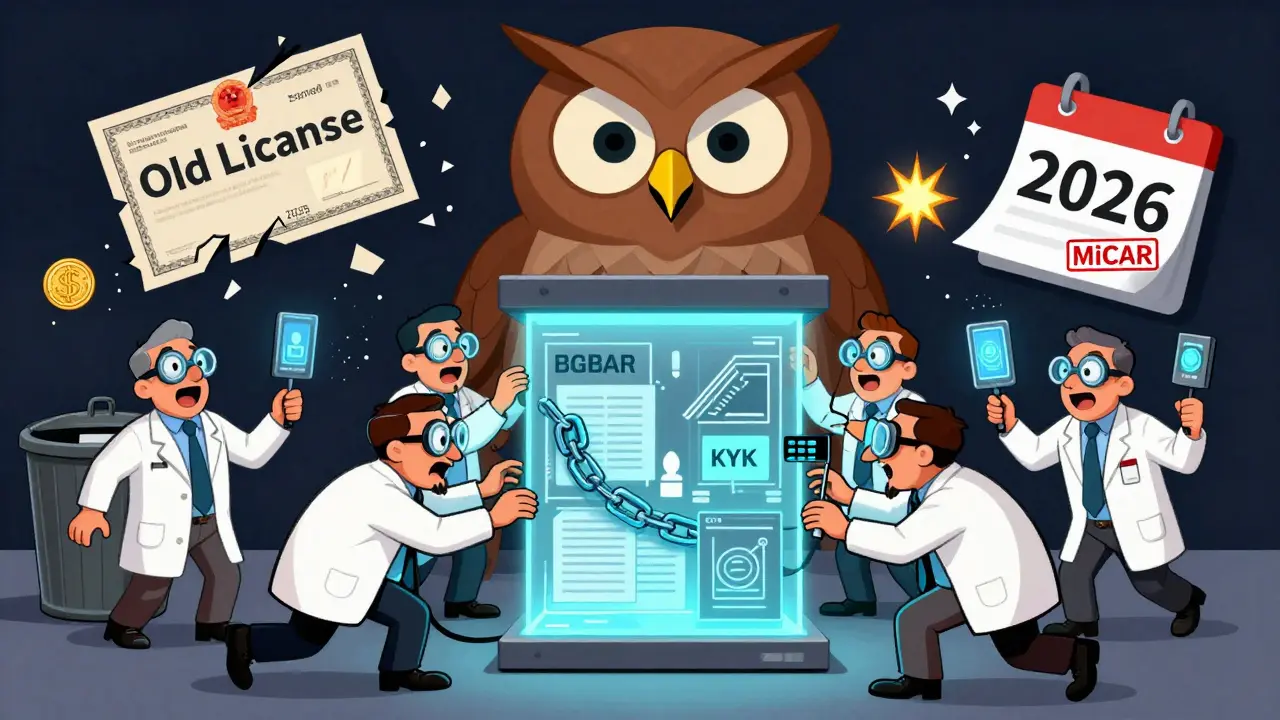
By the end of 2025, all existing crypto licenses under German law expired. Now, every provider must hold a MiCAR-compliant license. BaFin has stopped issuing old-style permits. If you’re still operating under an old license, you’re illegal.Expect more enforcement in 2026. BaFin is hiring 200 new staff focused on crypto compliance. They’re building automated tools to scan blockchain addresses linked to unlicensed entities. They’re also working with banks to freeze accounts tied to unregistered crypto services.
The message is clear: Germany is open for business - but only if you play by the rules. No gray areas. No loopholes. No excuses.
How to Stay Compliant
If you’re running a crypto business in Germany, here’s your checklist:- Confirm your activity requires a license - if in doubt, assume it does
- Apply for a MiCAR-compliant license through BaFin’s online portal
- Implement full KYC and AML procedures with verified software
- Ensure your IT systems meet BaFin’s cybersecurity standards
- Train your team on the travel rule and documentation requirements
- Keep daily records of all transactions and valuations
- Review tax reporting rules every quarter - they change fast
Don’t wait for a notice from BaFin. Start now. The window for easy compliance is closing.
Do I need a BaFin license if I only accept crypto payments for my online store?
No, you don’t need a license if you’re only accepting crypto as payment for goods or services and immediately converting it to euros through a licensed provider. But if you hold crypto for more than 30 days, trade it yourself, or advertise crypto trading services, you cross into regulated territory and need a license.
What happens if I use an unlicensed crypto payment processor?
You’re liable. BaFin can fine you for facilitating unlicensed financial activity, even if you didn’t know the processor was unlicensed. Always verify your payment provider has a valid BaFin license before integrating their service.
Can a foreign crypto company operate in Germany without a license?
Only if they don’t target German customers. If they advertise in German, accept euros, or have a German-language website, BaFin considers them active in Germany and requires a license. Passive access - like a German user finding the site on their own - doesn’t trigger licensing.
Is staking crypto taxable in Germany?
Yes. Active staking - running your own validator node - is treated as income and taxed at your personal rate. Passive staking through platforms like Coinbase is treated as capital gains. You must track the value of staking rewards at the time they’re received and report them annually.
How long does it take to get a BaFin crypto license?
It used to take over a year. Now, with MiCAR, applications are processed in 3 to 6 months - if they’re complete. Incomplete applications or missing documentation can delay approval by months. Submit clean, thorough paperwork to avoid delays.
What’s the minimum capital required for a BaFin crypto license?
For crypto custody services, you need at least €125,000 in capital. For trading or exchange services, the requirement is €50,000. These funds must be held in a German bank and remain accessible to BaFin at all times.