Top Wrapped Assets by Volume: WETH, WBTC, and USDT Dominance in 2026
Jun, 14 2026
Imagine trying to spend your Bitcoin at a coffee shop that only accepts Ethereum. It’s impossible, right? That’s the problem wrapped assets solve. They are the bridges that let digital money flow between blockchains that don’t naturally talk to each other. If you are looking at wrapped assets by volume today, you aren't just looking at tokens; you are looking at the plumbing of the entire decentralized finance (DeFi) ecosystem. Without them, liquidity would be stuck in silos, and cross-chain trading would grind to a halt.
As we move through mid-2026, the landscape has shifted from experimental tech to critical infrastructure. The total crypto market cap hovering around $4 trillion means billions of dollars are constantly moving across chains. But which specific wrapped tokens handle the most weight? The answer isn't always the biggest coins you think it is. Let's break down the actual volume leaders, why they dominate, and what this means for your portfolio.
The Heavyweights: Why Stablecoins Lead the Pack
When people hear "wrapped asset," they often picture Wrapped Bitcoin (WBTC). But if you look at raw trading volume, stablecoins take the crown. Specifically, Wrapped Tether (USDT) and its counterparts on Ethereum and other EVM-compatible chains are the undisputed kings of volume.
Why? Because traders use stablecoins as their base currency. When you buy an altcoin on Uniswap or SushiSwap, you are likely swapping USDT for that token. Since USDT exists natively on Tron but needs to be "wrapped" or bridged to function smoothly on Ethereum or BNB Chain, these wrapped versions see massive daily turnover. In Q3 2025 alone, stablecoin transfer volumes hit $3.66 trillion monthly. A significant chunk of that flows through wrapped variants because liquidity providers prefer the security and composability of established smart contract standards like ERC-20.
- USDT (ERC-20): The primary vehicle for trading pairs on Ethereum-based DEXs.
- USDC (Bridged/Wrapped): While native on many chains, bridged versions still see high volume during cross-chain arbitrage events.
- Dai (Multi-chain): Often moved via bridges, acting as a wrapped representation of its underlying collateral across networks.
The key takeaway here is utility. You don't hold wrapped USDT for yield; you hold it to trade. This transactional nature creates the highest volume metrics in the space.
Wrapped Bitcoin (WBTC): The Gold Standard of Collateral
If stablecoins are the cash register, Wrapped Bitcoin (WBTC) is the vault. WBTC allows Bitcoin holders to participate in Ethereum DeFi without selling their BTC. It was one of the first major wrapped assets, launched in 2019, and it remains the benchmark for trust and volume among non-stablecoin wrapped assets.
By June 2026, WBTC continues to dominate the lending markets. Protocols like Aave and Compound rely heavily on WBTC as collateral. When you borrow ETH against your WBTC, that action generates volume. Furthermore, as Layer 2 solutions like Arbitrum and Optimism mature, WBTC is frequently bridged to these networks, creating secondary wrapped representations that add to the aggregate volume count.
However, WBTC faces stiff competition. Newer alternatives like tBTC (trustless Bitcoin) and cbBTC (Coinbase Bitcoin) are gaining traction. These newer entrants promise better transparency and lower counterparty risk. Yet, WBTC's sheer size and integration into thousands of smart contracts keep its volume near the top. It’s the incumbent advantage in action.
| Asset | Underlying Asset | Primary Use Case | Volume Driver |
|---|---|---|---|
| WBTC | Bitcoin (BTC) | DeFi Collateral & Lending | Borrowing activity & long-term holding |
| WETH | Ethereum (ETH) | DEX Trading Pairs | Swapping & liquidity provision |
| wstETH | Lido Staked ETH | Yield Farming | Restaking protocols (EigenLayer) |
| sOL (Sollet) | Solana (SOL) | Cross-Chain Yield | Moving Solana yields to Ethereum |
Wrapped Ether (WETH): The Native Language of DeFi
This might sound redundant. Why wrap Ethereum when you are already on Ethereum? The answer lies in technical compatibility. Smart contracts on Ethereum understand the ERC-20 token standard perfectly. Native ETH does not follow this standard exactly-it’s the gas, not the token. To make ETH work seamlessly in automated market makers (AMMs) like Uniswap, it must be wrapped into WETH.
Consequently, WETH has some of the highest trading volumes of any individual token on Ethereum. Every time you swap a meme coin for ETH on a DEX, you are technically swapping for WETH behind the scenes. It is the universal solvent of the Ethereum ecosystem. As Layer 2 networks grow, WETH becomes even more critical because it serves as the bridge asset between L1 and L2 environments.
In 2026, with Ethereum's role as the settlement layer for the broader crypto economy solidified, WETH volume correlates directly with overall DeFi activity. If DeFi TVL (Total Value Locked) goes up, WETH volume almost certainly follows.

The Rise of Liquid Staking Derivatives (LSDs)
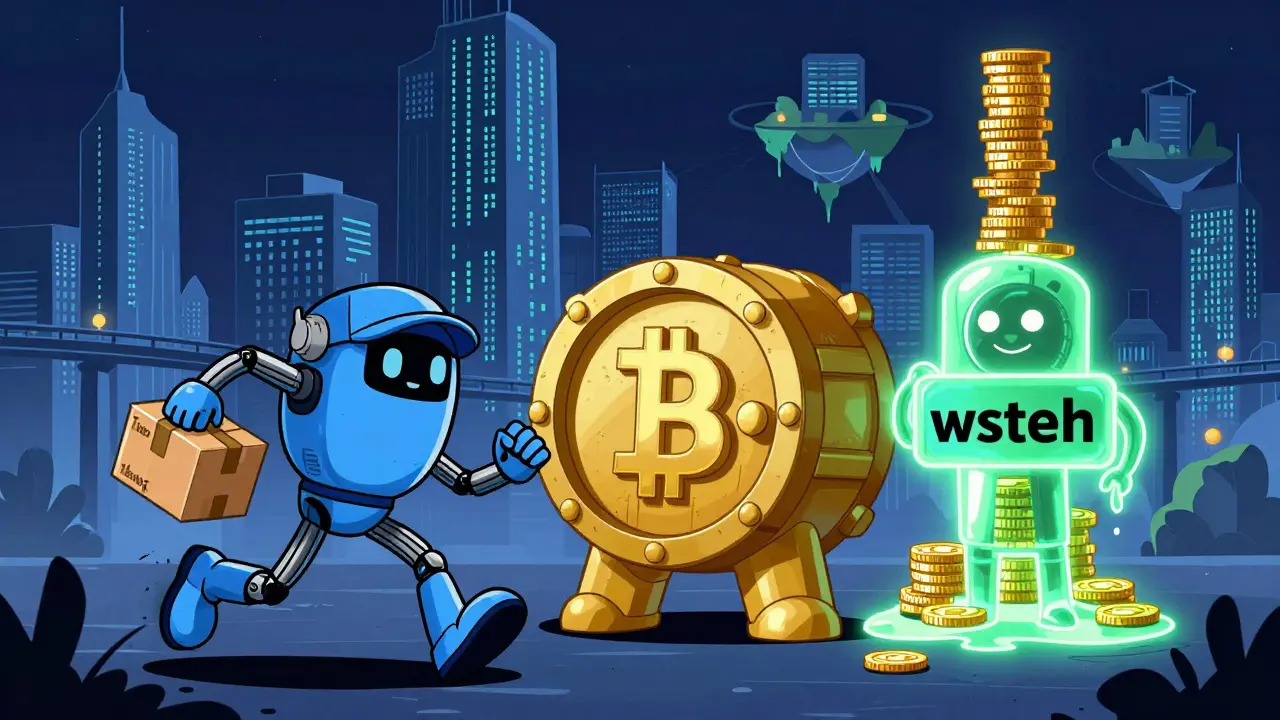
A new category has exploded in volume since late 2024: wrapped liquid staking tokens. These aren't just wrappers for static assets; they are wrappers for *yield*. wstETH (wrapped staked ETH) is the prime example. When users stake ETH via Lido, they get stETH. To use stETH in protocols that expect a specific interface or to boost yield further, they wrap it into wstETH.
With the rise of restaking protocols like EigenLayer, wstETH has become a foundational asset. Users deposit wstETH to secure multiple networks simultaneously, generating additional rewards. This cycle of depositing, wrapping, and restaking creates immense internal volume. By mid-2026, wstETH consistently ranks in the top 5 for trading volume among all wrapped assets, surpassing many traditional wrapped coins.
Other players include rETH (Rocket Pool) and osETH (Ethena), each capturing slices of this yield-bearing wrapped market. The trend is clear: users want their wrapped assets to earn interest while they sit idle in a wallet or protocol.
Cross-Chain Bridges and Synthetic Volumes
It is important to distinguish between native wrapped assets (like WBTC issued by a custodian) and bridged assets. When you move SOL from Solana to Ethereum using a bridge like Wormhole, you receive a wrapped version called sOL or solUSD. These synthetic volumes can sometimes skew data.
In 2025 and 2026, the proliferation of intent-centric bridges and modular blockchains has made wrapping easier than ever. However, this also introduces fragmentation. There isn't just one "wrapped BTC" anymore. There is WBTC, tBTC, cbBTC, and various L2-specific bridges. Each has its own volume metric. When analyzing "top by volume," you must decide if you are aggregating all Bitcoin-wrappers or looking at specific implementations. For most retail investors, WBTC remains the default due to its deep liquidity pools, but institutional players are increasingly splitting their allocations across tBTC and cbBTC for diversification of counterparty risk.
Risks in High-Volume Wrapped Assets
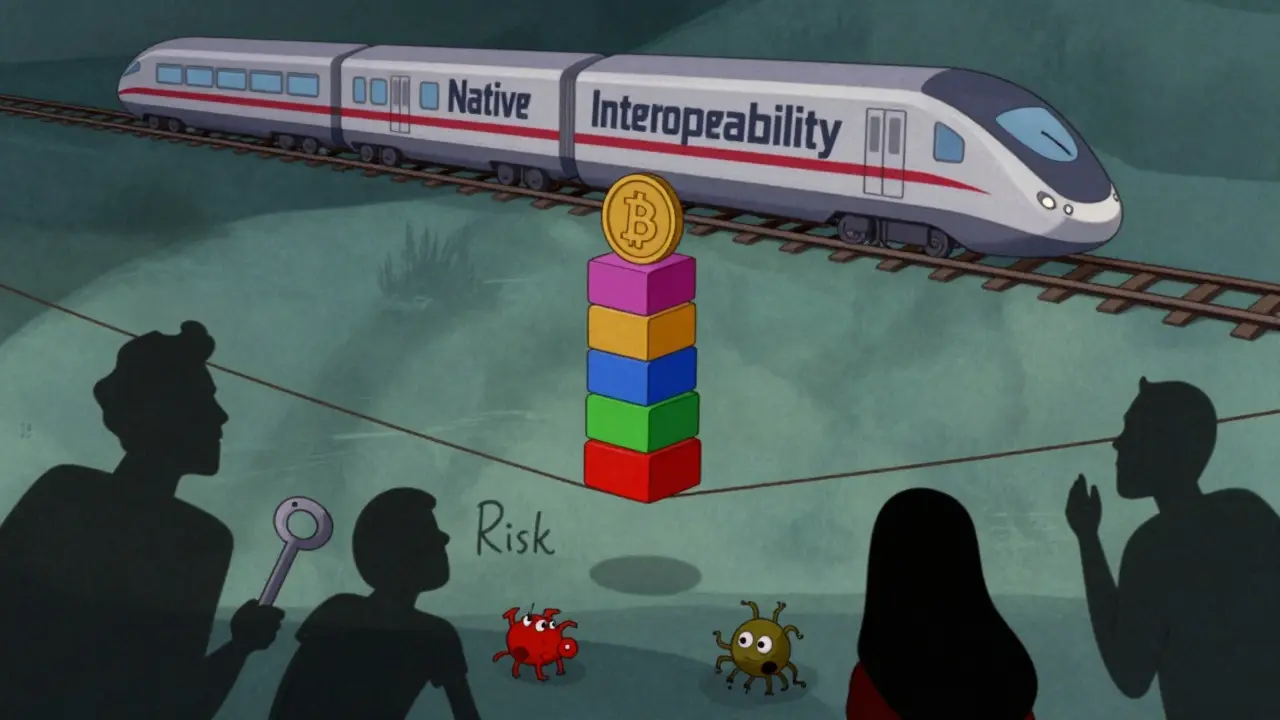
High volume implies high liquidity, which usually means safety. But wrapped assets introduce unique risks that native assets do not have. Understanding these is crucial before you park millions in WBTC or wstETH.
- Custodial Risk: WBTC relies on BitGo and Coinbase as custodians. If they freeze funds or go bankrupt, your wrapped token could become worthless. This is centralization risk in a decentralized world.
- Smart Contract Risk: Even if the custodian is safe, the smart contract managing the mint/burn mechanism could have a bug. Audits help, but they don't guarantee immunity from exploits.
- Depegging Events: During periods of extreme market stress, wrapped assets can temporarily lose parity with their underlying asset. If WBTC trades at $89,000 while BTC is at $90,000, arbitrageurs step in, but slippage can hurt small traders.
- Bridge Hacks: Cross-chain wrapped assets are vulnerable to bridge hacks. In 2022 and 2023, billions were lost in bridge exploits. While security has improved by 2026, the threat remains for less audited, newer wrapping protocols.
Always check the audit status and the reputation of the issuer before interacting with lesser-known wrapped assets. Stick to the blue chips (WBTC, WETH, wstETH) unless you have a specific reason to take on extra risk.
How to Track Wrapped Asset Volume Yourself
You don't need to guess where the volume is going. Several tools provide real-time data on wrapped asset flows. Here is how I track them:
- Dune Analytics: Search for dashboards specifically tracking "Cross-Chain Bridge Flows" or "WBTC Mint/Burn." Community-created dashboards often offer deeper insights than generic exchange data.
- DefiLlama: Go to the "Tokens" section and filter by "Wrapped" or check the "Stablecoins" page to see which wrapped stablecoins have the highest market cap and velocity.
- Nansen: If you are willing to pay, Nansen tracks smart money flows. You can see if whales are accumulating specific wrapped assets before major price moves.
Look for trends, not just snapshots. A sudden spike in WBTC inflows to Ethereum often precedes a rally in BTC price, as it signals capital moving into DeFi for leverage or yield. Conversely, outflows might signal profit-taking.
The Future: Account Abstraction and Native Interoperability
Will we still need wrapped assets in five years? Maybe not in the same way. Technologies like Account Abstraction (ERC-4337) and native interoperability protocols (like Chainlink CCIP or LayerZero) aim to reduce the friction that makes wrapping necessary. If my wallet can natively interact with Bitcoin and Ethereum without converting assets, the need for WBTC diminishes.
However, until full interoperability is achieved-and that is a tall order-wrapped assets will remain the lifeblood of cross-chain finance. For now, volume will continue to concentrate in the most trusted, deeply integrated wrappers. Keep an eye on regulatory developments too. The SEC and other global bodies are scrutinizing wrapped tokens, particularly those issued by centralized entities. Regulatory clarity could consolidate the market further toward compliant issuers like Coinbase (cbBTC) or force changes in how WBTC operates.
In summary, if you want to ride the wave of highest volume, look at WETH for trading, WBTC for collateral, and wstETH for yield. These three form the holy trinity of wrapped assets in 2026. Everything else is noise until it proves otherwise.
What is the difference between WBTC and BTC?
BTC is the native cryptocurrency on the Bitcoin blockchain. WBTC is an ERC-20 token on the Ethereum blockchain that represents 1 BTC. You cannot send WBTC to a Bitcoin address; it must stay within the Ethereum ecosystem. WBTC allows you to use Bitcoin value in Ethereum DeFi apps.
Is it safe to hold large amounts of wrapped assets?
It depends on the issuer. WBTC and cbBTC are considered relatively safe due to reputable custodians, but they carry custodial risk. Always verify the audit reports and reserve proofs. Diversifying across different wrapped assets or using trustless alternatives like tBTC can mitigate single-point-of-failure risks.
Why does WETH exist if I already have ETH?
Native ETH does not follow the ERC-20 token standard required by most smart contracts and decentralized exchanges. Wrapping ETH into WETH converts it into a standard token format, allowing it to be used in liquidity pools, lending protocols, and automated market makers seamlessly.
Which wrapped asset has the highest trading volume in 2026?
Generally, wrapped stablecoins like USDT (on Ethereum) have the highest absolute trading volume due to their use as base trading pairs. Among non-stablecoins, WETH and WBTC typically lead, followed closely by liquid staking derivatives like wstETH.
Can I convert wrapped assets back to the original?
Yes, this process is called "burning." For WBTC, you send the tokens to a burn address managed by the operator, who then releases the underlying BTC to your Bitcoin wallet. For WETH, you simply unwrap it back to native ETH instantly on the Ethereum network. Fees may apply depending on the protocol.