TradeOgre Shutdown: Canada Seizes $40 Million in Crypto in Biggest Ever Asset Takedown

Feb, 26 2026
On September 18, 2025, Canadian authorities pulled the plug on TradeOgre, one of the most notorious privacy-focused cryptocurrency exchanges in the world. In a single operation, the Royal Canadian Mounted Police (RCMP) seized CAD$56 million (approximately US$40 million) in digital assets - the largest cryptocurrency seizure in Canadian history. This wasn’t just a wallet freeze or a temporary takedown. It was the complete dismantling of an entire exchange infrastructure, from its servers to its transaction logs. TradeOgre didn’t just get shut down. It was erased.
What Was TradeOgre?
TradeOgre launched in 2018 as a cryptocurrency exchange built for anonymity. Unlike Coinbase, Kraken, or Binance, it didn’t ask for your name, ID, or address. No KYC. No paperwork. Just deposit crypto, trade, and disappear. It specialized in privacy coins like Monero (XMR), which are designed to hide transaction details - who sent what, to whom, and when. It even ran as a Tor hidden service, meaning you needed special software just to access it. This made it invisible to standard web crawlers and traditional financial monitoring tools.
It wasn’t a big exchange by volume. It didn’t have millions of users. But it was a magnet for people who wanted to move money without leaving a trail. And that’s exactly why law enforcement came after it.
How Did Canada Find It?
The investigation didn’t start in Canada. It began with a tip from Europol in June 2024. European investigators had traced suspicious funds flowing into TradeOgre’s wallets - money linked to ransomware attacks, darknet market sales, and stolen cryptocurrency. The trail led to Canada. That’s when the RCMP’s Money Laundering Investigative Team (MLIT) took over.
They didn’t raid a physical office. TradeOgre had no office. Instead, they worked with Arkham Intelligence, a blockchain analytics firm that tracks crypto flows across thousands of wallets. Using advanced pattern recognition, they mapped out how funds entered TradeOgre, moved between internal wallets, and were withdrawn. They found that over 80% of the exchange’s transaction volume had no legitimate source. It was all dirty money.
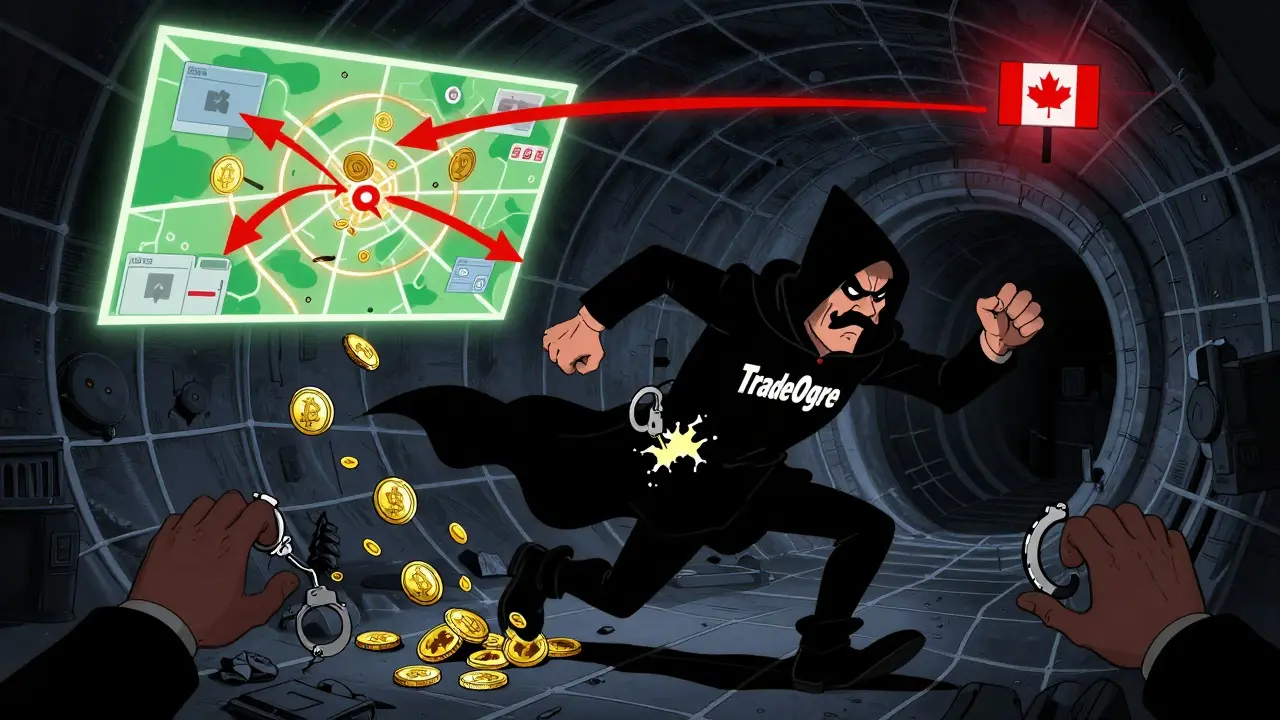
By July 2025, the exchange vanished from the internet. No announcement. No warning. Just a dead website. That’s when investigators knew the operators were panicking. They started moving funds out - but they didn’t realize the RCMP had already tagged every wallet connected to TradeOgre.
The Seizure: A New Kind of Digital Raid
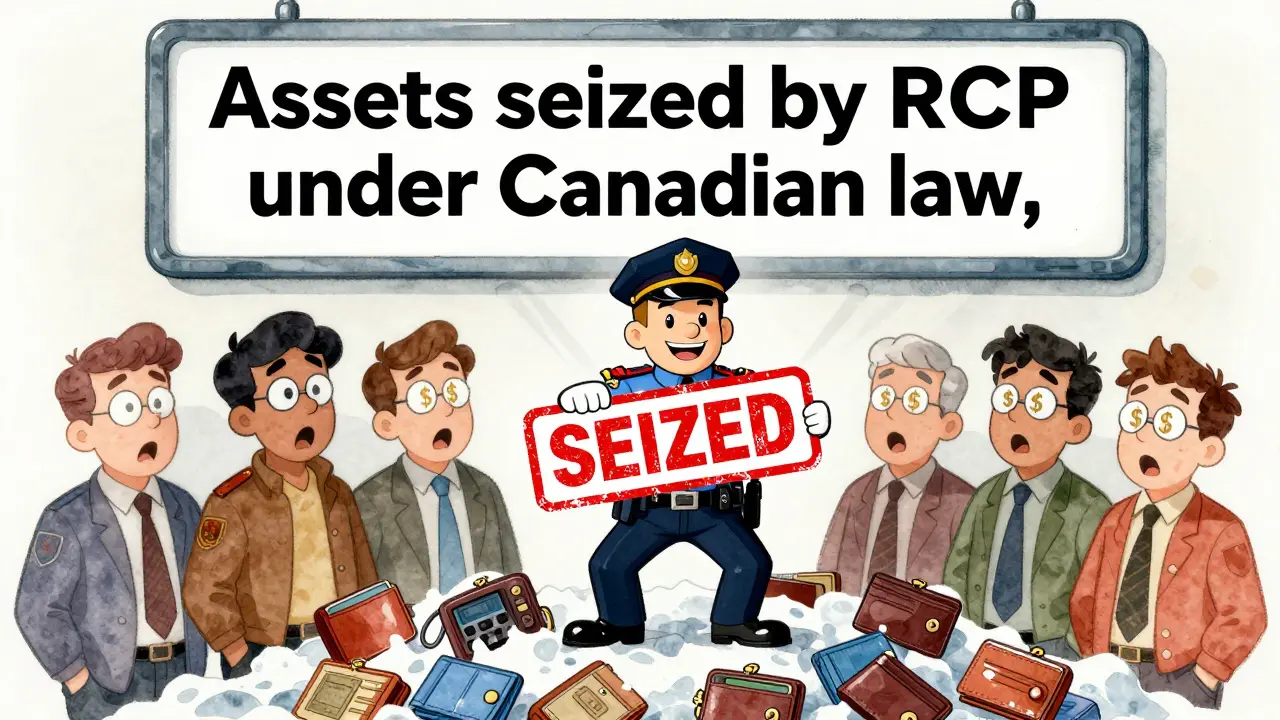
On September 18, 2025, the RCMP didn’t just freeze accounts. They took control of the assets - and made it public. They didn’t just seize the money. They embedded messages directly into the blockchain, proving they now controlled the wallets. These weren’t hidden notes. They were public, verifiable, and permanent. Anyone could look at the transactions and see: “Assets seized by RCMP under Canadian law.”
This was the first time law enforcement had done this on such a scale. It wasn’t just about taking the money. It was about sending a message: You can’t hide behind privacy tech. We can still find you.
Why TradeOgre Broke the Law
Canada requires every crypto exchange serving its residents to register with FINTRAC - the Financial Transactions and Reports Analysis Centre of Canada. Registration means implementing KYC, reporting suspicious activity, and keeping records. TradeOgre did none of this. It operated outside Canadian law entirely. Even though it was registered in the U.S., it actively marketed itself to Canadians, accepted Canadian dollars via crypto, and had thousands of users from Canada.
That made it a target. Under Canadian law, it didn’t matter where the company was based. If it served Canadian users, it had to comply. TradeOgre chose not to. And that decision cost it everything.
What Happened to the Money?
The CAD$56 million seized isn’t being returned to TradeOgre’s users. It’s being held as evidence. Authorities believe the funds originated from criminal activity - ransomware, fraud, darknet sales. The money will likely be forfeited to the Canadian government. Some may be used to fund future investigations. Some may be auctioned off. But none of it is going back to the people who deposited it. That’s the harsh reality: if you use an illegal exchange, you lose your assets.
What This Means for Other Exchanges
TradeOgre was the outlier. But it wasn’t alone. There are still dozens of small, unregulated exchanges operating with no KYC, no registration, and no oversight. Some are in Eastern Europe. Some are hosted on offshore servers. Some still use Tor. But now, Canada has shown it can find them - and shut them down - no matter how hidden they think they are.
Exchanges that still claim “no KYC, no problem” are playing Russian roulette. The tools to track crypto are better than ever. Blockchain analytics firms like Arkham, Chainalysis, and Elliptic work with police forces worldwide. The days of anonymous crypto trading on unregulated platforms are over - at least in countries with strong financial enforcement like Canada, the U.S., the UK, and Australia.
What You Should Do
If you’re using an exchange that doesn’t ask for your ID, you’re at risk. Not because you’re doing anything illegal - but because the platform you’re using probably is. When that platform gets shut down, your funds vanish. There’s no customer support. No refund. No recourse.
Stick to regulated exchanges. They’re safer. They’re more reliable. And if something goes wrong, you have legal rights. Unregulated platforms offer freedom - but at the cost of total risk. TradeOgre’s shutdown proves that freedom is an illusion. Your money isn’t safe just because no one asked for your name.
The Bigger Picture
This wasn’t just a raid. It was a turning point. Canada didn’t just take money. It changed the game. Other countries will follow. The era of anonymous crypto trading is ending. Privacy coins aren’t going away - but the platforms that let you use them without oversight are.
Regulators now have the tools, the legal authority, and the international cooperation to go after any exchange that ignores the rules. Whether it’s based in the U.S., Panama, or a basement in Moldova - if it serves Canadian users, it’s fair game.
TradeOgre is gone. Its servers are offline. Its wallets are frozen. Its operators are silent. And the message is clear: if you build an exchange to hide crime, you’ll be the one who disappears.
Was TradeOgre a legitimate cryptocurrency exchange?
No. TradeOgre was not a legitimate exchange under Canadian law. It operated without registering with FINTRAC, failed to implement KYC or AML procedures, and deliberately avoided financial oversight. While it functioned as a trading platform, it did so illegally, making it a target for law enforcement.
Why did Canada seize crypto from a U.S.-registered exchange?
Canada has jurisdiction over any cryptocurrency exchange that serves Canadian users - regardless of where it’s registered. TradeOgre actively marketed itself to Canadians, accepted Canadian dollar-denominated crypto deposits, and had thousands of users from Canada. Under Canadian law, that’s enough to trigger enforcement.
Can I still use TradeOgre today?
No. TradeOgre’s website and services were permanently shut down after the September 2025 seizure. Its servers were seized, its domain was taken offline, and its operators have not responded since. Any site claiming to be TradeOgre now is likely a scam.
What happened to the users’ money on TradeOgre?
The seized funds are being held as evidence of criminal activity. Canadian authorities believe the money came from illegal sources like ransomware and darknet markets. Users who deposited funds on TradeOgre have no legal claim to recover their money - because the platform was operating illegally, and their deposits were tied to criminal transactions.
Is Monero illegal because TradeOgre used it?
No. Monero (XMR) is not illegal. It’s a privacy-focused cryptocurrency that has legitimate uses, including protecting financial privacy. The issue wasn’t Monero itself - it was TradeOgre’s refusal to comply with anti-money laundering rules. Many regulated exchanges now support Monero with full KYC - and they’re still legal.
How did law enforcement trace funds on a Tor-based exchange?
Even though TradeOgre used Tor to hide its website, it still operated on the public blockchain. Every cryptocurrency transaction is recorded on a public ledger. Using blockchain analytics tools like Arkham Intelligence, investigators traced fund flows between wallets, identified patterns of criminal activity, and linked transactions to known illicit addresses - even if the exchange itself was hidden.
Could this happen in New Zealand or Australia?
Yes. New Zealand, Australia, the UK, and the U.S. all have similar laws requiring crypto exchanges to register and enforce KYC. If an exchange serves users in those countries without compliance, it’s at risk of being shut down and seized - just like TradeOgre. Canada’s action sets a global precedent.
Are all privacy-focused exchanges now illegal?
No. Privacy-focused exchanges aren’t illegal if they comply with local regulations. Exchanges like Kraken and Bitfinex offer Monero trading with full KYC. The problem isn’t privacy - it’s operating without oversight. You can have privacy and legality - but not anonymity and no rules.