Underground Crypto Trading in Cambodia: How Criminal Networks Turned a Ban into a $4 Billion Empire

Jan, 31 2026
On paper, cryptocurrency is illegal in Cambodia. Since 2019, the National Bank of Cambodia has banned all crypto transactions. But if you walk through the streets of Sihanoukville or Chrey Thom, you’ll see something very different: luxury hotels with security guards, glowing LED signs advertising "crypto trading centers," and young men in suits sitting in air-conditioned rooms, scrolling through fake trading apps while threatening workers with electric shocks. This isn’t fiction. It’s the reality of Cambodia’s underground crypto economy - a criminal empire built on human trafficking, digital fraud, and laundered billions.
The Ban That Made It Worse
When the National Bank of Cambodia issued Directive No. 1125 in 2019, it didn’t stop crypto trading. It just drove it underground. People still wanted to trade Bitcoin and Ethereum. Banks wouldn’t touch it. So they found other ways. And criminals stepped in. Instead of shutting down the market, the ban created a vacuum. No licenses. No oversight. No rules. That’s when groups like the Prince Group and Huione Guarantee moved in. They didn’t care about regulation. They cared about volume. And they found a way to turn Cambodia into the world’s largest crypto laundering hub. Even with the ban, 10.63% of Cambodians were still using crypto in 2025, according to Standard Insights. That’s over 1.5 million people. Most weren’t investors. They were either victims or workers in scam compounds - people forced to run fake crypto trading platforms under threat of violence.The Scam Compounds: Where Victims Become Criminals
The heart of this operation isn’t a dark web forum. It’s a hotel. In Sihanoukville, the Jinbei Hotel and Casino doubled as a forced labor camp. In Chrey Thom, the "Golden Fortune Science and Technology" compound looked like a tech startup - until you learned what happened inside. Workers, often lured from Vietnam, Myanmar, and China with promises of high-paying jobs, were locked in. Their passports taken. Their phones confiscated. Their job? To scam people out of their life savings. They’d pose as successful traders on Telegram and WhatsApp. They’d show fake profit screenshots. They’d promise 10x returns on Bitcoin. Victims in the U.S., South Korea, and Australia sent money. And it disappeared - straight into Huione Guarantee’s laundering network. If a worker didn’t meet their daily quota? They were beaten. Starved. Sometimes, electrocuted. Former workers told PANE News Lab they worked 18-hour days. Some didn’t sleep for weeks. One said he saw a man thrown off a balcony after trying to escape. These weren’t rogue operators. They were part of a system. The Prince Group owned the buildings. Huione handled the money. And the whole thing was run like a corporation - with HR departments, performance reviews, and even bonuses for top scammers.Huione Guarantee: The One-Stop Crime Platform
Huione Guarantee isn’t a bank. It’s not even a company. It’s a criminal infrastructure. Founded in 2014, Huione started as a small crypto exchange. But by 2021, it had evolved into what Elliptic called a "one-stop crime platform" - a Telegram-based service where fraudsters could buy everything they needed: fake trading interfaces, stolen identities, money laundering routes, and even contact lists of potential victims. Telegram shut them down in 2015. So they went darker. They moved to encrypted apps. They created shell companies in Dubai and the Seychelles. They used underground money houses - unregulated cash brokers who moved crypto into cash without a paper trail. By 2025, Huione had laundered at least $4 billion. That includes:- $37 million from North Korean cyber thefts
- $36 million from fake crypto investment scams
- $300 million from ransomware and dark web payments

The Korean Connection: How .9 Million Turned Into .8 Billion
The biggest source of cash? South Korea. In 2023, just 9.22 million won ($6,500) flowed from five Korean exchanges into Huione’s accounts. By 2024? That number jumped to 12.8 billion won - $8.9 million. A 1,400-fold increase in one year. By October 2025, it was still growing. 3.15 billion won in just the first 20 days of the month. That’s over $2 million every few days. Why Korea? Because Korean investors are among the most active in crypto globally. And they’re often targeted by scammers who speak their language, use their cultural references, and mimic Korean trading platforms like Upbit and Bithumb. The Brooklyn Network - a laundering pipeline documented by TRM Labs - moved over $18 million from U.S. victims to Prince Group accounts between 2021 and 2022. The money didn’t just vanish. It was funneled through multiple exchanges, mixed with clean funds, and finally pulled out as cash through Cambodian casinos and luxury real estate.The Regulatory Switch: From Ban to Backdoor
In late 2024, Cambodia changed its rules. Instead of banning crypto, it started issuing licenses. Prakas B7-024-735 Prokor created a permission-based system. On the surface, it looked like progress. But it was a trap. Criminal groups like Huione applied for licenses. They used fake documents. They bribed officials. They opened "legitimate" crypto offices next to their scam compounds. Suddenly, they had legal cover. Banks started processing their transactions. Auditors gave them clean reports. Lightspark’s 2025 analysis called it "a regulatory loophole designed for criminals." The National Bank of Cambodia wanted to bring crypto into the light. Instead, they gave organized crime a uniform. Meanwhile, the U.S. Treasury’s FinCEN labeled Huione a "primary money laundering concern." The U.K. and U.S. coordinated a massive seizure in October 2025 - $15 billion in Bitcoin, the largest forfeiture in U.S. history. But even after that, transactions kept flowing.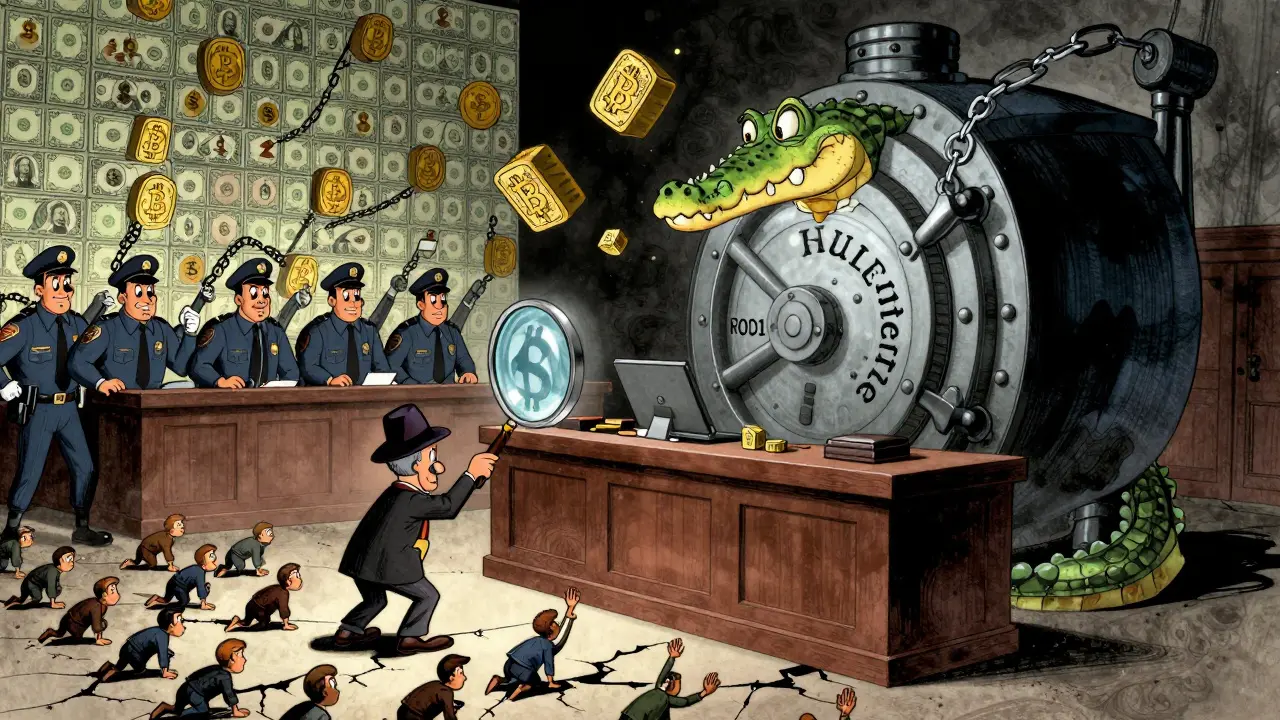
Why Cambodia? The Perfect Storm
Cambodia didn’t become the world’s crypto crime capital by accident. It was built on four things:- Weak regulation. Ranked 128th out of 180 countries in Transparency International’s 2024 Corruption Perceptions Index. Officials are easily bribed.
- Cash economy. Most transactions are still done in cash. No digital trail.
- Geographic position. Close to South Korea, Thailand, and Vietnam - all major crypto markets.
- Political silence. The government turns a blind eye. Scam compounds fund local businesses, hotels, and even politicians’ families.
The Human Cost
Behind every dollar laundered is a person. A 22-year-old woman from Hanoi was promised a job as a customer service rep in Phnom Penh. She arrived to find herself locked in a room with 12 others. Her first task? Call 50 people a day and convince them to invest in a fake crypto platform. She made 12 sales. Her bonus? A bowl of rice. A teenager from Myanmar escaped after 11 months. He showed scars on his arms from electric shocks. "They said if we didn’t make $10,000 a day, we’d be sold to another compound," he told KUAF. There are no official numbers. But experts estimate 10,000 to 15,000 people are trapped in these compounds right now. And the scammers? Many are victims too. Forced into crime. Trained to lie. Taught to see their victims as numbers on a screen.What’s Next?
The $15 billion seizure was a wake-up call. But it won’t end this. Criminal networks adapt. They move to decentralized exchanges. They use privacy coins like Monero. They shift operations to Laos or Myanmar. They bribe new officials. The National Bank of Cambodia says it’s working on a Central Bank Digital Currency (CBDC) to replace underground crypto. But that’s a five-year project. In the meantime, the money keeps flowing. Jacob Sims from Harvard’s Asia Center called this "the top form of financial crime impacting Americans now and maybe ever in history." He’s right. The profits rival the global drug trade. The scale is global. The victims are everywhere. And Cambodia? It’s not just a country. It’s a business model - one built on fear, fraud, and forgotten people. If you’re thinking about investing in crypto, remember: the most dangerous markets aren’t the ones with volatile prices. They’re the ones where the rules don’t exist - and the people who enforce them are on the other side.Is cryptocurrency legal in Cambodia?
No, cryptocurrency trading is not legally permitted under Cambodia’s 2019 banking directive. However, the government shifted in late 2024 to a licensing system that allows some entities to operate under regulation. This change has been exploited by criminal networks like Huione Guarantee to disguise illegal crypto laundering as legal activity. Most underground trading still operates outside the law.
Who is behind the crypto scams in Cambodia?
The Prince Group is the primary organization behind the scam compounds in Cambodia. They operate luxury hotels and casinos that double as forced labor camps. Huione Guarantee (also known as Huiwang Group) is their financial arm, handling the laundering of over $4 billion in illicit crypto funds since 2021. Both are linked to human trafficking, cyber fraud, and international money laundering networks.
How do crypto scams in Cambodia work?
Victims are contacted through social media or messaging apps by people posing as successful traders. They’re shown fake profit screens and promised high returns on Bitcoin or Ethereum investments. Once money is sent, it’s funneled through multiple exchanges and mixed with clean funds via Huione’s laundering network. The scammers vanish. The victims lose everything. Workers in the scam compounds are often trafficked and forced to run these operations under threat of violence.
Why is Cambodia a hotspot for crypto crime?
Cambodia’s weak financial oversight, high corruption levels, cash-based economy, and proximity to major crypto markets like South Korea make it ideal for criminal networks. The 2019 crypto ban created a vacuum that organized crime filled. The 2024 licensing system gave these groups a legal facade. Combined with a lack of international enforcement until recently, it became the perfect environment for large-scale fraud and laundering.
What happened to the $15 billion in Bitcoin seized in 2025?
The $15 billion in Bitcoin was seized by the U.S. Department of Justice in coordination with the U.K. and other international partners in October 2025. It was linked to the Prince Group and Huione Guarantee’s money laundering operations. The assets were frozen as part of a civil forfeiture case. The funds are being held pending court decisions on their final disposition, which could include destruction, auction, or use for victim compensation.
Can victims get their money back?
Very few victims recover their funds. Cambodia has no legal mechanism for crypto fraud recovery. The National Bank of Cambodia offers only general warnings - no restitution program. The U.S. Justice Department’s asset seizures may eventually lead to partial compensation for American victims, but the process is slow, complex, and limited to cases tied to U.S. law enforcement actions. Most victims never see a dollar again.