Upbit KYC Violations: What the 500,000 Crypto Compliance Cases Mean for Traders
May, 10 2026
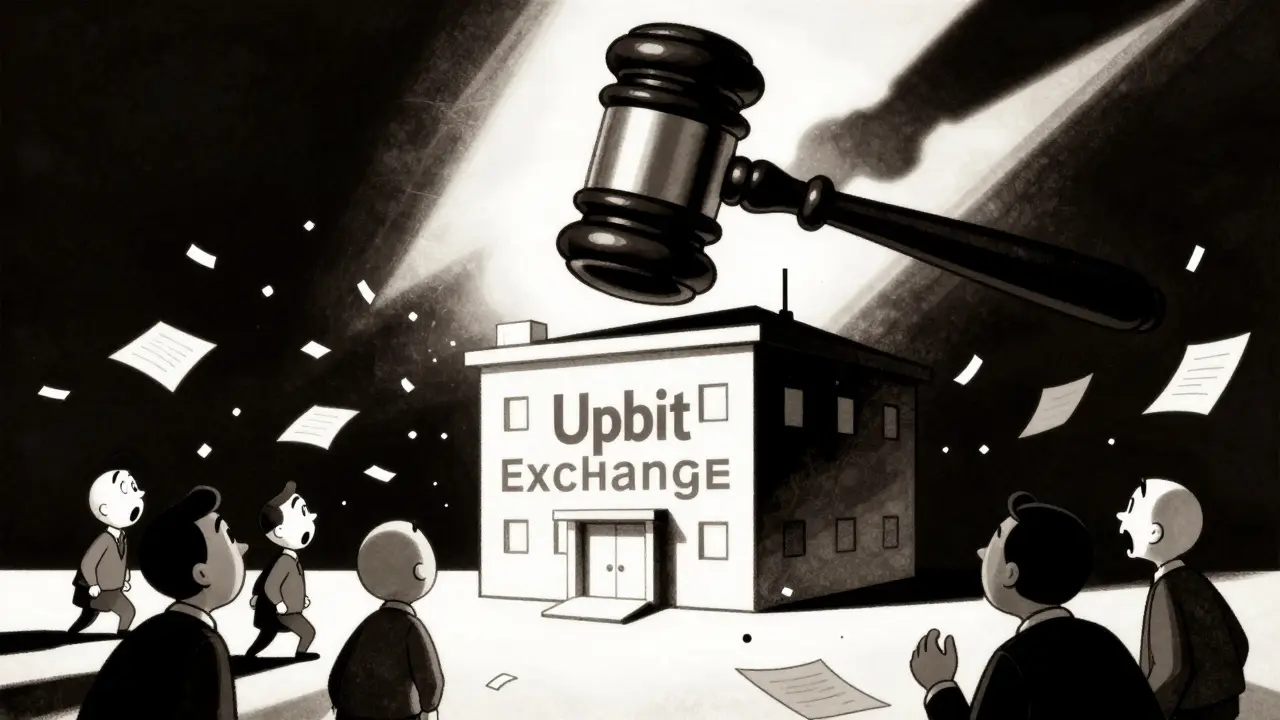
Imagine waking up to find that your favorite trading platform has been flagged for half a million regulatory breaches. That is exactly what happened in late 2024 when South Korea’s Financial Services Commission (FSC) uncovered massive KYC violations at Upbit, the country's largest cryptocurrency exchange. For traders and investors, this wasn't just a headline; it was a signal that the era of loose oversight in Asian crypto markets might be over. With over 500,000 suspected compliance cases identified, the investigation into Upbit Dunamu marks one of the most significant enforcement actions in digital asset history.
The stakes are incredibly high. Upbit processes billions of dollars in daily transactions and holds an estimated 80% of the domestic market share in South Korea. When a platform of this size faces scrutiny, the ripple effects touch every user, from casual Bitcoin holders to institutional funds. The core issue? A systematic failure to verify customer identities properly, raising serious questions about money laundering risks and the safety of your assets.
The Scale of the Upbit Investigation
To understand why this case is so shocking, you need to look at the numbers. The Financial Intelligence Unit (FIU), which operates under the FSC, didn't just find a few errors. They found nearly 190,000 instances where driving licenses were verified incorrectly. In these cases, Upbit checked personal information but failed to validate the encrypted serial number on the card-a mandatory security feature in South Korea. This isn't a minor glitch; it’s a fundamental breakdown in identity verification.
Even more alarming is the discovery of over 9 million cases during re-verification processes where no official identification documents were collected at all. How does an exchange operate without proper ID checks? The answer lies in the rapid growth of the crypto industry, where speed often outpaced compliance infrastructure. Additionally, regulators accused Upbit of facilitating approximately 45,000 transactions with unregistered foreign exchanges, directly violating the Act on Reporting and Using Specified Financial Transaction Information.
| Violation Type | Number of Cases | Regulatory Impact |
|---|---|---|
| Driving License Verification Failures | ~190,000 | Identity fraud risk |
| Missing ID Documents (Re-verification) | >9,000,000 | Systemic compliance gap |
| Transactions with Unregistered Exchanges | ~45,000 | Money laundering exposure |
| Total Suspected KYC Breaches | >500,000 | License suspension threat |
Why KYC Matters More Than You Think
You might wonder why verifying a driver’s license matters so much. Know Your Customer (KYC) protocols aren't just bureaucratic red tape; they are the first line of defense against financial crimes. Under South Korea’s Special Financial Transactions Act, exchanges must prevent money laundering, terrorist financing, and tax evasion. When Upbit accepted photocopied IDs or allowed obscured details to pass through, they opened the door for bad actors to use the platform illicitly.
This creates risk for honest users too. If an exchange is shut down or sanctioned due to non-compliance, your ability to withdraw funds could be frozen indefinitely. We’ve seen this happen in other jurisdictions where regulators pulled the plug on platforms that couldn’t prove they knew who their customers were. The Upbit case serves as a stark reminder that regulatory compliance is not optional-it’s the foundation of trust in centralized finance.

Potential Penalties and Market Impact
The potential financial fallout from these violations is staggering. Regulators have the authority to impose fines of up to 100 million Korean won ($68,600) per violation. While a theoretical total of $34 billion is unlikely, even a fraction of that would be devastating. More immediate is the proposed six-month suspension of new user registrations. This penalty stops Upbit from growing while keeping existing users locked in-a middle-ground approach that pressures the company to fix its systems without causing immediate chaos.
Compare this to Binance’s $4.3 billion settlement with U.S. authorities in 2023. That case involved global operations and severe anti-money laundering failures. Upbit’s situation is different because it affects a concentrated market. South Korea has over 30% adult adoption of cryptocurrency, making Upbit’s dominance critical for market stability. If Upbit falters, where do those millions of users go? Competitors like Bithumb will see increased traffic, but can they handle the surge? The uncertainty itself drives volatility in local trading pairs.
What This Means for Other Exchanges
The Upbit investigation is a warning shot for the entire fintech industry. Regulatory experts call it a "watershed moment" because it shows that even the biggest players aren't immune to scrutiny. Exchanges worldwide are now expected to implement enhanced KYC verification systems, including advanced document authentication technologies and multi-layer identity checks. It’s no longer enough to have a basic ID upload process; you need real-time validation against government databases.
For operators in South Korea and similar strict jurisdictions, this means higher compliance costs. You’ll see more investment in audit trails, dedicated compliance teams, and AI-driven fraud detection tools. The timeline for license renewals has also changed. Instead of a rubber-stamp approval, expect comprehensive reviews of historical transactions and onboarding records. If you’re running a crypto business, start preparing your documentation now. The days of flying under the radar are gone.
User Reactions and Community Sentiment
How are traders reacting? Anxiety is the dominant emotion. On Reddit and Korean crypto forums, users are worried about service interruptions and fund accessibility. Many are diversifying their holdings across alternative domestic exchanges like Bithumb or moving to international platforms. Social media sentiment is mixed-some support stricter oversight to clean up the industry, while others criticize what they see as excessive government interference.
This shift in behavior is significant. Users are becoming more educated about compliance. They’re asking harder questions: Does this exchange have a clean regulatory record? Are they transparent about their KYC processes? This trend toward due diligence benefits the long-term health of the market by rewarding compliant platforms and punishing negligent ones. As a trader, you should adopt this same mindset. Don’t just pick an exchange based on fees; check their regulatory standing.
Next Steps: Legal Battles and Industry Precedents
Upbit operator Dunamu hasn’t gone quietly. They filed a lawsuit to challenge the business sanctions, arguing that the penalties are disproportionate. The January 20, 2025 deadline for their response marked a critical juncture, with final penalty determinations scheduled shortly after. However, FSC officials have stated that "nothing has been decided yet," suggesting ongoing negotiations. These legal battles can take months or even years, creating a period of uncertainty for the market.
Regardless of the outcome, the precedent is set. South Korea is positioning itself as a leader in comprehensive digital asset oversight. Other jurisdictions are watching closely. If the U.S., EU, and Asia follow suit, we’ll see a global standardization of crypto compliance. For investors, this means a safer, more mature market-but also less anonymity and higher barriers to entry. The wild west days of crypto are officially behind us.
Will my funds be safe if Upbit is sanctioned?
In most cases, yes. Sanctions typically target the company's operational capabilities, such as halting new registrations, rather than seizing user assets immediately. However, there may be temporary freezes on withdrawals during audits. Always keep a portion of your assets in cold storage or diversified across multiple reputable exchanges to mitigate this risk.
What is the Special Financial Transactions Act?
It is South Korea’s primary law governing anti-money laundering efforts. It requires virtual asset service providers to verify customer identities, report suspicious transactions, and maintain detailed records. Failure to comply can result in heavy fines, license suspensions, or criminal charges.
How does this compare to the Binance settlement?
While both involve major compliance failures, the contexts differ. Binance faced global scrutiny and paid a record $4.3 billion fine. Upbit’s case is focused on domestic Korean regulations and involves a larger volume of specific KYC procedural errors relative to its user base. Both cases highlight the increasing pressure on exchanges to prioritize compliance over rapid growth.
Should I move my assets from Upbit right now?
Consider diversifying. While Upbit remains the dominant player in South Korea, the regulatory uncertainty introduces risk. Moving some assets to established competitors like Bithumb or international regulated exchanges can provide a safety net. Monitor official announcements from the FSC and Upbit before making drastic moves to avoid unnecessary transaction fees or slippage.
What are the chances of Upbit losing its license entirely?
A complete shutdown is unlikely given Upbit’s systemic importance to the Korean crypto market. Regulators prefer corrective measures, such as fines and registration suspensions, that force improvement without disrupting the economy. However, repeated failures to meet compliance standards could lead to more severe penalties in the future.