What are Decentralized Exchanges? A Beginner's Guide to DEX Trading
Oct, 27 2026
Imagine buying a coffee without ever handing your wallet to a barista. You just show them the cash, they take it, and you walk away with your drink. No middleman holding your money in a vault, no receipt to sign, no one checking your ID. That is essentially how a Decentralized Exchange (DEX) works for cryptocurrencies. Instead of trusting a company like Coinbase or Binance to hold your funds while you trade, you keep control of your private keys and swap tokens directly with other users via smart contracts.
If you have been hearing about Uniswap or PancakeSwap and wondering why people prefer them over traditional exchanges, this guide breaks down exactly what a DEX is, how it operates under the hood, and whether it fits your trading style. We will skip the heavy jargon where possible and focus on what actually happens when you click "swap."
The Core Concept: Peer-to-Peer Without Middlemen
A decentralized exchange is a peer-to-peer marketplace where cryptocurrency transactions occur directly between users without intermediaries. Unlike centralized exchanges (CEXs), which act as brokers holding your assets in custody, a DEX uses blockchain-based smart contracts to facilitate trades. This means you never deposit your crypto into the exchange’s account; you connect your personal wallet, authorize a transaction, and the code executes the swap.
This non-custodial nature is the biggest selling point. On a CEX, if the exchange gets hacked or freezes withdrawals due to regulatory issues, your funds are stuck. On a DEX, your assets remain in your wallet until the exact moment the trade settles. You maintain full sovereignty over your capital. However, this freedom comes with responsibility. If you lose your private key or approve a malicious contract, there is no customer support line to call. The blockchain is unforgiving but transparent.
How Do Decentralized Exchanges Actually Work?
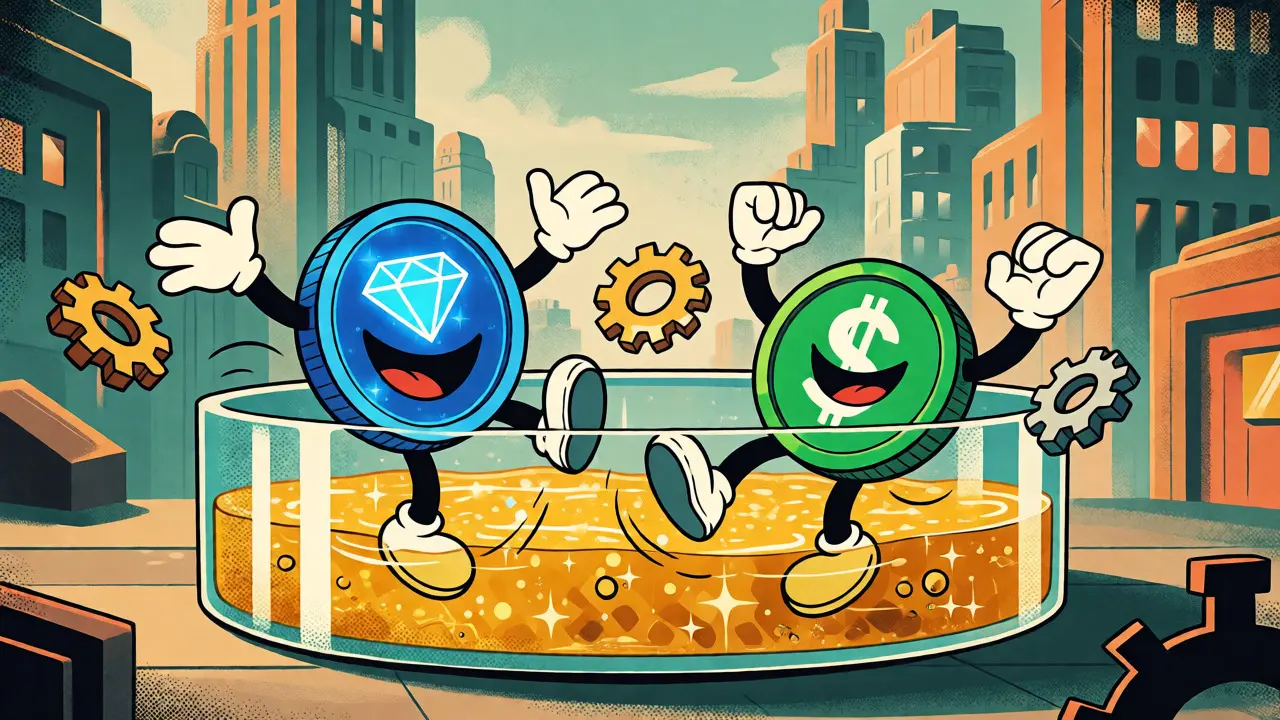
Most modern DEXs do not use traditional order books where buyers and sellers list specific prices and wait for matches. Instead, they rely on a mechanism called an Automated Market Maker (AMM). Think of an AMM as a giant pool of two different tokens, say ETH and USDC. The price of each token isn't set by a person; it is determined by a mathematical formula based on the ratio of assets in that pool.
Here is the simple logic: If you want to buy more ETH from the pool, you add USDC to it. This increases the amount of USDC relative to ETH, making ETH scarcer in the pool and therefore more expensive. Conversely, if everyone sells ETH into the pool, ETH becomes abundant, and its price drops within that specific liquidity pool. This system ensures that there is always liquidity available, provided someone has deposited funds to back the pool.
Who provides these funds? Regular users known as Liquidity Providers (LPs). They lock their tokens into these pools to earn trading fees. For example, if you provide liquidity to an ETH/USDC pair on Uniswap, you might earn a small percentage of every trade that happens through that pool. It sounds passive, but it carries risks, specifically impermanent loss, which we will discuss later.
Key Differences: DEX vs. Centralized Exchange
Choosing between a DEX and a CEX depends on what you value more: convenience or control. Here is a realistic comparison based on current market standards as of late 2026:
| Feature | Decentralized Exchange (DEX) | Centralized Exchange (CEX) |
|---|---|---|
| Custody of Funds | User keeps private keys (Non-custodial) | Exchange holds funds (Custodial) |
| KYC Requirements | Generally none required | Mandatory identity verification |
| Fiat On-Ramps | Limited; usually requires crypto first | Direct bank/card integration |
| Token Selection | Virtually unlimited; anyone can list | Curated selection; listing fees apply |
| Speed & Fees | Depends on network congestion; gas fees vary | Fast execution; lower trading fees |
| Risk Profile | Smart contract bugs, user error | Hacks, insolvency, regulatory freeze |
You might notice that DEXs win on privacy and asset variety but lose on ease of entry. If you are trying to convert your salary from USD to Bitcoin, a CEX is far easier because it connects directly to your bank. Once you have crypto, moving to a DEX allows you to access thousands of smaller projects that haven't been vetted by major exchanges yet.

The Risks You Need to Know
Trading on a DEX is not risk-free. In fact, the risks are different from those on a CEX, which often surprises beginners. The primary technical risk is smart contract vulnerability. Since DEXs run on code, any bug in that code can be exploited. Hackers have drained billions of dollars from DeFi protocols over the years by finding flaws in how liquidity pools handle transactions.
Then there is slippage. Because prices change block-by-block, the price you see when you initiate a trade might not be the price you get when the transaction confirms. If you try to buy a large amount of a low-liquidity token, you might move the price so much that you pay significantly more than expected. Most DEX interfaces allow you to set a "slippage tolerance," but setting it too low causes failed transactions, while setting it too high exposes you to bad fills.
Finally, beware of scams. Since anyone can create a token and list it on a DEX instantly, the space is rife with "rug pulls." This is where developers create a token, hype it up, let early investors buy in, and then withdraw all the liquidity, leaving holders with worthless tokens. Unlike a CEX, which does some due diligence before listing a coin, a DEX is permissionless. You must do your own research.
Step-by-Step: How to Make Your First Trade
Ready to try it out? Here is a simplified workflow for swapping tokens on a typical Ethereum-based DEX like Uniswap.
- Set Up a Wallet: Install a browser extension wallet like MetaMask or Trust Wallet. Securely write down your seed phrase offline. Never share this phrase with anyone.
- Fund Your Wallet: Send some cryptocurrency to your wallet address. Remember, you need the native token of the network (e.g., ETH for Ethereum, BNB for BNB Chain) to pay for gas fees.
- Connect to the DEX: Visit the DEX website and click "Connect Wallet." Approve the connection request in your MetaMask popup.
- Select Tokens: Choose the token you are selling (from) and the token you are buying (to). Ensure you are using the correct contract addresses to avoid fake tokens.
- Review the Quote: Check the estimated output amount and the price impact. If the price impact is high (over 1-2%), consider splitting the trade or waiting for better liquidity.
- Approve Token: If you are swapping a token for the first time, you must "approve" the DEX to spend that token. This costs a small gas fee.
- Execute Swap: Confirm the swap transaction. Wait for the network to process it. Once confirmed, check your wallet balance to ensure the new tokens arrived.
It sounds long, but once you do it twice, it becomes muscle memory. The approval step is unique to DEXs and often confuses newcomers, but it is a security feature allowing you to limit how much a protocol can spend from your wallet.

Why Use a DEX? The Real Benefits
Beyond avoiding custodial risk, DEXs offer composability. This is a fancy word for the ability to stack financial services together. You can lend your assets on Aave, use the collateral to borrow stablecoins, and then swap those stablecoins for yield-bearing tokens on Curve-all without leaving the blockchain ecosystem. This open-lego-block structure allows for complex strategies that centralized banks cannot easily replicate.
Additionally, transparency is absolute. Every transaction, every liquidity addition, and every trade is recorded on the public ledger. You can verify exactly how much liquidity backs a token and who owns it. For traders who value data-driven decisions, this level of visibility is invaluable.
Frequently Asked Questions
Do I need to pay taxes on DEX trades?
Yes, in most jurisdictions, swapping one cryptocurrency for another is considered a taxable event. Even though no fiat currency changes hands, tax authorities typically view the disposal of one asset for another as realizing a gain or loss. Always consult a local tax professional, as rules vary by country.
What is impermanent loss?
Impermanent loss occurs when the price of your deposited assets changes compared to when you deposited them. If you provide liquidity to a pool and one token's price skyrockets, you end up with less of that token than if you had just held it in your wallet. It is called "impermanent" because if the prices return to their original ratio, the loss disappears. However, if you withdraw while prices are divergent, the loss becomes permanent.
Can I buy Bitcoin directly on a DEX?
Not directly on most EVM-based DEXs like Uniswap, because Bitcoin runs on its own separate blockchain. You usually need to use a wrapped version of Bitcoin (like WBTC on Ethereum) or use a cross-chain bridge. Some newer DEXs support multi-chain swaps, but direct BTC-to-USDC swaps are more common on specialized platforms or via bridges.
Are DEXs safe?
DEXs eliminate counterparty risk (the risk of the exchange running away with your money) but introduce smart contract risk. Major DEXs like Uniswap and Curve have undergone multiple audits and have battle-tested code, making them relatively safe. However, smaller, newer DEXs may have unaudited code, posing a higher risk of hacks. Always start with reputable protocols.
Why did my transaction fail?
Common reasons include insufficient gas fees (you didn't bid enough for miners to prioritize your tx), slippage tolerance being set too low (price moved more than you allowed), or network congestion. Check the error message in your wallet explorer; it often tells you exactly why the revert happened.