What is MCP AI (MCP) Crypto Coin? Solana Meme Token Explained

Jul, 15 2026
Have you seen MCP AI popping up in your feed or on a random crypto tracker? It sounds impressive. The name suggests it connects artificial intelligence to the tools you use every day. It promises seamless, open-source connectivity. But if you look closer at the numbers, the picture changes fast. This isn’t the next big infrastructure play. It’s a micro-cap token with a supply so large it defies logic and a market cap that barely covers a nice dinner for two.
As of mid-2026, MCP AI (ticker: MCP) is best understood as a speculative asset on the Solana blockchain. It leans heavily into the "AI" narrative, specifically referencing the Model Context Protocol, but lacks the technical depth, liquidity, or user base to back those claims. Before you think about buying even a fraction of a cent worth, you need to understand what this token actually is-and what it definitely isn’t.
The Basics: What Is MCP AI?
MCP AI is a cryptocurrency token built on the Solana network that markets itself as an AI integration tool but functions primarily as a meme coin. It launched in 2025, riding the wave of both Solana’s popularity and the broader hype around artificial intelligence in crypto.
The project describes itself as "the bridge between AI models and the tools you love." That sounds like serious tech. In reality, there is no detailed whitepaper, no audited code repository, and no clear product roadmap available on major tracking sites. Most data providers, including Fin-plan.org, explicitly classify MCP AI under the "memes" category. This means its value is driven by community sentiment and speculation, not by actual utility or revenue generation.
Here is the critical distinction: There is a real technology called the Model Context Protocol (MCP) which allows AI agents to connect to data sources securely. CoinGecko, for example, has its own educational resources on how MCPs work for accessing crypto data. However, there is no evidence that the MCP AI token powers this protocol. It appears to be borrowing the acronym for branding purposes-a common tactic in the meme coin space.
Tokenomics: The 100 Quadrillion Problem
If you have ever looked at Bitcoin’s supply (21 million), Ethereum’s circulating supply (around 120 million), or even popular meme coins like Dogecoin (over 140 billion), MCP AI’s numbers will shock you. Let’s break down the math because it explains why the price is so low.
- Total Supply: 100,000,000,000,000,000 tokens (100 quadrillion).
- Circulating Supply: Nearly 100% of the total supply is already in circulation.
- Max Supply: Hard-capped at 100 quadrillion. No new tokens can be created.
- Mining: None. All tokens were created at genesis.
Why does this matter? Because market capitalization equals price multiplied by supply. If the market cap is tiny-which it is-the price must be infinitesimally small to balance the equation. As of July 2026, the price per MCP token hovers around $0.00000000000003 (3 x 10^-14). You cannot buy one whole token. You would need millions of dollars just to buy a few thousand units. This structure makes it psychologically appealing to retail investors who want to "own millions of coins," but it creates massive slippage and illiquidity risks.
Market Performance and Liquidity Risks
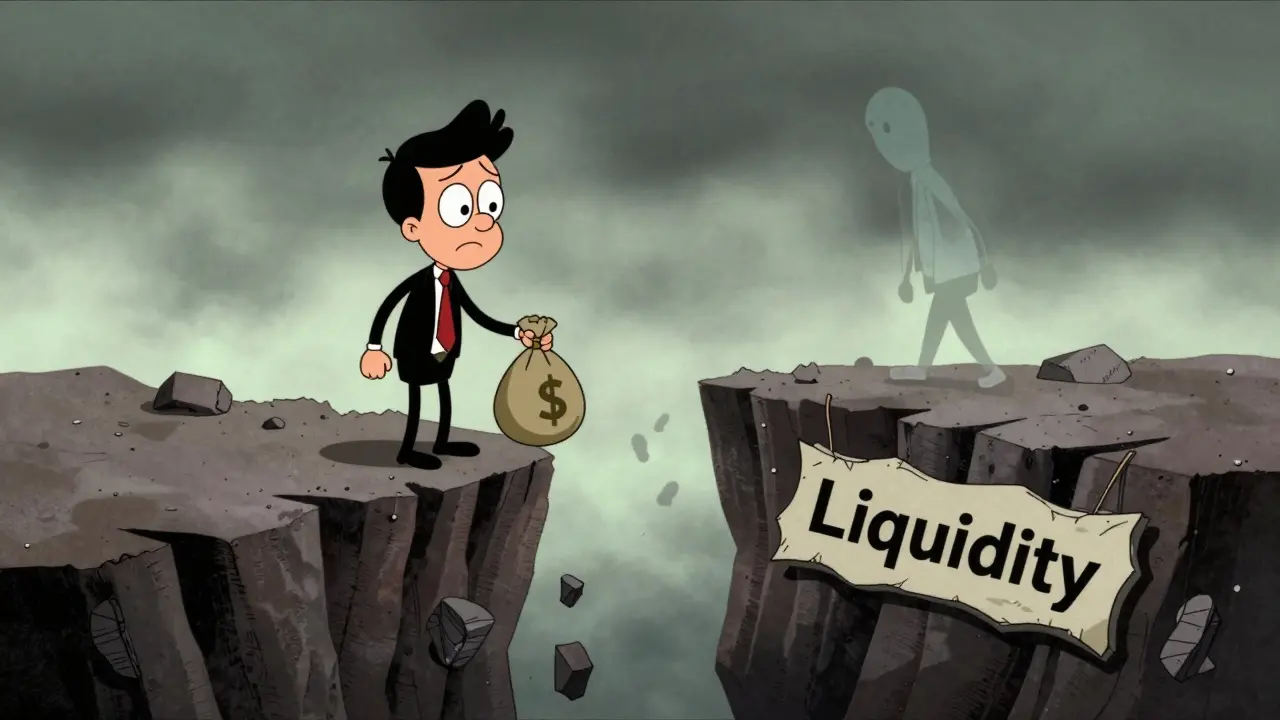
Liquidity is the lifeblood of any tradable asset. Without it, you might buy a token but find yourself unable to sell it without crashing the price. MCP AI suffers from extreme illiquidity.
| Metric | Value / Status |
|---|---|
| Market Cap | $2,500 - $8,000 USD |
| 24-Hour Volume | $0 - $1.26 USD |
| Global Rank | #7,800 - #33,897 (varies by platform) |
| Primary Exchange | Raydium (DEX on Solana) |
| Price Trend | Highly volatile, often null/untrackable |
Look at that volume. On some days, the entire world trades less than $2 worth of MCP AI. Compare this to established Solana projects that see hundreds of millions in daily volume. This means the order book is incredibly thin. If someone decides to sell a significant amount, the price could drop 90% in seconds. Conversely, a small buy order could spike the price artificially, creating a false sense of momentum.
Data inconsistency is another red flag. One tracker might show a price, while another shows "null" or zero. LiveCoinWatch has reported instances where the price tracking simply stops working because there are no recent trades to reference. This is typical of "zombie" tokens-projects that are technically alive but economically dead.

How to Buy MCP AI (And Why You Should Think Twice)
If you still want to proceed, you cannot buy MCP AI on major centralized exchanges like Coinbase or Binance directly. You have to go through decentralized finance (DeFi) channels. Here is the process:
- Get a Solana Wallet: You’ll need a wallet like Phantom or Solflare that supports SPL tokens.
- Fund with SOL: Buy Solana (SOL) on a reputable exchange and send it to your wallet. Remember to keep extra SOL for transaction fees (gas).
- Connect to Raydium: Raydium is the primary decentralized exchange (DEX) listing the MCP/SOL pair.
- Swap for MCP: Input the amount of SOL you wish to trade. Set your slippage tolerance high (often 10-20%+) because of the low liquidity.
- Verify the Contract Address: Always double-check the contract address. Scammers create fake tokens with similar names. Ensure you are interacting with the correct 100-quadrillion supply token.
Warning: Even after following these steps, selling may be difficult. If the liquidity pool is drained or too shallow, your funds could get stuck. This is known as being "rug-pulled" or simply facing extreme slippage where you lose most of your value just trying to exit.
MCP AI vs. Real AI Crypto Projects
To put MCP AI in perspective, let’s compare it to legitimate players in the AI-crypto intersection. Projects like Render (RNDR), Fetch.ai (FET), or even newer Solana-native AI agents have actual products, developer communities, and institutional interest.
- Utility: Real AI tokens provide compute power, data storage, or API access. MCP AI provides nothing beyond potential speculation.
- Transparency: Established projects publish audits, team details, and roadmaps. MCP AI offers vague slogans and no verifiable documentation.
- Liquidity: Top AI tokens have deep liquidity pools allowing easy entry and exit. MCP AI’s pool is negligible.
The term "Model Context Protocol" is being used here as a buzzword magnet. While the concept of connecting AI to data is valid and valuable, MCP AI does not appear to own, operate, or facilitate this technology. It is a passenger on the train, not the engine.
Is MCP AI a Scam?
Labeling something a "scam" requires legal proof of intent to defraud. We don’t have that. However, we can assess risk. MCP AI exhibits several characteristics of high-risk, predatory assets:
- Narrative Hijacking: Using the name of a legitimate tech standard (MCP) without affiliation.
- Extreme Dilution: A supply of 100 quadrillion ensures the token never reaches a "human-friendly" price like $1 or $10, keeping hope alive for retail buyers while preventing meaningful appreciation.
- Lack of Development: No GitHub activity, no regular updates, and no clear team behind the project.
- Zero Utility: No staking rewards, no governance rights, and no service backing the token.
It is likely not a malicious hack waiting to drain your wallet (though you should always check for honeypot functions before buying any DEX token). Instead, it is a "vaporware" asset-a project that exists only as a ticker symbol and a hope. The developers may have already sold their initial holdings, leaving retail traders to pick up the slack in a near-empty market.
Final Verdict: Stay Away or Dip a Toe?
If you are looking for exposure to AI in crypto, there are dozens of better options with actual fundamentals. If you are looking for meme coin gains, there are more liquid Solana memes with active communities and higher trading volumes. MCP AI sits in an awkward middle ground: too serious-sounding to be a fun meme, but too empty to be a serious investment.
Treat any money spent on MCP AI as lost. Do not invest rent money, savings, or funds you need for emergencies. The likelihood of significant returns is outweighed by the near-certainty of illiquidity and stagnation. In the world of crypto, attention is currency. MCP AI currently has very little of either.
What is the current price of MCP AI?
As of mid-2026, the price of MCP AI is approximately $0.00000000000003 (3 x 10^-14 USD). Due to extreme illiquidity, the price can fluctuate wildly or become untrackable on various platforms.
Is MCP AI listed on Coinbase or Binance?
No, MCP AI is not listed on major centralized exchanges like Coinbase or Binance for direct trading. It is primarily traded on decentralized exchanges (DEXs) like Raydium on the Solana network. Price pages on major sites exist for tracking purposes only.
Does MCP AI actually use Artificial Intelligence?
There is no public evidence that the MCP AI token powers any AI technology. It borrows the name "Model Context Protocol" (MCP) for branding, but data providers classify it as a meme coin with no technical utility or AI infrastructure.
What is the total supply of MCP AI?
The total and maximum supply of MCP AI is 100 quadrillion (100,000,000,000,000,000) tokens. Almost all of these tokens are already in circulation, meaning there is no future inflation, but also no scarcity to drive value.
Can I mine MCP AI?
No, MCP AI cannot be mined. It is a pre-minted token on the Solana blockchain. All tokens were created at launch, and new tokens cannot be generated through mining or staking processes.
Is MCP AI a safe investment?
MCP AI is considered extremely high-risk. With a market cap under $10,000 and near-zero trading volume, it faces severe liquidity risks. There is no underlying utility, transparent team, or audit, making it suitable only for speculative gambling rather than investing.