What is Papu Token (PAPU)? A Deep Dive into the Crash Bandicoot Meme Coin
Jul, 7 2026
You’ve probably seen memes about Papu Token (PAPU) floating around social media or niche crypto forums. It’s a cryptocurrency with a funny name, inspired by a video game character, and it promises the thrill of the meme coin market. But before you rush to buy in, you need to know exactly what you’re looking at. Is this the next big thing, or is it just digital noise?
In short, Papu Token is an Ethereum-based meme coin with virtually no utility, extremely low liquidity, and high risk. It doesn’t power a platform, offer staking rewards, or have a clear roadmap. It exists primarily for entertainment and speculation. If you are asking "what is Papu Token" because you want to understand its mechanics, risks, and whether it’s worth your time, you’ve come to the right place. Let’s break down the reality behind the hype-or lack thereof.
The Origins: From Video Games to Blockchain
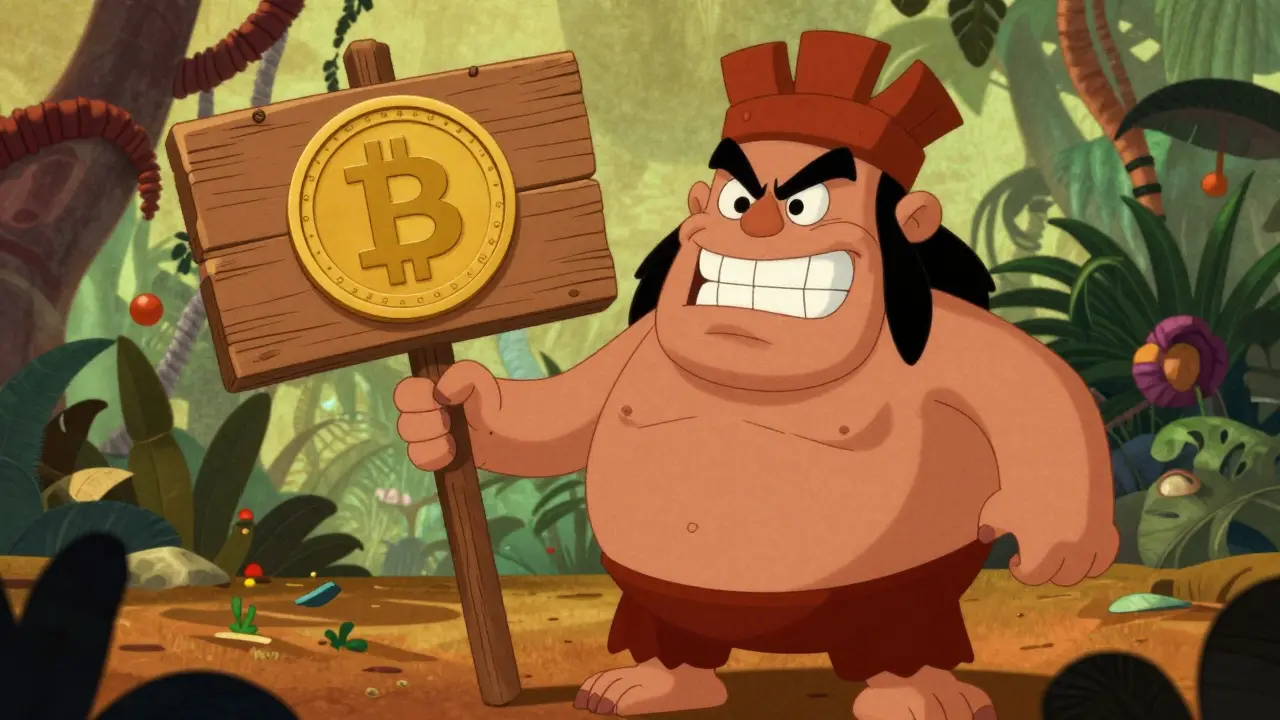
To understand PAPU, you first have to look at where it comes from. The token is named after Papu Papu, a boss character from the popular video game series Crash Bandicoot. In the games, Papu Papu is a large, somewhat comical antagonist. Crypto creators often latch onto pop culture icons to build instant recognition, hoping that nostalgia or humor will drive adoption. This is the same playbook used by early meme coins like Dogecoin, which borrowed from internet dog memes.
However, there is a crucial difference here. Unlike some projects that secure licensing or partnerships, there is no public evidence that Papu Token has any official affiliation with Activision Blizzard, the company that owns the rights to Crash Bandicoot. This raises immediate red flags regarding intellectual property. While meme coins often operate in a gray area legally, the lack of official backing means the project relies entirely on organic community interest, which appears to be non-existent based on current data.
Technical Specs: How Does PAPU Work?
Under the hood, Papu Token is not a standalone blockchain. It operates as an ERC-20 token on the Ethereum network. This is important because it dictates how you buy, sell, and store it. Being on Ethereum means it inherits the security of the main chain but also suffers from its transaction costs.
Here is the technical breakdown:
- Blockchain: Ethereum
- Token Standard: ERC-20
- Contract Type: Smart Contract (Unverified/No Audit)
- Total Supply: Approximately 8.88 billion tokens (as of late 2023 data)
Because it is an ERC-20 token, you cannot hold it in a standard bank account or even most centralized exchange wallets directly. You need a Web3 wallet like MetaMask or Trust Wallet to interact with it. To buy or sell PAPU, you typically have to use decentralized exchanges (DEXs) like Uniswap. This creates a barrier to entry for casual users who aren’t familiar with managing private keys or paying gas fees.
The Economics: Why the Price Is So Low
If you look up the price of PAPU, you will see numbers that look like scientific notation. We are talking about fractions of a cent so small they are almost invisible. For context, recent data showed prices hovering around $0.0000000004 USD. Why is it so cheap? It’s not just because the value is low; it’s because the liquidity is nonexistent.
| Metric | Papu Token (PAPU) | Average Viable Meme Coin |
|---|---|---|
| Market Cap | ~$19,800 (Extremely Low) | $1M - $100M+ |
| 24h Trading Volume | ~$3 USD | $100k - $10M+ |
| Liquidity Pool | Negligible | Deep & Locked |
| Community Size | Non-existent | Active Discord/Twitter |
Look at that trading volume: $3 in 24 hours. That means if you wanted to sell $100 worth of PAPU, you might crash the entire market price because there isn’t enough money in the pool to absorb your sale. This is known as slippage, the difference between the expected price of a trade and the price at which the trade executes. In illiquid markets like PAPU, slippage can be catastrophic. You could click "sell" and end up with 50% less value than you thought you had.
The Hidden Cost: Ethereum Gas Fees
This is the biggest trap for new investors. Since PAPU lives on Ethereum, every time you swap ETH for PAPU, or vice versa, you pay a gas fee. These fees are paid in ETH, not PAPU. On a busy day, a simple swap on Ethereum can cost $5 to $20, or even more during peak times.
Imagine trying to buy $1 worth of PAPU. You pay $10 in gas fees to make the transaction. You are instantly down 90% before the price even moves. This economic structure makes micro-investments irrational. It is why many low-cap tokens migrate to cheaper chains like Solana or BSC. PAPU staying on Ethereum suggests either a lack of resources to upgrade or simply that the developers don’t care about user accessibility.
Risk Assessment: Is It Safe?
When we talk about safety in crypto, we mean two things: technical security and financial viability. PAPU fails on both fronts.
Technical Security: There is no public audit report for the PAPU smart contract. Without an audit from firms like CertiK or OpenZeppelin, you have no guarantee that the code doesn’t contain backdoors. Could the developers drain the liquidity pool? Could they mint infinite tokens and dump them on holders? Technically, yes. This is a common tactic in "rug pulls," where developers abandon the project after taking investors' money.
Financial Viability: A study by the University of Cambridge Centre for Alternative Finance found that only 5% of cryptocurrency projects show meaningful development activity six months after launch. PAPU shows zero signs of active development. There is no GitHub repository with recent commits, no whitepaper outlining future goals, and no team transparency. According to Chainalysis reports on blockchain analytics, tokens with these characteristics often enter a "death spiral"-where low prices discourage trading, which reduces liquidity, which further destabilizes the price.

Comparison: PAPU vs. Established Meme Coins
It’s easy to compare PAPU to giants like Dogecoin or Shiba Inu, but the comparison highlights PAPU’s weaknesses rather than strengths. Here is how they stack up:
- Dogecoin (DOGE): Has a massive community, celebrity endorsements, and acceptance as a payment method by companies like Tesla. It has survived multiple bear markets.
- Shiba Inu (SHIB): Built an ecosystem including Shibarium (a layer-2 blockchain), a decentralized exchange (ShibaSwap), and charitable initiatives.
- Papu Token (PAPU): Has no ecosystem, no charity work, no major listings, and no recognizable community. It is purely a speculative asset with no fundamental drivers.
Even newer meme coins like Pepe (PEPE) managed to generate billions in market cap through viral marketing and strong community coordination. PAPU lacks the viral momentum required to sustain even a modest valuation.
How to Buy (If You Still Want To)
I am not recommending you buy PAPU, but if you are determined to experiment with high-risk assets, here is the process. Note that this requires technical knowledge.
- Set Up a Wallet: Download MetaMask and securely back up your seed phrase. Never share this phrase with anyone.
- Fund Your Wallet: Buy Ethereum (ETH) on a major exchange like Coinbase or Binance and transfer it to your MetaMask address.
- Find the Contract Address: Go to a tracker like Etherscan or CoinGecko to find the official PAPU contract address. Beware of fake tokens with similar names.
- Use a DEX: Connect your wallet to Uniswap or SushiSwap. Paste the PAPU contract address into the output field.
- Adjust Slippage: Because the token is volatile, you may need to increase the slippage tolerance setting (e.g., to 5-10%) for the transaction to go through.
- Confirm Transaction: Pay the gas fee and wait for confirmation. Remember, you are now holding an asset with near-zero liquidity.
Final Verdict: Proceed With Extreme Caution
Papu Token (PAPU) is a classic example of the "long tail" of cryptocurrency-a vast number of tokens that exist technically but fail economically. It serves no purpose other than speculation, and even that speculation is hindered by prohibitive transaction costs and lack of liquidity. For every person who buys PAPU hoping for a moonshot, there are dozens who lose their initial capital to gas fees and slippage.
If you are interested in meme coins, look for projects with active communities, transparent teams, and sufficient liquidity to allow you to exit when you want. PAPU offers none of these safeguards. It is a digital relic of a trend that has long since moved on.
Is Papu Token (PAPU) a scam?
While there is no definitive proof that PAPU is a coordinated fraud, it exhibits many characteristics of high-risk assets that often lead to losses. The lack of audits, anonymous team, and negligible liquidity make it vulnerable to manipulation and rug pulls. Treat it as a total loss potential unless you have verified insider information, which is rare and risky.
Where can I buy Papu Token?
PAPU is not listed on major centralized exchanges like Binance or Coinbase. You can only buy it on decentralized exchanges (DEXs) such as Uniswap using an Ethereum wallet like MetaMask. Be prepared to pay high Ethereum gas fees for each transaction.
What is the price of PAPU?
The price of PAPU is extremely low, often measured in fractions of a billionth of a dollar (e.g., $0.0000000004). However, price alone is misleading due to the lack of liquidity. The market cap is under $20,000, indicating very few people are actively trading it.
Does Papu Token have any utility?
No. PAPU is classified as a meme coin with no functional utility. It does not offer staking rewards, governance rights, or access to specific services. Its value is derived solely from speculative demand, which is currently minimal.
Is it safe to invest in meme coins like PAPU?
Investing in low-cap meme coins like PAPU is extremely risky. Most meme coins fail within months. Only invest money you can afford to lose completely. Always check for liquidity depth, team transparency, and community activity before buying any obscure token.