BEQUANT Crypto Exchange Review: What Happened and Why It No Longer Serves Retail Traders
Jan, 20 2026
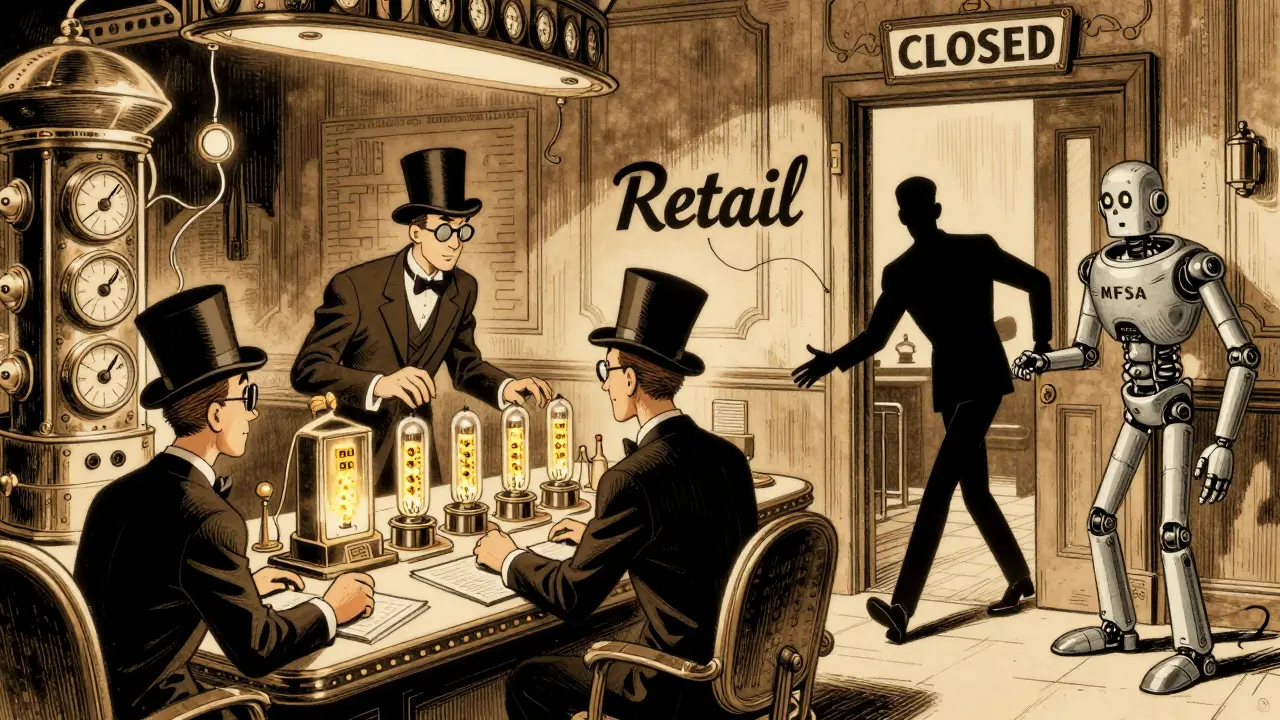
BEQUANT used to be a name you’d see on lists of top crypto exchanges. But if you’re looking to trade Bitcoin or Ethereum on BEQUANT today, you won’t find it. The platform shut down its retail exchange in July 2022. That’s not a glitch. It wasn’t a hack. It was a strategic decision - and one that tells you a lot about where the crypto market is heading.
What BEQUANT Actually Was
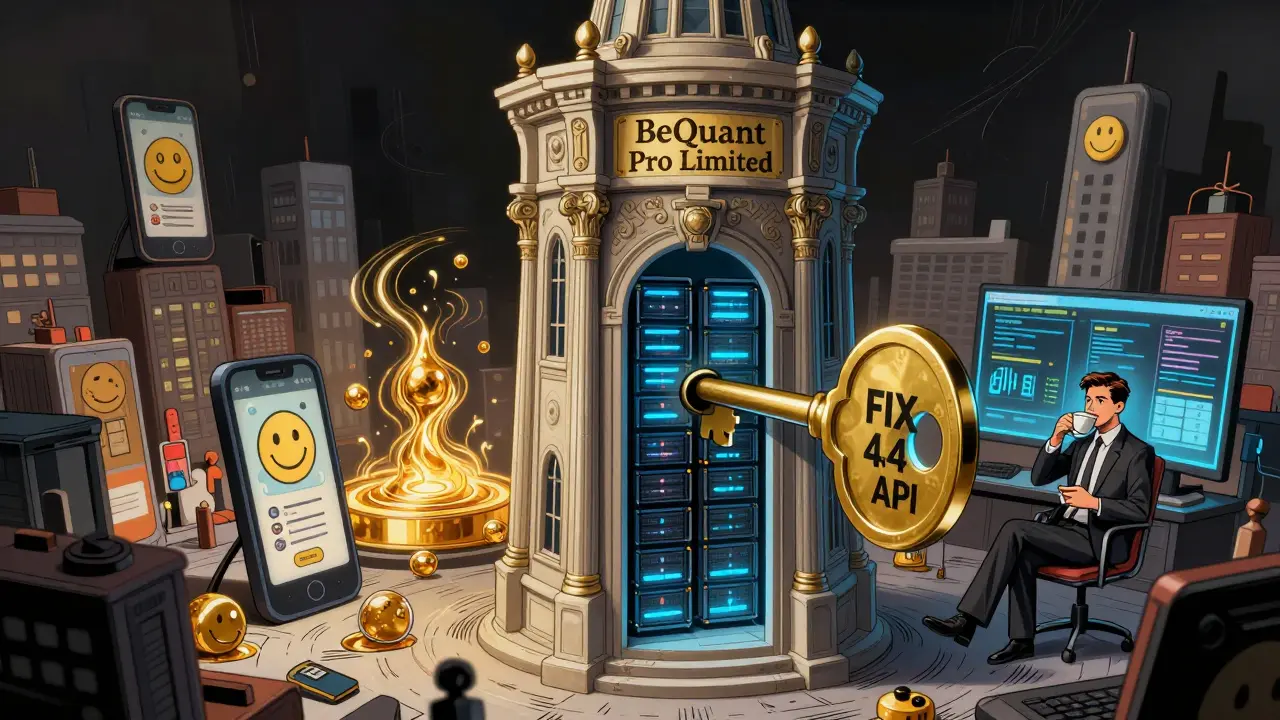
BEQUANT launched in 2018 as a crypto exchange with a twist. Instead of chasing retail users with flashy apps and meme coins, it built a high-speed trading system for professionals. Its infrastructure was built in London’s Equinix LD4 data center, where trades executed in microseconds. It supported FIX 4.4, WebSocket, and REST APIs - the same tools hedge funds use to trade stocks and futures. At its peak, it handled over 33 million trades across 85 trading pairs.The fees were competitive: makers paid 0.01%, takers paid 0.10%. That’s lower than most retail exchanges. It was licensed by Malta’s Financial Services Authority (MFSA) under the VFAA, giving it regulatory credibility in Europe. For a while, it looked like BEQUANT was carving out a niche: a clean, fast, compliant exchange for serious traders.
Why BEQUANT Stopped Serving Regular Users
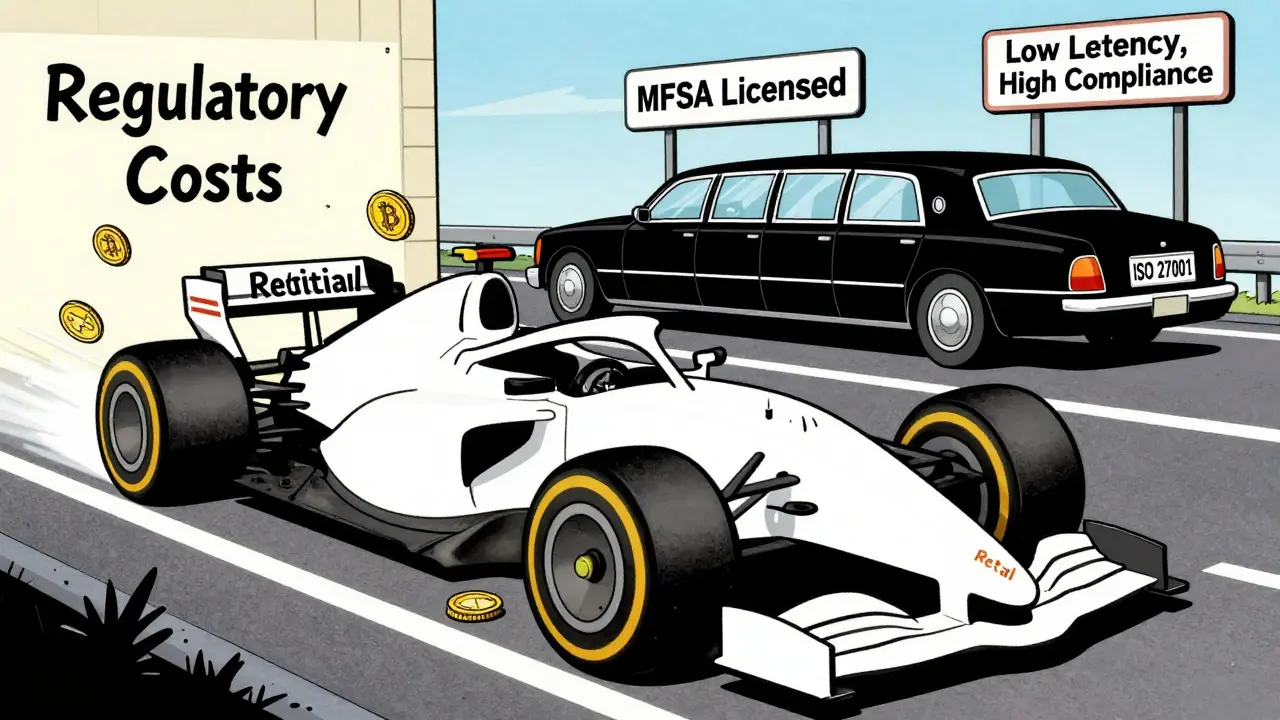
In July 2022, BEQUANT made a quiet but massive move: it surrendered its Class 4 license for retail exchange operations. By August 8, 2022, all retail accounts were closed. Users couldn’t deposit or withdraw anymore. The platform didn’t vanish - it just stopped being a place for you or me to buy Bitcoin.The reason? Regulation became too expensive and too complex for a small exchange trying to serve both retail and institutional clients. While giants like Binance and Coinbase spent hundreds of millions on global compliance, BEQUANT chose to focus on what it did best: serving institutions. That meant letting go of retail users - even if they were loyal.
This wasn’t a failure. It was a pivot. BEQUANT realized it couldn’t compete with the marketing budgets of Binance or the user-friendly apps of Coinbase. But it could outperform them in speed, liquidity, and regulatory clarity - if it focused only on big clients.
What BEQUANT Does Now
Today, BEQUANT operates as BeQuant Pro Limited, a regulated prime brokerage. It doesn’t let you trade directly. Instead, it provides infrastructure to hedge funds, asset managers, and OTC desks. Think of it like a back-office powerhouse for professional crypto traders.Its services now include:
- Direct market access to 13+ institutional liquidity pools
- Co-located trading servers in London for ultra-low latency
- Custody and collateral management
- Margin lending and financing
- Execution algorithms designed for large orders
It still holds its Class 3 MFSA license for prime brokerage and maintains ISO 27001 security certification. Its clients aren’t looking for a mobile app or a 24/7 chatbot. They need reliability, speed, and compliance - and BEQUANT delivers that.
How It Compared to Other Exchanges (When It Was Active)
When BEQUANT still served retail traders, it was a different beast than the big names.| Feature | BEQUANT | Binance | Coinbase | Kraken |
|---|---|---|---|---|
| Target Users | Professional traders, institutions | Retail + institutions | Retail-focused | Retail + pro traders |
| API Access | FIX 4.4, WebSocket, REST | REST + WebSocket | REST only | REST + WebSocket |
| Latency | Microseconds (co-located) | Milliseconds | Milliseconds | Milliseconds |
| Maker Fee | 0.01% | 0.02% | 0.00% | 0.00% |
| Taker Fee | 0.10% | 0.04% | 0.20% | 0.16% |
| Mobile App | No | Yes | Yes | Yes |
| Language Support | English only | 10+ languages | 10+ languages | 8+ languages |
| Regulation | MFSA Class 4 (retail) | Global, varied | US, EU, Canada | US, EU, Canada |
BEQUANT wasn’t trying to be the easiest exchange. It was trying to be the fastest and most reliable for people trading large sums. If you were a day trader with a $5,000 account, you’d probably prefer Binance. If you were managing $50 million for a fund, BEQUANT’s infrastructure made more sense.
Why Retail Users Left - And Why They Won’t Come Back
User reviews from 2021 and early 2022 were mixed. Some praised the low fees and clean interface. Others complained about the lack of Russian or Spanish support, the absence of a mobile app, and the confusing support system. There were only about 4 verified reviews on crypto review sites - a sign that BEQUANT never really broke into the retail market.And here’s the truth: retail traders didn’t leave because BEQUANT was a scam. They left because it wasn’t built for them. No tutorials. No in-app learning. No customer service for beginners. It was like walking into a Formula 1 garage and asking how to change a tire. The tools were there - but no one was there to help you use them.
Now that BEQUANT is fully institutional, there’s no path back for retail users. You can’t sign up. You can’t deposit. You can’t even access your old account. The doors are closed.
What This Means for the Crypto Market
BEQUANT’s shift reflects a bigger trend: crypto is maturing. The wild west days of anyone opening an exchange and hoping for traffic are over. Regulatory pressure is rising. Compliance costs are soaring. And institutions - not retail traders - are the ones moving real money.BEQUANT didn’t fail. It evolved. It saw the future and bet on it. Other small exchanges are doing the same. Some are merging. Others are shutting down. Only those with clear niches - like institutional liquidity, custody, or compliance - are surviving.
If you’re a retail trader, BEQUANT is irrelevant now. But if you’re managing crypto assets for a fund, a family office, or a trading desk, BEQUANT’s infrastructure is still one of the cleanest, fastest, and most regulated options in Europe.
Alternatives for Retail Traders
If you’re looking to trade crypto today, BEQUANT is not an option. But here are three solid alternatives:- Binance - Best for volume, low fees, and wide coin selection. Watch out for regulatory changes in your region.
- Kraken - Strong compliance, good for EU and US users. Slightly higher fees but excellent security.
- Bybit - Great for derivatives and advanced trading tools. Strong mobile app and multilingual support.
None of these offer BEQUANT’s ultra-low latency or institutional-grade APIs - and they don’t need to. For 99% of retail traders, speed matters less than ease of use, customer support, and mobile access.
Final Verdict: Was BEQUANT Worth It?
BEQUANT was never meant for casual traders. It was a tool for professionals who needed speed, reliability, and regulatory clarity. For those users, it delivered. But for the rest of us? It was like a race car with no steering wheel.Its shutdown wasn’t a collapse. It was a strategic retreat. BEQUANT chose to serve the clients who could pay the most and needed the most - and left the rest behind. That’s not a bad business move. It’s just not a move that helps you if you’re buying Bitcoin on your phone.
Today, BEQUANT lives on - but only for institutions. If you’re one of them, it’s still a top-tier player. If you’re not, you’ll need to look elsewhere. And that’s okay. The crypto market doesn’t need every exchange to serve everyone. It just needs the right tools in the right hands.
Can I still trade on BEQUANT as a retail user?
No. BEQUANT shut down its retail exchange on July 31, 2022. All retail accounts were closed, and no new users can sign up. The platform now operates exclusively as a prime brokerage for institutional clients like hedge funds and asset managers.
Is BEQUANT a scam?
No, BEQUANT was never a scam. It was a regulated exchange licensed by Malta’s Financial Services Authority (MFSA). It operated transparently and had strong technical infrastructure. Its shutdown was a business decision, not a failure or fraud. Many users reported legitimate trading experiences before the pivot.
What happened to my funds if I had an account on BEQUANT?
Users had until August 8, 2022, to withdraw their funds. After that date, all retail accounts were permanently closed. If you didn’t withdraw before then, your funds are no longer accessible. BEQUANT has no obligation to return assets from closed retail accounts.
Does BEQUANT have a mobile app?
No, BEQUANT never offered a mobile app - even during its retail phase. It was designed as a desktop-only platform for professional traders using APIs and advanced terminals. Today, as an institutional prime broker, it provides no consumer-facing apps at all.
Can I use BEQUANT for OTC trading now?
Yes - but only if you’re an institutional client. BEQUANT Pro Limited offers OTC trading services as part of its prime brokerage offering. This includes large-volume trades, private liquidity access, and customized execution. Retail traders cannot access these services.
Is BEQUANT still regulated?
Yes. BEQUANT Pro Limited still holds its Class 3 MFSA license for prime brokerage services and maintains ISO 27001 security certification. It remains under active regulation by Malta’s Financial Services Authority, making it one of the few compliant institutional crypto providers in Europe.
Why did BEQUANT shut down its retail exchange?
BEQUANT shut down its retail exchange because the cost of compliance, customer support, and competition from larger platforms became unsustainable. By focusing solely on institutional clients, it could offer better infrastructure, lower fees for large trades, and stronger regulatory compliance - without the overhead of serving millions of retail users.
Are there any exchanges like BEQUANT today?
Yes, but only as institutional providers. Platforms like Genesis Trading, Cumberland, and LedgerX offer similar prime brokerage services. For retail traders, no exchange replicates BEQUANT’s low-latency infrastructure - and none need to. The market has split: retail platforms focus on ease of use; institutional platforms focus on speed and scale.