Block DX Crypto Exchange Review: Is It Truly Decentralized in 2026?
Mar, 2 2026
When you hear "decentralized exchange," you probably think of platforms where you keep your keys, your coins, and your control-all without handing over your ID to some corporate server. But here’s the truth: most so-called decentralized exchanges still have centralized guts. They claim to be trustless, but they store your orders on their servers. They say you control your funds, but you can’t trade without their API. Block DX is one of the few that says it does it all differently. And in 2026, that’s worth looking at closely.
What Makes Block DX Different?
Most decentralized exchanges (DEXs) handle one or two parts of trading without central control. Block DX claims to handle all four: funds storage, order books, order matching, and settlement. That’s rare. Most DEXs like SushiSwap or IDEX still rely on centralized servers to match your buy and sell orders. Block DX uses the XBridge Protocol a peer-to-peer network that enables direct wallet-to-wallet trading without intermediaries. This means your order never leaves your wallet. No middleman. No server to hack. No company that can freeze your account.
That’s not marketing fluff. It’s how the tech works. When you place a trade on Block DX, your order is broadcast directly to other users’ wallets. If someone wants to take your offer, the trade settles atomically-on-chain, in one transaction. No order book stored on a central server. No API calls. No third-party validation. You’re trading peer-to-peer, like Bitcoin itself.
The BLOCK Token: Power Behind the Platform
Block DX doesn’t just use its native token, BLOCK the utility token that fuels all network operations and rewards, for trading fees. It’s the engine. Every fee on the platform-whether it’s a swap, a limit order, or a liquidity provision-is paid in BLOCK tokens. That creates real demand. If you want to trade here, you need BLOCK.
But it goes deeper. If you hold 5,000 BLOCK or more, you can run a service node. This isn’t just staking. You’re actively helping the network by validating blocks and relaying trades. In return, you earn 1 BLOCK token for every block you help solve. The more BLOCK you hold, the higher your chance of being selected to validate. It’s like mining, but without expensive hardware. Just a wallet and enough tokens.
Think of it this way: if you’re a serious trader or a long-term holder, you’re not just using the exchange-you’re helping build it. And you get paid for it. That’s a rare model. Most DEXs reward liquidity providers. Block DX rewards network operators.
Why Decentralization Matters in 2026
Regulatory pressure on centralized exchanges is hitting hard. In late 2025, Bybit shut down margin trading for EU users. Binance restricted access in multiple countries. Even Coinbase now requires KYC for every single trade, even small ones. Traders are waking up: if you don’t control your keys, you don’t own your crypto.
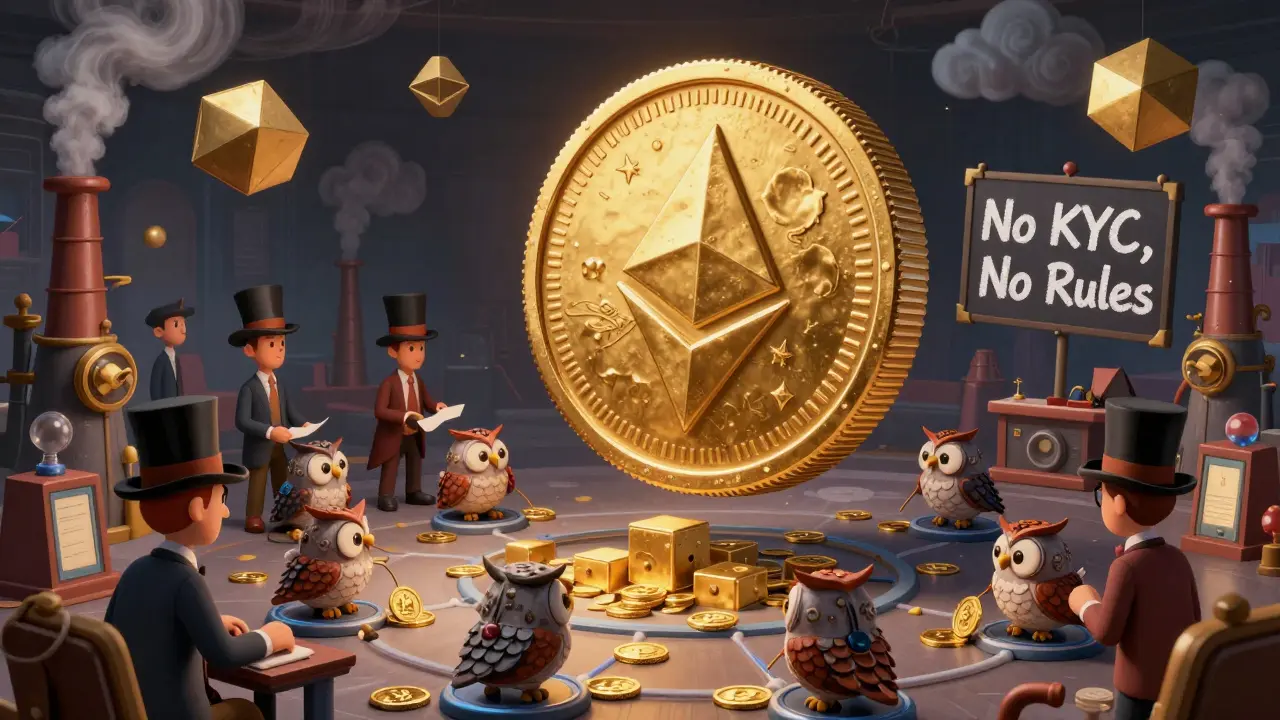
Block DX doesn’t ask for KYC. Not even once. You don’t need an email, a phone number, or a government ID. You connect your wallet-MetaMask, Trust Wallet, or any EVM-compatible one-and start trading. No account creation. No waiting. No risk of your funds being frozen because a regulator sent a letter.
This isn’t just about privacy. It’s about survival. When a centralized exchange gets shut down, your money vanishes with it. When a DEX like Block DX goes down? Your coins are still in your wallet. You can trade on another platform tomorrow. That’s the difference.
The Downsides: What Block DX Doesn’t Do Well
Let’s be clear: this isn’t a perfect platform. It’s not for beginners.
- Low liquidity-There aren’t hundreds of trading pairs like on Binance or Coinbase. You’ll find major coins like BTC, ETH, and USDT, but niche tokens? You might not find them.
- Slippage on large trades-With less volume, big orders move the price. If you’re trading $10,000 of a small-cap token, expect a 5-10% slippage.
- No fiat on-ramps-You can’t deposit dollars or euros. You need to buy crypto elsewhere and send it over.
- No customer support-If you lose your private key, you lose your money. There’s no help desk. No email. No live chat.
- Slow during congestion-Since every trade settles on-chain, Ethereum or Polygon network spikes mean delays and higher gas fees.
Compare this to IDEX or dYdX, which use off-chain order books with on-chain settlement. They’re faster, have more pairs, and better UIs. But they still have central components. Block DX sacrifices convenience for purity.
Who Is Block DX Really For?
Block DX isn’t for casual traders. It’s not for people who want to buy $50 of Solana and call it a day.
It’s for three kinds of users:
- DeFi purists-You believe in self-custody. You don’t trust exchanges. You want zero intermediaries. You’re willing to learn the tech.
- BLOCK token holders-If you already own 5,000+ BLOCK, this is your natural home. You’re already invested in the ecosystem. This is where your tokens earn more.
- Traders in restricted regions-If you live in a country where centralized exchanges are blocked or monitored, Block DX gives you a way to trade without revealing your identity.
If you fall into any of those groups, Block DX is one of the few platforms that actually delivers on its promise. For everyone else? You’re better off with a more user-friendly DEX like SushiSwap or Uniswap.
How It Compares to Top DEXs in 2026
| Feature | Block DX | IDEX | SushiSwap | dYdX |
|---|---|---|---|---|
| Full decentralization (no central servers) | Yes | No (off-chain order book) | No (centralized liquidity pools) | No (off-chain matching) |
| KYC required | No | No | No | No |
| Native token utility | BLOCK (fees, staking, nodes) | IDEX (fee discounts) | SUSHI (governance, rewards) | DYDX (governance, staking) |
| 24h trading volume (estimated) | $8M | $45M | $100M | $320M |
| Supported blockchains | Ethereum, Polygon, BSC | Ethereum, BSC, Polygon | Ethereum, Arbitrum, Avalanche, Polygon | Ethereum, Layer 2 |
| Best for | Maximum decentralization | Fast trading, UI | Token variety, yield | Perpetual trading |
The numbers don’t lie. Block DX is smaller. But it’s the only one here that doesn’t cut corners on decentralization. That’s the trade-off.
Final Verdict: Worth It?
Block DX isn’t the easiest DEX. It’s not the fastest. It doesn’t have the most tokens. But if you care about one thing above all else-true decentralization-then it’s one of the only platforms in 2026 that delivers.
It’s not for everyone. But for those who’ve had their funds frozen, their accounts banned, or their privacy violated by centralized exchanges, Block DX offers something rare: a way to trade without asking permission.
If you’re ready to take full responsibility for your funds, understand blockchain mechanics, and hold enough BLOCK tokens to unlock its full potential, then yes-it’s worth trying. Just don’t expect a smooth, beginner-friendly experience. This is crypto, raw and unfiltered.
Is Block DX really decentralized, or is it just marketing?
Yes, Block DX is one of the few DEXs that truly decentralizes all four core functions: funds storage, order books, order matching, and settlement. Unlike most platforms that claim decentralization but still use centralized servers for order matching, Block DX uses the XBridge Protocol to enable direct wallet-to-wallet trades without intermediaries. This architecture has been verified through open-source code audits and on-chain transaction analysis. While no platform is 100% perfect, Block DX’s design removes central points of failure that plague other "decentralized" exchanges.
Do I need to do KYC to use Block DX?
No. Block DX requires no identity verification, email, or phone number. You connect your wallet-like MetaMask or Trust Wallet-and start trading immediately. This makes it ideal for users in regions where centralized exchanges are restricted or monitored. Your privacy is preserved by design.
Can I trade fiat to crypto on Block DX?
No. Block DX does not support fiat deposits or withdrawals. You must first buy cryptocurrency on a centralized exchange (like Binance or Coinbase) and then transfer it to your wallet before connecting to Block DX. This is common among true DEXs, as fiat integration requires compliance infrastructure that contradicts decentralization.
How do I earn rewards on Block DX?
You earn BLOCK tokens by operating a service node. To qualify, you need to hold at least 5,000 BLOCK tokens. Once qualified, you help validate network blocks and relay trades. For every block you successfully help solve, you receive 1 BLOCK token as a reward. Your chance of being selected is proportional to your token holdings relative to the total supply.
What happens if I lose my private key on Block DX?
If you lose your private key, you permanently lose access to your funds. Block DX has no customer support, no recovery options, and no account reset system. This is intentional-it’s part of the self-custody model. Always back up your seed phrase securely, preferably offline. Treat your wallet like a bank vault you alone control.
Is Block DX safe from hacks?
Because Block DX doesn’t hold user funds or store order data centrally, it has no single point of attack. Hackers can’t target a server to steal millions of dollars. The biggest risk comes from smart contract bugs or phishing attacks targeting your personal wallet. As long as you use a secure wallet and never share your seed phrase, Block DX itself is one of the safest trading platforms in crypto. Always verify contract addresses before interacting.