Criminal penalties for crypto ban violations worldwide

Mar, 30 2026
Imagine you are traveling through North Africa with a laptop full of Ethereum. You open your wallet app in Algiers. Suddenly, that simple action lands you in serious legal trouble. Many people treat cryptocurrency as borderless money, but the law treats it differently depending on where you stand. As of March 2026, the regulatory landscape looks far more fractured than you might expect. Countries are not just regulating; some are actively banning ownership with threats of jail time.
The reality of these bans often clashes with how people actually use technology. Despite strict laws, adoption remains high. But does that mean you should ignore the warnings? Not necessarily. Governments are finding new ways to crack down, specifically targeting infrastructure rather than just individual users. Understanding the difference between a warning notice and a prison sentence can save your freedom.
The Global Map of Crypto Prohibitions
You cannot understand the risk without looking at the numbers. The Atlantic Council tracks cryptocurrency regulation globally and provides annual reports on adoption versus prohibition levels. Their 2025 analysis covers 75 nations. In this study, 45 countries fully legalized crypto operations. However, 20 nations impose partial bans, while 10 maintain general prohibitions. This means roughly one in seven countries considers your digital wallet a crime scene.
These restrictions usually stem from three main concerns: preventing money laundering, stopping terrorist financing, and curbing capital flight. Governments worry that virtual currencies allow bad actors to move value across borders without oversight. When you look at the G20 economies, only a few lean toward restriction. Most advanced economies have embraced legalization. The United States remains an outlier among wealthy nations, consistently ranking in the top ten for adoption despite having a complex, evolving regulatory environment.
| Region Type | Count of Nations | Adoption Trend | Enforcement Focus |
|---|---|---|---|
| Developed Economies | Mostly Legalized | High | Consumer Protection & Licensing |
| Emerging Markets | Mixed | Volatile | Capital Flight Prevention |
| Banned Jurisdictions | 10 (General Ban) | Surprisingly High | User Criminalization |
Highest Risk Jurisdictions
If you are moving through specific parts of the world, the stakes change dramatically. We see distinct approaches in North Africa, Asia, and the Middle East. These regions tend to view cryptocurrency as a direct threat to monetary sovereignty.
Algeria enacted Article 117 of its official journal on December 28, 2017. This law explicitly prohibits the purchase, sale, use, and holding of so-called virtual currency. Breaches are punishable under general criminal laws in force. While the law does not list specific years of imprisonment, "punishable under laws" opens the door to significant custodial sentences depending on other related financial crimes charged alongside the violation.
Neighbors like Morocco took a similar stance. On November 20, 2017, the Office des Changes declared transactions via virtual currencies an infringement of exchange regulations. Bank Al-Maghrib, the central bank, clarified that bitcoin is a financial asset carrying significant risks, not recognized currency. Violations carry penalties and fines provided by existing laws. This creates ambiguity. Authorities can use general fraud or unauthorized banking statutes to prosecute crypto holders if they get flagged.
China offers another case study, though recent history suggests a pivot. Since 2021, Beijing implemented comprehensive bans on exchanges, trading, and crypto mining. However, their enforcement has shifted. They target business operations and service providers. Individual holders face fewer documented criminal charges compared to businesses. Chainalysis estimated $28.7 billion in peer-to-peer transactions originated from China in 2024 alone. The government struggles to stop usage, so they focus on cutting off the supply chain.
The Enforcement Reality Gap
Here is where things get interesting. A law on paper does not always translate to a crackdown on the street. TRM Labs released their 2025 Crypto Crime Report detailing how sanctions function as modern enforcement tools. They noted that even in countries with general bans, adoption rates remain stubbornly high. Why? Because police resources are finite. Prosecuting millions of ordinary citizens who accidentally bought Bitcoin isn't feasible.
Users report different experiences on forums. A March 2025 thread on Reddit documented individuals in Algeria and Morocco successfully using platforms like LocalBitcoins for extended periods without incident. One trader reported eighteen months of activity with zero contact from law enforcement. Another user in Egypt noted payment processor blocks but claimed no personal legal consequences. However, anecdotal success is not immunity. The absence of prosecution statistics doesn't mean the threat isn't real.
How Sanctions Replace Direct Bans
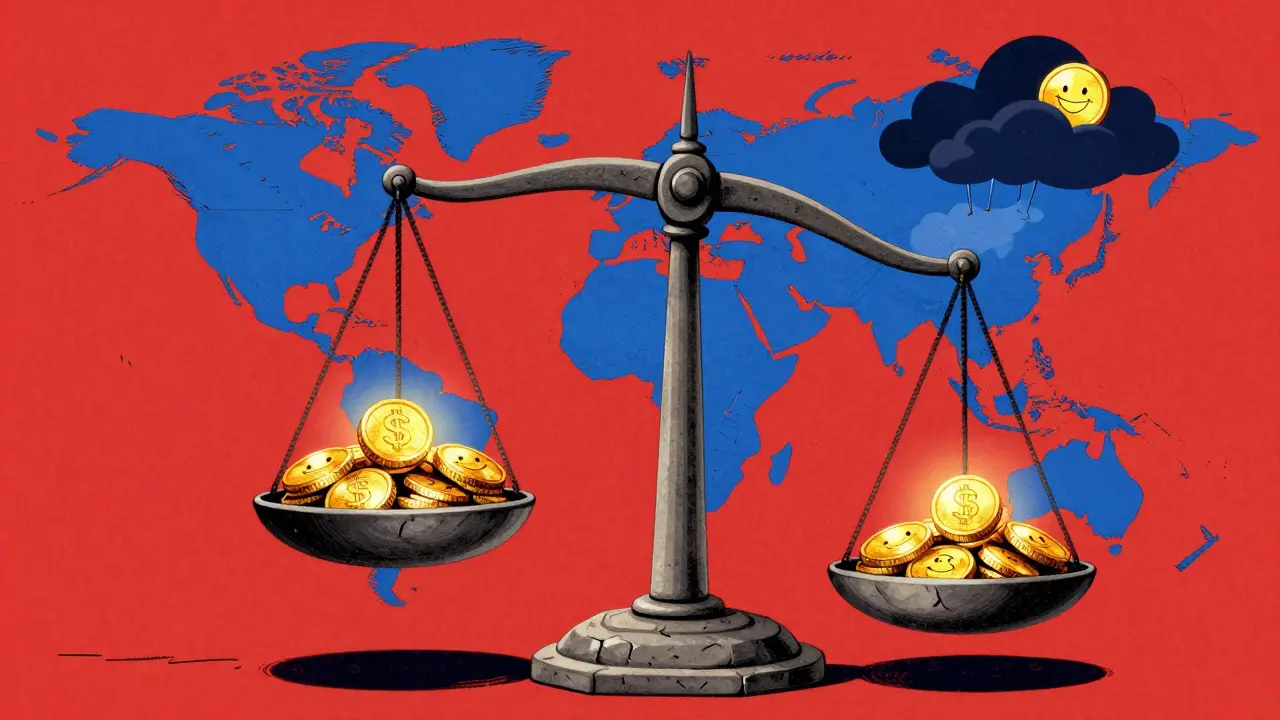
We are seeing a shift in strategy among major regulators. Instead of blanket criminalization, powerful nations like the US use targeted designations. Office of Foreign Assets Control (OFAC), part of the U.S. Treasury, designates specific addresses and entities for violating sanctions. This method allows them to attack illicit networks without declaring all crypto illegal domestically.
In 2024, OFAC issued 13 sanctions designations covering 86 cryptocurrency addresses linked to Russia-related entities. This approach disrupts the ecosystem supporting terrorism. For example, Tawfiq Muhammad Sa'Id al-Law, a Syria-based operator, got sanctioned for providing Hezbollah with digital wallets. If you interact with a sanctioned wallet or address, you risk freezing your own assets instantly. Your funds could become unmoveable, effectively turning a civil sanction into a functional seizure of property.
This targeted method contrasts with outright national bans. The U.S. Department of Justice issued a memorandum in April 2025 titled "Ending Regulation by Prosecution." This document re-scoped digital asset enforcement. They prioritized misappropriation of client assets, sanctions evasion, and fraud. Conversely, they deprioritized using criminal tools to resolve regulatory classification disputes. Basically, being wrong about the tax status of an asset is less dangerous than stealing client funds.
Financial Infrastructure and KYC Traps
Many users believe bypassing the ban is easy. They sign up for offshore exchanges. Often, this works until identity verification fails. Trustpilot reviews of exchanges like KuCoin, which Canada listed as prohibited, show mixed outcomes. Positive reviews mention easy access from restricted regions. Negative reviews cite account freezes when Know Your Customer (KYC) checks fail.
The data shows 68% of negative reviews involve account locks during verification. This happens because exchanges want to comply with anti-money laundering laws in their home jurisdictions while selling services in banned ones. They take the money, then freeze accounts when asked by regulators. You are left with no recourse.
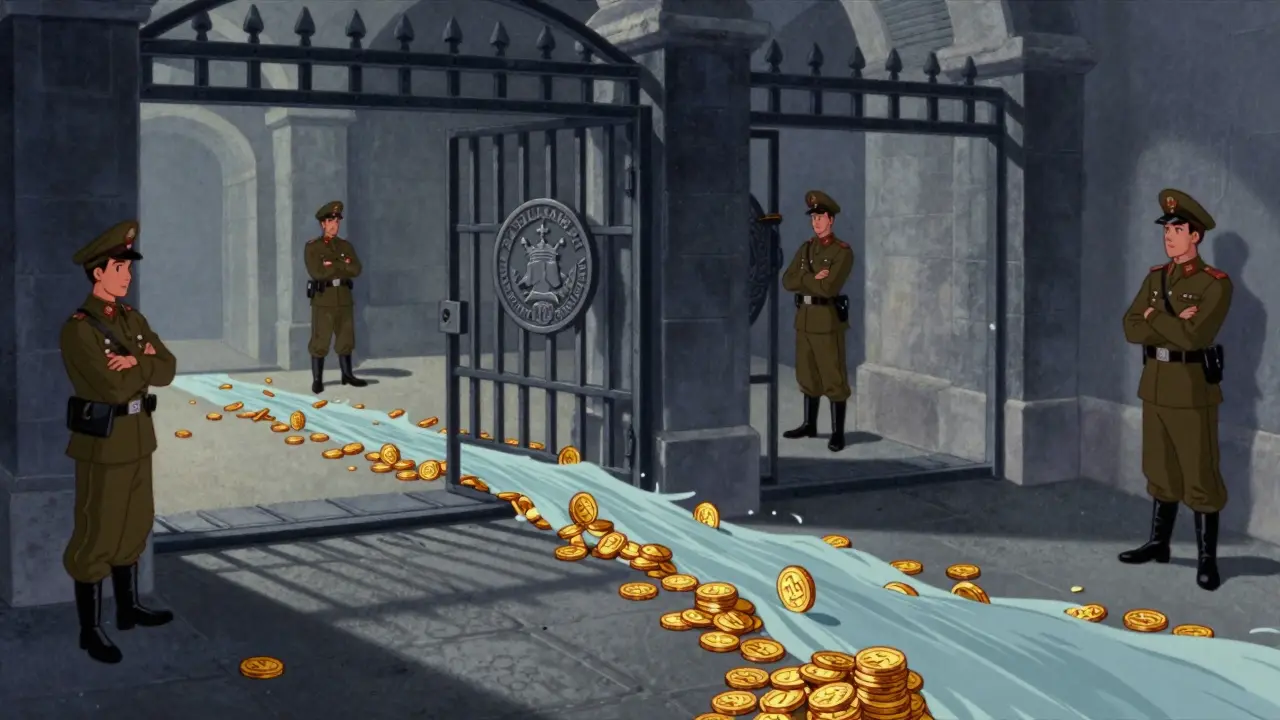
Dr. Sarah Bloom Raskin, former Deputy Secretary of the U.S. Treasury, highlighted this tension in January 2025. She observed that criminalization creates significant enforcement challenges when adoption rates stay high. Regulators prefer targeting the choke points-banks, payment processors, and centralized exchanges-rather than the end-user holding the private keys.
Nuanced Approaches: South Korea and the EU
Not every government wants to put crypto owners in prison. Some prefer heavy regulation. South Korea passed the Virtual Asset Users Protection Act in 2023. They focused on record keeping and transparency requirements instead of criminal penalties for mere usage. Financial authorities scheduled guidelines for listing virtual assets in early 2024.
Similarly, the European Union rolled out the Markets in Crypto-Assets (MiCA) framework in 2024. MiCA avoids criminal penalties for usage. It sets strict licensing requirements for service providers. This distinction matters immensely for investors. A jurisdiction might be friendly to users but hostile to companies operating without a license.
Facing the Future
By late 2026, we expect continued movement toward functional regulation. The Atlantic Council predicts emerging and advanced economies will develop more sophisticated enforcement mechanisms by 2027. The focus will likely shift entirely to sanctions evasion, fraud, and unlicensed money transmission. Blanket criminalization appears limited due to persistent adoption rates.
If you operate in or travel to a restrictive nation, keep your devices offline. Understand that local laws override global tech protocols. A decentralized network does not grant you legal immunity from local statutes.
What are the typical criminal penalties for crypto bans in 2026?
Penalties vary wildly. Some nations like Algeria use vague provisions allowing general criminal sentencing, which can mean years in prison depending on associated charges. Others rely on administrative fines. There is no unified global standard.
Is it illegal to simply hold Bitcoin in China?
China banned exchanges and mining operations strictly. While individual holding was not explicitly criminalized in public reports, the government focuses on blocking access to trading platforms. Enforcement targets business operations rather than private holders.
Can I get sanctioned by the US for using crypto abroad?
Yes. OFAC sanctions apply globally to US persons and entities. Even non-Americans risk freezing assets if they transact with designated wallets involved in sanctions evasion, such as those linked to Russia or terror groups.
Which countries have the strictest crypto bans right now?
Algeria, Morocco, Egypt, and Pakistan maintain strict prohibitions on usage. Qatar and Saudi Arabia have historically been restrictive, though recent developments may be softening stances. Always check the latest local laws before traveling.
Does buying crypto on a P2P platform avoid bans?
It reduces detection risk significantly. Platforms like LocalBitcoins enable trades without KYC sometimes. However, using P2P in a banned country technically violates the ban if the law covers 'use' or 'holding', regardless of how you acquired the coins.