How to Avoid Crypto Restrictions in India: A Guide to Compliance and Tax Safety

Aug, 3 2026
You don’t need to hide your Bitcoin wallet under a mattress or use sketchy offshore servers to trade crypto in India anymore. In fact, trying to "avoid" regulations by going off-grid is the fastest way to get flagged for money laundering or face massive tax penalties. The real secret to keeping your crypto safe and legal isn't evasion; it's strict compliance.
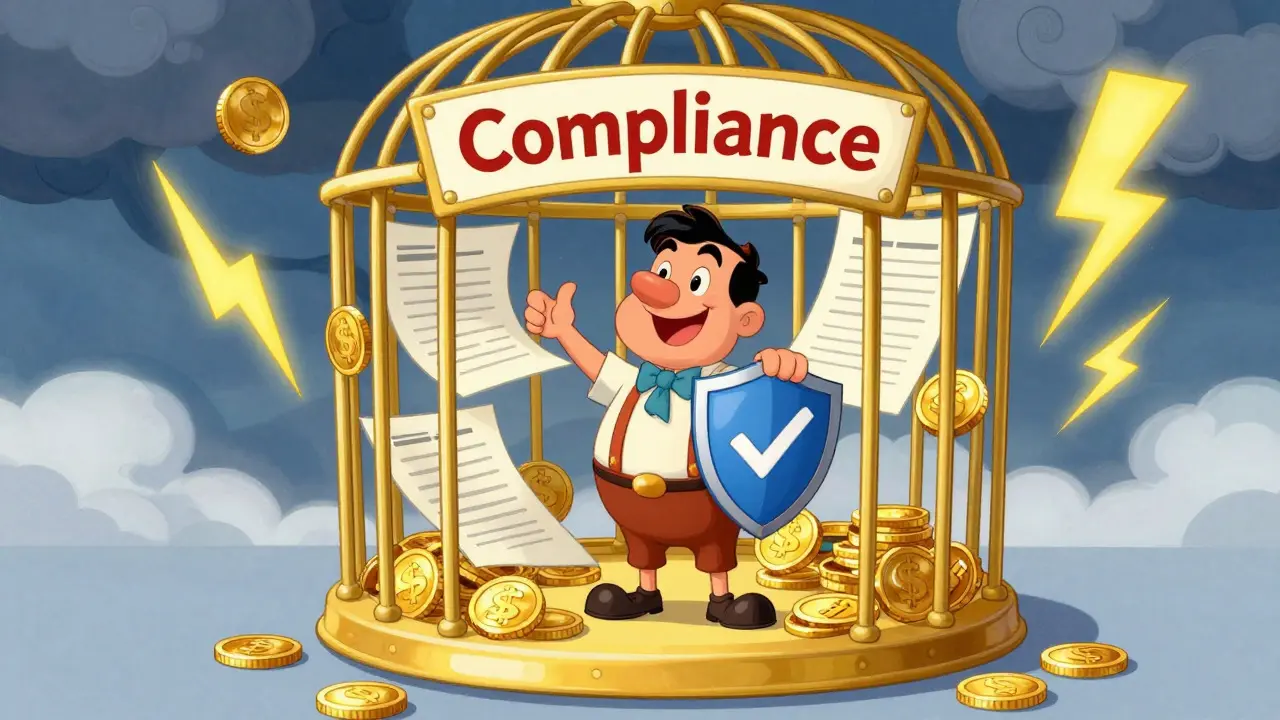
As of August 2026, the landscape has shifted dramatically from the uncertainty of previous years. The government hasn't banned crypto. Instead, they have built a cage around it made of taxes and reporting rules. If you stay inside that cage-by using registered platforms and paying your dues-you are safe. If you step outside, you become a target. This guide explains exactly how to navigate these rules so you can trade without fear.
The Myth of "Avoiding" Restrictions
First, let’s clear up a dangerous misconception. Many traders still think "avoiding restrictions" means finding loopholes to bypass the system. That era is over. With the implementation of the Income Tax (No. 2) Act, 2025, which received presidential assent in late 2025, the legal framework for Virtual Digital Assets (VDAs) is now rock solid. There are no more gray areas.
The Supreme Court of India struck down the Reserve Bank of India's (RBI) ban on banks servicing crypto users back in March 2020. Since then, holding and trading Bitcoin, Ethereum, and other tokens has been legal. The catch? You must play by the new book. The government’s strategy is "regulation through taxation." They want your cut of the profits, and in exchange, they grant you legitimacy. Trying to operate outside this system doesn't make you free; it makes you a criminal suspect in the eyes of the Financial Intelligence Unit India (FIU-IND).
Step 1: Use Only FIU-IND Registered Exchanges
The single biggest mistake Indian traders make is using unregulated international platforms that haven't bothered to register with local authorities. To avoid restrictions and potential account freezes, you must only trade on exchanges that are registered with the Financial Intelligence Unit India (FIU-IND).
Here is why this matters. The FIU-IND enforces Anti-Money Laundering (AML) laws. As of 2025, dozens of major exchanges, including Binance (which resumed operations in India in August 2024 after complying), WazirX, CoinDCX, and Zebpay, have successfully registered. These platforms implement strict Know Your Customer (KYC) procedures and transaction monitoring. When you trade on them, your identity is verified, and your transactions are reported to the government automatically.
If you use an unregistered platform, like some of the smaller offshore sites that were penalized in 2025 (such as BingX or LBank before they fixed their issues), you lose two things:
- Legal Protection: If the exchange gets hacked or shuts down, you have no recourse because the platform itself was operating illegally in India.
- Tax Documentation: Registered exchanges provide the necessary forms and reports you need to file your taxes. Without them, you’re guessing your own numbers, which auditors hate.
| Feature | FIU-IND Registered Exchange | Unregistered/Offshore Platform |
|---|---|---|
| Legal Status | Fully Legal & Protected | High Risk / Potential Ban |
| KYC Requirement | Mandatory (Aadhaar/PAN) | Often Loose or Fake |
| Tax Reporting | Automatic TDS & Forms Provided | Manual Calculation Required |
| Bank Integration | Seamless INR Payouts | Risky / Often Blocked by Banks |
| Audit Trail | Clear & Verifiable | Opaque & Suspicious |
Step 2: Master the 30% Tax + 1% TDS Rule
This is where most people feel "restricted," but it’s actually just the cost of doing business legally. Under the current law, all gains from transferring VDAs are taxed at a flat 30%. There are no deductions. No setting off losses against profits. It’s a blunt instrument, but it’s predictable.
More importantly, there is a 1% Tax Deducted at Source (TDS) on every transaction above a certain threshold. This means if you sell $10,000 worth of crypto, $100 is automatically sent to the government. This isn't a penalty; it’s an advance payment of your tax. At the end of the financial year, you calculate your total gains. If the 1% TDS plus any other taxes paid covers your 30% liability, you’re done. If not, you pay the difference. If you overpaid, you get a refund.
To avoid issues here, you must keep meticulous records. Don’t rely on memory. Use a spreadsheet or dedicated crypto tax software to track:
- Date of purchase and sale.
- Amount of crypto bought/sold.
- Price in INR at the time of transaction.
- Purpose of the transaction (investment, payment, etc.).
Indian tax law requires you to keep these records for at least six years. If the Income Tax Department asks for proof, you better have it.
Step 3: Understand the Role of Regulators
You aren’t dealing with just one agency. Understanding who watches what helps you avoid accidental violations.
- Income Tax Department: They care about your profits. They enforce the 30% tax and 1% TDS. Their goal is revenue collection.
- FIU-IND: They care about crime. They ensure exchanges report suspicious activities. Their goal is stopping money laundering.
- RBI (Reserve Bank of India): They care about the banking system. While they can’t ban crypto, they monitor banks that service crypto users. If your bank sees unusual high-volume crypto flows without proper documentation, they might freeze your account. Keep your crypto transfers separate from your daily salary account if possible.
- SEBI (Securities and Exchange Board of India): They watch out for scams and unregistered securities. If a token looks like an Initial Public Offering (IPO) but isn’t regulated, SEBI will step in.

Common Pitfalls to Avoid
Even compliant traders trip up. Here are the specific behaviors that trigger scrutiny:
Using Multiple Unlinked Wallets: Moving funds between personal wallets and exchanges without a clear paper trail looks like layering, a technique used in money laundering. Always move funds through registered channels where the KYC matches your PAN card.
Igoring Crypto-to-Crypto Trades: Selling Bitcoin for Ethereum is a taxable event. Even though you didn’t get cash, you realized a gain or loss. Many beginners forget this. Calculate the value in INR at the moment of the swap and record it.
Receiving Payments from Unknown Sources: If someone sends you crypto from an address linked to a darknet market or a sanctioned entity, your exchange may flag your account. Stick to peer-to-peer (P2P) trades on reputable platforms where the counterparty is also KYC-verified.
Future-Proofing Your Strategy
The regulatory environment in India is moving toward greater structure, not less. The government is actively participating in global forums like the G20 and the Financial Stability Board (FSB) to create unified standards. We are likely to see more detailed guidelines on staking rewards, NFT sales, and decentralized finance (DeFi) protocols in the coming months.
For now, the best way to "avoid" future restrictions is to be transparent today. Consult with a tax professional who specializes in crypto assets. The learning curve takes about 2-3 months for individuals to set up proper systems. Businesses may take longer. But once you have your records straight and your exchange chosen, you can trade with confidence.
Remember, the goal isn't to hide from the government. The goal is to prove to them that you are a legitimate investor. Do that, and the "restrictions" disappear into the background noise of normal business operations.
Is cryptocurrency legal in India in 2026?
Yes, cryptocurrency is legal in India. Following the Supreme Court's 2020 judgment and the subsequent Income Tax (No. 2) Act, 2025, Virtual Digital Assets (VDAs) are recognized for trading and holding purposes. However, they are not considered legal tender (currency) and are subject to strict taxation and AML regulations.
What happens if I trade on an unregistered exchange?
Trading on an exchange not registered with the FIU-IND carries significant risks. You may face difficulties withdrawing funds to Indian bank accounts, lack legal protection if the exchange fails, and struggle to provide accurate tax documentation. Additionally, large transactions on unregistered platforms may trigger scrutiny from the Income Tax Department for potential money laundering.
Do I have to pay tax on crypto-to-crypto trades?
Yes. Every transfer of a Virtual Digital Asset is a taxable event. This includes swapping Bitcoin for Ethereum. You must calculate the capital gain or loss based on the INR value at the time of the transaction and report it in your income tax return. The flat 30% tax rate applies to these gains.
Which exchanges are currently compliant in India?
Major exchanges such as Binance, WazirX, CoinDCX, and Zebpay have registered with the FIU-IND and comply with Indian AML and KYC norms. Always verify the current registration status of an exchange on the official FIU-IND website before depositing funds, as the list of compliant entities can change.
How much TDS is deducted on crypto transactions?
A 1% Tax Deducted at Source (TDS) is applied to crypto transactions exceeding specified thresholds. This amount is deducted automatically by the exchange and deposited with the government. It serves as an advance payment toward your final annual tax liability, which is calculated at a flat 30% on net gains.