OFAC Cryptocurrency Sanctions and Compliance: What Crypto Businesses Must Do in 2026
Jan, 22 2026
If you run a cryptocurrency exchange, wallet service, or even a DeFi protocol that touches U.S. users, OFAC cryptocurrency sanctions aren’t something you can ignore. They’re not a suggestion. They’re a legal requirement with real penalties-fines, asset freezes, and even criminal charges. And in 2026, the stakes have never been higher.
What OFAC Actually Does in Crypto
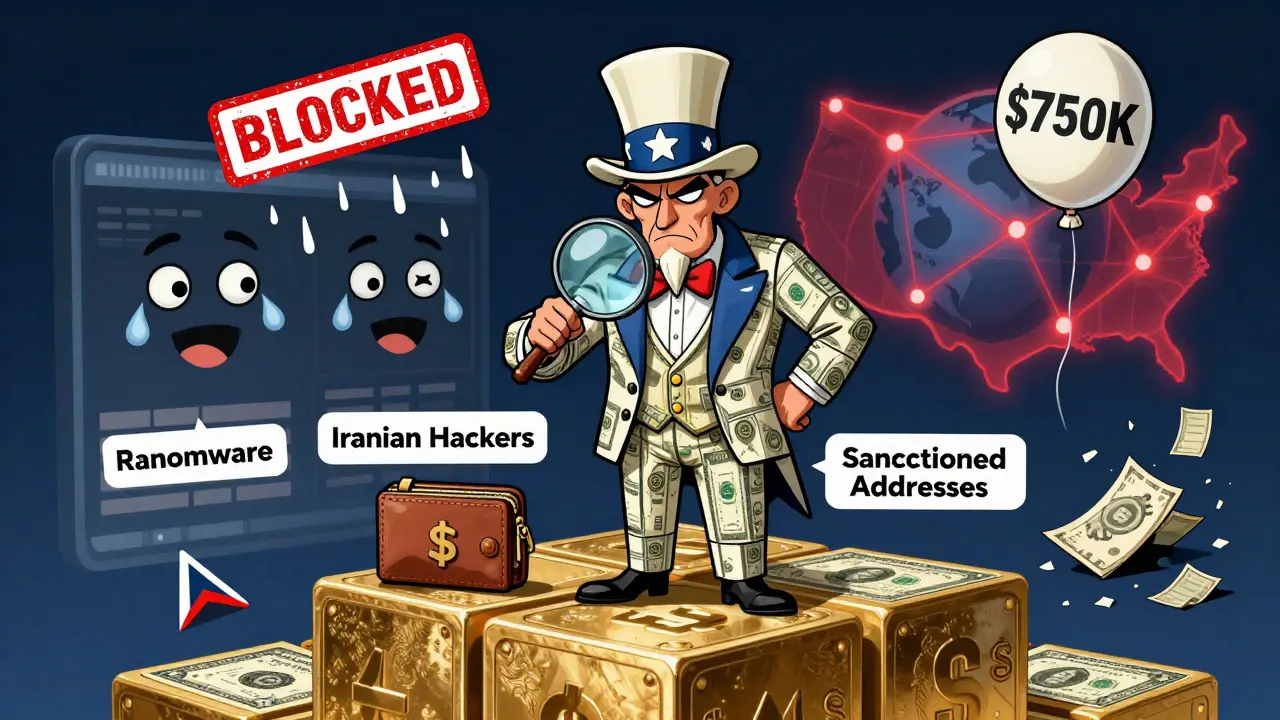
The Office of Foreign Assets Control (OFAC) is part of the U.S. Treasury. Since 2018, it’s been actively adding cryptocurrency wallet addresses to its Specially Designated Nationals (SDN) List. By October 2025, that list included 1,247 crypto addresses tied to sanctioned entities-places like ransomware gangs, Russian financial intermediaries, and Iranian hacking groups. It doesn’t matter if you’re based in New Zealand, Singapore, or Nigeria. If your service is used by someone in the U.S., or if you’re incorporated under U.S. law, OFAC’s rules apply. That includes decentralized exchanges, peer-to-peer platforms, and even crypto ATMs. The key point? OFAC operates under strict liability. That means you can be fined even if you didn’t know a transaction involved a sanctioned address. No intent required. Just a match on the list-and you’re on the hook.The ShapeShift Case: A Warning Shot
In September 2025, ShapeShift AG paid $750,000 to settle OFAC violations. Why? Over two years, their platform processed $12.5 million in crypto trades from users in Cuba, Iran, Sudan, and Syria. They didn’t block IP addresses. They didn’t verify locations. They didn’t screen wallets. OFAC didn’t accuse them of helping terrorists. They didn’t need to. The violation was simple: they allowed transactions with blocked addresses. Period. This case set a precedent. Even if you think you’re just a tech company, if you handle crypto and serve U.S. users, you’re a financial institution in OFAC’s eyes.What Compliance Actually Looks Like
OFAC’s 2021 guidance laid out five pillars for a proper compliance program. You need all five:- Management Commitment: Your board or CEO must sign off on sanctions compliance. It’s not just the job of your compliance officer.
- Risk Assessment: Update your crypto-specific risk analysis every quarter. What chains do you support? Which tokens are high-risk? Do you handle privacy coins?
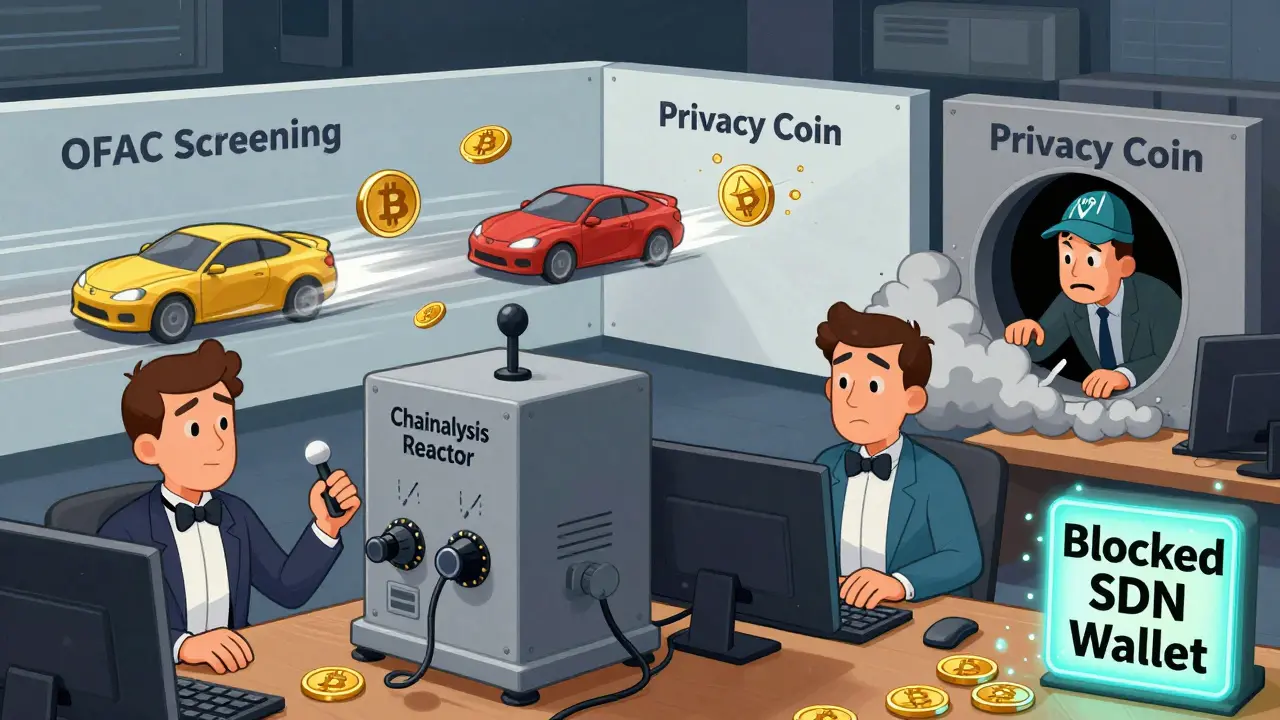
- Internal Controls: This is where tools like Chainalysis, Elliptic, or Crystal Intelligence come in. You need automated screening that checks every transaction against the latest SDN list.
- Testing and Auditing: Hire an independent third party to audit your system at least once a year. Don’t trust your own checks.
- Training: Every employee who touches transactions-support, dev, ops-must be trained. ACAMS found compliance officers need 147 hours of specialized training just to get started.
How Screening Works in Practice
You can’t just check names. You have to check wallet addresses. And not just one time. You have to screen every incoming and outgoing transaction in real time. Here’s how it breaks down:- When a user sends BTC to your platform, your system checks the sender’s wallet against the SDN list.
- If it matches, the transaction is blocked. The funds stay in the wallet, but no one can move them.
- OFAC allows you to consolidate all blocked crypto into one “Blocked SDN Digital Currency” wallet-no need to convert to USD.
- You must report these blocked assets to OFAC within 10 business days.
The Big Challenge: Privacy Coins and DeFi
Monero, Zcash, and other privacy coins are the Achilles’ heel of compliance. Their technology hides sender, receiver, and amount. No blockchain explorer can trace them. OFAC’s October 2025 update says you still need “reasonable measures” to prevent transactions with blocked persons-even if you can’t see the address. That’s vague. And hard. Most firms just block all privacy coin deposits. It’s the only safe move. DeFi is even trickier. When you swap tokens on Uniswap or lend on Aave, you don’t know who you’re transacting with. There’s no KYC. No IP tracking. 73% of firms surveyed in 2025 said they couldn’t effectively screen DeFi transactions. OFAC hasn’t issued a formal rule yet-but they’re watching. If you’re building a DeFi protocol and ignoring sanctions, you’re playing with fire.How OFAC Compares to the Rest of the World
The EU’s 6AMLD directive uses a “reasonable measures” defense. If you can prove you tried, you might avoid a fine. OFAC doesn’t care. You either blocked the transaction or you didn’t. The UK’s OFSI has issued only three crypto-related penalties since 2018. OFAC has issued 17-and collected $48.7 million in fines. Singapore’s MAS has been stricter than the EU but still less aggressive than the U.S. The difference? The U.S. goes after the whole network. In August 2025, OFAC didn’t just sanction Garantex. They sanctioned six related companies across Russia and Kyrgyzstan. That’s a new level of enforcement.Costs and Real-World Implementation
Implementing a full OFAC-compliant system isn’t cheap. Deloitte’s 2025 survey of 78 crypto firms found annual costs range from $150,000 to $2 million, depending on volume. For a small exchange processing $10 million a month? You’re looking at $200,000-$400,000 for tools, setup, and staff. For Binance? They spent $2 million on their system. It screens 1.2 million transactions a day with 99.98% accuracy. Setup takes time too. Steptoe & Johnson’s 2025 study found full implementation takes 22 to 36 weeks:- 4-8 weeks: Risk assessment
- 8-12 weeks: Pick and install blockchain analytics tools
- 6-10 weeks: Integrate with your backend
- 4-6 weeks: Train staff and test
What Happens If You Don’t Comply?
The penalties aren’t theoretical. - ShapeShift: $750,000 fine. - Garantex: Designated as a sanctioned entity. Their assets frozen. Their executives blocked from the U.S. financial system. - In 2024, a U.S.-based crypto broker was fined $1.2 million for processing $2.1 million in transactions with a sanctioned Russian address. And it’s not just fines. Your business could be cut off from U.S. banks. Your domain could be seized. Your founders could be barred from entering the U.S.
What’s Coming in 2026 and Beyond
OFAC just launched a new Digital Asset Sanctions Task Force with 35 specialists. Their budget increased 40% in 2026. Ethereum’s community is fighting a proposal called EIP-7594 that would add on-chain sanctions checks. If it passes, wallets and smart contracts might auto-block transactions. That could make compliance easier-but it also risks fragmenting the blockchain. Meanwhile, 65% of crypto transactions are projected to be screened in real time by 2027, up from 38% today. The message is clear: compliance isn’t optional. It’s becoming the baseline.Where to Start Right Now
If you’re reading this and you’re not compliant, here’s your action plan:- Download the latest OFAC SDN List from Treasury’s official API. Don’t rely on third-party feeds.
- Map every crypto asset your platform supports. Which chains? Which tokens? Which privacy coins?
- Choose one blockchain analytics provider. Chainalysis, Elliptic, or Crystal Intelligence. Start with the one that integrates easiest with your stack.
- Set up real-time screening for all deposits and withdrawals. Block, don’t just flag.
- Train every employee. Even your customer support team needs to know what to say if someone asks why their transaction was blocked.
- Document everything. Your risk assessment, your tool choices, your training logs. If OFAC comes knocking, you need proof you tried.
Frequently Asked Questions
Do OFAC sanctions apply to non-U.S. crypto businesses?
Yes-if your service is used by U.S. persons, or if your company is incorporated in the U.S., OFAC rules apply. Location doesn’t matter. U.S. connections do. Even if you’re based in Wellington, New Zealand, and a single U.S. user sends crypto to your platform, you’re subject to OFAC.
Can I just block IP addresses instead of wallet screening?
No. IP blocking alone is not enough. Sanctioned users can use VPNs, Tor, or public Wi-Fi. OFAC requires direct screening of blockchain addresses. ShapeShift was fined because they only used IP checks-and failed.
What if I don’t know who sent me the crypto?
You still have to screen. Even on decentralized exchanges, you’re responsible for transactions that hit your platform. OFAC expects you to use blockchain analytics tools to trace the origin of funds, even if the counterparty is anonymous. Ignorance isn’t a defense.
Do I need to convert blocked crypto to USD?
No. OFAC explicitly says you don’t have to convert blocked digital assets to fiat. You can hold them in a designated “Blocked SDN Digital Currency” wallet. The goal is to freeze the asset, not liquidate it.
How often does OFAC update the SDN list with crypto addresses?
OFAC updates the list regularly-sometimes weekly. In Q2 2025 alone, they added 37 new crypto addresses. You need automated systems that pull updates daily. Manual checks won’t cut it.
Are wallet providers required to screen users?
If your wallet allows users to send or receive crypto and it’s accessible to U.S. persons, then yes. Of 124 wallet apps analyzed in 2025, only 17 had built-in sanction screening. Most don’t. But if you’re a provider with U.S. users, you’re legally exposed. The risk is growing.
What happens if my system has a false positive?
You must investigate it. A false positive is still a red flag. OFAC expects you to have a process to review flagged transactions, contact the user if needed, and document your findings. Don’t just ignore it. That’s how violations happen.