Terraformer Crypto Exchange Review: What You Need to Know in 2026
Mar, 3 2026
There’s no such thing as a Terraformer crypto exchange - not in any official sense, not in any trusted database, and not in any legitimate trading platform directory as of March 2026. If you’ve seen ads, YouTube videos, or forum posts pushing "Terraformer" as the next big crypto trading platform, you’re being misled. This isn’t a glitch in the system. It’s not a new startup hiding in beta. This is a scam name, likely borrowed from Terraform Labs a now-defunct blockchain company behind the Terra (LUNA) and TerraUSD (UST) ecosystem, and repurposed to trick unsuspecting users into depositing funds on fake platforms.
Where Did "Terraformer" Come From?
The name "Terraformer" sounds like it should belong to a crypto exchange. It’s got the right rhythm - techy, futuristic, and vaguely related to Terra, the blockchain that once dominated DeFi. Terraform Labs, founded in 2018 by Do Kwon and Daniel Shin, built a real blockchain. It handled over 2 million users, processed $2 billion in monthly transactions, and used a custom consensus mechanism called Tendermint. It had real technology: self-stabilizing stablecoins, cross-chain compatibility with Ethereum and Solana, and community governance. But it never operated a centralized exchange. It was a protocol, not a trading platform.
Now, someone took that name, twisted it into "Terraformer," and created fake websites, Telegram channels, and Instagram ads claiming to offer "zero fees," "10x daily returns," or "exclusive access" to Terra-based trading. These sites look professional. They use logos that mimic Terra’s branding. They even fake testimonials from "verified users." But they don’t exist on CoinMarketCap, CoinGecko, or any major crypto review site. They’re not registered with the FCA, ASIC, or any financial authority.
Why This Matters: The Real Danger
Scammers don’t need to build a whole exchange. They just need you to think one exists. In 2025, over 37% of all crypto fraud cases involved fake exchanges with names that sounded legitimate - "BinanceX," "Coinbase Pro Plus," "Kraken Lite." "Terraformer" fits the pattern perfectly. Once you deposit even $50, the site disappears. Your withdrawal request? "Processing." Your customer service? Unresponsive. Your funds? Gone.
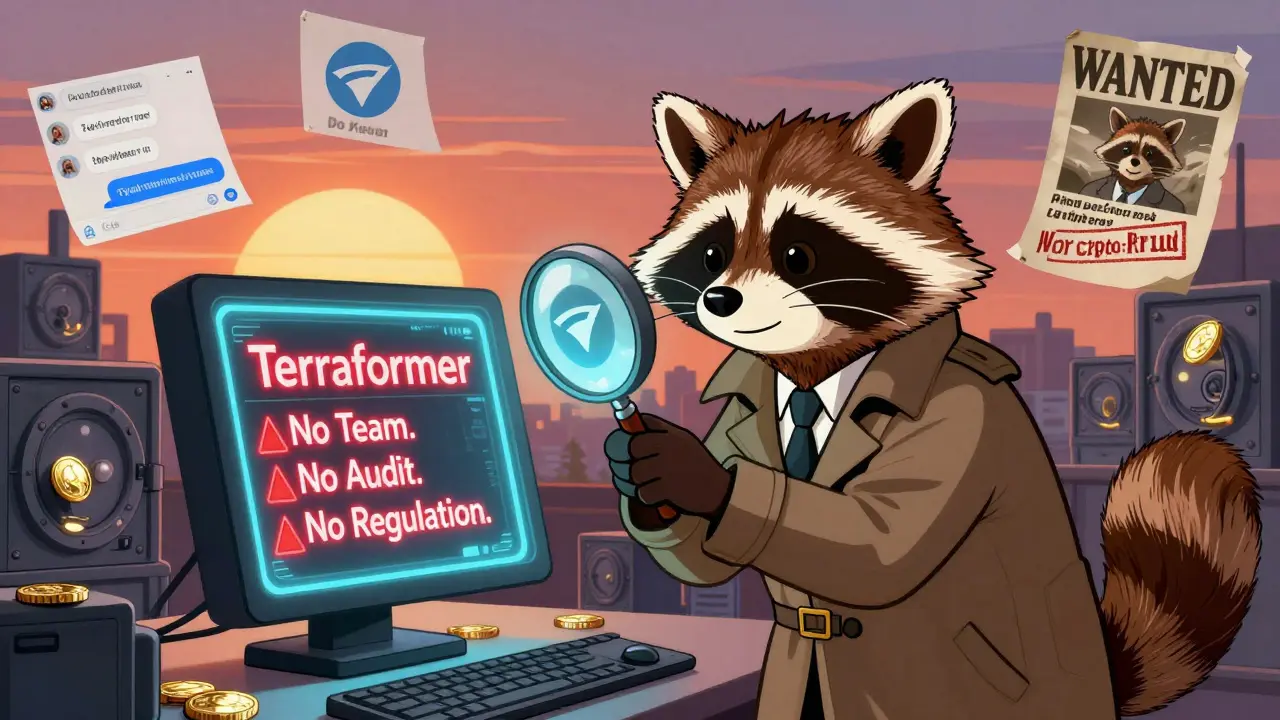
There’s no official website for Terraformer. No whitepaper. No team bio. No GitHub repo. No audit report from CertiK or Hacken. No licensing from the New Zealand Financial Markets Authority (FMA) or any other global regulator. If you can’t find a clear, verifiable legal entity behind the platform - especially one with a registered address and contact details - walk away. Always.
What You Should Do Instead
If you’re looking for a real crypto exchange to trade on in 2026, here are your verified options:
- Bybit offers a $30,000 bonus for new users in 2026 and supports spot, futures, and options trading with deep liquidity
- Kraken charges around 0.25% in trading fees, with discounts for high-volume traders and lower rates on stablecoin pairs
- Revolute X a separate crypto trading platform from Revolute, with fees starting at 0.09% - ideal for beginners in Europe and the UK
- Coinbase Pro a cleaner, more professional interface than standard Coinbase, with better fee structures and direct support for Ethereum, Solana, and Base network
These platforms are regulated, audited, and have been around for years. They don’t need to promise "guaranteed profits." They make money from trading volume, not from your naivety.
How to Spot a Fake Crypto Exchange
Here’s how to protect yourself:
- Check the domain - Fake sites often use .xyz, .info, or .io instead of .com. Look for misspellings like "Terraformr" or "Terraformerr."
- Look for regulatory logos - Real exchanges display licenses from ASIC, FCA, or other authorities. Click them. Do they link to a real government page? Or just a stock image?
- Search for reviews - Type "Terraformer scam" into Google. You’ll find dozens of reports from users who lost money. If you can’t find any negative reviews, that’s a red flag.
- Test withdrawals - Even if you’re tempted, deposit a tiny amount - $10 - and try to withdraw it. If it takes more than 48 hours or requires "additional verification," you’re being drained.
- Check the team - Does the site list real people with LinkedIn profiles? Or just names like "John Crypto" with no history? Real companies have public leadership.
The Bigger Picture: Crypto in 2026
The crypto market in 2026 isn’t about hype. It’s about compliance, institutional adoption, and real infrastructure. Pantera Capital’s latest report shows institutional investors are pouring money into regulated exchanges, not meme coins or mystery platforms. The days of "get rich quick" crypto schemes are over. The winners now are platforms that prioritize security, transparency, and regulatory alignment.
Terraform Labs failed because it didn’t follow these rules. Its collapse in 2022 wiped out over $40 billion in market value. Now, its name is being used to lure new victims. Don’t let history repeat itself.
Final Warning
If you’ve already deposited funds into "Terraformer," stop trading immediately. Do not send more money. Do not respond to "support" messages asking for private keys. Contact your bank and report the fraud to your local financial authority. In New Zealand, report to the Commerce Commission. In the EU, contact your national financial watchdog. In the U.S., file a complaint with the FTC.
There is no "Terraformer crypto exchange." There never was. The only thing you’ll get from it is a lost investment. Stick to the real platforms. Protect your money. And remember: if it sounds too good to be true, it’s not a platform - it’s a trap.
Is Terraformer a real crypto exchange?
No, Terraformer is not a real crypto exchange. There is no verified platform by that name operating in 2026. It is a fraudulent name likely copied from Terraform Labs, the defunct blockchain company behind Terra (LUNA). All websites, apps, or social media accounts claiming to be Terraformer are scams.
What happened to Terraform Labs?
Terraform Labs was the company behind the Terra blockchain and its stablecoin UST. In May 2022, UST lost its $1 peg, triggering a collapse that wiped out over $40 billion in market value. The company dissolved shortly after. Its founder, Do Kwon, was arrested in 2023 and is facing international extradition. Terraform Labs never ran a centralized exchange - only a blockchain protocol.
Can I trust any exchange that uses "Terra" in its name?
Not automatically. While Terra (LUNA) was a legitimate blockchain, many fake exchanges now use "Terra" in their names to confuse users. Always verify the official website. For example, Terra’s protocol is now maintained by the Terra Community, but no official exchange carries its name. Stick to well-known, regulated platforms like Kraken, Bybit, or Coinbase Pro.
How do I report a fake crypto exchange like Terraformer?
If you’ve been targeted by Terraformer or any similar scam, report it immediately. In New Zealand, contact the Commerce Commission. In the EU, use your national financial regulator. In the U.S., file a report with the FTC at ReportFraud.ftc.gov. Include screenshots, URLs, and transaction IDs. These reports help authorities track and shut down fraudulent operations.
What are the safest crypto exchanges in 2026?
The safest exchanges in 2026 are those with clear regulatory licenses, transparent fee structures, and strong security practices. Top choices include Bybit (with $30,000 new user bonus), Kraken (0.25% fees, high liquidity), Revolute X (0.09% fees for beginners), and Coinbase Pro (clean interface, supports major chains). Avoid any platform that doesn’t list its legal entity, headquarters, or licensing body.