SyncSwap v2 Review: The Best zkSync DEX?

Sep, 2 2026
Imagine swapping Ethereum tokens for pennies instead of paying $50 in gas fees. That’s the promise of SyncSwap a leading decentralized exchange (DEX) built on the zkSync Era network. If you’ve been watching Layer 2 solutions grow, you’ve likely heard this name pop up. But is SyncSwap v2 actually worth your time and capital? Let’s cut through the noise.
This isn’t just another copy-paste Uniswap fork. SyncSwap has carved out a dominant position within the zkSync ecosystem, holding nearly 38% of the market share with over $63 million locked in its pools. But here’s the catch: not all deployments are created equal. While the mainnet thrives, some newer networks like Sophon have seen activity dry up completely. This review breaks down what works, what doesn’t, and whether SyncSwap v2 fits your trading style in 2026.
What Exactly Is SyncSwap v2?
At its core, SyncSwap is an automated market maker (AMM) that allows users to trade cryptocurrencies without intermediaries. Unlike centralized exchanges where you trust a company with your funds, SyncSwap uses smart contracts to facilitate trades directly from your wallet. The "v2" designation refers to the updated protocol architecture that improved efficiency and user experience compared to the original version.
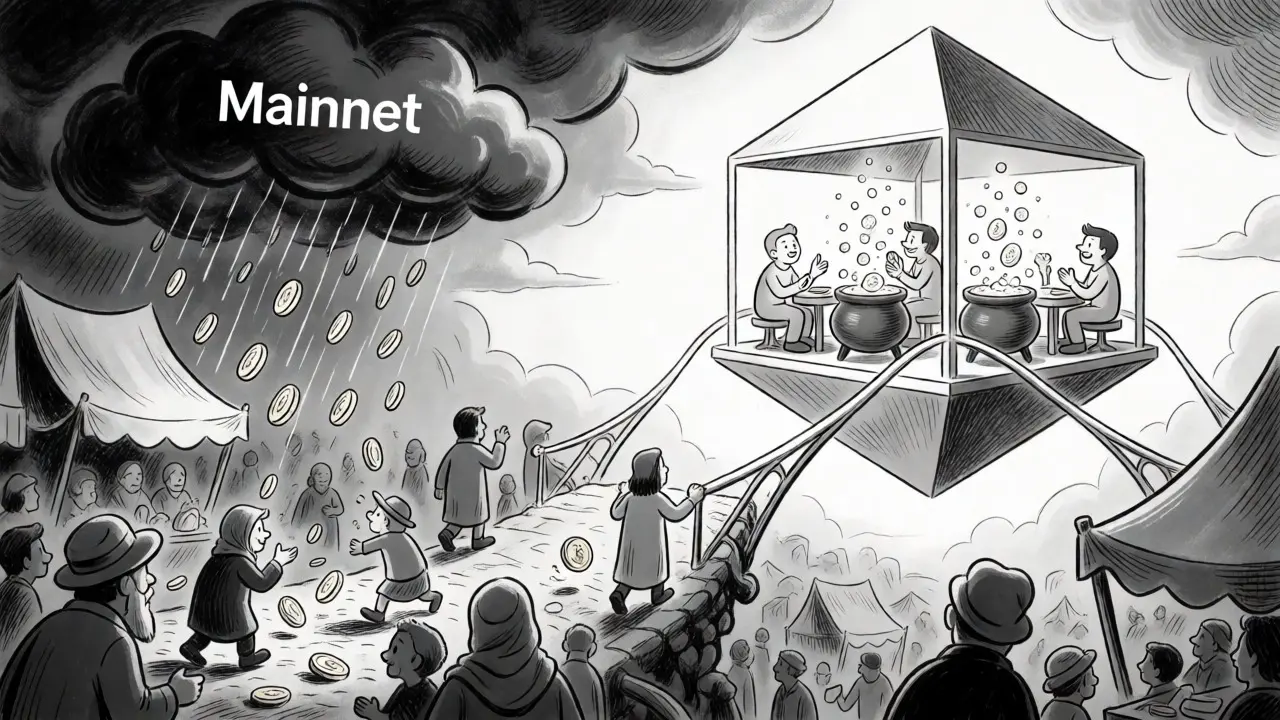
The platform runs primarily on zkSync Era an Ethereum Layer 2 scaling solution that uses zero-knowledge rollups to bundle transactions. Why does this matter? Because it slashes costs. On Ethereum Mainnet, a simple swap might cost you $20-$50 depending on congestion. On zkSync Era via SyncSwap, that same trade often costs less than $0.10. It’s not magic; it’s math. Zero-knowledge proofs verify thousands of transactions off-chain and settle them on-chain in one go, spreading the cost across all users.
| Metric | SyncSwap (zkSync Era) | Ethereum Mainnet DEX |
|---|---|---|
| Average Swap Fee | $0.01 - $0.10 | $15.00 - $50.00+ |
| Transaction Speed | Near-instant finality | 12-30 seconds (variable) |
| Market Share (Ecosystem) | ~37.8% | N/A (Different network) |
| Total Value Locked (TVL) | $63M - $82M | Varies widely |
Performance Across Networks: Not All Are Equal
Here is where things get tricky. SyncSwap didn’t just launch on zkSync; they expanded to other Layer 2s like Scroll, Linea, Taiko, and Sophon. But don’t let the list fool you. The performance varies wildly.
The primary deployment on zkSync Era is the heavyweight champion. It processes billions in cumulative volume and maintains deep liquidity. If you’re looking to trade major pairs like ETH/USDC or WBTC/ETH, this is where the action is. The interface is smooth, and the depth of liquidity means you can execute larger trades without massive slippage.
Now, look at the Scroll implementation. Interestingly, it offers 0.00% fees for both makers and takers. Yes, zero. This is a strategic move to attract volume in a competitive market. For high-frequency traders or those moving large amounts, this fee structure is a no-brainer. However, liquidity depth is thinner than on zkSync, so check the pool size before dumping a huge order.
Then there’s the Sophon network. As of late 2025, data showed only three cryptocurrencies available for trading, with virtually no transaction activity in the preceding month. If you bridge assets to Sophon expecting active markets, you might find yourself stuck with illiquid positions. Always check the specific network’s TVL and recent trade history before committing funds.
User Experience and Interface
Let’s talk about usability. Many DEXs feel like they were designed by engineers for engineers. SyncSwap aims for simplicity. The dashboard clearly displays your portfolio, pending transactions, and available pools. Connecting your wallet-whether it’s MetaMask, Rabby, or WalletConnect-is straightforward.
One standout feature is the cross-network integration. You can view balances across supported chains without constantly switching networks in your wallet. This reduces friction significantly. However, be aware that bridging assets between these networks still takes time and incurs separate bridging fees. SyncSwap handles the swap, but getting the token there initially is a separate step.
Web traffic data suggests users spend about 2.5 minutes on the site per visit, viewing roughly two pages. This indicates people know what they want: quick swaps. They aren’t browsing endless articles or complex dashboards. The design supports this "in-and-out" behavior effectively.
Fees, Rewards, and Tokenomics
Trading fees are the bread and butter of any DEX. On SyncSwap, standard pools typically charge around 0.3%, which is industry-standard. This fee goes to liquidity providers (LPs). However, as mentioned, certain deployments like Scroll offer promotional zero-fee periods. Keep an eye on announcements for these opportunities.
What about rewards? The community has been buzzing about the potential SYNC token. With 100 million tokens confirmed, speculation runs high. Users engage in "farming" behaviors, providing liquidity in hopes of qualifying for future airdrops. While nothing is guaranteed, historical patterns in DeFi suggest that early contributors often receive significant allocations. If you plan to provide liquidity, consider using stablecoin pairs (like USDT/USDC) to minimize impermanent loss while earning fees.
Pro Tip: Don’t chase yield blindly. High APYs often come with high risks. Check if the rewards are paid in the native token or a volatile altcoin. If the token price drops 50%, your "high yield" might be negative when converted to USD.
Security and Risks
Decentralized finance always carries risk. SyncSwap’s code is open-source, allowing independent audits. Being part of the zkSync ecosystem adds a layer of security due to the robustness of zero-knowledge proofs. However, smart contract vulnerabilities remain a theoretical possibility.
Regulatory status is another factor. Currently, SyncSwap operates in a gray area typical for DEXs-it’s not regulated by government authorities. This means you retain custody of your keys, but you also bear full responsibility for your transactions. There’s no customer support hotline to call if you send funds to the wrong address. Institutional investors might hesitate due to this lack of regulatory clarity, but for retail traders, self-custody is often preferred.
Another risk is network dependency. If zkSync Era faces downtime or congestion issues, SyncSwap operations halt. While zkSync has proven reliable, relying on a single Layer 2 solution concentrates risk. Diversifying your exposure across multiple L2s mitigates this.

Who Should Use SyncSwap v2?
SyncSwap v2 shines for specific types of users:
- Cost-Conscious Traders: If you’re tired of paying $30 to swap $100 worth of tokens, this is your playground.
- zkSync Ecosystem Participants: If you already hold assets on zkSync, keeping them there for trading avoids unnecessary bridging.
- Liquidity Providers: Those willing to lock funds in pools for fee generation and potential airdrops will find SyncSwap attractive due to its dominant market share.
Conversely, avoid SyncSwap if:
- You need fiat on-ramps directly within the app (you’ll need a bridge first).
- You require advanced charting tools and technical analysis features found on centralized exchanges.
- You are trading obscure altcoins not listed on zkSync.
Final Verdict
Is SyncSwap v2 the best DEX? Within the zkSync ecosystem, absolutely yes. It combines speed, low costs, and a user-friendly interface better than most competitors. Its dominance with nearly 40% market share speaks volumes about user trust and utility. However, treat its expansion into other networks with caution. Stick to the main zkSync Era deployment for the deepest liquidity and most reliable service.
If you’re exploring Layer 2 DeFi, SyncSwap is a mandatory stop. It represents the maturation of decentralized exchanges-moving beyond clunky interfaces to seamless financial tools. Just remember: do your own research, start small, and never invest more than you can afford to lose.
Is SyncSwap safe to use?
Yes, SyncSwap is generally considered safe within the context of decentralized exchanges. It is audited, open-source, and leverages the security of the zkSync Era network. However, as with all DeFi protocols, risks include smart contract bugs and user error (such as sending funds to incorrect addresses). Always ensure you are connecting to the official website to avoid phishing scams.
How much are the fees on SyncSwap?
Standard trading fees are typically around 0.3%, which goes to liquidity providers. Network gas fees on zkSync Era are extremely low, often under $0.10 per transaction. Some deployments, like the Scroll version, may offer 0.00% trading fees during promotional periods to attract volume.
Can I buy crypto directly on SyncSwap?
No, SyncSwap is a decentralized exchange, meaning you cannot buy crypto with fiat currency (USD, EUR, etc.) directly. You must first acquire crypto on a centralized exchange or via a bridge, then deposit it into your wallet connected to the zkSync network to trade on SyncSwap.
What is the difference between SyncSwap v1 and v2?
SyncSwap v2 introduced improvements in user experience, multi-chain support, and protocol efficiency. While v1 laid the groundwork on zkSync, v2 expanded to networks like Scroll, Linea, and others, offering a more unified interface and optimized smart contracts for better performance and lower slippage.
Will there be a SyncSwap token airdrop?
The team has confirmed the existence of 100 million SYNC tokens. While an airdrop distribution schedule hasn't been fully finalized for all users, historical precedent in DeFi suggests that active traders and liquidity providers are strong candidates for receiving tokens. Monitor official channels for updates.