Blockchain Metadata: What It Is and Why It Matters in Crypto
When you send Bitcoin or swap tokens on a decentralized exchange, you’re not just moving money—you’re leaving behind a trail of blockchain metadata, the structured data attached to every transaction that records who sent what, when, and under what conditions. Also known as on-chain data, it’s the invisible backbone that makes blockchains transparent, verifiable, and tamper-resistant. Without it, you couldn’t track who owns what, verify a token’s origin, or confirm that a validator node did its job correctly.
Blockchain metadata isn’t just transaction history. It includes things like timestamps, gas fees, sender and receiver addresses, smart contract calls, and even the exact code that triggered a swap. This data is stored permanently on the ledger and can be read by anyone—no central authority needed. That’s why projects like Ethereum and Solana rely on it to power everything from DeFi protocols to NFT ownership proofs. If you’re trying to understand why a token’s price dropped or how a validator got slashed, you’re really looking at metadata. It tells you whether a transaction was legitimate, how much energy it consumed, or if it came from a flagged wallet linked to sanctions.
Related concepts like blockchain nodes, the computers that store and validate the ledger and on-chain data, the full record of all transactions across a blockchain are built on top of this metadata. Nodes use it to agree on the state of the network. Analysts use it to spot whale movements or rug pulls. Regulators use it to trace illicit flows. And scams? They can’t hide from it—every fake airdrop, every zero-fee exchange with no users, every worthless meme coin like PENGU or MANNA leaves a digital fingerprint. That’s why posts on this page dive into validator specs, exchange reviews, and tokenomics: they all depend on clean, accurate metadata to work—or to fail.
What you’ll find here isn’t theory. It’s real-world breakdowns of how metadata affects your wallet, your trades, and your security. From how Iran uses mining data to bypass sanctions, to why Digitex’s zero-fee model doesn’t add up when you check the on-chain volume, every post ties back to what’s actually happening on the chain. You won’t find guesses. You’ll find facts pulled straight from the ledger.
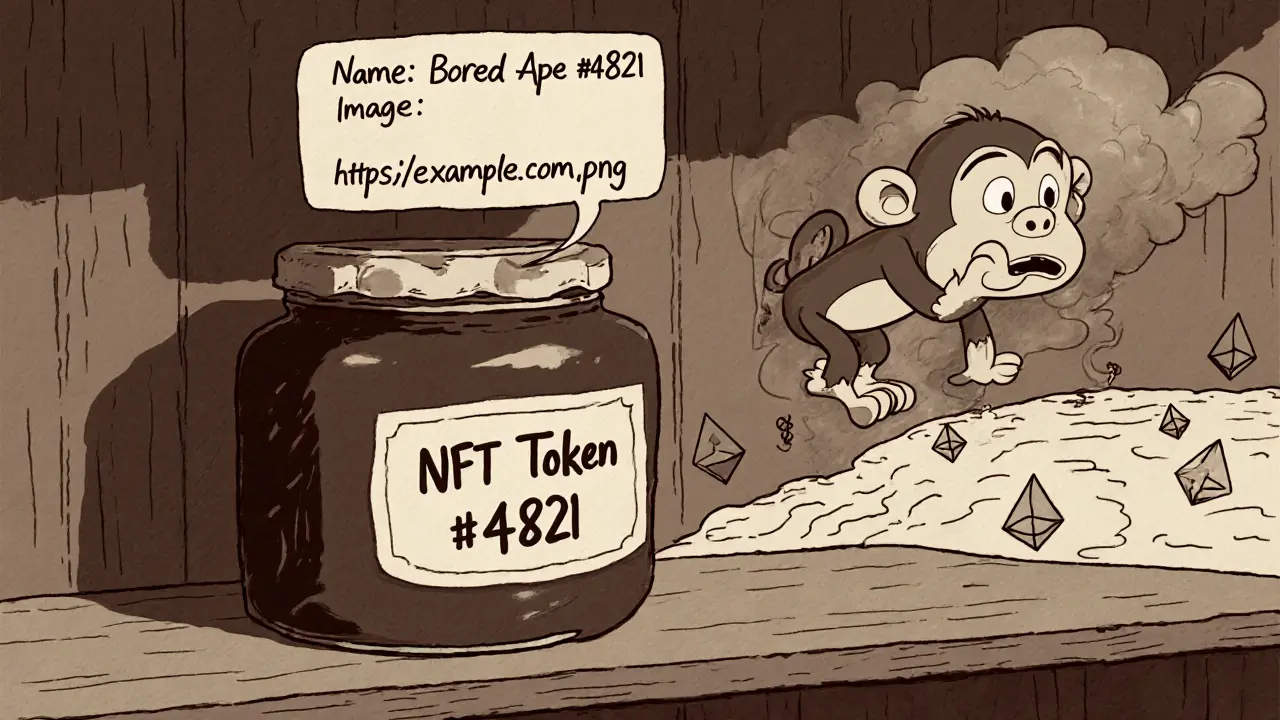
What Is NFT Metadata? A Clear Guide to How It Works and Why It Matters
Caius Merrow Nov, 27 2025 0NFT metadata is the JSON data that defines what your NFT looks like and how it works. Learn how it's stored, why centralized hosting puts your NFT at risk, and how to check if your NFT is truly permanent.
More Detail