What Are Wrapped Assets in DeFi? A Clear Breakdown of How They Work and Why They Matter
Feb, 27 2026
Imagine you own Bitcoin, but you want to earn interest on it in a DeFi lending app - one that only accepts Ethereum-based tokens. You can't just send Bitcoin there. It doesn't understand Bitcoin. That’s where wrapped assets come in. They let you use your Bitcoin, Ethereum, or any other crypto on a blockchain it wasn’t born on - without selling it. It’s like having a digital IOU that works everywhere.
How Wrapped Assets Actually Work
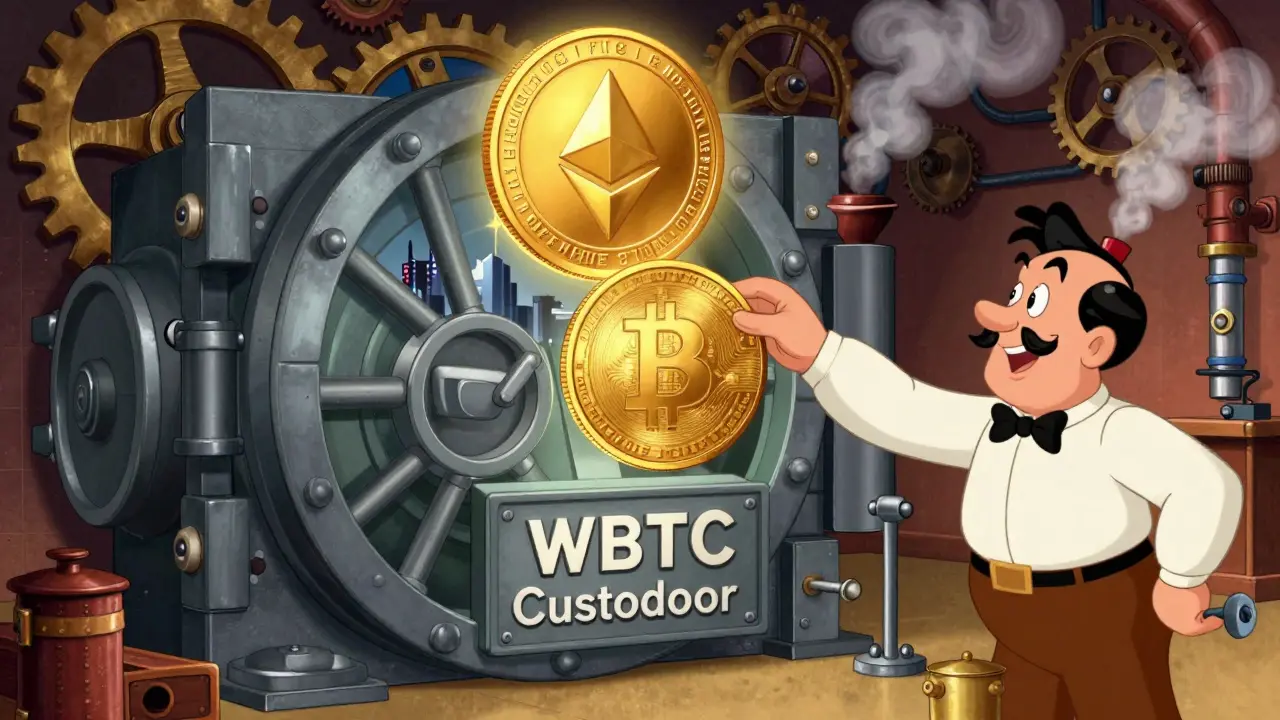
A wrapped asset is a token that represents another cryptocurrency but lives on a different blockchain. For example, Wrapped Bitcoin (WBTC) looks and acts like Bitcoin but runs on Ethereum as an ERC-20 token. Every WBTC you hold is backed 1:1 by real Bitcoin locked up in a secure reserve. When you wrap BTC, you’re not trading it - you’re locking it away and getting an equivalent token that works on Ethereum.
The process is simple: you send your Bitcoin to a custodian (like BitGo for WBTC), they verify it, then mint the same amount of WBTC on Ethereum. When you want your Bitcoin back, you burn the WBTC, and they release your original BTC. No middleman takes your money. It’s just a digital promise backed by real assets.
This isn’t magic - it’s engineering. Without wrapped assets, Bitcoin holders would be locked out of Ethereum’s entire DeFi world: lending, staking, yield farming, swaps. That’s why WBTC, launched in January 2019, became the first major bridge between two biggest blockchains. Today, over $7.8 billion worth of WBTC is locked in DeFi protocols - more than any other wrapped asset.
Why Wrapped Ether (WETH) Exists
You might wonder: if Ethereum has its own currency, ETH, why do we need WETH? It’s not because ETH is less valuable. It’s because ETH predates the ERC-20 standard. Most DeFi apps - Aave, Compound, Uniswap - were built to work with ERC-20 tokens. ETH, as a native currency, doesn’t play nice with them. So WETH was created: it’s ETH wrapped into an ERC-20 token. It’s still 1:1 with ETH. You can swap it back anytime. But now, you can use it to borrow, lend, or trade in any Ethereum-based DeFi app.
WETH controls 99.8% of the wrapped Ether market. Why? Because every major DeFi protocol expects it. If you try to use ETH directly, you’ll get errors. WETH fixes that. It’s not optional - it’s mandatory infrastructure.
Custodial vs. Decentralized Models
Not all wrapped assets are built the same. There are two main types: custodial and decentralized.
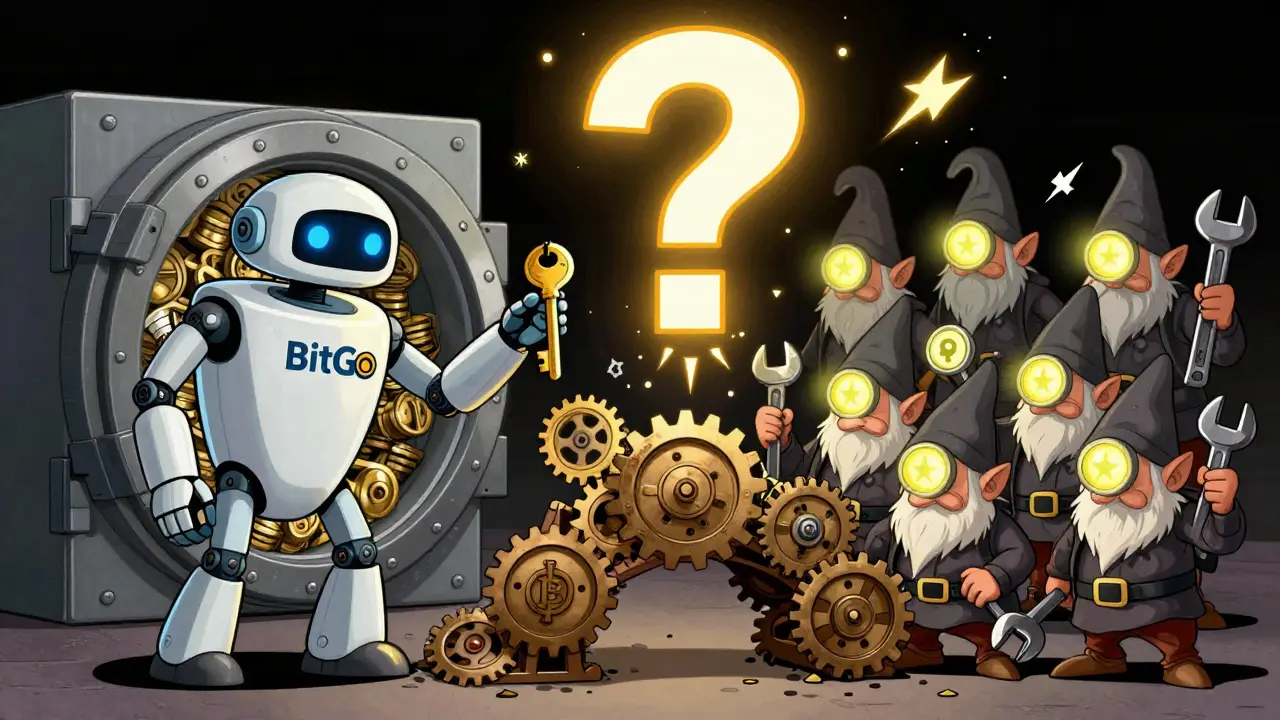
Custodial wrapped assets (like WBTC) rely on trusted third parties. For WBTC, BitGo holds the actual Bitcoin in a multi-signature wallet. To release BTC, at least 3 out of 5 approved entities must sign off. It’s secure - but centralized. If BitGo gets hacked or goes offline, you’re stuck. Chainalysis found that 97.3% of WBTC custody depends on just five companies. That goes against DeFi’s core promise: no middlemen.
Decentralized versions (like renBTC) use smart contracts and networks of nodes instead of a single custodian. RenBTC, for example, uses “darknodes” - computers run by users who stake REN tokens as collateral. If someone tries to steal, they lose their stake. It’s more trustless, but slower and more complex. renBTC has grown 217% in 2023, but still only holds 18.7% of the wrapped Bitcoin market.
The trade-off is clear: custodial = fast, easy, regulated. Decentralized = slower, harder, but more aligned with crypto’s ideals.
Where Wrapped Assets Are Used
Wrapped assets aren’t just for trading. They’re critical collateral in DeFi.
Take Aave and Compound - two of the biggest lending platforms. Together, they hold over $4.3 billion in WBTC as collateral. That means people are borrowing USD or DAI by locking WBTC. Without WBTC, those loans wouldn’t exist. Bitcoin holders wouldn’t be able to access liquidity without selling their coins - which triggers taxes and loses long-term upside.
Institutional players are catching on. Grayscale reported that 17 institutional clients used WBTC as collateral for $287 million in DAI loans in Q2 2023. Why? They avoid capital gains taxes. They keep Bitcoin exposure. And they earn yield on top of it.
WETH is even more widespread. It’s used in over 80% of Ethereum-based DeFi apps. It’s not just a bridge - it’s the glue holding Ethereum’s DeFi ecosystem together.
Costs, Risks, and Real Problems
Wrapped assets aren’t risk-free. There are three big issues:
- Custodial risk: If the custodian is hacked, your wrapped asset could vanish. The $600 million Nomad Bridge hack in August 2022 drained WBTC, renBTC, and WETH - proving that even popular bridges aren’t safe.
- Smart contract bugs: Automated systems can have flaws. A single coding mistake can let attackers drain funds. There’s no FDIC insurance here.
- Fees: Wrapping and unwrapping usually costs 0.1% to 0.5%. That’s not much, but it adds up if you’re moving assets often. Coinbase charges 0.3% - users complain about it during market spikes.
And then there’s the speed problem. WBTC transactions on Ethereum cost $10-15 in gas and take 15 seconds. Bitcoin transactions? $1-2, but 10 minutes. If you’re trying to move funds fast during a crash, Ethereum’s fees can spike to $50+ and take minutes. That’s not ideal.
How to Get Started
If you want to try wrapped assets, here’s how:
- Choose your asset. WBTC for Bitcoin. WETH for Ethereum.
- Decide on a platform. Centralized exchanges like Coinbase or Kraken make it easy - just click “wrap.” Decentralized options like RenBridge or Wormhole require a wallet like MetaMask.
- Deposit your native asset. Send BTC to the wrapping service. Wait 1-60 minutes.
- Receive your wrapped token. It shows up in your wallet. Now you can use it in DeFi apps.
- When you’re done, burn the wrapped token to get your original asset back.
Pro tip: Always check which version of a wrapped asset a DeFi app accepts. Using renBTC instead of WBTC in a protocol that only supports WBTC can cause errors or lost funds.
The Future: Will Wrapped Assets Last?
Experts are split. Vitalik Buterin called wrapped tokens a “necessary evil” - needed now, but not forever. Delphi Digital predicts custodial wrapped assets will drop from 78% to 40% of the market by 2027. Why? Because better tech is coming.
Projects like Chainlink’s CCIP and LayerZero are building trust-minimized bridges that don’t need custodians. They use decentralized networks to verify asset transfers across chains - no locking, no minting, no IOUs. Just direct transfers. Early tests show 99.98% accuracy.
Meanwhile, Ethereum might soon make WETH obsolete. EIP-7251, proposed in 2023, could allow ETH to function like an ERC-20 token natively. If that happens, WETH might fade away.
But for now? Wrapped assets are essential. They’ve unlocked billions in liquidity. They’ve let Bitcoin join the DeFi party. They’ve given institutions a way to participate without selling. And they’ve shown us that cross-chain interoperability isn’t a dream - it’s a working reality.
Whether you love them or hate them, wrapped assets are still the backbone of today’s DeFi. And until something better replaces them, they’ll keep running the show.
Are wrapped assets the same as stablecoins?
No. Stablecoins like USDC or DAI are pegged to fiat currencies (usually the U.S. dollar). Wrapped assets are pegged to other cryptocurrencies - like Bitcoin or Ethereum. WBTC is worth 1 BTC. USDC is worth $1. They solve different problems.
Can I wrap any cryptocurrency?
Technically yes, but not all are supported. The most common wrapped assets are WBTC, WETH, WMATIC, and WBSC. Others exist, like WSol or WAVAX, but they’re less liquid and carry higher risk. Always check if a wrapped version is officially maintained before using it.
Is wrapping crypto taxable?
In most jurisdictions, wrapping crypto is not a taxable event - because you’re not selling or exchanging the asset. You’re just converting its format. But unwrapping to get back the original asset might be treated as a disposal. Always consult a tax professional familiar with crypto regulations in your country.
Why is WBTC worth more than renBTC?
WBTC has more adoption because it was the first, backed by Coinbase and BitGo - trusted names. It’s integrated into major DeFi apps, wallets, and exchanges. renBTC is more decentralized but slower and less supported. Network effects matter: more users = more liquidity = more trust.
What happens if the custodian of WBTC goes bankrupt?
In theory, the Bitcoin backing WBTC is still owned by the custodian. If BitGo goes under, legal claims would be made to recover those assets - but it’s messy. There’s no guarantee you’d get your Bitcoin back quickly. That’s why decentralized wrapped assets exist - to avoid this single point of failure.