Wrapped Token Supply and Reserves Explained for 2026
Mar, 26 2026
Why Reserve Transparency Matters More Than Ever
If you've been watching the crypto space since the collapse of centralized giants in 2022, you know one thing for sure: checking the actual numbers isn't optional anymore. By March 2026, the question has shifted from 'Is this asset real?' to 'Can I see the backup right now?'. Wrapped tokens sit at the center of this scrutiny. They allow Bitcoin holders to use their assets in Ethereum-based apps, but only if the reserves backing those digital representations are solid. This guide breaks down how the supply and reserve mechanism works, who holds the keys, and why the industry has pivoted toward radical transparency in our current market landscape.
The Core Mechanics of Wrapped Assets
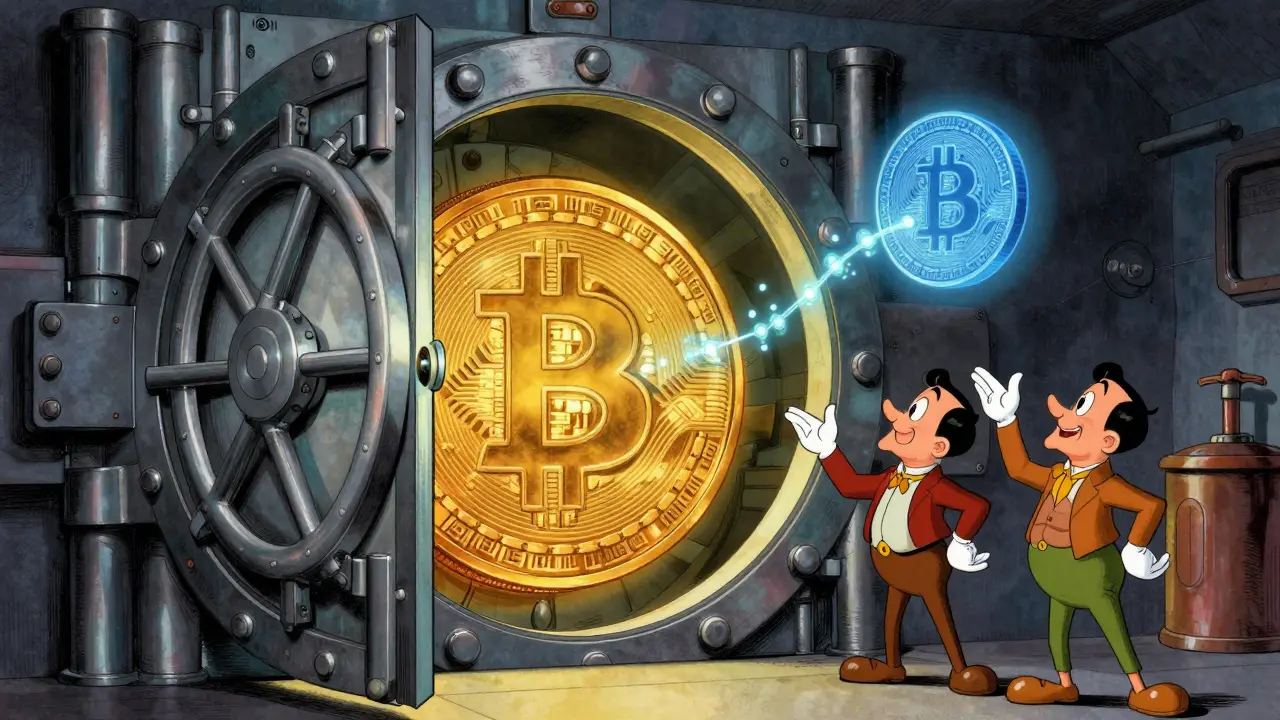
At its simplest level, a wrapped tokenis a digital asset that represents an underlying asset on a different blockchain network. You can't use native Bitcoin directly inside an Ethereum smart contract because the protocols don't speak the same language. Wrapping solves this by creating a proxy token. When you deposit Bitcoin with a custodian, they issue you an equivalent amount of Wrapped Bitcoin (WBTC) on Ethereum. The magic-and the risk-lies in the ratio. For every single unit of WBTC circulating in your wallet or a DeFi protocol, there must be exactly one Bitcoin locked in a secure vault.
This creates a system of supply and demand managed by two distinct actions: minting and burning. Think of it like a factory. If a merchant needs new inventory (WBTC), they send raw material (BTC) to the factory. Once the warehouse confirms receipt, the factory stamps out the wrapped tokens. Conversely, when someone wants their original Bitcoin back, they send the wrapper to the factory, which destroys it and releases the raw Bitcoin from storage. In 2026, this process is automated via smart contracts but still relies on off-chain actors to verify the physical movement of funds.
The Custodian Model and Reserve Management
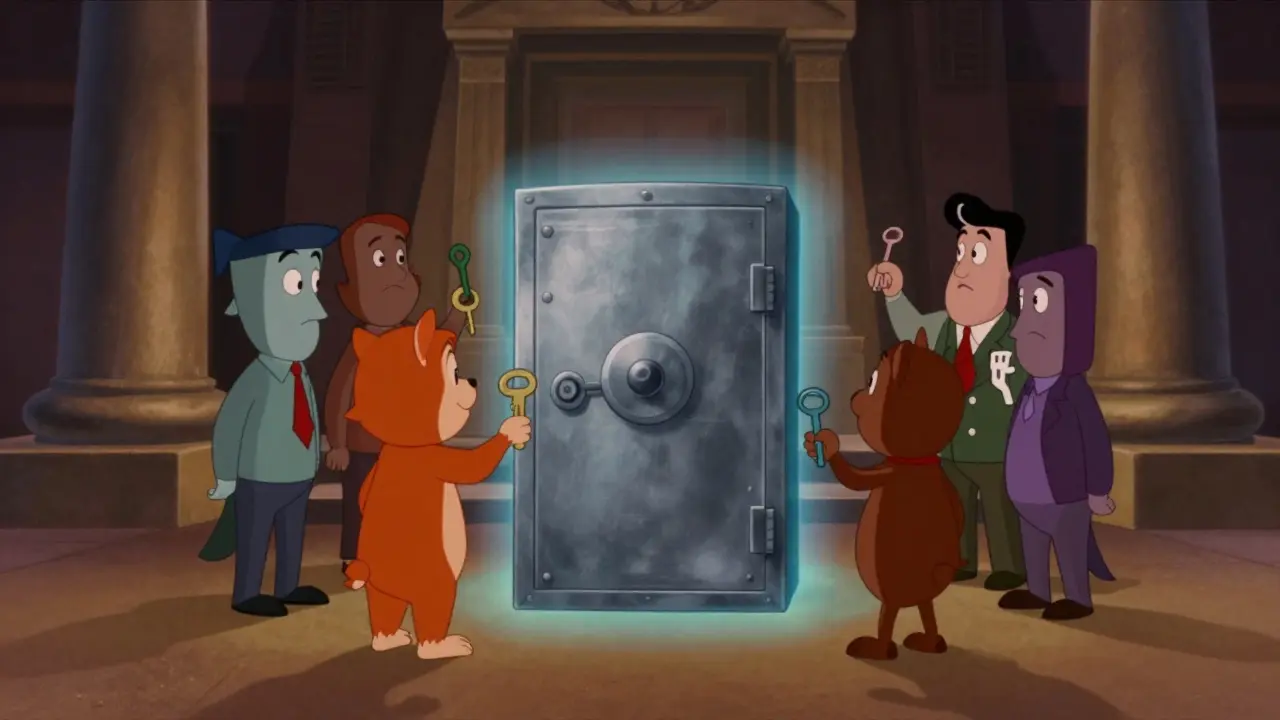
You might wonder who actually holds the Bitcoin while your wrapped version sits in Metamask. This is where the role of the custodian becomes critical. In the case of Wrapped Bitcoin, BitGo serves as the primary custodian. They manage multi-signature wallets that store the reserves. It's not just one person holding the keys; typically, multiple independent parties must sign off on a transaction before Bitcoin moves from the cold storage. This adds layers of security, but it also introduces a central point of failure.
Overseeing these custodians is the Wrapped Token DAO (Decentralized Autonomous Organization). As of late 2025, this group consists of fifteen entities representing various sectors of the web3 economy-from protocol developers to auditing firms. They collectively decide which merchants can generate wrapped tokens and approve changes to the reserve policies. While this sounds complex, it effectively distributes power so that no single company can print fake tokens without detection. However, critics argue this model is 'semi-decentralized' until fully trustless cross-chain bridges become the standard.
Verifying the Numbers: The Audit Process
Transparency is useless without verification. Post-2024 regulations (like the EU's MiCA framework) made public attestations mandatory for major issuers. Today, the industry gold standard involves monthly reports from independent accounting firms. For example, the firm Armanino regularly signs off on WBTC reserves. These aren't just guesses; they involve cryptographic proofs comparing the on-chain balance of wrapped tokens against the off-chain ledger of reserved Bitcoin.
Data from 2025 shows that properly audited systems maintain supply accuracy within 0.01% variance. This means if there are 1 million WBTC tokens in existence, there are 999,900 to 1,000,100 Bitcoins locked behind them. During high volatility, temporary discrepancies can occur due to time-lags in reporting, but automated systems now flag these instantly. You can check this yourself via the project's dashboard, where you'll see the total minted supply listed alongside the latest verified audit snapshot.
| Model Type | Primary Custodian | Reserve Verification | Market Share (Q1 2026) |
|---|---|---|---|
| Custodial (WBTC) | BitGo | Monthly Third-Party Audit | ~85% |
| Decentralized (renBTC) | RenVM (Network Nodes) | On-Chain Zero Knowledge Proofs | ~10% |
| Exchange Native (BTCB) | Binance / CEX | Quarterly Proof of Reserves | ~5% |

Shifts in Custody: The 2026 Reality
A significant shift happened late last year regarding WBTC. To reduce the risk of relying on a single custodian, the ecosystem migrated to a multi-custodian model. Now, several institutions hold portions of the reserves rather than BitGo alone. This change addresses the "single point of failure" concern raised by regulators in 2025. It also aligns with predictions that by 2026, account abstraction (EIP-4337) would begin enabling non-custodial wrapping methods, though fully trustless bridges remain in development phases.
Institutional adoption has driven this change. Banks and large hedge funds participating in DeFi require institutional-grade custody insurance. This requirement forced retail projects to upgrade their security protocols. Consequently, the gap between "retail" and "institutional" wrapped tokens has narrowed, with both sides demanding near-perfect reserve parity.
Risks and The Path Forward
Despite improvements, the risks haven't vanished. Smart contract vulnerabilities in the minting logic could theoretically allow an attacker to create excess supply if the code is flawed. Furthermore, the reliance on legal contracts in the real world remains a friction point. If a custodian goes bankrupt, frozen assets can impact the peg even if the technology works perfectly. Community sentiment analysis indicates that users prioritize platforms offering real-time, on-chain proof over those promising quarterly reports. As the market matures, the trend points away from opaque exchange-wrapped coins toward transparent, publicly verifiable reserves that anyone can query via a browser extension.
Does the supply of wrapped tokens always match the reserve?
Ideally, yes. Reputable projects like WBTC maintain a 1:1 ratio verified by monthly audits. Temporary gaps can occur during processing queues, but sustained mismatches indicate serious systemic failure and depegging events.
Who controls the reserves for Wrapped Bitcoin?
BitGo acts as the primary custodian for WBTC, but governance is shared by a DAO comprising 15 diverse entities including developers, merchants, and protocol founders who approve custodial changes.
What happens if a wrapped token issuer fails?
If the custodian cannot redeem requests, the token price usually drops below $1 per Bitcoin because users lose confidence in the redemption promise. This led to tighter regulations in 2025 requiring segregated accounts for reserves.
Are decentralized alternatives like renBTC safer?
They remove centralized custodian risk but introduce complex cryptography risks. Currently, decentralized models suffer lower liquidity compared to custodial solutions like WBTC, making them harder to exit quickly during stress.
How often are reserves audited?
Under 2025 regulatory frameworks, monthly third-party attestations are required for significant market caps. Some projects offer daily proof-of-reserves snapshots using Chainlink integration for real-time data feeds.