Bitcoin and Stablecoins in Venezuela: Survival Strategy Amid Crisis
Jun, 23 2026
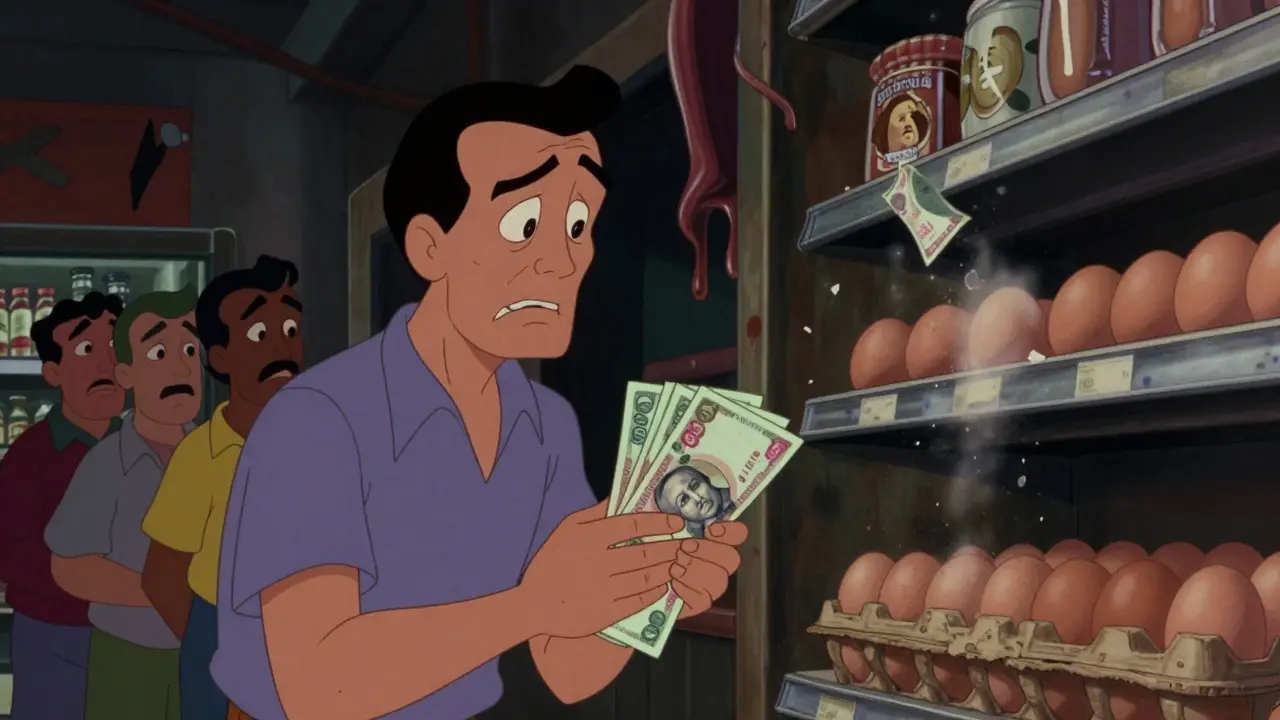
The bolívar is broken. If you are standing in a supermarket line in Caracas today, holding a stack of cash that bought a loaf of bread last month but now buys a single egg, you understand why millions of Venezuelans have turned to digital coins. This isn't about getting rich quick or following a tech trend. It is about putting food on the table when your national currency loses more than 70% of its value in less than a year.
Venezuela has become the world’s most extreme case study for cryptocurrency as a survival tool. According to Chainalysis’ 2024 Crypto Adoption Index, the country ranks 13th globally for crypto usage, with adoption jumping 110% year-over-year. But these numbers hide a harsh reality: people aren’t buying Bitcoin because they believe in decentralization ideology. They are using it-and mostly stablecoins like Tether (USDT)-because the traditional banking system has collapsed under hyperinflation and sanctions.
Why Cash Failed and Crypto Stepped In
To understand the shift, you have to look at the math of the collapse. The Venezuelan Finance Observatory reported annual inflation hitting 229% in May 2024. Between October 2023 and June 2024, the government stopped defending the bolívar, causing it to plummet. For a worker earning a salary in bolívares, waiting even a few hours to deposit money into a bank could mean losing significant purchasing power by the time they withdrew it.
Crypto offers an immediate escape hatch. When you hold USDT, often called “Binance dollars” locally, your savings stay pegged to the U.S. dollar. You don’t watch your wealth evaporate overnight. Economist Aarón Olmos put it bluntly in an August 2025 interview: “Venezuelans started using cryptocurrencies out of necessity due to inflation, low wages, foreign currency shortages, and difficulty opening bank accounts.”
This wasn’t a gradual transition. It was a sudden pivot driven by absolute need. Private sector crypto transactions hit $119 million in July 2025 alone, according to data from SUNACRIP analyzed by AInvest. That money is moving through peer-to-peer networks because traditional banks are either inaccessible or too risky to use for large sums.
Stablecoins vs. Bitcoin: What People Actually Use
While the title of this article mentions Bitcoin, the reality on the ground is different. Bitcoin is volatile. If you are trying to pay rent or buy medicine, you cannot afford for your payment method to swing 5% up or down while you wait for confirmation. That is why stablecoins dominate daily life in Venezuela.
| Asset Type | Primary Use Case | Transaction Speed | Risk Factor |
|---|---|---|---|
| Tether (USDT) | Daily commerce, rent, salaries | < 2 minutes (Tron network) | Centralized issuer risk |
| Bitcoin (BTC) | Long-term savings, cross-border transfers | 10-60 minutes | Price volatility |
| Bolívar (VES) | Tiny local purchases only | Instant | Hyperinflation (229% annual) |
USDT holds 76% of Venezuela’s stablecoin market share. It moves fast. On the Tron blockchain, transactions confirm in under two minutes. Bitcoin takes longer-anywhere from 10 to 60 minutes during peak times. For a merchant selling coffee, that delay matters. So, while Bitcoin serves as a store of value for those looking to preserve wealth over years, USDT is the actual currency of the street economy.
How Transactions Work Without Banks
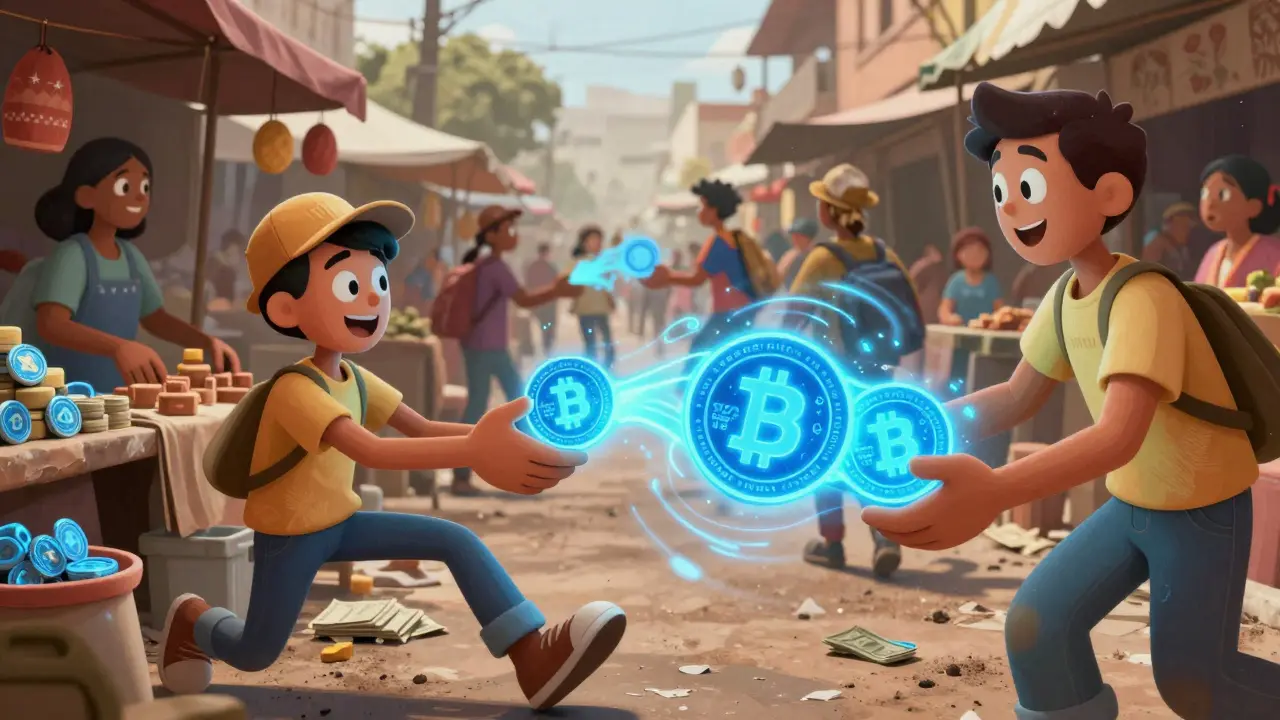
You might wonder how someone without a bank account buys groceries with crypto. The answer is Peer-to-Peer (P2P) platforms. Binance P2P leads the pack with a 63% market share in Venezuela, followed by LocalBitcoins at 22%. These platforms allow users to trade directly with each other. One person sends USDT digitally; the other transfers bolívares via mobile app or cash in hand. No bank intermediary is needed.
Here is how a typical transaction looks for a user named Carlos in Caracas:
- Carlos receives his monthly salary in USDT from a remote employer abroad.
- He opens Binance P2P and finds a seller offering bolívares at a competitive rate.
- He transfers the USDT to the escrow wallet provided by the platform.
- The seller sends bolívares to Carlos’s local mobile banking app.
- Once Carlos confirms receipt, the platform releases the USDT to the seller.
- Carlos uses the bolívares to pay for immediate small expenses or keeps the USDT for larger purchases like rent, which many landlords now accept directly.
This system works around U.S. sanctions that restrict direct banking relationships. However, it is not flawless. About 18% of attempted transactions get blocked due to sanctions filters, according to internal Binance data shared with CoinTelegraph. Users must be careful to avoid accounts linked to sanctioned entities, or their funds can freeze instantly.
The Hidden Costs and Risks
It sounds like a perfect solution, but there are serious downsides. First, connectivity. Venezuela ranks 153rd globally for internet speed, averaging just 14.79 Mbps. During blackouts or network congestion, you literally cannot transact. Thirty-seven percent of surveyed users reported connectivity issues affecting their ability to pay bills.
Second, centralization risk. While Bitcoin is decentralized, USDT is controlled by Tether Limited. If Tether were to face legal action or freeze assets, millions of Venezuelans could lose access to their livelihoods overnight. University of Caracas economist María Fernández warned that this dependency creates a fragile parallel economy.
Third, the spread costs. When you convert crypto to fiat or vice versa, you pay a premium. During high-demand periods, spreads average 3.7%. That means if you send $100 worth of crypto, you might only receive $96.30 in local currency. For families living on tight margins, that 3.7% cut adds up quickly.
Regulatory Chaos and Government Stance
The Venezuelan government sends mixed signals. In 2018, they launched their own cryptocurrency, the Petro, tied to oil reserves. It failed completely, collapsing in 2024 amid corruption allegations. Meanwhile, the state regulator, SUNACRIP, shut down private exchanges in 2023, creating confusion.
Yet, in practice, the government tolerates crypto. Why? Because it helps keep the informal economy running. The Central Bank acknowledged crypto’s role in a 2024 report but offered no clear rules. This regulatory gray area leaves users vulnerable. There is no consumer protection if a P2P trader scams you. In Q1 2025 alone, the Venezuelan Finance Observatory recorded 1,247 complaints related to crypto fraud and technical failures.
International pressure also looms. The IMF’s David Lipton noted in April 2025 that “digital assets provide tactical relief but cannot substitute for sound monetary policy.” Until structural reforms happen, crypto remains a band-aid, not a cure.

Real Stories from the Ground
Numbers tell part of the story, but personal experiences reveal the human impact. Victor Sousa, a resident of Caracas, told reporters he uses USDT to buy phone accessories and save for the future. “There’s lots of places accepting it now,” he said. “The plan is to one day have my savings in crypto.”
Others are less optimistic about the long term but grateful for the short-term survival. On Reddit’s r/BitcoinVenezuela community, which has over 42,000 members, users share tips on avoiding scams and managing volatility. One user, ‘CryptoSurvivorVE,’ posted in June 2025: “Without USDT, I couldn’t feed my family after my bolivar salary became worthless overnight.”
Education plays a huge role here. Many new users learn within 2-3 weeks, thanks to YouTube channels like ‘Cripto Para Todos’ and university courses at Universidad Central de Venezuela, which made crypto literacy mandatory in January 2025. This grassroots education is filling the gap left by formal financial institutions.
What Comes Next?
Will this last? Most experts say yes, for now. As long as inflation stays above 50%, crypto will remain essential. The IMF doesn’t expect inflation to drop below that threshold before 2027. Some economists hope crypto will eventually integrate into a stabilized national system. Others fear that if the bolívar suddenly recovers, crypto users could be left exposed to centralized risks without the safety net of necessity.
For now, Venezuela stands as a stark example of technology adapting to crisis. It is not a utopia. It is a lifeline. And for millions of citizens, it is the only thing keeping them afloat.
Is Bitcoin legal in Venezuela?
Yes, cryptocurrency is legal. Venezuela passed a Crypto Assets Law in 2020, though enforcement is inconsistent. The government tolerates private crypto use despite shutting down some exchanges in 2023.
Why do Venezuelans prefer USDT over Bitcoin?
USDT is pegged to the U.S. dollar, providing stability for daily transactions like paying rent or buying food. Bitcoin’s price volatility makes it risky for routine commerce, so it is mostly used for long-term savings.
Can foreigners send money to Venezuela via crypto?
Yes, crypto remittances account for 9% of total remittances to Venezuela. Platforms like Binance P2P allow seamless transfers, bypassing traditional banking restrictions and high fees associated with services like Western Union.
What are the biggest risks of using crypto in Venezuela?
Key risks include U.S. sanctions blocking transactions, poor internet connectivity causing failed payments, centralized control of stablecoins like USDT, and lack of consumer protection against scams or fraud.
How much does it cost to convert crypto to bolívares?
Conversion spreads average around 3.7% during high-demand periods. This means users lose roughly 3.7 cents for every dollar converted, adding up significantly for low-income households.