BTCMAX Crypto Exchange Review: Clarifying BitMEX vs BTC Markets
Jan, 25 2026
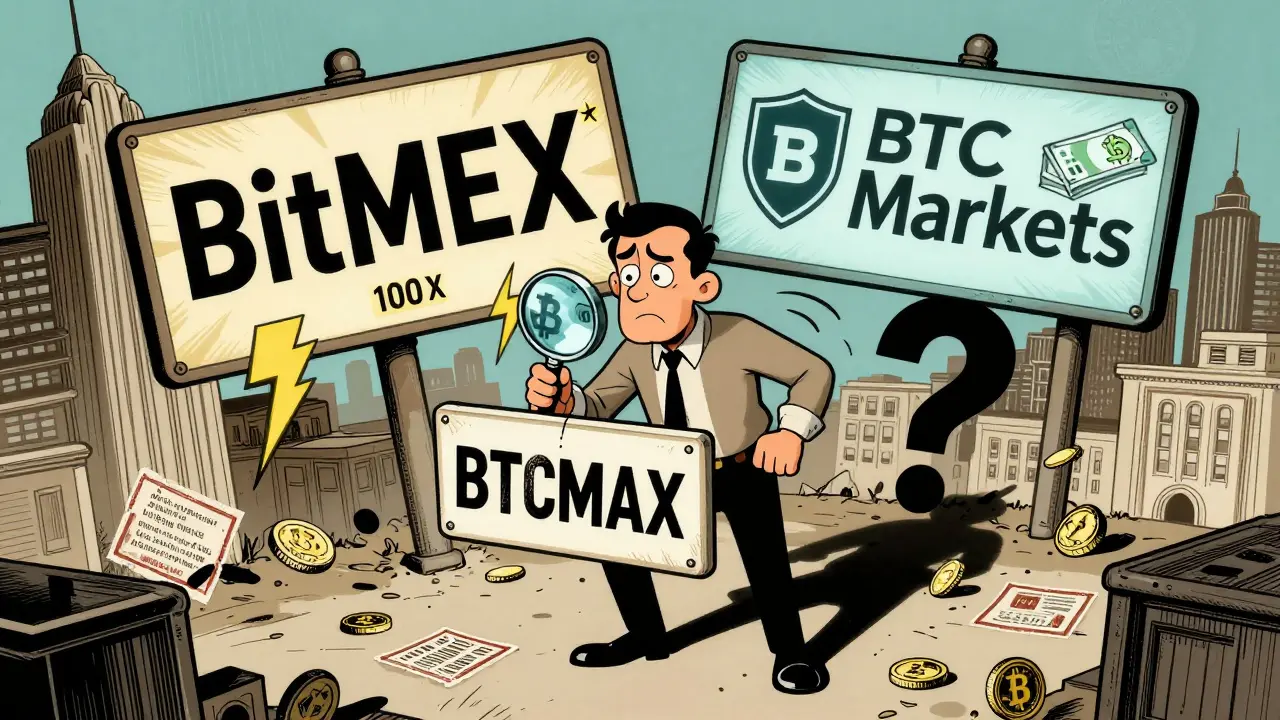
There is no such thing as a crypto exchange called BTCMAX. If you searched for it, you’re not alone - many people mix up the name with two real exchanges: BitMEX and BTC Markets. They’re completely different platforms serving different needs. One is a high-leverage derivatives giant with global reach but a troubled legal history. The other is a regulated Australian spot exchange trusted by everyday traders. This review clears up the confusion and tells you exactly what each one offers - and who should use which.
BitMEX: The High-Stakes Derivatives Exchange
BitMEX, short for Bitcoin Mercantile Exchange, launched in 2014 and quickly became the go-to platform for traders who wanted to bet big on Bitcoin’s price swings. It’s not a spot exchange - you can’t buy Bitcoin here and hold it like you would on Coinbase or Binance. Instead, you trade futures and perpetual contracts with leverage up to 100x. That means you can control $100,000 worth of Bitcoin with just $1,000. It’s powerful, but dangerous.
As of Q4 2025, BitMEX still handles around $17.8 billion in monthly trading volume, according to CoinGecko. Most of its users are in Asia, and 83% of its traffic comes from there. The platform’s infrastructure is built for speed and resilience. It holds 98% of customer funds in cold storage using multi-signature wallets. Withdrawals require 3-of-5 approvals from geographically distributed hardware security modules (HSMs). Their Proof of Reserves report from December 2025, verified through a merkle tree, showed full backing of user deposits.
But behind the technical strength is a legal mess. In 2020, BitMEX pleaded guilty to violating U.S. Bank Secrecy Act rules and paid a $100 million fine to the CFTC. They were operating without proper anti-money laundering (AML) controls. Since then, they’ve lost access to 15 major markets, including the EU and Canada. Their 2023 exit from Europe left thousands of traders scrambling. Even today, their regulatory status is shaky. While they claim to be licensed in the Seychelles, that’s not recognized by most Western regulators.
Users praise BitMEX for deep liquidity and tight spreads on BTC/USD perpetuals. But complaints are loud: KYC verification takes 7 to 10 business days. API access is locked behind strict IP whitelisting and rate limits. New users spend an average of 17.3 hours learning the interface before trading confidently. Trustpilot gives it a 3.8/5 rating from over 1,800 reviews. Reddit users in r/BitMEX are increasingly nervous. One user posted in January 2026: “Withdrew all funds after hearing about potential Singapore licensing issues - love the platform but can’t risk regulatory limbo.”
BTC Markets: The Trusted Australian Spot Exchange
BTC Markets is the opposite of BitMEX. Founded in 2013 in Melbourne, it’s an Australian Securities and Investments Commission (ASIC)-regulated spot exchange. You buy and sell Bitcoin, Ethereum, and other coins at current market prices. No leverage. No futures. Just simple, direct trading.
It’s the most popular crypto exchange in Australia, holding 28.7% of the domestic spot market as of Q4 2025, according to ASIC data. It also serves New Zealand since 2025 under a mutual recognition agreement. Annual trading volume hit $1.2 billion in 2025. Its security is built for compliance, not speculation. 99% of funds are stored in cold storage across multiple secure vaults. Their Q3 2025 attestation by BDO Australia confirmed full asset coverage. They use AES-256 encryption, TLS 1.3 for data transfer, and mandatory FIDO2 two-factor authentication since August 2024.
What sets BTC Markets apart is its regulatory discipline. They hold an AUSTRAC license (#100543242) and are ISO 27001 certified. Twice-daily fund reconciliations are performed - more frequent than most exchanges. Their documentation is clear, and their customer support is responsive. Trustpilot gives them a 4.2/5 rating from over 2,100 reviews. Australian users love the AUD deposit and withdrawal options, tax reporting tools, and the peace of mind that comes with ASIC oversight.
But it’s not perfect. They only offer 35 cryptocurrencies - far fewer than competitors like Swyftx or CoinSpot. Withdrawals can slow down during market spikes because of their strict reconciliation process. Their API is simpler than BitMEX’s, but lacks advanced features like destination tags or anti-phishing codes. Still, for most Australians, these trade-offs are worth it. One user on r/AusCrypto wrote in January 2026: “Stuck with BTC Markets despite higher fees because ASIC regulation gives peace of mind after the FTX collapse.”
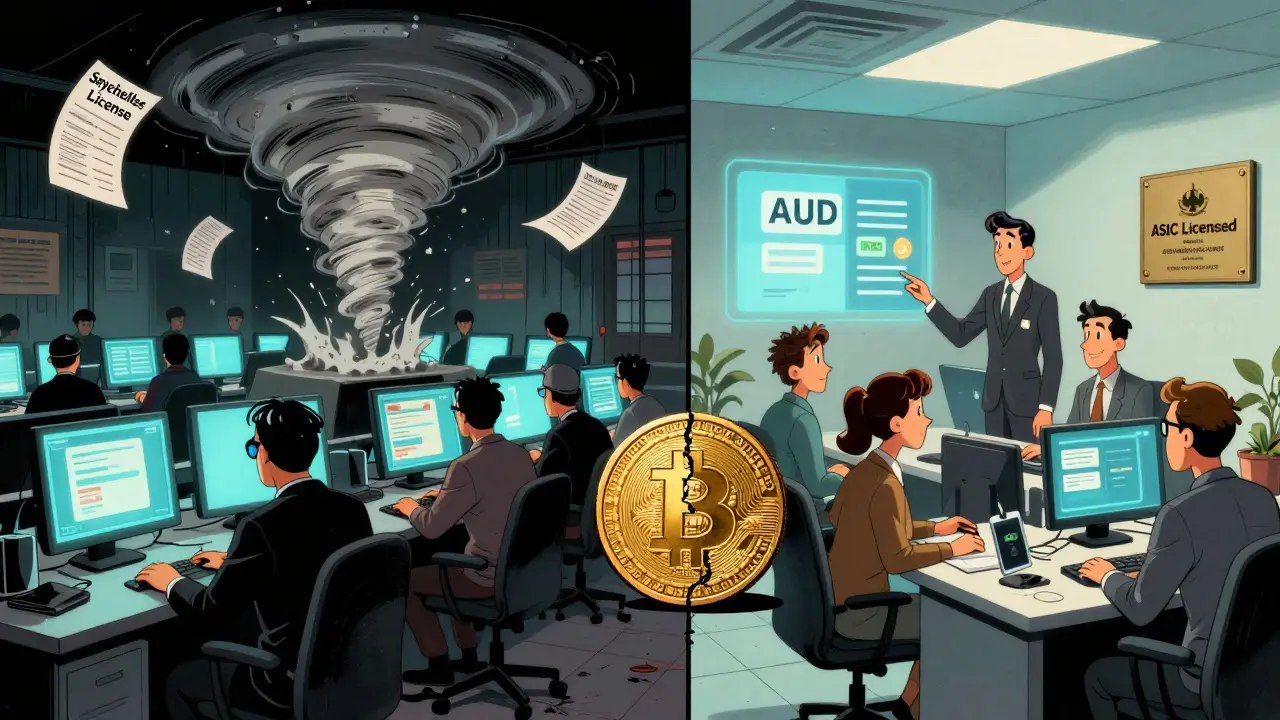
Security Showdown: BitMEX vs BTC Markets
Both platforms take security seriously - but in different ways.
| Feature | BitMEX | BTC Markets |
|---|---|---|
| Asset Storage | 98% cold storage, 3-of-5 multi-sig | 99% cold storage, multiple vaults |
| Encryption | Standard TLS, no public AES details | AES-256 at rest, TLS 1.3 in transit |
| 2FA | OTP only | FIDO2-compliant (passwordless) |
| Certifications | No SOC 2 or ISO 27001 | ISO 27001 since 2022 |
| Withdrawal Delays | 48-hour global settings lock | Twice-daily reconciliation slows large withdrawals |
| Regulatory Status | Seychelles, no Western licenses | ASIC & AUSTRAC licensed |
BitMEX’s security is more complex and technically impressive. But BTC Markets’ certifications and compliance make it far safer for everyday users. If you’re holding crypto long-term, BTC Markets is the clear winner. If you’re a professional trader betting on volatility, BitMEX still has unmatched liquidity - but only if you’re comfortable with the legal risks.
Who Should Use Which?
Ask yourself this: Are you trading to make quick profits, or are you buying to hold?
If you’re a professional or experienced trader who understands leverage, futures, and margin calls - and you’re outside the U.S. and EU - BitMEX might still be worth considering. But only if you treat it like a trading terminal, not a wallet. Never keep large amounts of crypto here. Use it for short-term positions, then move your funds out.
If you’re an Australian or New Zealand resident who wants to buy Bitcoin, Ethereum, or other coins to hold, invest, or use for payments - BTC Markets is the best choice. It’s regulated, secure, easy to use, and supports AUD deposits. Their new Institutional Prime service, launched in January 2026, even offers sub-10ms API speeds for serious traders with over AUD$500,000.
For everyone else - especially those in the U.S., Canada, or Europe - neither platform is a safe option. BitMEX is blocked. BTC Markets doesn’t serve you. Look at Kraken, Coinbase, or Binance (where available) instead.

What’s Next for Both Exchanges?
BitMEX is trying to rebuild. In January 2026, they announced a partnership with Chainalysis to improve on-chain monitoring. They’re also planning to relaunch a limited U.S. product in Q3 2026 through a licensed MSB partner. Their new multi-party computation (MPC) wallet system, detailed on GitHub in December 2025, will roll out in Q2 2026 - a major upgrade to key management.
BTC Markets is growing steadily. Their integration with Australia’s new Digital Identity system - launching in Q3 2026 - will cut KYC times by 65%. That’s huge. Right now, 68% of users complete verification in under 24 hours. With that kind of speed and regulatory backing, they’re positioned to dominate the Australian market for years.
BitMEX is a relic of the wild west era of crypto - brilliant technology, but haunted by its past. BTC Markets is the future: regulated, reliable, and focused on serving real users, not speculators.
Is BTCMAX a real crypto exchange?
No, BTCMAX is not a real exchange. It’s a common misspelling or confusion between BitMEX and BTC Markets. Both are legitimate, but completely different platforms. Always double-check the exact name before signing up.
Which is better for beginners: BitMEX or BTC Markets?
BTC Markets is far better for beginners. BitMEX is designed for advanced traders who understand leverage and derivatives. Its interface is complex, and the risks are high. BTC Markets offers simple spot trading, AUD support, and clear documentation - perfect for first-time buyers.
Can I use BitMEX if I live in the United States?
No. BitMEX has blocked U.S. users since 2020 following their CFTC settlement. Even if you try to access it via VPN, your account will be frozen and funds withheld. Do not attempt to bypass restrictions - it’s against their terms and illegal.
Does BTC Markets support altcoins?
Yes, but only 35 cryptocurrencies as of early 2026. That’s fewer than competitors like Swyftx or CoinSpot, which offer over 200. If you want to trade lesser-known tokens, BTC Markets may not be enough. But for Bitcoin, Ethereum, and top 10 coins, it’s solid.
Is BTC Markets safe after the FTX collapse?
Yes. Unlike FTX, BTC Markets is regulated by ASIC, holds all user funds in cold storage, and undergoes regular audits by BDO Australia. Their transparency and compliance practices make them one of the safest exchanges in Australia. Many users switched to BTC Markets specifically because of FTX’s failure.
What’s the best way to deposit AUD on BTC Markets?
Use bank transfer (Osko or POLi) for instant deposits. Credit/debit card deposits are available but carry higher fees. Withdrawals are processed in AUD and sent back to your registered bank account. Processing time is usually 1-2 business days.
Final Thoughts
If you’re looking for BTCMAX, you’re really looking for either BitMEX or BTC Markets. One is a high-risk, high-reward trading tool for pros. The other is a secure, regulated gateway for everyday crypto buyers. Don’t let the name confuse you. Know what you’re signing up for - and choose based on your goals, not your memory.