Exchange Security Against Double-Spending: How Crypto Exchanges Protect Your Funds
Oct, 26 2026
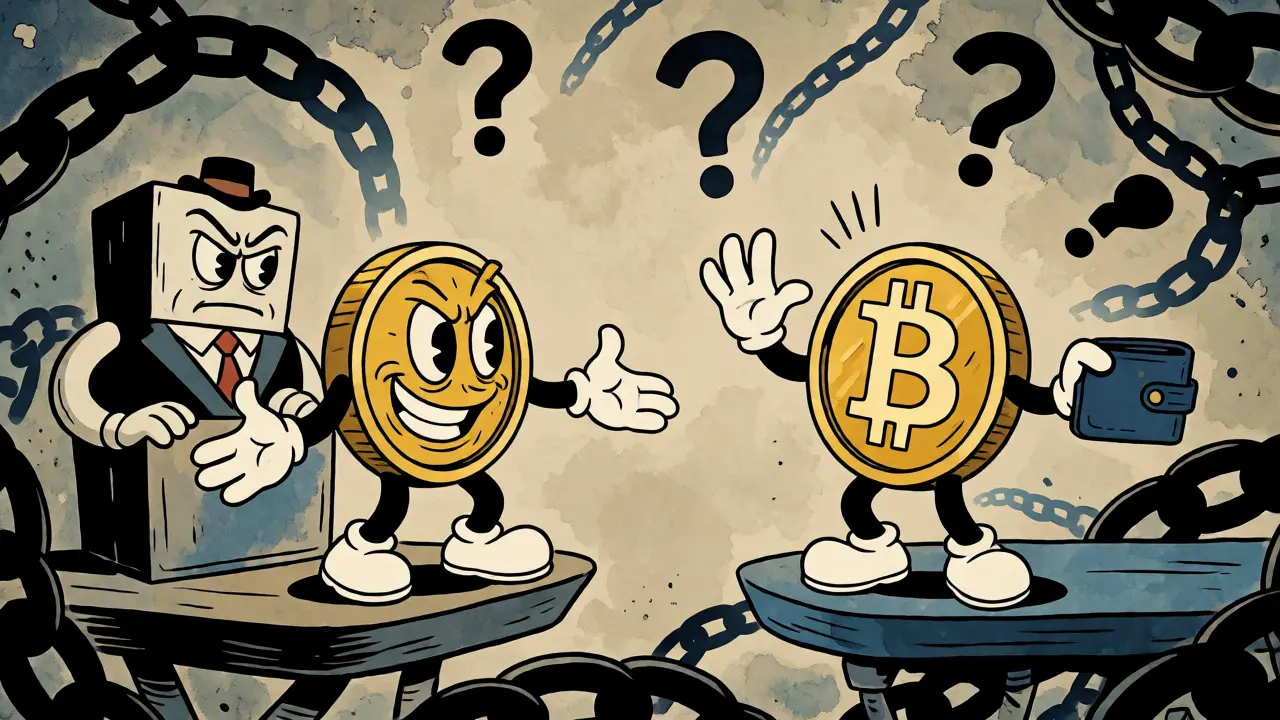
Imagine sending Bitcoin to an exchange, waiting for it to show up in your balance, and then instantly withdrawing it as cash. Sounds simple, right? But what if you could make that same Bitcoin appear twice? Once on the exchange so you can withdraw it, and once back in your own wallet where you still hold the coins? This is Double-Spending, a fundamental vulnerability in digital currency systems where the same unit of value is used more than once. For cryptocurrency exchanges, preventing this isn't just a technical nicety; it’s the bedrock of trust. If an exchange gets double-spent, they lose real money, and users lose faith. So, how do platforms like Coinbase or Binance stop someone from pulling off this digital sleight of hand?
The Core Problem: Why Digital Money Can Be Copied
In the physical world, handing over a $10 bill means you no longer have it. The transfer is immediate and final. Digital files, however, are different. You can copy a JPEG image infinitely without losing the original. Early digital cash attempts failed because they couldn’t prevent this copying. Bitcoin solved this by using a public ledger called the blockchain, which records every transaction ever made. When you send crypto, the network checks if you actually own those specific coins and haven’t already spent them elsewhere. The challenge for exchanges is timing. They need to credit your account quickly enough to keep you happy but wait long enough to ensure the transaction won’t be reversed.
Consensus Mechanisms: The First Line of Defense
The primary shield against double-spending is the Consensus Mechanism of the underlying blockchain. Think of this as the rulebook that all computers (nodes) in the network follow to agree on who owns what. Two main types dominate the landscape today.
Proof of Work (PoW), used by Bitcoin, requires miners to solve complex math puzzles to add a block of transactions to the chain. To reverse a transaction (and thus double-spend), an attacker would need to outpace the entire network’s computing power, known as a 51% attack. This is incredibly expensive and difficult, making PoW highly secure but slow.
Proof of Stake (PoS), used by Ethereum since its Merge, works differently. Validators lock up their own crypto as collateral. If they try to cheat by validating conflicting transactions, they lose their stake. This economic penalty makes double-spending financially ruinous for attackers.
| Feature | Proof of Work (Bitcoin) | Proof of Stake (Ethereum) |
|---|---|---|
| Security Basis | Computational Power | Economic Collateral |
| Attack Cost | High hardware & energy cost | Loss of staked funds |
| Reversal Difficulty | Requires >50% hash rate | Requires slashing conditions |
| Finality Speed | Probabilistic (slower) | Deterministic (faster) |

Transaction Confirmations: Waiting for Certainty
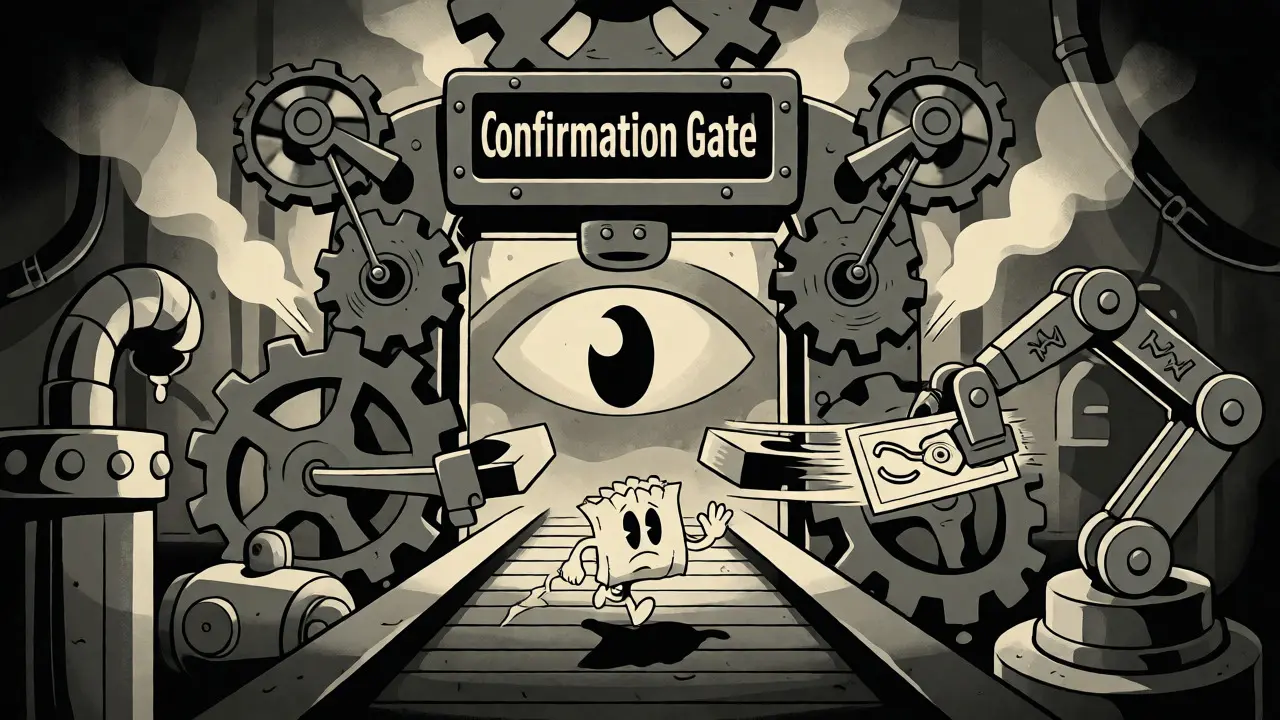
You’ve probably seen a warning when depositing crypto: "Wait for X confirmations." This is crucial. When a transaction first hits the network, it sits in a mempool (a holding area). Miners or validators pick it up and put it in a block. That’s one confirmation. Each new block added on top of that block increases the likelihood that the transaction is permanent.
Exchanges set strict rules here. For Bitcoin, most require six confirmations before crediting your balance. Why six? Because reversing a transaction after six blocks would require an attacker to redo all that work faster than the rest of the network combined. For newer chains with shorter block times, exchanges might require dozens of confirmations to achieve similar security levels. Some exchanges even use dynamic confirmation thresholds, requiring more waits for larger deposits because the risk-to-reward ratio for an attacker improves as the amount grows.
Network Architecture and Node Verification
Beyond the protocol itself, exchanges rely on the distributed nature of the network. Every node in the blockchain network keeps a full copy of the ledger. When an exchange receives a deposit, it doesn’t just trust one source. It queries multiple independent nodes to verify the transaction exists and hasn’t been reorganized out of the chain.
If a malicious actor tries to broadcast two conflicting transactions at once-one to the exchange and one to another wallet-the network will eventually accept only one. The other becomes an "orphan" or stale transaction. Exchanges monitor these reorganizations closely. If a deposit disappears after being credited, the system automatically flags the account for review, freezing further withdrawals until the dust settles. This redundancy ensures that a single point of failure or a temporary network glitch doesn’t result in lost funds.
Advanced Monitoring and Behavioral Analysis
Technology alone isn’t enough. Sophisticated attacks often look normal on the surface but suspicious in pattern. Modern exchanges employ machine learning algorithms to detect anomalies. For instance, if a user deposits a large sum and immediately requests a withdrawal to a brand-new address, the system might flag this as high-risk.
These systems analyze velocity-how fast transactions occur-and cluster analysis, checking if the receiving addresses belong to known mixing services or darknet markets. By combining on-chain data with off-chain behavioral patterns, exchanges can pause potentially fraudulent activities before completing the payout. This human-in-the-loop approach adds a layer of judgment that pure code sometimes misses.
What Users Should Do to Stay Safe
While exchanges handle the heavy lifting, users play a role too. Always check the confirmation count before assuming your funds are fully yours. Don’t rush trades during periods of network congestion, as transaction fees spike and delays increase the window for potential issues. Also, be wary of exchanges that promise instant credits for volatile assets without clear security policies. If a platform lets you spend unconfirmed balances, they are taking on significant risk themselves, which might translate to stricter limits or sudden freezes for you.
Can I double-spend my own crypto on an exchange?
Yes, technically. If you send crypto to an exchange and simultaneously broadcast a competing transaction spending the same coins to a different address, you create a race condition. However, if the exchange has already credited you and allowed a withdrawal based on the first transaction, and the second transaction wins the race later, the exchange loses money. Most exchanges mitigate this by waiting for sufficient confirmations before allowing withdrawals.
Why do some coins require fewer confirmations than others?
Confirmation requirements depend on the blockchain's block time and security model. A coin with 1-minute blocks needs more confirmations to reach the same level of immutability as a coin with 10-minute blocks. Additionally, networks with deterministic finality, like Solana or Polkadot, may allow faster settlement compared to probabilistic networks like Bitcoin.
What happens if a blockchain fork occurs during my deposit?
A fork creates two versions of history. If your deposit was on the branch that becomes orphaned, the transaction effectively vanishes. Exchanges monitor for forks and may temporarily suspend deposits or withdrawals for affected assets until the network stabilizes and the canonical chain is clear.
Is Proof of Stake safer than Proof of Work against double-spending?
Both are secure but in different ways. PoW relies on physical energy costs, while PoS relies on economic penalties. PoS offers faster finality, reducing the time window for attacks, but it introduces risks related to validator centralization. Neither is inherently "safer," but PoS reduces the latency that attackers exploit.
Do all exchanges use the same number of confirmations?
No. Policies vary widely. Some conservative exchanges require 10+ confirmations for Bitcoin, while aggressive ones might allow trading after 1-2. Check the specific asset page on your exchange for their current policy, as it can change based on network activity.