What is the Kimchi Premium? Understanding the Korean Crypto Market
Apr, 22 2026
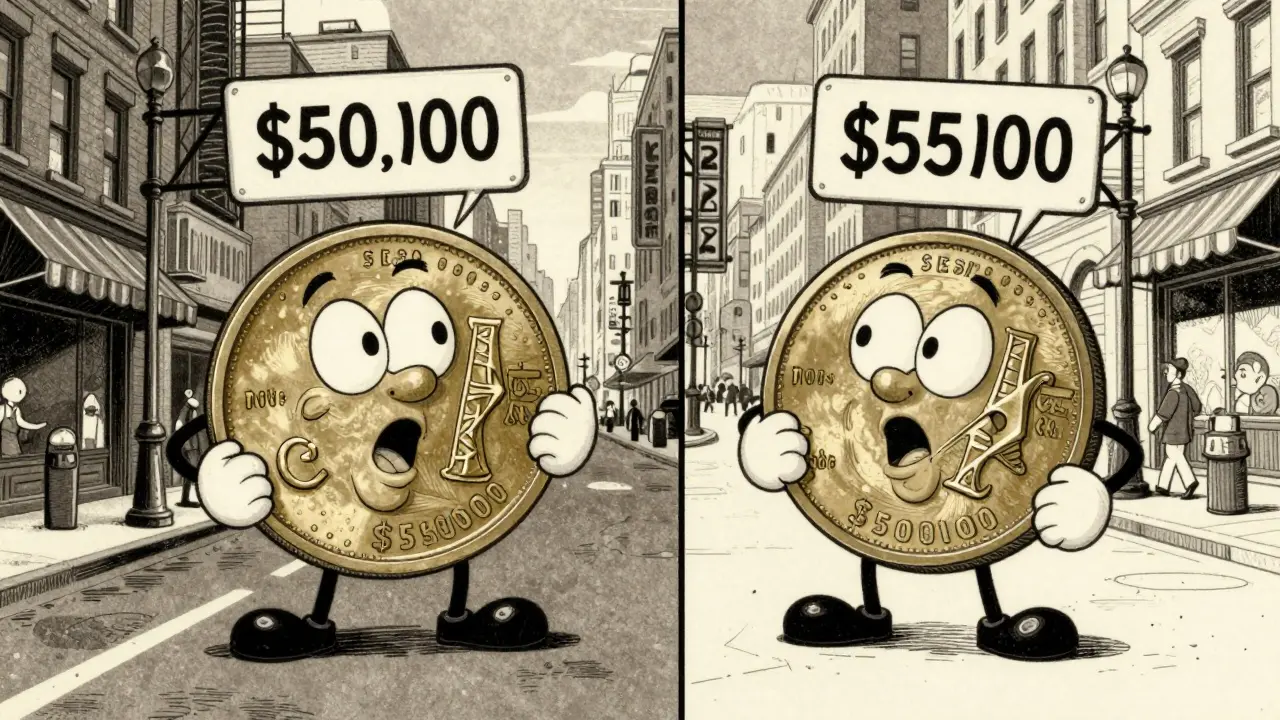
Imagine waking up and realizing that the exact same digital coin you can buy for $50,000 in New York is selling for $55,000 in Seoul. In any other market, traders would snap up the cheaper coins and sell them where they are more expensive until the prices leveled out. But in the world of crypto, specifically in South Korea, this gap often persists for weeks or months. This price difference is known as the Kimchi premium is a market phenomenon where cryptocurrencies trade at a higher price on South Korean exchanges than on global platforms. It is a wild example of how government rules can break the "borderless" promise of blockchain technology.
Why the Kimchi Premium Happens
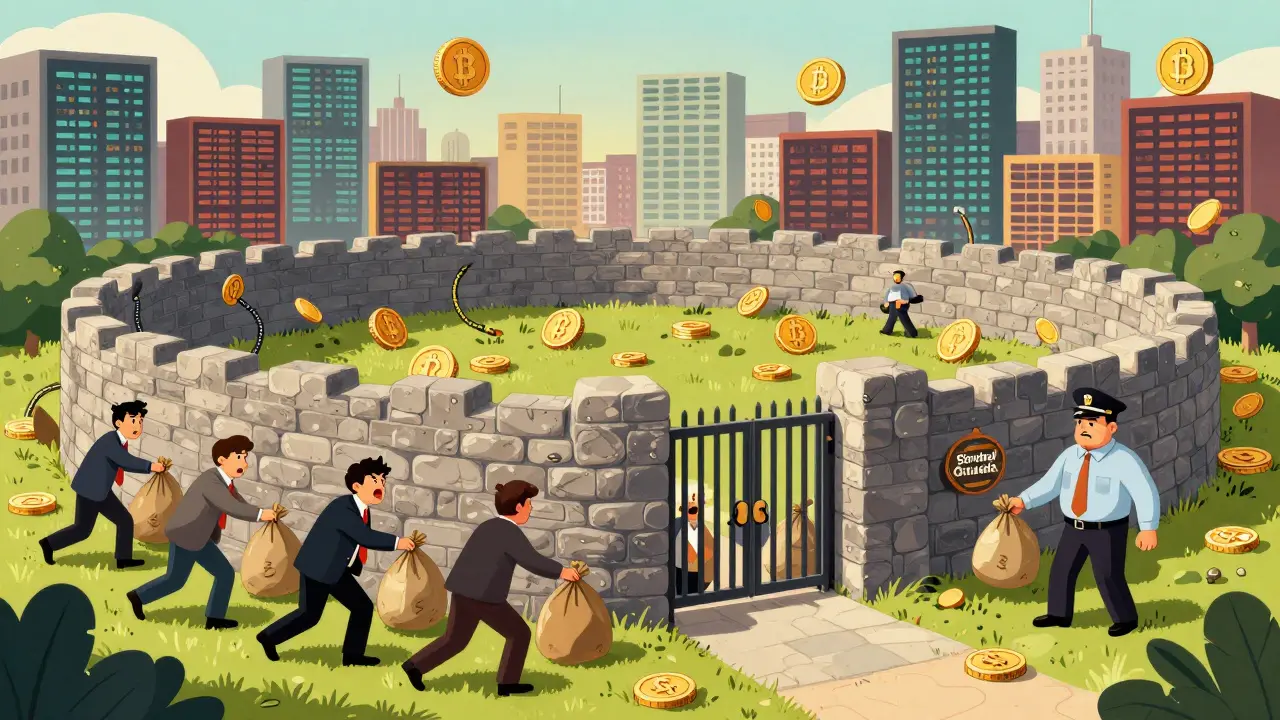
You might wonder why a simple price gap doesn't just disappear. In a perfect world, arbitrage-buying low and selling high-fixes this. However, the South Korean market isn't a perfect world; it's a walled garden. The primary driver is an insatiable local appetite for digital assets. South Korean investors are famously aggressive, often treating crypto like a high-stakes national sport. This massive demand consistently outweighs the available supply within the country, pushing prices upward.
But demand is only half the story. The real reason the gap stays open is due to Capital Controls is government-imposed restrictions on the movement of money into and out of a country managed by the Korean Central Bank. These laws make it incredibly difficult to move large sums of money across borders quickly. If you're a trader in the US trying to profit from this, you can't just send a wire transfer and buy coins on a Korean exchange in five minutes. By the time your funds clear the regulatory hurdles, the premium might have vanished.
The Role of Local Exchanges and Regulations
To understand the premium, you have to look at where the trading happens. Most of the action occurs on UpBit is one of the largest cryptocurrency exchanges in South Korea by trading volume and Bithumb is a leading South Korean digital asset trading platform known for its high liquidity . These platforms are the heart of the local ecosystem.
The government adds another layer of complexity with strict identity verification. To open an account on these exchanges, you typically need a local residency ID. This effectively locks out international speculators who would otherwise swoop in to flatten the price difference. When you combine these residency requirements with anti-money laundering laws, you get a market that is practically isolated from the rest of the world, allowing local prices to drift wherever local sentiment takes them.
| Feature | Global Markets (e.g., Binance, Coinbase) | South Korean Markets (e.g., UpBit) |
|---|---|---|
| Price Stability | Closely aligned with global averages | Prone to regional premiums (Kimchi Premium) |
| Access Requirements | Generally open to international users | Requires local residency and ID verification |
| Capital Movement | Relatively fluid across borders | Strictly monitored by the Central Bank |
| Trading Behavior | Diverse institutional and retail mix | High retail speculation and "listing pumps" |
Speculation and the "Listing Pump"
The Korean market is also known for its volatility, often amplified by speculative behavior. When the rest of the world is cautious, Korean traders often lean in, creating a feedback loop that inflates the premium. A particularly fascinating quirk is the "listing pump." When a new coin is listed on a major Korean exchange, the local price often skyrockets instantly, far exceeding the global price. This happens because local traders view a listing on UpBit as a massive seal of approval, triggering a buying frenzy.
This behavior proves that the premium isn't just about money movement-it's about psychology. The cultural drive for rapid gains in the Korean tech-savvy population turns these exchanges into pressure cookers. While the premium peaked at a staggering 55% in early 2018, it usually hovers around a more modest 4.5%. However, during bull markets, that number can spike again, signaling a state of extreme local euphoria.
The Arbitrage Trap: Why You Can't Just "Get Rich Quick"
On paper, the Kimchi premium looks like free money. You buy Bitcoin for $60,000 on a global exchange and sell it for $63,000 in Korea. But in practice, this is a logistical nightmare. Most international traders hit a brick wall when trying to move fiat currency into won (KRW) or vice versa. The Korean government's stance on preventing rapid capital flight means that traditional banking channels are heavily monitored.
Some traders try "creative" methods, such as buying coins on a global exchange and transferring them to a Korean one. However, the cost of these transfers, the time they take, and the risk of the price dropping during the transit often eat the profit. Moreover, attempting to bypass capital controls can lead to severe legal trouble with South Korean authorities, who are very protective of their financial stability.

What the Premium Tells Us About the Market
Economists and analysts don't just see the Kimchi premium as a glitch; they see it as a barometer. When the premium rises, it usually means local sentiment is overwhelmingly bullish. Conversely, when the premium shrinks or turns negative (a "reverse premium"), it can signal a cooling period or growing regulatory fear within Korea.
The phenomenon highlights a fundamental tension: Blockchain is a distributed ledger technology designed to be decentralized and borderless was meant to remove the need for middlemen and national borders. Yet, the Kimchi premium shows that as long as the "on-ramps" and "off-ramps" (the way you turn cash into crypto) are controlled by national governments, the market will remain fragmented. It serves as a case study for other countries developing their own crypto frameworks, showing exactly how capital controls can create accidental market inefficiencies.
Looking Ahead: Will the Premium Disappear?
As we move through 2026, the Kimchi premium remains a persistent feature of the landscape. While it's not as extreme as the 80% gaps seen in early documented cases, it refuses to go away. The South Korean government continues to tweak its laws, attempting to balance consumer protection with the reality of a digital economy.
Institutional adoption might eventually dampen the volatility, but as long as residency requirements and capital controls exist, the Korean market will likely continue to dance to its own beat. For the average trader, the lesson is clear: regional anomalies are powerful, and government regulations are often stronger than the underlying technology's desire for decentralization.
How is the Kimchi premium calculated?
The premium is calculated by finding the percentage difference between the price of a cryptocurrency on a South Korean exchange (like UpBit) and its price on a global exchange (like Binance). For example, if BTC is $50,000 globally and $52,000 in Korea, the premium is 4%.
Can foreigners trade on Korean exchanges to profit from the premium?
It is extremely difficult. Most major Korean exchanges require a local ID and a Korean bank account for full trading and withdrawal capabilities, effectively blocking non-residents from executing arbitrage trades.
Does the Kimchi premium apply to all cryptocurrencies?
While it is most famously tracked via Bitcoin, the premium can affect many other digital assets. It is particularly prominent during "listing pumps" when a specific altcoin is first added to a major Korean platform.
Why doesn't the Korean government just stop the premium?
The premium is a symptom, not the cause. The government's primary goal is to maintain financial stability and prevent money laundering. The capital controls that cause the premium are intended to prevent massive, sudden outflows of currency that could destabilize the national economy.
Is the Kimchi premium a sign of a bubble?
A very high premium often indicates excessive speculation and "FOMO" (fear of missing out) among local investors, which can be a sign of a local bubble. However, a modest premium is simply a reflection of regional demand and regulatory friction.