Medical Records on Blockchain: Benefits and Challenges
Feb, 28 2026
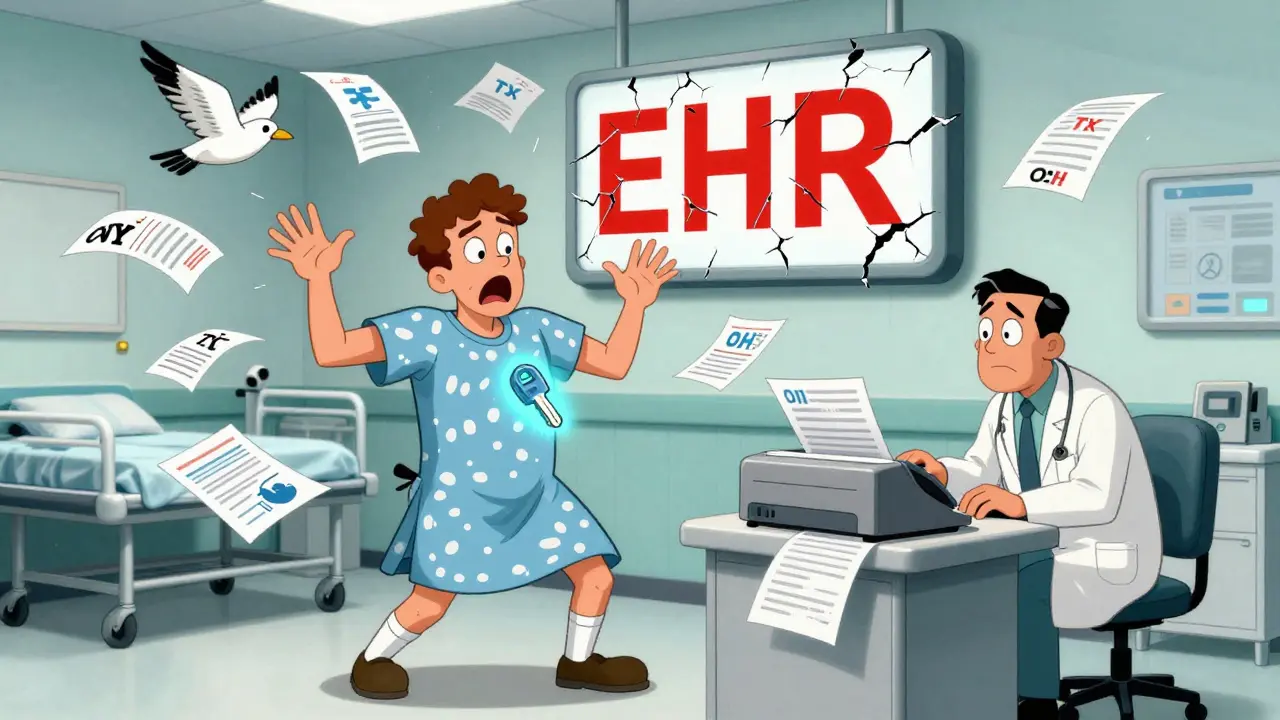
Imagine you’re in an emergency room halfway across the country. Your heart is racing, your breathing is shallow, and you can’t remember the name of the medication you’re taking. The doctors ask for your medical history. You give them what you can - but half of it’s missing. Your old records are locked in a system from a clinic you visited five years ago. The hospital’s computer can’t talk to theirs. This isn’t fiction. It happens every day in the U.S., where 26 different electronic health record systems don’t speak the same language. Patients suffer. Costs rise. Lives are at risk.
Why Medical Records Need a New System
Today’s electronic health records (EHRs) are fragmented, insecure, and controlled by institutions - not patients. Data gets stuck in silos. A patient might see a cardiologist in New York, a dermatologist in Texas, and a pharmacist in Ohio. Each uses a different software. Records aren’t shared automatically. Doctors waste time calling offices, faxing forms, or guessing what treatments were given. The U.S. spends about $1 trillion a year on healthcare waste - and a big chunk of that comes from duplicated tests, delayed diagnoses, and paperwork errors. Blockchain offers a different path. Instead of storing full medical records on a central server, it stores cryptographic pointers - tiny digital keys - that link to encrypted data stored elsewhere. Think of it like a secure receipt that proves you have a record, but doesn’t hold the record itself. Only the person with the right key can unlock the real data. That key? It’s controlled by you.How Blockchain Changes the Game
Blockchain isn’t just a database. It’s a network of computers that agree on what’s true - without needing a middleman like a hospital or insurance company. Every time a doctor adds a note, a lab sends results, or a pharmacy fills a prescription, that action gets recorded as a block. Once added, it can’t be deleted or altered. Tampering is nearly impossible. Systems like MeDShare is a blockchain-based platform that uses smart contracts to track who accesses a patient’s data and when and ProCredEx is a distributed ledger that verifies healthcare provider credentials using immutable records are already in use. They don’t store your MRI scans on the blockchain. They store a hash - a unique digital fingerprint - of your data. The real file stays encrypted in a secure cloud. The blockchain just says: "This hash matches the data you’re authorized to see." This eliminates the "push, pull, view" model of today’s EHRs. Instead, it introduces a fourth model: share. You decide who gets access - and for how long. Need your psychiatrist to see your last three therapy notes? You grant access. They log in. They see it. You’re notified. Then you revoke access. Done.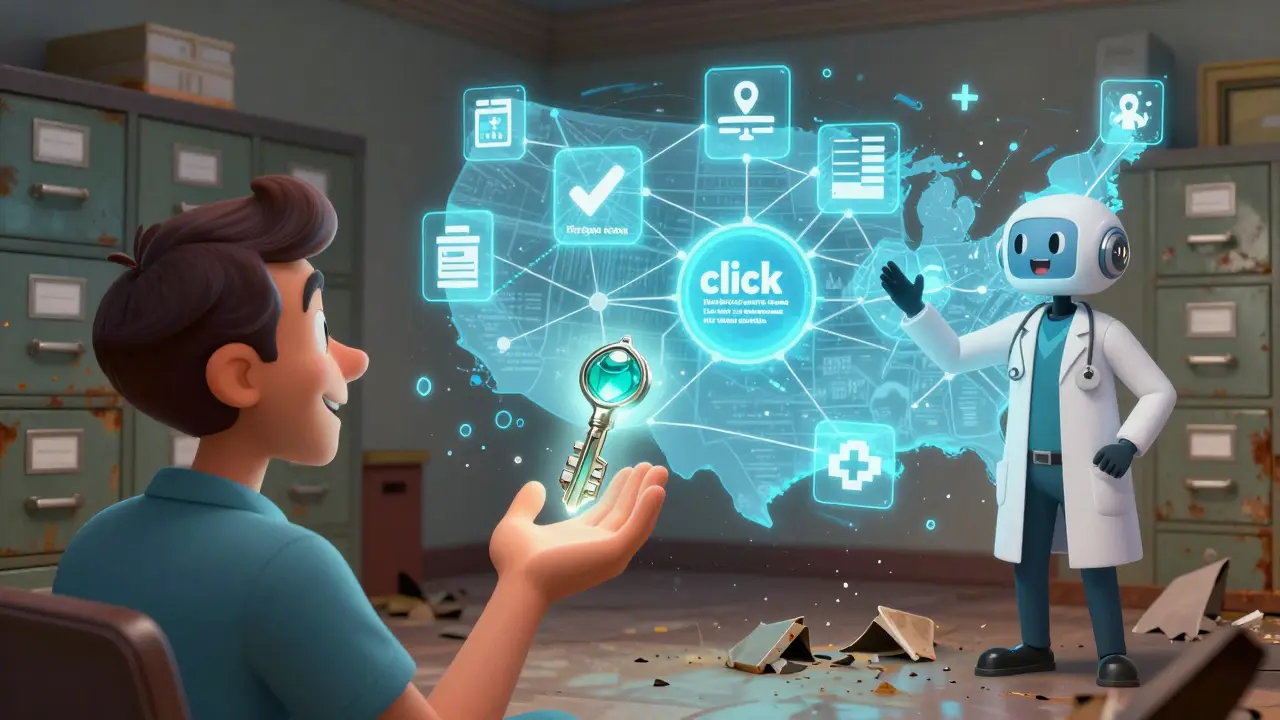
The Real Benefits: What’s Changing Today
- Patients control their data - No more begging clinics for copies. You own the keys.
- Doctors get full histories - No more guessing if you had a reaction to penicillin in 2018.
- Reduced fraud - Fake identities, stolen prescriptions, and billing scams drop when every action is traceable.
- Interoperability - A system from 2012 can still share data with one from 2026. No more "incompatible formats."
- Automated consent - Smart contracts can auto-revoke access if a provider stops paying fees or violates privacy rules.
Companies like Avaneer is a blockchain platform backed by Aetna, CVS Health, and Cleveland Clinic that improves claims processing and provider directory accuracy are already cutting administrative costs by 30% in pilot programs. Insurance claims that used to take 45 days now clear in 7. Provider credentialing - a process that used to take months - now takes days.
The Challenges: Why It’s Not Everywhere Yet
Despite the promise, adoption is slow. Why?- Legacy systems - Hospitals still run on 20-year-old software. Integrating blockchain means replacing or patching core infrastructure.
- Regulatory uncertainty - HIPAA doesn’t explicitly cover blockchain. Is a hash on the blockchain "protected health information"? No one’s sure.
- Scalability - Blockchains like Ethereum can get slow when thousands of hospitals add records every minute. Newer chains (like Polygon or Hyperledger) are solving this, but adoption lags.
- Training - Doctors aren’t coders. Nurses don’t know what a smart contract is. Learning curves are steep.
- Cost - Building a blockchain system from scratch costs millions. Smaller clinics can’t afford it.
Some fear privacy risks. If your blockchain record is immutable, what if you made a mistake? What if a diagnosis was wrong? You can’t delete it. But here’s the twist: you don’t need to. You can add a new entry: "Correction: The 2023 diagnosis of Type 2 diabetes was incorrect. Confirmed normal glucose levels in 2025." The history stays. The truth updates. Transparency wins.
Who’s Already Doing It
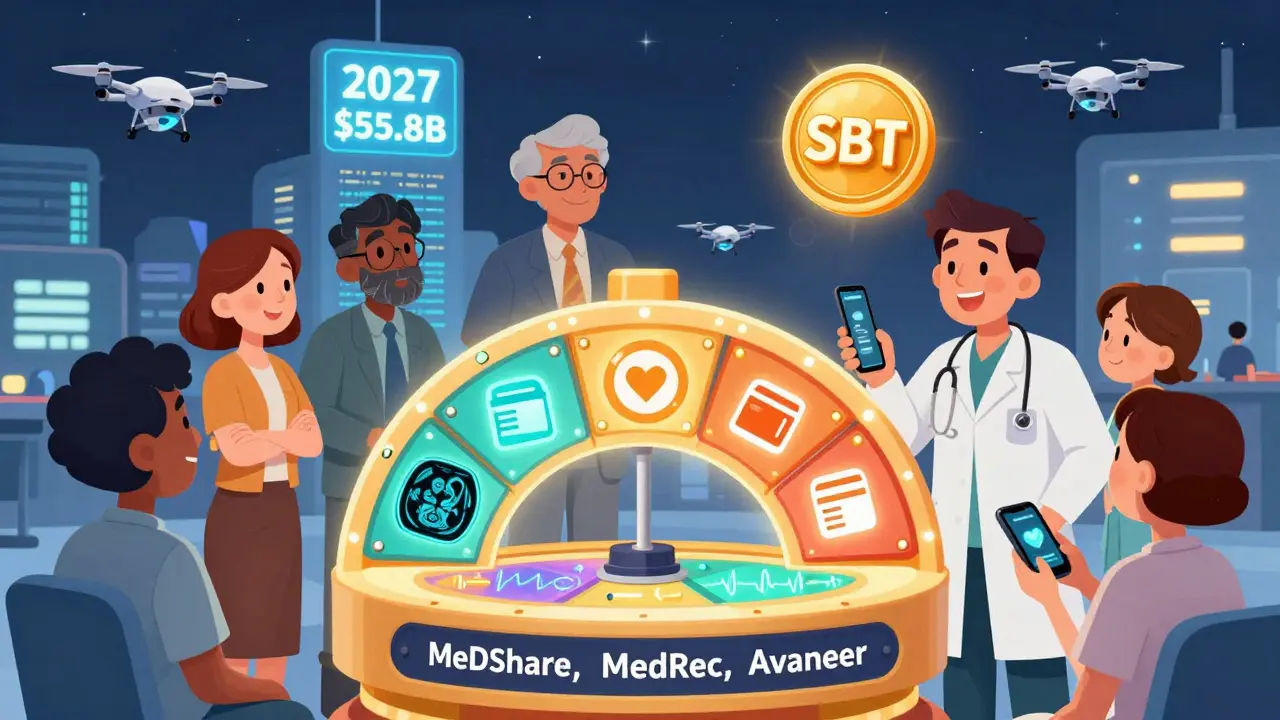
You don’t have to wait for the future. Real systems are live:- Personalory is a patient-owned platform that uses end-to-end encryption and blockchain to let users store, share, and control health data - Used by over 150,000 patients.
- MedRec is a research project from MIT that uses Ethereum to let patients manage consent for data sharing with providers - Piloted in Boston hospitals.
- IoMT + Blockchain integrates smart sensors (like glucose monitors or ECG patches) that automatically log data to the blockchain in real time - Used in remote patient monitoring programs in New Zealand and Australia.
These aren’t prototypes. They’re working. And they’re saving time, money, and lives.
What’s Next
The global healthcare blockchain market is projected to hit $55.8 billion by 2027. That’s not hype - it’s demand. Patients are demanding control. Providers are tired of inefficiency. Insurers are tired of fraud. The next five years will see:- Standardized blockchain protocols for healthcare (like HL7 FHIR on blockchain).
- Government pilot programs in the U.S., EU, and Australia.
- AI analyzing blockchain health data to predict outbreaks or drug reactions.
- Mobile apps letting patients approve data access with a fingerprint or face scan.
It won’t be perfect. It won’t be fast. But it’s coming. Because the old way isn’t just broken - it’s dangerous.
Can blockchain medical records be hacked?
The blockchain itself is nearly impossible to hack - it’s distributed across thousands of computers. But the weak point is the device you use to access it. If your phone is infected with malware, someone could steal your private key. That’s why strong authentication (like biometrics or hardware tokens) is critical. The data is encrypted, so even if a hacker gets the key, they can’t read the file without the decryption password - which only you hold.
Do I need to understand blockchain to use it?
No. You’ll interact with it through a simple app - like a health portal where you tap "Share with Dr. Lee" and it works. Behind the scenes, blockchain handles the rest. You don’t need to know how a car engine works to drive one.
What happens if I lose my private key?
You lose access to your records. That’s why backup systems exist - like encrypted recovery phrases stored in secure vaults or trusted family members. Some platforms now offer multi-signature recovery, where three people must approve access restoration. It’s not perfect, but it’s safer than a hospital holding your data hostage.
Is blockchain medical records legal under HIPAA?
It’s not explicitly banned. HIPAA regulates how protected health information is handled - not the technology used. As long as data is encrypted, access is logged, and patients can revoke consent, blockchain systems can comply. Many legal teams are now working with blockchain developers to design HIPAA-compliant architectures.
Will insurance companies use my blockchain data against me?
Not if you control the access. You decide who sees what. You can share your full history with your doctor but only show "no chronic conditions" to your insurer. Blockchain doesn’t force transparency - it gives you control over it. This is the opposite of today’s system, where insurers demand full access.